


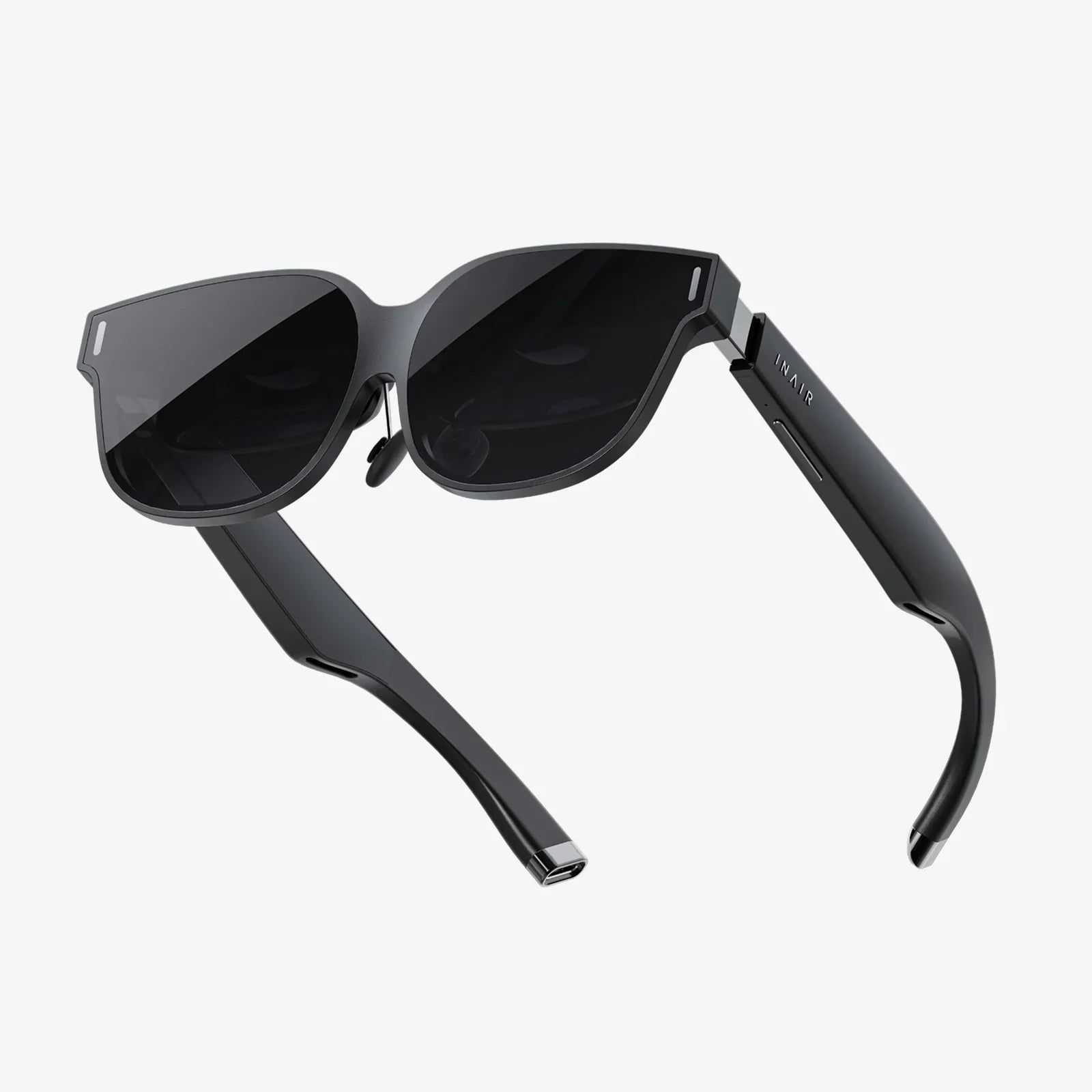
Imagine stepping through a portal into another world, one where you can climb mountains, explore the depths of the ocean, or walk on the surface of Mars, all from the comfort of your living room. This is no longer the stuff of science fiction; it's the breathtaking reality offered by modern VR glasses 3D with USB. This accessible technology has flung open the doors to immersive experiences, making the extraordinary an everyday possibility for millions. The journey into these digital realms begins with a simple, yet powerful, piece of hardware: a headset that connects directly to your world through a universal USB cable.
The Core Technology: How USB-Powered VR Glasses Work
At their heart, VR glasses 3D with USB are a marvel of modern engineering, combining optics, software, and connectivity into a single, cohesive experience. Unlike standalone wireless headsets that contain their own computing power, these devices leverage the processing prowess of an external source—be it a powerful computer, a gaming console, or even a smartphone in some hybrid models. The USB connection is the critical lifeline that makes this possible.
This cable does far more than just supply power. It acts as a high-speed data highway, transmitting a continuous, uncompressed stream of high-definition video and audio from the host device to the screens housed within the headset. For each frame of the virtual world, two distinct images are sent—one for each eye. This is the fundamental principle behind stereoscopic 3D, which creates the illusion of depth and scale that is so crucial to immersion.
Inside the headset, these dual images are projected onto lenses that sit between the screens and your eyes. These specialized lenses, often Fresnel lenses, warp and focus the images to fill your entire field of view, effectively tricking your brain into perceiving a vast, expansive environment instead of two small screens mere inches from your face. This optical magic is complemented by a critical component: an internal inertial measurement unit (IMU). This sensor package, which includes gyroscopes, accelerometers, and magnetometers, tracks the precise rotation of your head in real-time. This data is sent back through the USB connection to the computer, which instantly adjusts the on-screen perspective, ensuring the virtual world remains stable and responsive to your every movement.
A Universe of Applications: Beyond Just Gaming
While the world of gaming is the most famous beneficiary of this technology, the applications for VR glasses 3D with USB extend far beyond, touching nearly every aspect of modern life.
Revolutionizing Education and Training
Imagine a medical student performing a intricate virtual dissection, an archaeology student walking through a digitally reconstructed ancient city, or a mechanic practicing repairs on a complex engine model—all without any real-world risk or cost. VR provides an unparalleled platform for experiential learning. It transforms abstract concepts into tangible, interactive experiences, dramatically improving knowledge retention and engagement. From flight simulators for pilots to emergency response drills for firefighters, VR glasses 3D with USB offer a safe, controlled, and highly effective training environment.
Transforming Design and Architecture
For architects, engineers, and interior designers, these tools are a game-changer. Instead of viewing a building or product design on a flat monitor, they can step inside a full-scale 3D model. They can walk through rooms to assess sightlines and spatial relationships, inspect the fit of components, and make real-time changes to their designs. This immersive design review process helps identify potential issues long before construction begins, saving immense amounts of time and resources.
The Future of Social Connection and Remote Work
Virtual reality is poised to redefine what it means to be "present" with someone. Social VR platforms allow users, represented by customizable avatars, to meet, talk, watch movies, and play games together in shared virtual spaces as if they were in the same physical room. For remote work, this translates into virtual offices where colleagues from across the globe can collaborate on 3D models, brainstorm on virtual whiteboards, and interact with a sense of presence that video calls simply cannot replicate. A USB-connected headset becomes your ticket to the next iteration of the internet: the embodied internet.
Unprecedented Entertainment and Travel
The entertainment industry has embraced VR with open arms. Users can watch 360-degree films where they control the camera angle, attend live concerts from the front row, or experience heart-pounding cinematic adventures. Furthermore, VR offers the incredible ability to travel the world virtually. You can dive on the Great Barrier Reef, stand atop the Eiffel Tower, or visit museums on the other side of the planet, all without leaving your home. It's a powerful tool for those with physical limitations or travel restrictions, offering a taste of freedom and exploration.
Choosing Your Portal: Key Considerations
With a growing market, selecting the right pair of VR glasses 3D with USB requires careful consideration of several factors to ensure your experience is smooth and enjoyable.
Display and Resolution
The quality of the visual experience is paramount. Look for headsets with a high resolution per eye (often listed as a combined resolution). A higher resolution significantly reduces the "screen door effect," where the faint lines between pixels become visible, breaking immersion. Additionally, consider the display technology; OLED panels typically offer deeper blacks and more vibrant colors, while LCDs can provide a sharper image with less Mura effect (clouding). The refresh rate, measured in Hertz (Hz), is also critical. A higher refresh rate (90Hz and above) results in smoother motion and greatly reduces the potential for motion sickness.
Field of View (FOV)
Field of View is the extent of the observable world you can see at any given moment, measured diagonally in degrees. A wider FOV, typically over 100 degrees, creates a more immersive experience by filling more of your peripheral vision, making the virtual world feel more natural and less like you're looking through a pair of binoculars.
Tracking and Controllers
Most modern VR glasses 3D with USB utilize "inside-out" tracking. This means cameras mounted on the headset itself track the movement of the controllers and the environment, eliminating the need for external sensors placed around your room. This makes for a much simpler setup process. The controllers themselves are your hands in the virtual world. Ergonomic, responsive controllers with good haptic feedback are essential for a convincing and intuitive experience.
Comfort and Fit
Immersion is instantly shattered by discomfort. Since VR sessions can last for hours, a well-designed headset is crucial. Look for models with adjustable head straps (preferably a rigid halo-style or flexible strap system), interchangeable facial interfaces to accommodate different face shapes, and balanced weight distribution. Proper ventilation is also important to prevent the lenses from fogging up during intense use.
System Requirements and Content Library
Before you purchase, always check the system requirements. High-fidelity VR experiences demand a powerful computer with a capable graphics card, sufficient RAM, and the correct USB ports (often a specific version of USB 3.0). Ensure your system meets or exceeds the recommended specs to avoid performance issues. Finally, explore the content ecosystem. A robust and supported platform with a wide variety of games, applications, and experiences will ensure your investment continues to provide value for years to come.
Setting Up for Success
Once you've chosen your hardware, proper setup is key. Designate a clear, open area free of obstacles for room-scale experiences. Carefully follow the manufacturer's instructions to set up the software, calibrate your play space (known as "guardian" or "chaperone" systems), and adjust the headset for your interpupillary distance (IPD). This physical adjustment, which moves the lenses to match the distance between your pupils, is vital for achieving a clear, comfortable image and avoiding eye strain.
Navigating the Challenges
Despite its wonders, the technology is not without its hurdles. Motion sickness, or VR-induced nausea, can affect some users, especially when there is a disconnect between what the eyes see (movement) and what the inner ear feels (stationary). This can often be mitigated by starting with stationary experiences, using comfort settings like teleportation for movement, and taking frequent breaks. The initial cost of a capable computer and headset can also be a barrier, though prices continue to fall as the technology matures.
Perhaps the most significant challenge for USB-connected VR is the tether itself. The cable, while necessary for high-fidelity data transmission, can be a tangible reminder of the real world, potentially limiting freedom of movement and posing a tripping hazard. However, this is a trade-off for the unparalleled visual fidelity and low latency that a direct connection provides, making it the preferred choice for serious gamers and professionals.
The world of VR glasses 3D with USB is not just evolving; it's accelerating at a breakneck pace, pushing the boundaries of what we believe is possible. This is your invitation to step beyond the screen and into the experience itself. The USB cable is more than a wire; it's your umbilical cord to new dimensions of play, work, and discovery. An entire universe of immersive content is waiting, demanding only your curiosity to unlock it. Your front-row seat to the future is ready—all you have to do is put on the headset.
Share:
Top AI Glasses: The Future on Your Face is Here and It's Incredible
Augmented Reality Application Development: The Ultimate Guide to Building the Future