


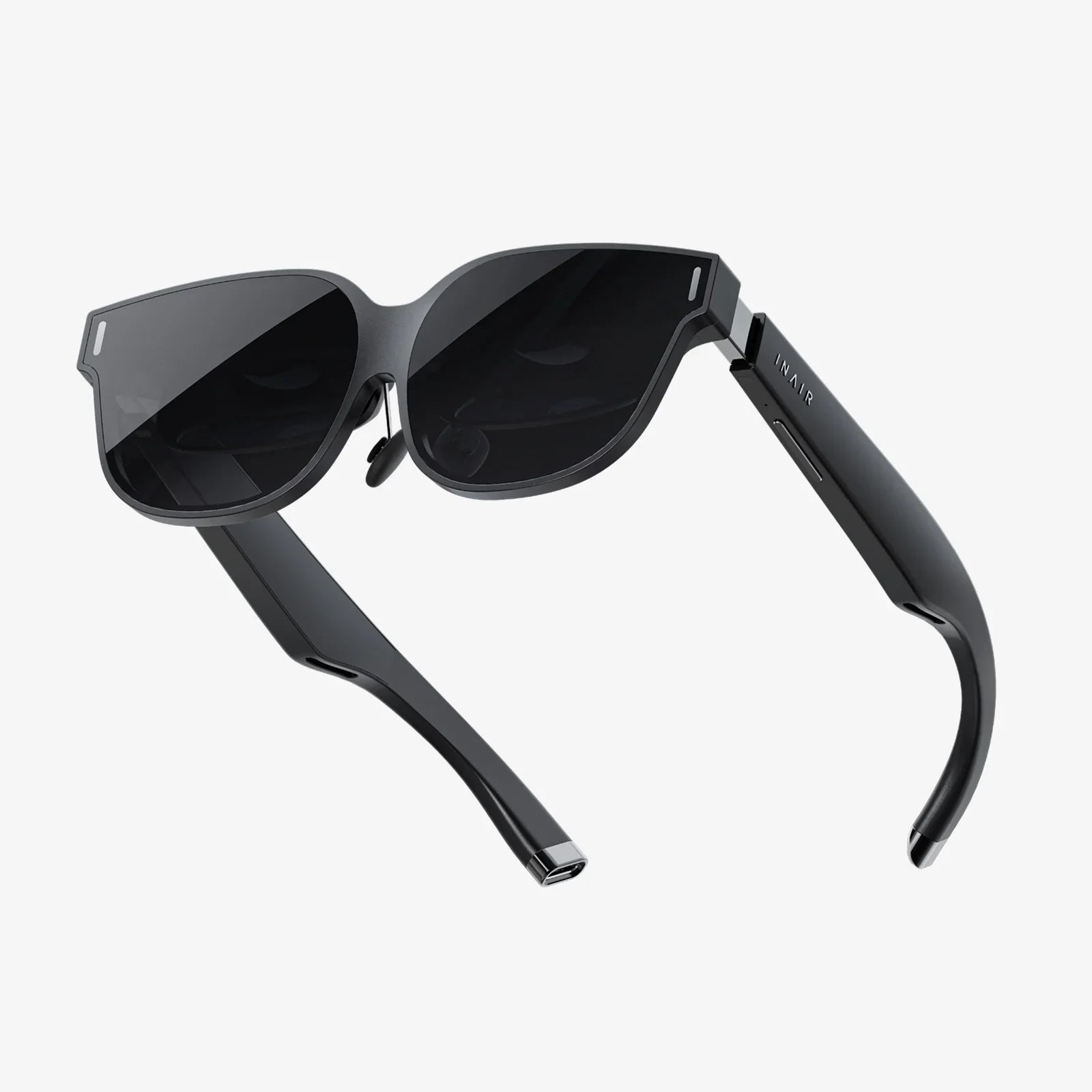
Imagine a world where digital information doesn't just live on a screen but is seamlessly woven into the fabric of your physical reality, enhancing everything you see, learn, and do. This is no longer the realm of science fiction; it is the present and rapidly evolving future powered by augmented reality (AR). Unlike its fully immersive cousin, virtual reality, AR doesn't replace your world—it enriches it. By overlaying computer-generated graphics, sound, and data onto our view of the real environment, AR creates a powerful, interactive, and contextually aware experience. The applications of this technology are vast and profound, stretching across every major industry and touching countless aspects of our daily lives. From the operating room to the factory floor, from the classroom to the living room, AR is quietly orchestrating a revolution. Here are the top augmented reality uses that are not just promising a transformative future but are actively building it today.
Revolutionizing Retail and E-Commerce Experiences
The retail sector has been one of the earliest and most enthusiastic adopters of augmented reality, fundamentally altering the consumer journey. The era of guessing whether a new sofa will fit in your living room or if a shade of lipstick will suit your skin tone is rapidly fading. AR applications now allow customers to project life-sized, photorealistic 3D models of furniture into their own homes using nothing more than a smartphone camera. They can visualize how a new coffee table will look between their couch and armchair, check if a bookshelf will fit in an alcove, and even walk around the virtual object to see it from every angle. This "try before you buy" capability drastically reduces purchase hesitation and minimizes the rate of product returns, creating a win-win scenario for both consumers and retailers.
In the realm of fashion and beauty, virtual try-on mirrors and apps enable shoppers to see themselves wearing clothes, accessories, glasses, and makeup without ever physically touching a product. This technology uses advanced facial mapping and tracking to ensure the virtual items move and behave like their real counterparts, providing a highly accurate and engaging preview. For the automotive industry, potential buyers can configure their dream car, changing its color, wheels, and trim in real-time, and then project that customized vehicle into their driveway to get a true sense of its presence and appearance. This level of immersive, personalized shopping is bridging the gap between the convenience of online retail and the confidence of an in-store purchase, creating a new, hybrid model of commerce.
Transforming Education and Interactive Learning
Education is undergoing a seismic shift thanks to augmented reality, moving away from passive learning towards dynamic, interactive, and deeply engaging experiences. Textbooks, once static repositories of information, are being transformed into dynamic portals. By scanning a page with a device, a student can see a historical battle play out on their desk, a human heart beat in 3D above the diagram, or a complex mathematical equation explode into a visual graph. This makes abstract and difficult concepts tangible and easier to comprehend, catering to various learning styles and improving knowledge retention. AR brings lessons to life, turning learning into an adventure of discovery.
Beyond the classroom, AR enables powerful skill-based training without the associated risks or costs. Medical students can practice complex surgical procedures on detailed, layered anatomical models that hover in mid-air, allowing them to understand spatial relationships between organs, nerves, and blood vessels in a way that textbooks or cadavers cannot match. Mechanics-in-training can learn to repair an engine by following step-by-step AR instructions overlaid directly onto the physical machinery, highlighting exactly which bolt to turn and which component to replace. This "see-what-I-see" remote guidance can be broadcast from an expert to a novice anywhere in the world, democratizing access to specialized knowledge and accelerating the learning curve. Augmented reality is not just changing how we learn; it's revolutionizing what we can learn and how quickly we can master new skills.
Enhancing Industrial Design, Manufacturing, and Maintenance
In industrial settings, augmented reality is a powerhouse for efficiency, safety, and precision, forming a core component of what is often termed Industry 4.0. During the design and prototyping phase, engineers and designers can use AR headsets to visualize and interact with full-scale 3D models of their creations superimposed onto the real world. They can walk around a virtual engine, peer inside its components, and make collaborative adjustments with colleagues in different locations, all in real-time. This drastically reduces the need for expensive physical prototypes, shortens design cycles, and fosters more innovative problem-solving.
On the manufacturing floor and for maintenance operations, AR is an indispensable tool. Technicians equipped with AR glasses can have schematics, safety instructions, and step-by-step repair manuals overlaid directly onto the equipment they are servicing. Instead of constantly looking back and forth between a physical manual or a computer screen and the machinery, the information is contextually presented right in their line of sight. This hands-free access to information improves accuracy, slashes task completion time, and significantly reduces human error. Furthermore, remote experts can see what an on-site worker sees and annotate their field of view with arrows, circles, and notes to guide them through a complex repair, effectively teleporting their expertise and eliminating travel costs and delays. This application is invaluable for maintaining critical infrastructure, from power plants to aircraft, ensuring operations are safe and downtime is minimized.
Advancing Medical Procedures and Patient Care
The healthcare industry is leveraging augmented reality to achieve remarkable improvements in surgical precision, medical training, and patient outcomes. In the operating room, surgeons can use AR headsets to view critical patient data—such as heart rate, blood pressure, and oxygen levels—without taking their eyes off the surgical site. More impressively, AR can project 3D reconstructions from CT, MRI, or ultrasound scans directly onto the patient's body. This allows a surgeon to, in effect, see “inside” the patient, visualizing the exact location of a tumor, the path of a key blood vessel, or the precise placement for a surgical incision before making a single cut. This enhanced visualization increases surgical accuracy, minimizes risks, and leads to less invasive procedures and faster patient recovery times.
Beyond surgery, AR is a powerful tool for medical education, as previously mentioned, and for enhancing patient communication. A doctor can use an AR model to explain a complex condition or procedure to a patient, making the information far more accessible and understandable than a 2D diagram. For physical therapy and rehabilitation, AR can create engaging exercises and games that guide patients through their recovery movements, ensuring they are performed correctly and motivating them to complete their often tedious regimens. From diagnosis to treatment to recovery, augmented reality is providing medical professionals with superhuman vision and a deeper understanding of the human body, ultimately saving lives and improving the quality of care.
Powering Navigation and Urban Planning
Augmented reality is set to fundamentally change how we navigate and interact with our cities and built environment. Forget looking down at a blue dot on a smartphone map; the next generation of AR navigation will project giant, floating arrows onto the real world, guiding you along the sidewalk, highlighting the entrance to a subway station, or pointing out your final destination. This technology can be integrated into car windshields, displaying speed, directions, and hazard alerts directly on the road ahead, allowing drivers to keep their eyes on the road while receiving crucial information.
For urban planners and architects, AR is an invaluable visualization tool. They can project full-scale digital models of proposed new buildings, parks, or infrastructure projects directly onto an existing physical site. This allows stakeholders and community members to literally walk through and experience a design before a single foundation is poured, assessing its visual impact, scale, and integration with the surrounding environment. This facilitates better public consultation, more informed decision-making, and ultimately, the creation of more thoughtful and human-centric urban spaces. AR allows us to see not just what a city is, but what it could be.
Creating Immersive Entertainment and Gaming Experiences
The entertainment world was one of the first to introduce the masses to the potential of augmented reality, most famously through a mobile game that had millions of people chasing virtual creatures in their local parks. This was just the beginning. AR is now being used to create deeply immersive experiences that blend storytelling with the real world. Live events, such as concerts and sports games, can use AR to overlay statistics, player information, and interactive graphics for viewers watching through their phones at home or on large stadium screens.
Museums and historical sites are using AR to resurrect the past, allowing visitors to point their devices at an artifact or ruin to see a historical reenactment, a reconstructed building, or detailed information about its significance. In the home, AR can transform a living room into a virtual battlefield, a dance floor, or an interactive storybook for children. The line between the narrative and the audience's environment is blurring, creating a new form of participatory entertainment that is personalized, location-based, and endlessly creative. AR empowers users to become active participants in the entertainment, transforming their immediate surroundings into a canvas for play and exploration.
Shaping the Future of Remote Collaboration and Work
The global shift towards remote and hybrid work models has accelerated the need for better collaboration tools, and augmented reality is rising to meet this challenge. Traditional video conferencing, while useful, is still a fundamentally 2D experience. AR collaboration platforms aim to create a shared, persistent 3D space where remote participants can interact with digital models and data as if they were in the same physical room. Imagine a team of engineers from different continents all wearing AR headsets and collectively assembling a virtual prototype of a new product, with each person able to manipulate, annotate, and test the model simultaneously.
This "digital twin" concept allows for unparalleled teamwork on complex projects. An architect can walk a client through a virtual building design, a marketing team can review a 3D product mockup, and factory planners can design a new production line—all from their respective locations. These shared experiences foster a deeper level of understanding and creativity than a flat screen can ever provide. AR is poised to dissolve the barriers of geography, creating a future where physical presence is no longer a prerequisite for high-fidelity, collaborative work, ultimately redefining the very concept of the workplace and global teamwork.
The journey into our augmented future has already begun, and its potential is limited only by our imagination. These top uses are merely the foundation, the first few chapters in a much larger story. As the technology becomes more sophisticated, affordable, and integrated into devices like smart glasses, its presence in our lives will become as commonplace as the smartphone is today. It will move from a novel application to an invisible utility, enhancing our perception, amplifying our abilities, and seamlessly connecting the digital and physical realms. The world is about to get a whole new layer of information, interaction, and wonder—are you ready to see it?
Share:
What Are Three Examples of Augmented Reality? Exploring the Digital Overlay Reshaping Our World
Is Augmented Reality Expensive? A Deep Dive into the True Cost of Immersive Technology