


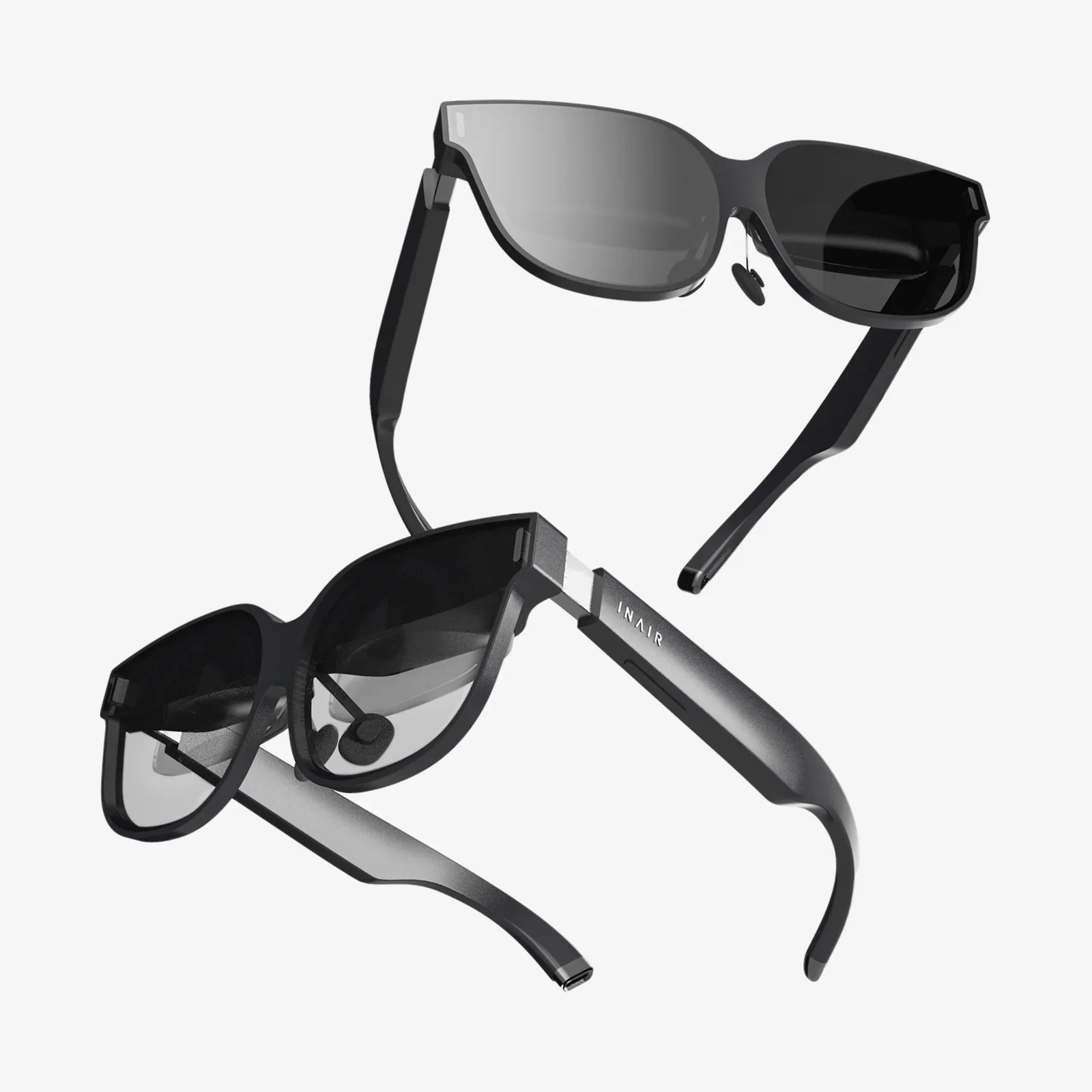
Imagine a world where digital information seamlessly overlays your physical reality, enhancing everything from how you work and learn to how you shop and play. This is the promise of Augmented Reality (AR), a technology once confined to science fiction and high-budget military applications. But as it steadily integrates into our daily lives, a critical question emerges for businesses and consumers alike: is this futuristic vision a luxury reserved for the wealthy, or an accessible tool for the masses? The answer is far from a simple yes or no, lying instead in a complex tapestry of hardware, software, development, and application.
Deconstructing the Cost Equation: It's More Than Just Glasses
To truly understand the expense of AR, one must first dismantle the concept into its core components. The total cost of ownership or engagement is rarely a single line item; it's a spectrum influenced by the target user, the complexity of the experience, and the chosen technological pathway. The primary cost centers are the hardware—the devices that deliver the experience—and the software—the development and deployment of the AR content itself. These two pillars support a vast range of possibilities, from multi-million-dollar enterprise solutions to free consumer-facing mobile apps.
The Hardware Horizon: From Smartphone Ubiquity to Specialized Headsets
The most significant factor democratizing AR has been the proliferation of powerful smartphones. For the average consumer, the cost of entry into basic AR is effectively zero. If you own a modern smartphone, you already possess a capable AR device in your pocket. This has enabled the viral success of social media filters, navigation aids that overlay directions onto live street views, and retail apps that let you visualize furniture in your home. The hardware cost here is sunk; it was purchased for a multitude of reasons, with AR being a powerful bonus feature.
However, the experience on a smartphone, while convenient, is often limited. It's a "window" into AR, requiring the user to hold up their device, which can be cumbersome for prolonged use. This is where dedicated AR headsets and smart glasses enter the picture, and with them, a wide range of costs.
- Consumer-Grade Smart Glasses: Designed for everyday use, these glasses often focus on displaying notifications, translating text in real-time, or recording video. Their price typically ranges from a few hundred to a few thousand dollars. They represent a growing mid-tier market, offering a hands-free experience without the full feature set of enterprise gear.
- Enterprise-Grade AR Headsets: At the top end of the spectrum are ruggedized, high-performance headsets designed for industrial use. These devices boast features like robust processing power, high-resolution displays, advanced depth sensors, extended battery life, and software platforms for complex tasks like remote expert assistance, digital work instructions, or intricate 3D visualization for design and engineering. The price for these units can range from approximately two thousand to well over three thousand dollars per device. For a large enterprise deploying to a field workforce of hundreds or thousands, this represents a substantial capital investment.
The Development Dilemma: Where the True Investment Often Lies
While hardware costs are often the most visible, for organizations looking to implement AR solutions, the development of the software experience is frequently the most significant and complex expense. Building a stable, intuitive, and valuable AR application is not a trivial undertaking. The cost can vary dramatically based on several key factors.
Key Cost Drivers in AR Development
- Experience Complexity: A simple AR marker-based app that displays a 3D model when a specific image is scanned is relatively inexpensive to develop. Conversely, a marker-less, persistent AR experience that requires sophisticated environmental understanding, cloud anchoring (where digital objects persist in a specific space for multiple users), and complex user interactions will demand a much larger budget, potentially running into hundreds of thousands of dollars.
- 3D Asset Creation: High-fidelity, optimized 3D models, animations, and visual effects are the core of most AR experiences. Creating these assets from scratch or converting existing CAD data requires skilled 3D artists and engineers, adding considerably to the project cost.
- Platform and Integration: Developing for a single platform (iOS or Android) is less expensive than cross-platform development. Furthermore, integrating the AR application with existing enterprise systems like ERP, CRM, or IMS adds layers of complexity and cost.
- Developer Expertise: AR development is a specialized field. Skilled AR developers and designers command higher salaries than general app developers, impacting the overall project rate.
A basic proof-of-concept AR application might be developed for a few thousand dollars. A moderately complex application for a specific business use case could range from fifty thousand to one hundred and fifty thousand dollars. Large-scale, enterprise-grade deployments with custom hardware integration and advanced features can easily cost several hundred thousand to millions of dollars when accounting for full deployment, training, and maintenance.
The Enterprise Arena: Calculating Return on Investment (ROI)
In the business world, the question shifts from "Is it expensive?" to "Is it worth it?" Enterprises are willing to make substantial investments in AR technology because they demonstrate a clear and compelling return on investment. The high cost of enterprise-grade headsets and custom software is justified by quantifiable benefits that impact the bottom line.
- Increased Efficiency and Productivity: AR can provide workers with hands-free access to information, schematics, and expert guidance, drastically reducing task completion times and minimizing errors. In manufacturing, this can shave precious minutes off complex assembly processes. In field service, it can enable first-time fixes, eliminating costly return visits.
- Enhanced Training and Safety: AR can simulate dangerous or expensive scenarios for training purposes without any real-world risk. It can also overlay safety information and warnings directly into a worker's field of view, preventing accidents.
- Reduced Downtime and Travel Costs: Remote expert assistance allows a senior specialist to see what a field technician sees and provide guidance from anywhere in the world, eliminating the need for expensive and time-consuming travel.
When a single avoided equipment failure or a minor percentage gain in productivity can save a company hundreds of thousands of dollars annually, the initial high cost of a robust AR system is quickly amortized, making it not an expense, but a strategic investment.
The Consumer Landscape: Free, Freemium, and Affordable Innovation
For individual consumers, the AR cost model is entirely different. The market is dominated by applications that are free to download or use a freemium model. Social media platforms offer countless AR filters at no cost, funded by advertising and data. Retailers offer AR "try-on" features for makeup, glasses, or furniture to drive sales, absorbing the development cost as a marketing expense. Mobile games use AR as a novel feature to engage users, monetizing through in-app purchases.
The barrier for a consumer to engage with these experiences is incredibly low—just a smartphone and an internet connection. The cost is not in dollars, but in data and attention. This model has been instrumental in normalizing AR technology and educating the public on its potential, creating a fertile ground for future paid applications and hardware adoption.
The Future of AR Pricing: A Trajectory Towards Affordability
Like all transformative technologies, from personal computers to smartphones, AR is on a predictable path toward lower costs and higher accessibility. Several trends are accelerating this process.
- Hardware Commoditization: As more manufacturers enter the AR hardware space, competition will drive down prices. Advancements in display technology (like microLED) and optics will make production cheaper over time.
- Software Standardization: The emergence of robust AR development platforms and SDKs is reducing the time and expertise required to build applications. Pre-built templates and cloud-based services are making powerful AR tools available to smaller development teams and businesses.
- The Power of the Cloud: Offloading complex processing tasks to the cloud reduces the hardware requirements (and therefore cost) of AR devices themselves, enabling more powerful experiences on lighter, less expensive form factors.
We are moving toward a future where capable AR glasses will be as affordable and ubiquitous as a good pair of wireless headphones today. Development costs will continue to fall as tools improve, opening the door for smaller businesses and indie creators to innovate.
So, is augmented reality expensive? It can be. A full-scale industrial deployment is a major capital project. But it can also be remarkably cheap, even free, for a consumer playing a game or trying on a new watch. The cost is not a fixed number but a variable, directly proportional to the depth of the immersion and the complexity of the problem it solves. The true measure of its expense, therefore, is not in its price tag, but in its value—and for an increasing number of applications across industries, that value is proving to be immeasurably high, making the initial investment a price worth paying for a transformative leap into the future of how we interact with the world.
Share:
Top Augmented Reality Uses: Transforming Industries and Redefining Reality
Latest Trends in Augmented Reality: Shaping Our Digital and Physical Worlds