


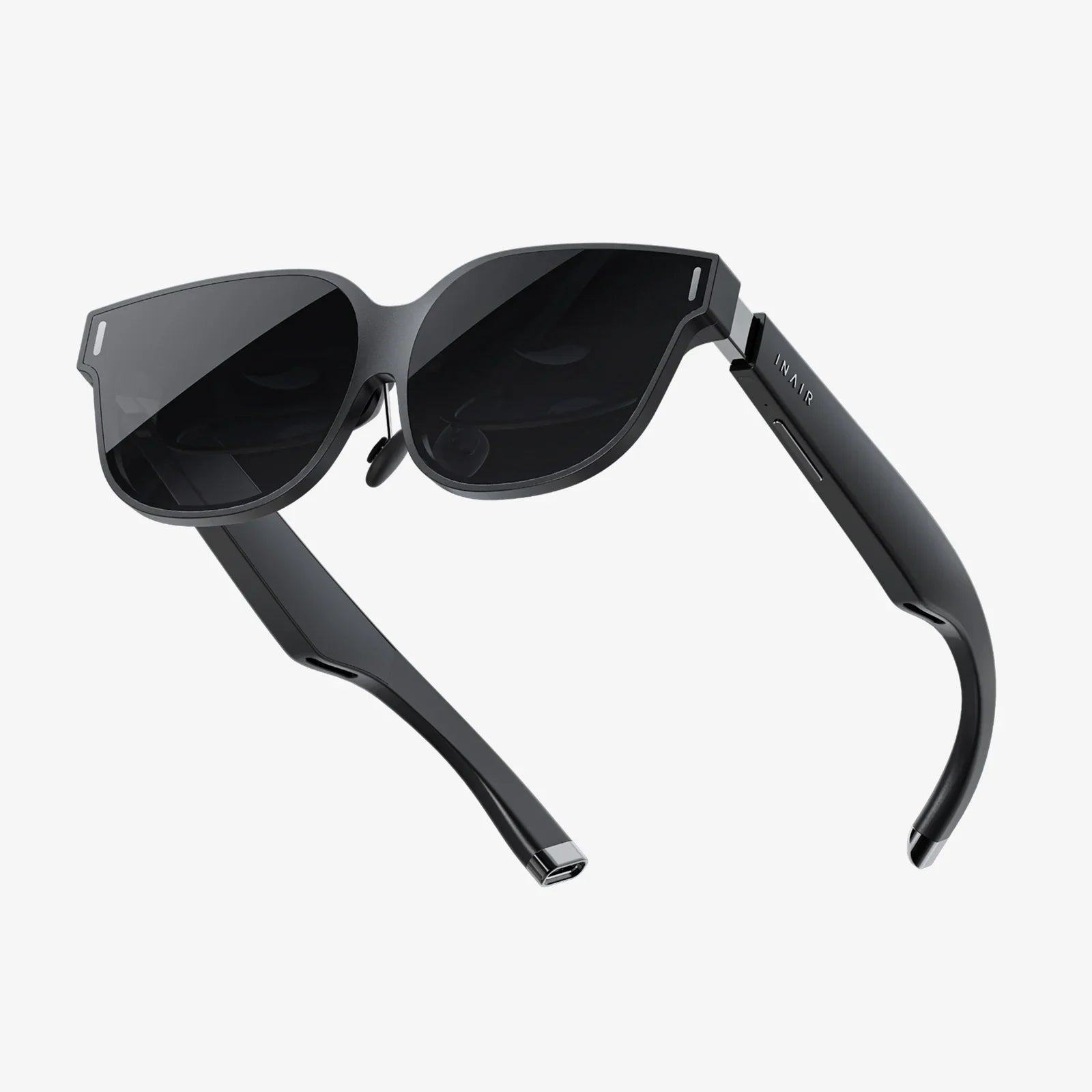
Imagine watching your home videos, your short films, or your documentary footage leap off the screen with a depth and realism you previously thought was reserved for big-budget Hollywood productions. The ability to turn video into 3D is no longer a distant fantasy or a prohibitively complex technical endeavor. It's an accessible, powerful process that is revolutionizing content creation across industries, from independent filmmaking and architectural visualization to education and social media. This technology invites viewers to step inside the moment, transforming passive observation into an active, immersive experience. The journey from a flat rectangle to a window into a living, breathing world is both an art and a science, and it's a journey that is now open to anyone with a creative vision and a willingness to learn.
The Allure of the Third Dimension: Why Depth Captivates Us
Human vision is stereoscopic. We perceive depth naturally because our two eyes, spaced slightly apart, see the world from two different angles. Our brain seamlessly merges these two slightly offset images into a single, coherent picture rich with spatial information. This is why a 3D representation feels so intuitive and engaging—it mimics our innate way of seeing. A traditional 2D video flattens this rich visual information onto a single plane, losing the parallax and depth cues that make a scene feel real. Converting video into 3D is, at its core, the process of reconstructing this lost depth information, creating the illusion of separate left-eye and right-eye views that, when combined, trick the brain into perceiving volume, space, and distance.
Core Techniques for Converting 2D to 3D
The magic of 3D conversion isn't a single trick but a toolbox of techniques, often used in combination. The chosen method depends heavily on the source material, the desired quality, and the available resources.
1. Depth Mapping: The Most Common Approach
This is the fundamental technique behind most modern conversion processes, both automated and manual. It involves creating a grayscale "depth map"—a separate image that accompanies each frame of the original video. In this map, the brightness of each pixel represents its perceived distance from the viewer. Typically, white or light gray pixels are designated as being very close to the viewer, while black pixels represent the distant background, with shades of gray defining everything in between.
Sophisticated software and AI algorithms can analyze a 2D video to automatically generate an initial depth map by recognizing objects, estimating their size and position, and interpreting motion parallax. However, this automated process is rarely perfect. For high-quality results, an artist often needs to manually refine these depth maps, painstakingly painting and adjusting the depth values frame-by-frame to ensure clean edges around objects and a natural, consistent sense of depth throughout the scene.
Once an accurate depth map is created, the software uses it to generate the second-eye view. It shifts pixels horizontally based on their depth value: objects meant to appear closer are shifted more, creating a greater disparity between the left and right views, which the brain interprets as being near. Background elements are shifted very little. This process effectively creates the two distinct images needed for stereoscopic 3D.
2. 2D Plus Depth Format
This technique is a specific application of depth mapping that has become a standard in some fields. It doesn't output a final stereoscopic video directly. Instead, it produces two streams of data: the original 2D video and a synchronized depth map video. This combination is known as the "2D Plus Depth" format.
The major advantage of this format is its flexibility and efficiency. The same 2D video and depth map can be used to render the 3D effect for various displays with different screen sizes and optimal viewing distances. The playback device or software handles the final step of generating the left-eye and right-eye views tailored to its specific hardware. It also allows viewers to potentially adjust the intensity of the 3D effect to their personal preference.
3. AI and Machine Learning: The New Frontier
Artificial intelligence has dramatically accelerated and improved the process of turning video into 3D. Deep learning models can be trained on massive datasets of 3D content and stereoscopic imagery. These models learn the complex relationships between a 2D image and its potential depth structure.
Instead of just following programmed rules, these AI systems make intelligent predictions. They can infer the 3D shape of objects occluded from view, understand complex textures, and maintain temporal consistency—ensuring the depth of an object doesn't flicker or change unnaturally from one frame to the next. This results in more accurate automatic depth maps with far fewer errors around complex edges like hair, fences, or transparent objects. AI is making high-quality conversion faster and more accessible than ever before.
4. Manual Rotoscoping and Projection (The Professional Pipeline)
For the highest-end results, such as in major motion pictures, the process is intensely manual and requires a team of skilled artists. This method involves:
- Rotoscoping: Artists meticulously cut out every significant object in every frame, creating individual mattes for characters, props, and background elements.
- Projection onto Geometry: Simple 3D geometric models (cards, planes, or basic meshes) are created and positioned in a 3D space to represent the objects in the scene.
- Texturing: The original 2D footage is projected onto these 3D models as textures.
- Rendering: A virtual stereoscopic camera is then used to render out the left-eye and right-eye views from this reconstructed 3D scene. Because the scene has true 3D geometry, the parallax and perspective are mathematically perfect.
This method offers the greatest creative control, allowing artists to fix errors, add or remove elements, and fine-tune the depth to the director's exact vision. However, it is extremely time-consuming and expensive.
The Step-by-Step Conversion Process
While the specifics vary by software, a general workflow for turning your video into 3D involves several key stages.
- Source Video Selection: Not all footage is created equal. Videos with a stable camera, clear subjects, and strong depth cues (e.g., a person in the foreground with trees in the background) convert much better than shaky, blurry, or flat footage.
- Software Import and Analysis: The video is imported into a conversion application. The software will perform an initial automated analysis, generating a first-pass depth map.
- Depth Map Refinement: This is the crucial step. Using tools within the software, you will adjust the depth map. This typically involves painting depth onto objects, defining depth planes, and smoothing transitions. This ensures the foreground is properly separated from the midground and background.
- Stereo Pair Generation: The software uses the refined depth map to calculate and generate the second-eye view, creating the full stereoscopic video stream.
- Fine-Tuning and Adjustments: You can adjust parameters like the convergence (where the viewer's eyes are focused) and interocular distance (the virtual distance between the left and right cameras, controlling the strength of the 3D effect). Getting this right is key to a comfortable viewing experience.
- Rendering and Export: Finally, the software renders the finished 3D video into a usable format, such as side-by-side, top-and-bottom, or anaglyph (red/cyan), depending on how you plan to view or distribute it.
Choosing the Right Tools for the Job
The landscape of software for 3D conversion ranges from fully automated consumer apps to professional-grade suites. Many modern video editing applications now include basic 3D conversion or depth effect modules. There are also dedicated standalone applications powered by AI that offer a good balance of automation and manual control, making them ideal for prosumers and independent creators. For the highest echelon of quality and control, the film industry uses powerful, integrated visual effects suites that are part of a larger post-production pipeline. The choice depends entirely on your budget, desired quality, and the amount of time you wish to invest.
Creative Applications and Future Possibilities
The ability to turn video into 3D unlocks a universe of creative potential. Filmmakers can add a dramatic new layer to their storytelling. Educators can create immersive historical recreations or detailed biological explorations. Real estate agents can offer virtual tours with a palpable sense of space. Travel vloggers can make their audiences feel like they are truly standing beside them on a mountain peak. Looking forward, this technology is the gateway to more advanced mediums. The depth maps generated from 2D video are a foundational element for creating content for Virtual Reality (VR) and Augmented Reality (AR) experiences, allowing users to feel truly present within a scene captured by a standard camera.
Challenges and Considerations
The path to perfect 3D is not without its obstacles. The conversion process is computationally intensive and can be very time-consuming, especially for longer, high-resolution videos. Achieving a natural and comfortable 3D effect requires a careful hand; overdoing the depth can cause eye strain and headaches. The most difficult scenes to convert are those with motion blur, reflections, transparent objects (like glass or water), and complex fine details, as these elements often confuse automated depth estimation algorithms. Furthermore, you must consider your delivery platform—how will your audience ultimately view this 3D content? Whether it's on a 3D television, a VR headset, or a mobile device with a parallax barrier screen, the final format must be chosen correctly.
The power to add a new dimension to your existing memories and creations is now at your fingertips. This is not just a technical process; it's a creative reimagining of reality, a chance to breathe new life into flat images and invite your audience to step through the screen and into the world you've captured. The tools are here, the techniques are maturing rapidly, and the only limit is your imagination. What will you bring into depth?
Share:
Virtual Reality Cost in India: A Comprehensive 2024 Price Breakdown Guide
Virtual Reality Headset With Earphones: The Complete Immersive Experience Explained