


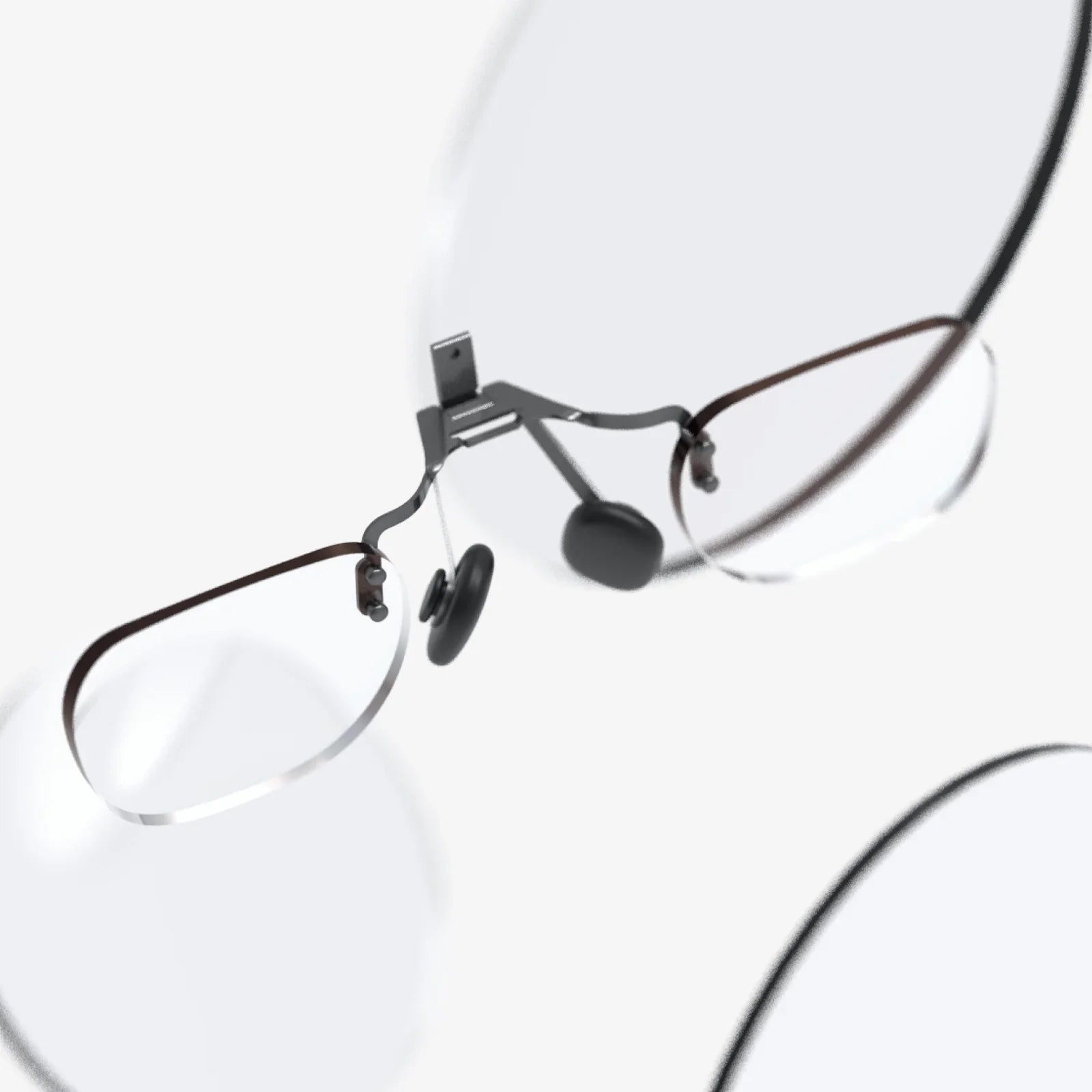
Imagine walking through a sun-drenched park, the sound of birds chirping in your ears, while simultaneously watching the final moments of a championship game on a massive, crystal-clear screen that only you can see. This isn't a scene from a science fiction novel; it's the reality made possible by a revolutionary piece of wearable technology: TV sunglasses. This groundbreaking innovation is redefining the very concept of personal entertainment, merging the sleek, familiar form of premium eyewear with the immersive power of a private cinema, liberating screens from our hands and pockets and placing them directly before our eyes, anywhere we choose to go.
The Technology Behind the Frames: How It All Works
At first glance, a pair of TV sunglasses might be mistaken for a high-end pair of aviators or wayfarers. The magic, however, is hidden within the arms and lenses. The core technology that brings this experience to life is a sophisticated miniaturized optical system. Tiny, high-resolution micro-displays are embedded within the arms of the glasses. These displays project images through a series of precision lenses and onto specially engineered optics within the lenses themselves.
These are not traditional sunglass lenses. Instead, they often employ a technology like waveguide optics or a similar beam-splitting method. This allows the projected digital image to be reflected into the user's eyes while remaining largely transparent. The result is a stunning, floating screen that appears to hover in the mid-distance, typically equivalent to watching a large-screen television from several feet away. The user can see this vibrant, high-definition image superimposed over their real-world surroundings, enabling a unique blend of digital and physical reality, often referred to as augmented reality (AR) or mixed reality.
Beyond the Hype: Tangible Benefits and Use Cases
The appeal of TV sunglasses extends far beyond a simple novelty. They offer a suite of compelling benefits that address specific needs and modern lifestyle challenges.
A Truly Private Cinema
In an increasingly public world, privacy is a premium. Whether you're a commuter wanting to watch a movie without your seatmate glancing over, a student in a shared dorm room, or a professional on a lunch break seeking a mental escape, TV sunglasses offer an unparalleled level of discretion. The screen is visible only to you, creating a personal bubble of entertainment that is immune to prying eyes.
Ultimate Portability and Convenience
These devices eliminate the need to hold a phone or tablet at the perfect angle, struggle with a kickstand, or find a flat surface. Your screen is always perfectly positioned, hands-free. This is a game-changer for travelers, fitness enthusiasts on long cardio sessions at the gym, or anyone who wants to consume content in scenarios where holding a device is impractical or uncomfortable.
Reduced Eye Strain in Bright Environments
Traditional smartphone screens can be difficult to see in direct sunlight, forcing users to squint and max out brightness, which can be harsh on the eyes. TV sunglasses solve this problem inherently. By projecting the image directly onto the retina and being worn as protective eyewear, they provide a consistently clear and viewable display even on the brightest days, all while shielding your eyes from harmful UV rays.
Accessibility and Multitasking Potential
For individuals with certain mobility challenges or those who need to keep their hands free for other tasks—from cooking and crafting to light manual work—this technology can be incredibly empowering. It allows for continuous viewing without physical interaction. Furthermore, the AR capabilities open doors for contextual information display, navigation prompts, and more, layering useful data onto the real world.
Navigating the Considerations and Current Limitations
As with any emerging technology, the current generation of TV sunglasses is not without its drawbacks. A prospective user must weigh these factors carefully against the benefits.
Battery Life: The Power Dilemma
Powering two high-resolution displays, speakers, and Bluetooth modules requires significant energy. While battery technology continues to improve, many models offer between 3 to 6 hours of continuous video playback. This is often managed by housing the battery in a slightly thicker arm or a separate small pod that connects to the glasses via a short cable, which can be tucked into a pocket. For long-haul flights or all-day use, an external power bank becomes an essential companion.
Audio Experience: Private but Not Always Perfect
Audio is delivered either through tiny, open-ear bone conduction speakers that vibrate sound through your cheekbones or small directional speakers in the arms. While this keeps you aware of your surroundings—a critical safety feature—the audio quality can lack the deep bass and richness of high-end headphones. Audio can also sometimes be faintly heard by those in very close proximity in quiet environments. Most models include a standard audio jack or Bluetooth connectivity for pairing with your own private headphones for a more immersive and higher-fidelity sound experience.
The Field of View Compromise
The virtual screen, while impressively large for a wearable device, does not fill your entire field of vision. It appears as a fixed rectangle in the upper portion of your view. This can be compared to looking at a large TV in a room rather than being inside an IMAX dome. Users must learn to focus on the screen while their peripheral vision remains aware of their surroundings. This split attention can be distracting for some, though many adapt to it quickly.
Style and Social Acceptance
While design is rapidly improving, the technology's components can sometimes lead to frames that are bulkier than standard sunglasses. Furthermore, wearing sunglasses indoors or in low-light conditions can draw curious glances and might be considered socially awkward in certain settings. However, as the technology becomes more common, this perception is likely to fade, much as it did with Bluetooth earpieces and smartwatches.
The Future is Clear: Where This Technology is Headed
The current iteration of TV sunglasses is merely the first step onto a much larger stage. The trajectory of this technology points toward a future where digital and physical realities are seamlessly intertwined. We can anticipate several key advancements:
Enhanced Integration: Future models will be lighter, slimmer, and indistinguishable from regular fashion eyewear, with improved battery technology distributed more elegantly throughout the frame.
Spatial Computing and AR: The move from a simple floating screen to true interactive augmented reality is the next frontier. Imagine navigation arrows painted onto the street in front of you, real-time translations of foreign signs overlaying the text, or interactive diagrams floating beside a machine you are learning to repair.
Ecosystem Expansion: As the platform matures, we will see a richer ecosystem of apps specifically designed for this glasses-first format, moving beyond video playback into gaming, productivity, social connection, and remote collaboration.
Improved Visual Fidelity: Displays will offer higher resolutions, wider fields of view, better contrast, and more adaptive brightness to make the virtual screen even more convincing and comfortable for extended use.
TV sunglasses represent a bold leap toward a more integrated and personal digital life. They challenge the status quo of how we interact with media, offering a glimpse into a future where our technology adapts to our environment and our lives, rather than the other way around. They are not just a new gadget; they are a new paradigm for visual consumption.
Forget crowded commutes and sun-glared screens; the future of personal viewing is already here, perched comfortably on the bridge of your nose, offering a world of entertainment hidden in plain sight, waiting for you to hit play.
Share:
Walking Tablet The Ultimate Guide to Portable Computing on the Go
Hologram 3D Projection: The Future of Immersive Technology Unveiled