


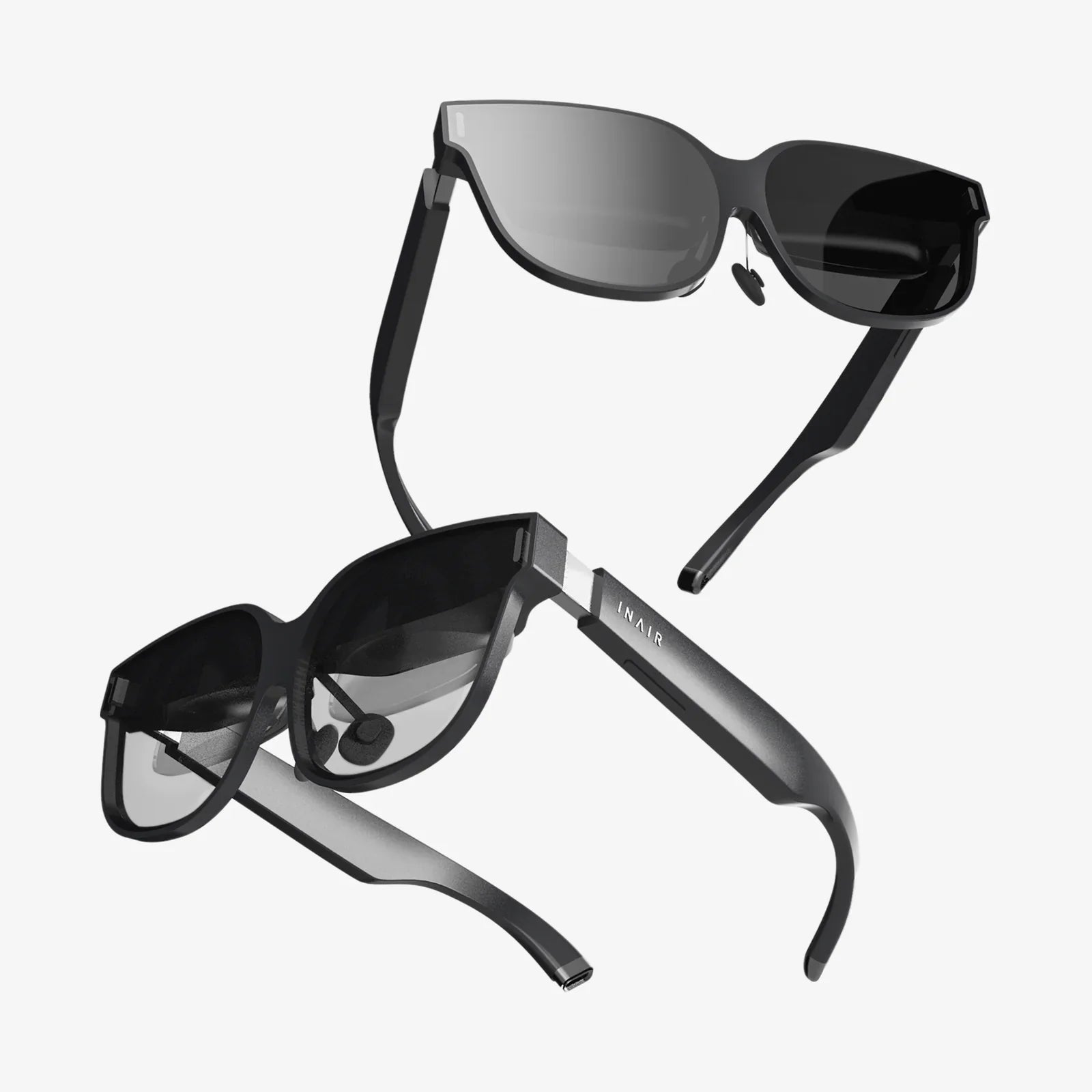
Imagine a world where digital instructions float over your engine as you repair it, where historical figures materialize in your living room to tell their stories, and your workspace is limited only by your imagination, not by physical screen size. This is the promise of augmented reality (AR), a technology not confined to science fiction but actively being built and deployed today. The gateway to these experiences is not a single device but a rapidly evolving spectrum of hardware, each designed for a specific purpose and user. Understanding the different types of augmented reality devices is the first step to grasping how this transformative technology will integrate into our personal and professional lives, reshaping everything from manufacturing and medicine to entertainment and everyday communication.
The Foundation: How AR Devices Create the Illusion
Before categorizing the devices themselves, it's crucial to understand the core components that allow them to function. While implementations vary, most AR devices share a common set of technological foundations that merge the physical and digital worlds.
Sensors and Cameras: The Eyes of the Device
The device must first perceive and understand its environment. This is achieved through a suite of sensors, which typically include:
- RGB Cameras: These standard cameras capture the user's real-world view, which forms the canvas for digital overlay.
- Depth Sensors: Using technologies like structured light or time-of-flight, these sensors measure the distance to objects, creating a 3D map of the surroundings. This allows digital objects to occlude, or be occluded by, real-world objects, a critical factor for immersion.
- IMUs (Inertial Measurement Units): These accelerometers, gyroscopes, and magnetometers track the precise movement, rotation, and orientation of the device itself in real-time.
- LiDAR (Light Detection and Ranging): Particularly common in mobile AR and some headsets, LiDAR scanners fire out laser pulses to measure distances and create highly accurate 3D environmental models with incredible speed.
Processing: The Brain Behind the Magic
The data from the sensors is meaningless without significant computational power to process it. This happens in one of two ways:
- On-Device Processing: Higher-end dedicated headsets contain sophisticated processors and graphics units (GPUs) that handle the complex tasks of environmental mapping, rendering high-fidelity 3D graphics, and running the AR experience all on the device. This offers low latency and untethered freedom.
- Off-Device Processing (Cloud/Computer): Some systems, particularly earlier models, offload the heavy computational work to a connected smartphone or a nearby powerful computer connected via a cable. This allows for more graphically intense experiences but can limit mobility.
Displays and Projectors: Painting Light onto the World
This is the component that actually creates the augmented visual. There are several primary methods:
- Optical See-Through: Users look directly at the real world through transparent lenses (like clear glass or plastic). Miniature projectors within the device's frame then beam light onto these lenses, which reflect it into the user's eyes, superimposing the image onto their real-world view. This is common in smart glasses.
- Video See-Through: Cameras on the outside of a headset capture the real world in real-time. The processor then composites the digital graphics onto this video feed, and the combined image is displayed on opaque screens inside the headset. This allows for more control over the blend of real and virtual but can sometimes introduce a slight lag.
- Retinal Projection: An emerging technology that projects light directly onto the user's retina. This can create images that appear incredibly sharp and bright while allowing the device itself to be very small and lightweight, as it doesn't require a traditional screen.
Category 1: Handheld AR Devices - The Gateway to Augmentation
The most accessible and widespread type of AR device is the one already in billions of pockets: the smartphone and tablet. These handheld devices leverage their built-in cameras, sensors, and processing power to deliver AR experiences through the screen.
Defining Characteristics
Handheld AR uses the device's screen as a viewport into an augmented world. Users point their camera at a trigger image, location, or simply their surroundings, and digital content appears on the display. This is often called "magic window" AR.
Primary Use Cases and Applications
- Consumer Gaming and Entertainment: The success of games like Pokémon GO demonstrated the mass-market appeal of mobile AR, blending gameplay with physical location.
- Retail and E-Commerce: Apps allow users to visualize furniture in their home, try on watches or makeup, or see how a new car would look in their driveway before making a purchase.
- Navigation and Tourism: AR overlays directional arrows onto a live street view for easier navigation or can resurrect historical scenes when pointing a phone at a monument.
- Marketing and Advertising: Packaging, posters, and print ads can come to life with animated content when viewed through a dedicated app.
Advantages and Limitations
Advantages: Ubiquity and low cost of entry; no additional hardware needed for most users; powerful processors in modern devices; easy to develop for.
Limitations: The experience is not hands-free; the field of view is constrained to the size of the screen; holding the device up for long periods can cause fatigue; it often lacks the depth-sensing precision of dedicated hardware.
Category 2: Smart Glasses - The Subtle Shift to Always-On AR
Smart glasses represent the next evolutionary step, aiming to integrate AR seamlessly into the user's field of vision in a form factor that resembles traditional eyewear. The goal is contextual, glanceable information that doesn't require a handheld screen.
Defining Characteristics
These are typically lightweight glasses that use optical see-through displays. They are designed for all-day wear, offering information like notifications, directions, and simple data overlays directly in the periphery of the user's vision. They often rely on a connected smartphone for processing and connectivity.
Primary Use Cases and Applications
- Enterprise and Logistics: Warehouse workers can see picking instructions and inventory data without looking down at a scanner or clipboard, keeping their hands and focus free.
- Remote Assistance: A field technician can stream their view to a remote expert who can then annotate the real world in front of them with arrows and notes to guide a repair.
- Consumer Lifestyle: Receiving navigation cues, message previews, or workout stats without interrupting the primary activity like walking, cycling, or running.
- Accessibility: Providing real-time captions for conversations for the hearing impaired or translating foreign text on signs and menus instantly.
Advantages and Limitations
Advantages: Hands-free operation; always-available information; socially acceptable form factor; long battery life for specific tasks.
Limitations: Limited field of view for the digital content; often less powerful processing, leading to simpler graphics; display brightness can struggle in direct sunlight; privacy and social acceptance questions around discreet recording.
Category 3: Standalone AR Headsets - The Power of Untethered Immersion
Standalone headsets are all-in-one systems that package the sensors, processors, and batteries into a single head-worn unit. They represent a significant leap in capability from smart glasses, offering a much more immersive and interactive experience, often at the cost of a bulkier form factor.
Defining Characteristics
These devices are fully self-contained, requiring no wires to a phone or computer. They typically use video see-through technology, offering high-fidelity passthrough video of the real world with digital objects composited on top. They feature advanced inside-out tracking (using their own sensors to map the world, not external beacons) and come with dedicated controllers for precise interaction.
Primary Use Cases and Applications
- Industrial Design and Engineering: Architects and engineers can collaborate around a full-scale 3D model of a building or product prototype, making changes in real-time.
- Advanced Training and Simulation: Medical students can practice complex procedures on virtual anatomy; mechanics can learn to service new equipment with step-by-step holographic guides overlaid on physical machinery.
- Collaborative Workspaces: Remote teams can meet in a shared virtual space with whiteboards, 3D models, and documents, all while seeing each other's avatars and interactions.
Advantages and Limitations
Advantages: Complete untethered freedom; powerful processing for complex rendering; high immersion with a wide field of view; precise hand-tracking and interaction.
Limitations: Bulkier and heavier design, leading to shorter comfortable usage sessions; higher cost; often focused on enterprise, not consumer, markets; battery life is limited by the intense computational demands.
Category 4: Tethered AR Headsets: Maximum Fidelity for Specialized Tasks
For applications where graphical fidelity and processing power are paramount, tethered headsets offer a solution. These devices sacrifice mobility for performance by connecting via a high-speed cable to a powerful external computer.
Defining Characteristics
The defining trait is the physical tether—a cable that provides both power and a data connection to a desktop-grade GPU. This allows them to offload all rendering work, enabling them to display incredibly detailed and complex holograms with minimal latency.
Primary Use Cases and Applications
- High-End Medical Visualization: Superimposing incredibly detailed, real-time 3D scans from MRI or CT machines directly onto a patient's body during surgical planning.
- Complex Automotive and Aerospace Design: Visualizing and interacting with every component of a vehicle or aircraft engine at life-size scale, with photorealistic detail.
- Research and Development: Scientists can visualize complex data sets, from molecular structures to astrophysical simulations, in a shared physical space.
Advantages and Limitations
Advantages: Unmatched graphical performance and realism; ability to handle enormous data sets; often more precise tracking due to external sensors.
Limitations: Complete lack of mobility; very high cost of the entire system (headset + powerful computer); setup is more complex; the cable can be a significant impediment to movement and a safety hazard.
Category 5: Specialized and Emerging AR Form Factors
Beyond the main categories, innovation continues to push the boundaries of what an AR device can be, leading to specialized hardware for unique applications and experimental form factors that hint at the future.
AR Contact Lenses and Retinal Displays
The ultimate goal for many is the complete invisibility of the hardware. Several companies are developing AR contact lenses that embed microscopic circuitry and displays to project information directly onto the eye. Similarly, retinal projection systems aim to do this without touching the eye, creating vast, crisp images from a tiny device. These technologies are still in early stages but promise a future where AR is as unobtrusive as normal vision.
Vehicle-Integrated AR
Modern automobiles are increasingly becoming AR platforms. Using forward-facing cameras and sensors, they project critical information like navigation arrows, speed, and safety alerts directly onto the windshield in the driver's line of sight. This is a form of head-up display (HUD) scaled into a full AR experience, highlighting the lane you need to be in or identifying hazards on the road ahead.
The Future Horizon: Where AR Hardware is Headed
The trajectory of AR devices is clear: they are moving towards greater integration, higher performance, and more natural interaction. We are progressing from holding a window to augmentation, to wearing it, to eventually seeing it as a natural part of our perception. The convergence of 5G connectivity, edge computing, and artificial intelligence will further empower these devices, allowing them to understand context and intent in real-time. The boundaries between device categories will blur, giving rise to a new generation of adaptive eyewear that can switch from the subtle information of smart glasses to the immersive power of a standalone headset based on the task at hand. The hardware is evolving from a novelty into an indispensable tool, a new lens through which we will fundamentally reimagine how we work, learn, connect, and explore the world around us.
The digital and physical realms are on a collision course, and the diverse array of augmented reality devices are the lenses bringing this fusion into focus. From the smartphone in your hand to the experimental prototypes on the horizon, each piece of hardware is a key unlocking a different dimension of our augmented future, promising to reshape reality itself from the ground up.
Share:
VR Headset Black: The Ultimate Guide to Stealth, Style, and Immersion
VR Headset Price India: A Complete Guide to Costs, Choices, and Value in 2024