


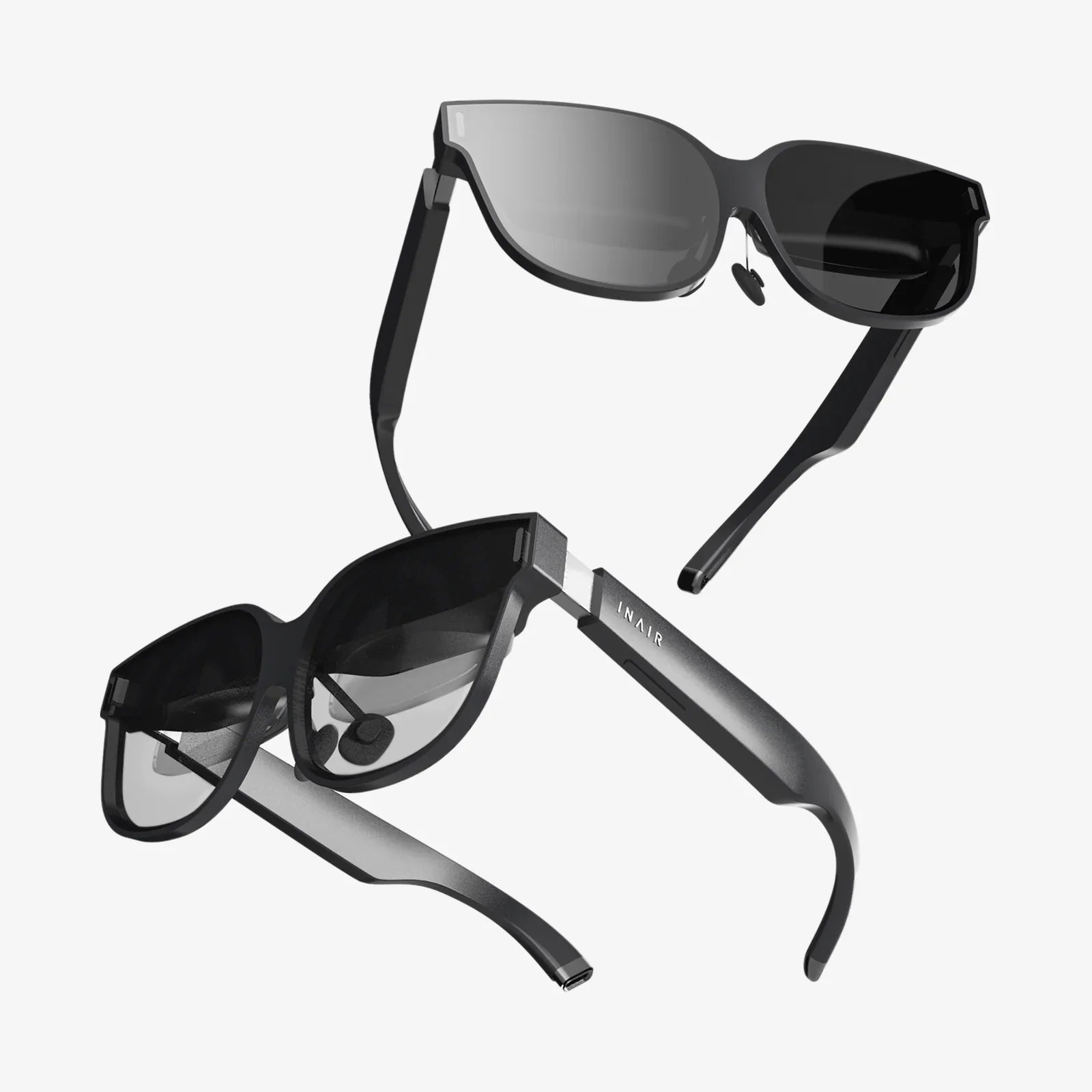
The digital and physical worlds are colliding in spectacular fashion across the United Kingdom, not in a destructive crash, but in a harmonious and transformative fusion powered by Augmented Reality (AR). From the high streets of London to the manufacturing floors of the Midlands, a quiet revolution is underway, reshaping how we shop, learn, work, and play. The UK augmented reality market is not a distant sci-fi fantasy; it is a vibrant, present-day economic force, a crucible of innovation where British creativity meets cutting-edge technology to create experiences that were unimaginable just a decade ago. This is more than a trend; it is a fundamental shift in human-computer interaction, and the UK is positioned firmly at its forefront, making it one of the most compelling and dynamic sectors to watch.
The Engine Room: Key Drivers Propelling the UK AR Market
The remarkable growth of the UK's AR ecosystem is not accidental. It is the direct result of a powerful confluence of technological, economic, and social factors creating a perfect storm of opportunity.
Technological Ubiquity and Advancement
The single most significant driver has been the near-universal penetration of powerful smartphones and tablets. These devices, equipped with high-resolution cameras, sophisticated sensors, powerful processors, and fast mobile connectivity, have placed an AR-capable device in the pocket of millions of UK consumers. This eliminated the need for expensive, specialised hardware, democratising access to AR experiences instantly. Furthermore, the development of robust software development kits (SDKs) and accessible game engines has empowered a new generation of developers and creators to build sophisticated AR applications without starting from scratch, dramatically accelerating innovation and content creation.
Robust Digital Infrastructure
The UK's extensive rollout of high-speed fibre broadband and increasingly comprehensive 5G networks provides the essential backbone for rich, complex, and real-time AR experiences. 5G's low latency and high bandwidth are particularly crucial for cloud-based AR, where heavy rendering is processed remotely and streamed seamlessly to a user's device. This infrastructure enables more detailed models, smoother tracking, and multi-user experiences in real-time, pushing the boundaries of what is possible outside a controlled Wi-Fi environment.
Thriving Investment and Support Ecosystem
London is a global financial hub, and venture capital, private equity, and corporate investment have flowed steadily into the UK's AR sector. Investors are recognising the vast potential for returns across various applications, from retail and marketing to enterprise solutions. This is complemented by significant government support through grants, tax incentives for research and development (R&D), and initiatives aimed at fostering digital skills. The presence of world-leading universities, such as Oxford, Cambridge, and Imperial College London, provides a constant pipeline of research in computer vision, machine learning, and human-computer interaction, feeding talent and innovation directly into the market.
Shifting Consumer and Business Sentiment
The COVID-19 pandemic acted as a profound catalyst, accelerating digital adoption by several years. Businesses and consumers were forced to find new ways to engage, shop, and work remotely. AR provided solutions: virtual try-ons replaced fitting rooms, remote assistance via AR guided repairs without travel, and AR manuals helped people assemble products at home. This period proved the practical utility and value of AR, moving it from a perceived gimmick to a legitimate tool for solving real-world problems, thereby building lasting trust and acceptance.
Transforming Industries: The Practical Application of AR
The true measure of the UK AR market's significance lies in its diverse and impactful applications across the economy. It is moving beyond marketing flash to become a core operational technology.
Retail and E-commerce: Reimagining the Shopping Experience
The retail sector has been one of the earliest and most enthusiastic adopters of AR. UK retailers, from global fashion brands to niche furniture makers, are leveraging AR to bridge the gap between online convenience and in-store confidence. Shoppers can now visualise how a sofa will look in their living room, accurately judging its scale and colour against their existing decor. In fashion, virtual try-on applications allow customers to see how glasses, makeup, or even clothes will look on them, drastically reducing purchase uncertainty and return rates. This is revolutionising the path to purchase, enhancing customer engagement, and providing rich data on consumer preferences.
Manufacturing, Engineering, and Logistics
Perhaps the most value-generating applications of AR are emerging in industrial settings. On factory floors, workers wearing AR smart glasses can see digital overlays of assembly instructions, wiring diagrams, or safety information directly onto the machinery they are working on, freeing their hands and reducing errors. This technology enables complex remote expert assistance, where a specialist located anywhere in the world can see what a field technician sees and provide visual annotations and guidance in real-time, minimising downtime and travel costs. In logistics and warehousing, AR can visually guide pickers to items, optimising routes and dramatically improving packing and inventory management accuracy.
Healthcare and Medicine: Enhancing Care and Training
The UK's healthcare sector is exploring AR with tremendous potential. Surgeons can use AR overlays to visualise patient anatomy, such as veins, tumours, or bone structures, directly on the patient during procedures, increasing precision and safety. Medical students can learn anatomy through interactive 3D holograms of the human body, and AR can be used for physiotherapy, providing patients with real-time visual feedback on their movements. These applications promise to improve patient outcomes, enhance medical training, and streamline complex clinical processes.
Education and Training: Interactive Learning
AR is turning traditional learning on its head by making it immersive and interactive. History students can explore historical sites reconstructed in their classroom, science students can manipulate 3D models of molecules or volcanoes, and mechanics-in-training can practice on virtual engines. This experiential learning boosts engagement, improves knowledge retention, and provides safe training environments for high-risk skills. UK educational institutions and ed-tech companies are investing heavily in this space to create the next generation of learning tools.
Tourism, Culture, and Heritage
The UK's rich history and cultural landscape provide a perfect canvas for AR. Museums are using AR to bring exhibits to life, allowing artefacts to tell their stories or showing ancient ruins in their former glory. Tourists exploring cities can point their phones at landmarks to see historical information, reconstructions of past events, or navigation cues overlaid onto the real world. This adds a deep, engaging layer of storytelling to the tourism experience, making heritage more accessible and captivating for all ages.
Navigating the Hurdles: Challenges and Considerations
Despite its promising trajectory, the UK AR market must navigate several significant challenges to achieve widespread, sustainable growth.
Technical Limitations and User Experience
While smartphone-based AR is widespread, it still faces issues with battery drain, accurate spatial mapping in varied lighting conditions, and occasional glitches that can break immersion. The user experience must be seamless and genuinely valuable to move beyond novelty. For wearable AR glasses—the next evolutionary step—challenges remain around design (making them socially acceptable and comfortable), battery life, processing power, and developing a compelling enough reason for consumers to wear them daily.
Data Privacy and Security
AR applications, by their very nature, are intensely data-hungry. They process real-time video and spatial data of a user's immediate environment. This raises critical questions about data ownership, storage, and usage. How is this sensitive environmental data secured? Could it be used for unauthorised surveillance? The market must develop and adhere to robust, transparent ethical frameworks and data privacy standards to build and maintain public trust.
Content Creation and the Skills Gap
Creating high-quality, interactive 3D content is complex, time-consuming, and expensive. There is a growing skills gap in the UK for professionals skilled in 3D modelling, spatial design, and AR-specific development. For businesses, the challenge is not just in developing one-off AR experiences but in integrating them sustainably into their workflows and digital strategy, which requires a new set of internal skills and understanding.
The Future is Overlaid: What Lies Ahead for the UK AR Market
The future of the UK AR market is inextricably linked to the development of the metaverse—a persistent network of interconnected 3D virtual spaces. AR will act as the primary gateway to this new digital layer of reality, blending the virtual and physical into a seamless continuum. We can expect the rise of the spatial web, where digital information is contextually anchored to locations and objects in the real world, accessible through AR interfaces. As wearable technology evolves towards more elegant and powerful glasses, we will move from pulling out our phones for AR to living with a constant, ambient digital layer that enhances our perception and interaction with the world around us. The UK, with its strong foundation in creative industries, finance, and technology, is uniquely positioned to be a global leader in defining this next chapter of the internet.
Imagine a Britain where your glasses help you navigate a city with arrows on the pavement, translate street signs instantly, and display the history of the building you're looking at. Envision surgeons across the NHS collaborating in real-time over a shared AR view of a patient, or engineers designing complex machinery in mid-air before a single piece of metal is cut. This is the promise of the UK augmented reality market—a promise that is rapidly becoming a reality, transforming the nation into a living, breathing canvas for digital innovation that will redefine everyday life for generations to come.
Share:
How Much Are Virtual Glasses? A Deep Dive into the Cost of Immersive Tech
How Is Augmented Reality Reshaping Marketing From Gimmick to Game-Changer