


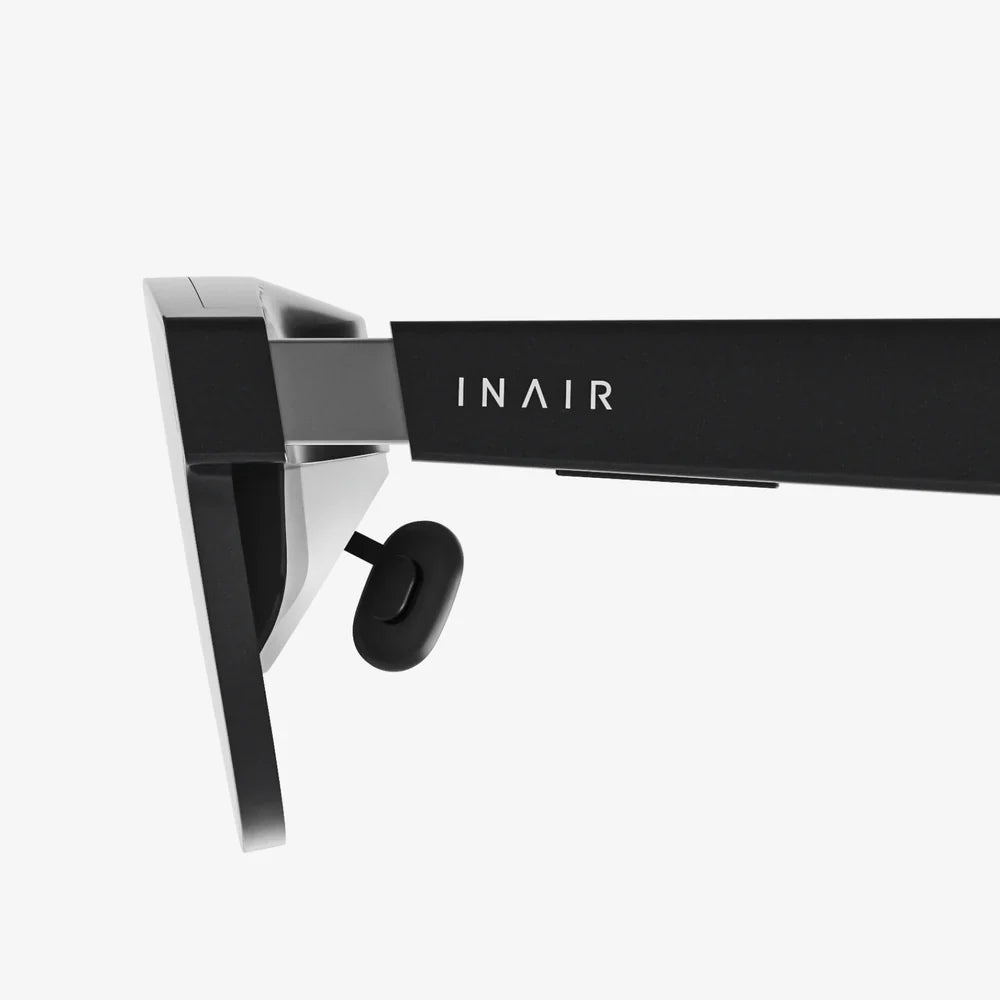
Imagine a world where the digital and the physical are no longer separate realms, viewed on isolated screens, but a single, unified experience. A world where information, entertainment, and social connection are woven directly into the fabric of your perception, accessible with a glance and interactable with a gesture. This is the profound promise held within the concept of Unity AR glasses—a promise that extends far beyond a simple technological upgrade to become a fundamental shift in how we compute, communicate, and comprehend the world around us. This isn't about replacing reality; it's about enhancing it, enriching it, and unifying it with the boundless potential of the digital universe.
The Architectural Foundation: More Than Just Lenses and Processors
At its core, the magic of immersive augmented reality experiences is built upon a sophisticated technological stack. Unlike virtual reality, which seeks to transport you elsewhere, AR aims to bring digital elements here. This requires a delicate dance of hardware and software working in perfect synchrony.
The hardware suite is a marvel of miniaturization. High-resolution, transparent waveguide displays project vivid imagery onto the lenses, allowing users to see both the digital overlay and the real world simultaneously. Advanced spatial mapping sensors, including LiDAR, depth cameras, and inertial measurement units (IMUs), constantly scan the environment. They create a real-time, three-dimensional understanding of the space—identifying floors, walls, tables, and other objects. This digital twin of the physical world is crucial for anchoring holograms convincingly, ensuring a virtual cat walks convincingly across your real sofa rather than floating eerily in mid-air.
But hardware is only half the story. The true brain of the operation is the software platform. This is where the concept of unity truly takes shape. A robust AR operating system must manage immense computational workloads: simultaneous localization and mapping (SLAM), gesture recognition, eye-tracking, and persistent cloud-anchored content. It provides the essential tools and frameworks for developers to create experiences that feel native to this new medium, abstracting away immense complexity so they can focus on creativity and user experience.
Redefining Human Connection and Collaboration
One of the most transformative applications for this technology lies in reshaping human interaction. Traditional video calls, with their grid of faces on a flat screen, are a poor facsimile of being in the same room. Unity AR glasses have the potential to shatter this barrier.
Imagine collaborating with a team of engineers from across the globe on a new engine design. Instead of sharing a 3D model on a monitor, a life-sized, photorealistic hologram of the engine appears in the center of your workshop. Your colleagues, represented by realistic avatars or even volumetric video captures, stand around it with you. One can point to a specific component, another can pull up a schematic that floats beside it, and a third can run a simulation showing airflow patterns in real-time. You are all sharing a single, unified context, manipulating the same digital object as if it were physically present. This shared spatial understanding eliminates misinterpretation and supercharges productivity.
On a personal level, this technology could revolutionize how we stay connected with loved ones. Instead of looking at a screen, you could see a holographic representation of a family member sitting on your couch, able to share in your environment and experiences more naturally. Watching a movie together, touring a museum, or simply sharing a meal could take on a new depth of presence, making geographical distance feel less significant.
Transforming Industries and Professional Workflows
The professional world stands to be utterly transformed by the practical applications of unified augmented reality. The ability to overlay critical information directly onto a worker’s field of view is a powerful tool for efficiency, accuracy, and safety.
- Manufacturing and Repair: A technician performing maintenance on a complex machine could see animated repair instructions overlaid directly on the components they are working on. Arrows could point to specific bolts to remove, torque values could be displayed next to each nut, and warnings could highlight live wires. This hands-free access to knowledge reduces errors, speeds up training, and empowers workers.
- Healthcare: Surgeons could have vital signs, 3D anatomical models from pre-op scans, and other critical data visualized in their periphery during procedures. Medical students could learn anatomy by walking through a life-sized, interactive hologram of the human body. This unified view of patient information and human biology can enhance precision and improve outcomes.
- Architecture and Design: An architect could walk through a full-scale holographic model of a new building long before ground is broken, assessing sightlines and spatial flow. Interior designers could place virtual furniture in a client’s empty living room, allowing them to see and adjust the layout in real-time. This bridges the gap between abstract design and physical reality.
- Logistics and Warehousing: Warehouse pickers could have optimal routes and item locations highlighted on their lenses, guiding them instantly to the correct shelf and verifying they have the right product, dramatically increasing fulfillment speed and reducing errors.
The New Frontier of Entertainment and Storytelling
Entertainment will cease to be something we watch and become something we live inside. This represents a fundamental evolution in storytelling, from passive observation to active participation within a unified narrative space.
Gaming will be the most obvious beneficiary. Instead of controlling a character on a screen, you become the protagonist in your own environment. A puzzle game could transform your living room into an ancient temple, with hidden switches disguised as books on your shelf. A strategy game could see epic battles play out across your coffee table. A fitness game could turn your local park into a fantastical landscape filled with challenges. The physical world becomes the game level, creating a unique and deeply personal experience.
Beyond gaming, imagine immersive theater experiences where digital characters interact with your real environment, or guided narrative tours of historical cities where historical events unfold around you. Artists could create dynamic sculptures that exist only in augmented space, viewable from every angle and changing over time. The very definition of art and performance will expand to encompass this new blended reality.
Navigating the Path to Widespread Adoption
For all its potential, the path to a world where these devices are as commonplace as smartphones is fraught with significant challenges that must be thoughtfully addressed.
Technical Hurdles: The devices must become smaller, lighter, more powerful, and have all-day battery life. The visual fidelity needs to be nearly perfect, with high-resolution graphics that seamlessly blend with real-world lighting to maintain the illusion. Solving the "vergence-accommodation conflict"—where your eyes struggle to focus on holograms that appear at a different depth than the screen projecting them—is critical for long-term comfort.
The Social Contract: The always-on, always-sensing nature of these devices raises profound questions about privacy and etiquette. How do we prevent unauthorized recording? What does consent look like in a world where you might be inadvertently captured in someone else's AR experience? Establishing clear social norms and robust privacy-protecting technologies will be essential for public acceptance.
Digital Equity and Accessibility: There is a risk that this powerful technology could create a new digital divide. Ensuring it is accessible, affordable, and designed for people with diverse abilities from the outset is not just ethical but necessary for its success as a unifying platform.
A Unified Future, Waiting to Be Drawn
The journey toward truly seamless augmented reality is not a sprint; it's a marathon of innovation, iteration, and careful consideration. The first generations of devices will be imperfect, likely targeting developers and specific enterprises. But with each cycle, the technology will become more refined, more intuitive, and more integrated into the fabric of our daily lives.
The ultimate goal is a state of calm computing, where technology fades into the background, and the information we need simply appears when and where we need it. It’s a future where our digital tools augment our human capabilities without demanding our constant attention, where the boundary between the digital and the physical finally dissolves into a cohesive and intelligent whole. The potential is not just to change what we see on a screen, but to change how we see the world itself, unlocking new layers of understanding, creativity, and connection that we are only beginning to imagine.
The horizon glimmers with the potential of a world remade, not through replacement, but through harmonious integration. The tools to overlay a universe of knowledge, narrative, and human connection onto our immediate reality are moving from science fiction into tangible prototypes. This emerging technology promises to be the most intimate and powerful interface we have ever devised, transforming every room into a potential workspace, every street into a potential game level, and every interaction into a potentially shared experience. The next great platform for human experience is being built not on a desk or in a pocket, but directly within our line of sight, waiting for us to put it on and see everything in a new, unified light.
Share:
Virtual Reality Adult Entertainment: The Unprecedented Digital Frontier Reshaping Intimacy
How Do You Watch Virtual Reality Videos: A Complete Immersive Guide