


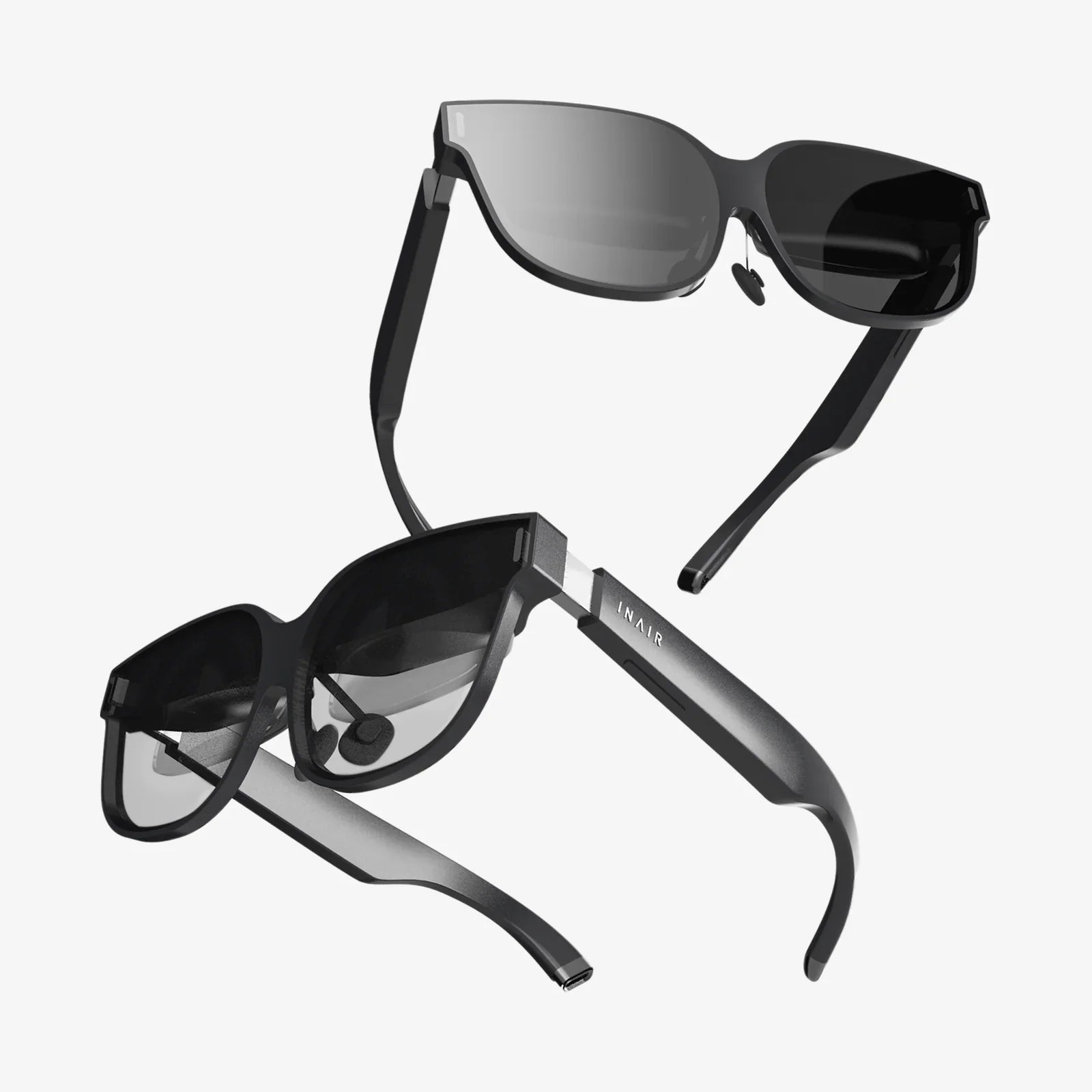
The whispers are getting louder, the rumors more specific, and the anticipation is reaching a fever pitch. Across tech forums and industry analyst reports, one topic dominates: the upcoming smart glasses release. This isn't just another gadget launch; it feels like the precursor to a fundamental shift in how we perceive and interact with technology. We are standing on the precipice of a new era, where the digital and physical worlds will not just coexist on a screen we hold, but will seamlessly merge within our field of vision. The upcoming smart glasses release promises to be the key that unlocks this augmented reality, moving computing from our pockets and onto our faces, and it’s set to change everything.
The Long Road to Now: From Concept to Imminent Reality
The dream of smart glasses is not new. For decades, science fiction has painted vivid pictures of characters accessing information, communicating, and interacting with digital overlays through their eyewear. Early attempts to realize this vision were ambitious but ultimately stumbled, hampered by clunky designs, limited battery life, underwhelming processing power, and a lack of compelling use cases that justified their existence. They were often solutions in search of a problem.
However, these early iterations were not failures; they were necessary prototypes. They provided invaluable lessons in miniaturization, user interface design, and heat dissipation. They taught developers what users would and would not tolerate on their faces. In the years since, a silent revolution has been underway in the labs of tech giants and ambitious startups. Breakthroughs in micro-optics, ultra-low-power processors, compact sensor arrays, and artificial intelligence have converged to make the dream not just possible, but commercially viable. The upcoming smart glasses release is the culmination of this decades-long journey, representing a maturity of technology finally ready for the mainstream.
Beyond the Hype: The Core Technologies Powering the Revolution
So, what makes this upcoming smart glasses release different? The answer lies in a sophisticated symphony of cutting-edge components working in harmony.
Advanced Optical Systems and Displays
The most critical and challenging component is the display. The goal is to project crisp, bright, and interactive digital images onto the real world without obstructing the user's natural vision. The leading technology for this is waveguide optics, often coupled with micro-LED or Laser Beam Scanning (LBS) projectors. These systems pipe light into a transparent lens, creating the illusion that digital objects are part of the physical environment. The advancements here focus on achieving a large "eyebox" (the area within which the image is visible), high resolution, vibrant colors, and sufficient brightness to be visible even in direct sunlight—all while maintaining a form factor that resembles regular eyeglasses.
The Invisible Brain: AI and Machine Learning
Hardware is only half the story. The true intelligence of the upcoming smart glasses release will be powered by sophisticated on-device and cloud-based AI. This is what will transform raw sensor data into contextual understanding. Machine learning algorithms will enable features like real-time language translation, where spoken foreign words are instantly transcribed and translated into text within your view. Object recognition will allow the glasses to identify a landmark and display its history, or recognize a product on a shelf and show you reviews and price comparisons. This contextual, ambient computing, where information appears precisely when and where you need it, is the core promise of AI-driven augmented reality.
A New Interface Paradigm: Voice and Gesture
Without a traditional keyboard or touchscreen, interaction requires a new language. Voice assistants will become more powerful and conversational, acting as a primary control mechanism. However, the upcoming smart glasses release will likely go a step further, incorporating precise gesture recognition. Tiny inward-facing cameras or other sensors will track subtle finger movements, allowing users to swipe through menus, select items, or zoom in on virtual objects with a flick of the wrist. This creates a private, intuitive, and hands-free interface that feels like magic.
A World Transformed: The Profound Impact on Daily Life
The applications for this technology extend far beyond novelty. They promise to augment human capability across nearly every facet of life.
Redefining Productivity and the Workplace
Imagine a field technician repairing a complex machine with a schematic diagram and instruction manual floating seamlessly next to the equipment. An architect walking through a construction site and seeing the digital blueprints overlaid onto the physical structure. A surgeon having vital signs and 3D imaging data available in their periphery during an operation. The upcoming smart glasses release will untether professionals from clunky tablets and clipboards, delivering hands-free information that increases efficiency, reduces errors, and enhances training.
Revolutionizing Social Connection and Accessibility
Social interaction stands to be profoundly enhanced. Video calls could transition from a window on a phone to a life-sized, virtual presence in your living room. For individuals who are deaf or hard of hearing, real-time speech-to-text transcription could be displayed during conversations, breaking down communication barriers. Navigation will become intuitive, with directional arrows painted onto the street in front of you, and points of interest highlighted as you explore a new city. This technology has the potential to make the world more accessible, connected, and understandable for everyone.
The Future of Entertainment and Gaming
The gaming world will be utterly transformed. Instead of looking at a screen, players could find themselves in the middle of the game board, with digital characters dueling on their coffee table or interactive puzzles embedded into their physical environment. Watching a sports game could allow you to pull up real-time stats for any player you look at, or even switch camera angles on command. The line between audience and participant will blur, creating immersive experiences that are currently unimaginable.
Navigating the Uncharted: Ethical and Social Considerations
With such transformative power comes immense responsibility. The upcoming smart glasses release will force us to confront challenging questions that we must address as a society.
The Privacy Paradox
A device that sees what you see and hears what you hear is inherently a powerful recording tool. The potential for ubiquitous surveillance, both by individuals and institutions, is a serious concern. Clear ethical guidelines and robust privacy controls will be non-negotiable. Users must have absolute transparency and control over when data is being collected, how it is used, and who has access to it. Features like a prominent recording indicator light will be essential to maintain trust and social etiquette.
The Digital Divide and Social Etiquette
Will this technology become a mandatory tool for work, creating a new class of "information haves" and "have-nots"? Furthermore, social norms will need to adapt. How do we interact with someone who is partially immersed in a digital world? Is it rude to wear them during a conversation? Establishing new etiquettes will be a gradual, organic process, but one that requires conscious discussion.
Blurring the Lines of Reality
As the digital overlay becomes richer and more persuasive, we must consider the psychological impact. Will constant augmentation lead to a detachment from physical reality? Could it exacerbate issues for those prone to dissociative disorders? Ensuring that this technology enhances our reality rather than replacing it will be a crucial design and philosophical challenge.
The Road Ahead: More Than Just a Product Launch
The upcoming smart glasses release is not the end point; it is the starting pistol. It represents the first truly viable step into the "spatial computing" era. The initial devices will undoubtedly have limitations—battery life may be measured in hours, the field of view may be narrow, and the app ecosystem will take time to mature. But their release will ignite an explosion of innovation.
Developers will finally have a platform to build upon, dreaming up applications we haven't even considered. Competing products will enter the market, driving rapid iteration and improvement. The technology will evolve from a separate device to perhaps eventually integrated prescription lenses, becoming as ubiquitous and essential as the smartphone is today. This launch is the beginning of a long and exciting journey to seamlessly weave computing into the fabric of our everyday lives.
We are not just waiting for a new device to hit store shelves; we are waiting for a new lens through which to see the world. The upcoming smart glasses release is the gateway to a future where information is contextual, assistance is ambient, and our digital lives are no longer confined to a rectangle in our hand but are elegantly interwoven with our physical existence. The potential to enhance human productivity, creativity, and connection is staggering, limited only by our imagination. Get ready; the world is about to be augmented.
Share:
Smart Glasses With Overlay: The Invisible Revolution Reshaping Reality
AR Mass: The Invisible Revolution Reshaping Our Physical World