


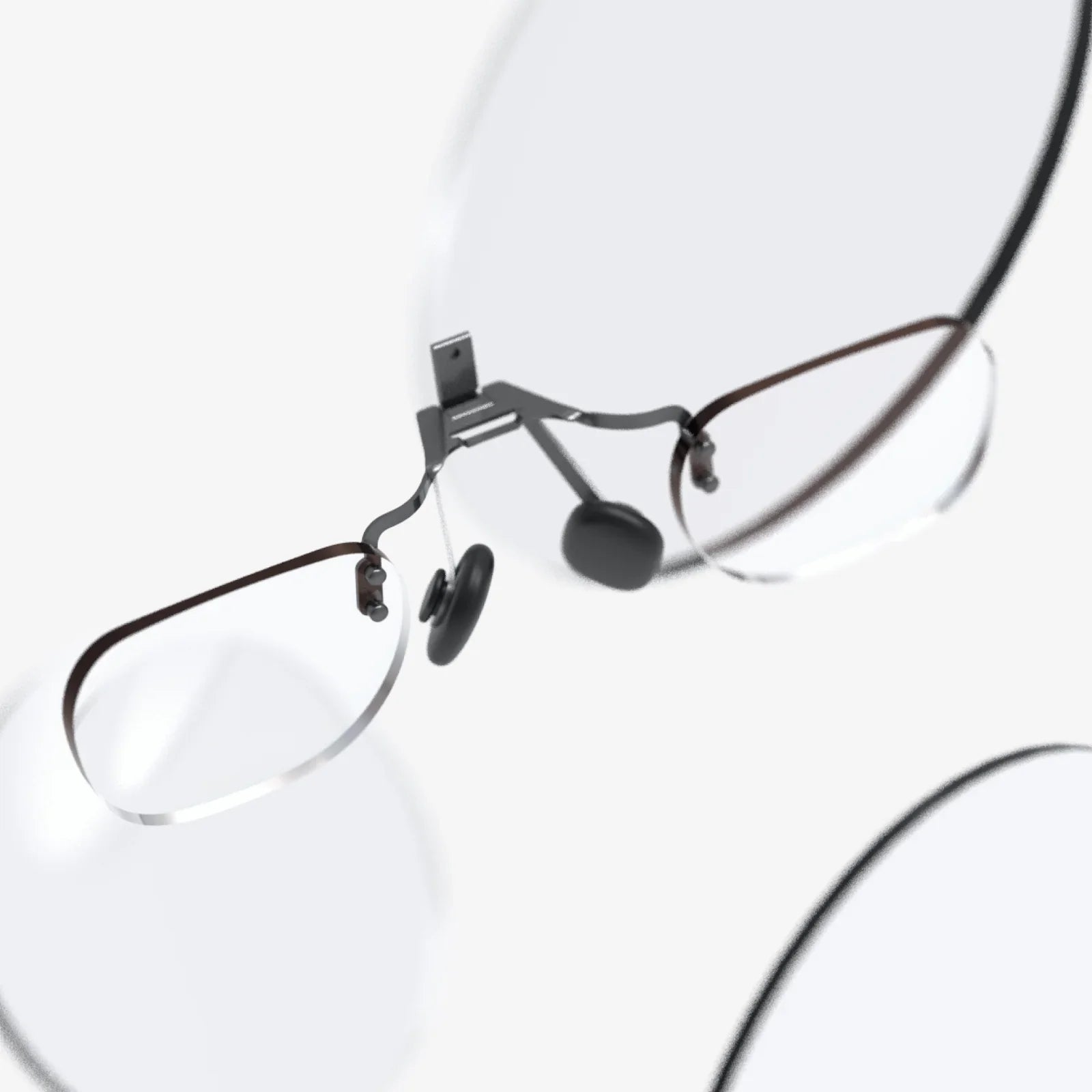
Imagine a world where information doesn’t live on a screen in your hand, but is painted onto the canvas of reality itself. This is the promise held within the simple, yet profound, act of a user wearing AR glasses. It’s a vision that has captivated futurists for decades, and now, it stands at the precipice of mass adoption, poised to fundamentally alter how we work, learn, play, and connect. This isn’t just another gadget; it’s a potential new layer of human experience, an invisible revolution waiting to be seen.
Beyond the Novelty: From Gimmick to Genuine Utility
For years, the concept of augmented reality was largely confined to smartphone apps that superimposed a dancing character on your living room floor. The experience was novel but ultimately isolating, requiring a user to hold up a device, effectively creating a barrier between them and their environment. The paradigm shift occurs when the technology becomes worn, when a user wearing AR glasses is granted hands-free, context-aware information seamlessly integrated into their field of view. This transition marks the journey from a entertaining gimmick to a tool of genuine utility.
The core value proposition lies in accessibility. Instead of breaking focus to look down at a phone, a mechanic can see torque specifications and wiring diagrams overlaid directly on the engine they are repairing. A surgeon can have vital signs and 3D anatomical models visible without turning away from the operating table. A student on a field trip can see historical figures reenact events on the very ground they occurred. The device fades into the background, and the information takes center stage, augmenting the user’s innate capabilities without interruption.
The Architectural Blueprint: How AR Glasses Perceive the World
To understand the experience of a user wearing AR glasses, one must first understand the sophisticated technology working behind the scenes. It is a symphony of sensors and software designed to bridge the digital and physical divide.
The Sensor Suite: The Digital Nervous System
At its heart, a typical AR glasses system employs a complex array of sensors that act as its eyes and ears. High-resolution cameras continuously scan the environment, while depth sensors (like LiDAR or time-of-flight sensors) map the world in three dimensions, understanding the precise distance and geometry of every surface. Inertial Measurement Units (IMUs), including accelerometers and gyroscopes, track the precise movement and orientation of the user’s head in real-time. Microphones capture audio, and in more advanced systems, eye-tracking cameras monitor where the user is looking. This constant, multimodal data stream is the raw material from which a digital understanding of the physical world is built.
Simultaneous Localization and Mapping (SLAM): Building a Digital Twin
The magic of spatial awareness is achieved through complex algorithms known as SLAM. SLAM allows the device to do two things simultaneously: map an unknown environment and track the user’s location within that map. As a user wearing AR glasses moves through a room, the SLAM system processes the sensor data to create a precise digital mesh or "point cloud" of the space—a digital twin. This means the glasses know where the walls, floors, tables, and chairs are, allowing digital objects to be placed persistently in the real world. A virtual sculpture will appear to stay on a real table, even if you walk around it, because the glasses understand the table’s location in space.
The Display: Projecting the Future Onto the Present
Finally, the processed digital information must be presented to the user’s eyes. This is achieved through micro-displays and optical systems like waveguides or holographic mirrors. These technologies project light directly into the user’s retina, making digital images appear as if they are part of the natural world at various focal depths. The challenge is to make these images bright enough to be seen in daylight, high-resolution enough to be readable, and placed within a form factor that is socially acceptable and comfortable for long-term wear.
Transforming Industries: The Professional User Wearing AR Glasses
While consumer applications often grab headlines, the most immediate and profound impact is being felt across numerous professional sectors. Here, the value is clear, the ROI is measurable, and the user wearing AR glasses is becoming a common sight on the front lines of industry.
Revolutionizing Manufacturing and Field Service
On the factory floor, AR is a game-changer. Assembly line workers can see step-by-step instructions, animations, and safety warnings overlaid directly on the components they are handling, reducing errors and drastically cutting training time. For field service technicians, diagnosing and repairing complex machinery is transformed. Instead of juggling physical manuals or a tablet, a user wearing AR glasses can have the relevant schematic superimposed on the equipment, receive remote expert guidance from a colleague who can see their point of view and draw annotations into their vision, and access a hands-free checklist to ensure procedures are followed correctly. This not only improves efficiency but also enhances safety and empowers a less experienced workforce.
Advancing Healthcare and Medical Training
In healthcare, the stakes are even higher. Medical students wearing AR glasses can practice procedures on hyper-realistic virtual patients, receiving instant feedback, before ever touching a real person. Surgeons can use AR for "X-ray vision," visualizing a patient’s internal anatomy—such as the precise location of a tumor or a major blood vessel—projected onto the patient’s body during an operation. This enhances precision and can lead to less invasive procedures and better outcomes. Furthermore, AR can assist in complex tasks like venipuncture, by highlighting the best vein to use, reducing patient discomfort.
Redefining Design and Architecture
For architects, engineers, and interior designers, AR glasses offer the ultimate design tool: the real world. Instead of visualizing a new building from a 2D screen, they can don a pair of glasses and walk through a full-scale, holographic model of their design on the actual construction site. They can assess sightlines, spatial relationships, and potential design clashes before a single foundation is poured. Clients can tour a virtual version of their future home, making changes to finishes and layouts in real-time, fostering a collaborative and immersive design process that was previously impossible.
The Social and Ethical Lens: Navigating a New Reality
As with any transformative technology, the rise of the user wearing AR glasses brings a host of social and ethical questions that society must grapple with.
The Privacy Paradox
The always-on, always-sensing nature of AR glasses creates a significant privacy challenge. Cameras and microphones that are constantly capturing the environment raise concerns about surveillance, both from corporations and governments, and from other individuals. The concept of consent becomes blurred; if a user is recording their point of view in a public space, are they violating the privacy of everyone around them? Clear norms, regulations, and technological solutions—like clear visual indicators when recording and robust data anonymization—will be critical to ensuring this technology is adopted responsibly and without creating a dystopian surveillance network.
The Digital Divide and Accessibility
There is a genuine risk that AR technology could exacerbate existing social and economic inequalities. If critical information, navigation, and communication begin to flow primarily through these devices, those who cannot afford them could be left at a significant disadvantage, creating a new kind of digital divide. Conversely, the technology also holds immense promise for accessibility. For individuals with visual impairments, AR glasses could highlight obstacles, recognize faces, and read text aloud from the physical world. For those who are hard of hearing, real-time transcription of conversations could be displayed in their glasses. The development path must be inclusive, ensuring these tools serve to bridge gaps, not widen them.
Reality Negotiation and Mental Health
When everyone can curate their own reality with digital filters and information layers, will we lose our shared sense of objective truth? The potential for misinformation, targeted advertising, and extremist echo chambers to be directly overlaid onto our perception of the world is a profound concern. Furthermore, the psychological impact of perpetually mediating reality through a digital lens is unknown. Could it lead to increased anxiety, dissociation, or a devaluation of the un-augmented physical world? These are not questions with easy answers, but they must be central to the conversation as the technology develops.
The Invisible Future: Where Do We Go From Here?
The ultimate goal for this technology is not to be noticed. The trajectory is toward smaller, lighter, and more powerful devices that eventually resemble ordinary eyewear, or even integrate directly into contact lenses. The user experience will evolve from conscious interaction to subconscious immersion. The technology will become a true cognitive partner, anticipating needs and providing information without explicit commands, powered by advanced AI.
We are moving toward a world where the physical and digital realms are not just connected, but fused. The simple act of a user wearing AR glasses is the first step into this new paradigm—a paradigm that promises to augment our humanity, redefine our potential, and challenge our very notions of reality. The revolution won't be televised; it will be illuminated, annotated, and experienced directly through the lenses we wear, forever changing what it means to see and to know.
Share:
Virtual Reality Glasses View: A New Lens on Reality and Human Experience
Full Sensory Virtual Reality: The Dawn of Total Digital Immersion