


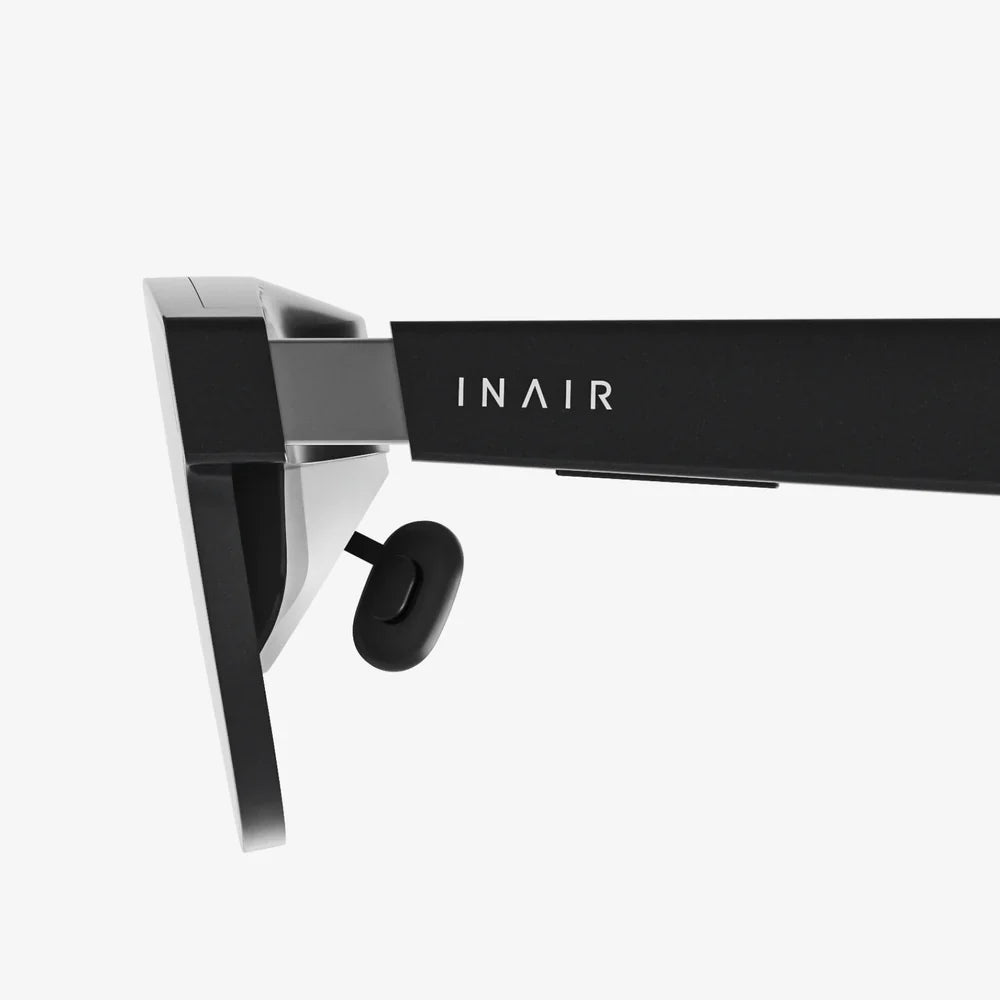
Imagine a device so powerful it can collapse continents into your living room, transform your identity, and redefine your very perception of reality. This is the experience of a user wearing a VR headset, a journey that begins not with a button press, but with the simple, deliberate act of raising a visor to the eyes. It is the modern-day equivalent of stepping through the looking glass, leaving the familiar constraints of the physical world behind to explore limitless digital dimensions. The allure is irresistible, promising adventure, connection, and knowledge previously confined to the realms of science fiction. This is more than entertainment; it is a fundamental shift in the human experience, a new medium for storytelling, work, and social interaction that is captivating millions.
The Threshold Moment: Donning the Gateway
The transformation begins the moment a user secures the headset. The outside world, with its sights and sounds, is intentionally occluded, replaced by a blank canvas—a void waiting to be filled. This physical act of isolation is a critical part of the ritual. It signals to the brain that an extraordinary experience is about to commence. The initial sensation is one of disorientation, a brief moment of sensory deprivation before the virtual engine roars to life. Then, pixels ignite, forming coherent shapes, colors, and environments. The user is no longer just standing in a room; they are being teleported. This threshold moment, the transition from physical to virtual, is where magic and technology become indistinguishable.
Beneath the Visor: The Technology of Presence
The seamless immersion experienced by a user wearing a VR headset is a masterpiece of integrated engineering. It’s a symphony of components working in perfect harmony to trick the brain into accepting a digital facsimile as reality.
- Visual Fidelity: High-resolution displays are positioned mere centimeters from the eyes, filling the entire field of view. Stereoscopic 3D rendering creates depth, while a high refresh rate ensures smooth, natural movement that prevents the disorientation and nausea associated with earlier technologies.
- Precise Tracking: Inside-out or external sensors constantly monitor the position of the headset and controllers. This six-degrees-of-freedom (6DoF) tracking translates every tilt of the head, step forward, and gesture of the hand into the virtual world with sub-millimeter accuracy, making the user’s agency feel immediate and real.
- Auditory Immersion: Spatial audio is the unsung hero of presence. By simulating how sound waves interact with the human ear and the environment, it allows a user to hear a whisper from behind or the echo of footsteps in a vast virtual cavern, adding a rich, convincing layer to the experience.
- Haptic Feedback: The sensation of touch is communicated through nuanced vibrations in the controllers and, increasingly, through advanced haptic suits and gloves. This tactile feedback—from the recoil of a virtual tool to the gentle brush of a digital leaf—completes the illusion, bridging the gap between seeing an action and feeling it.
The ultimate goal of all this technology is to achieve "presence," the unequivocal sensation of being in another place. When presence is achieved, the conscious knowledge of wearing a headset melts away, and the virtual experience becomes the primary reality.
The Psychological Shift: Avatar and Identity
A profound psychological metamorphosis occurs when a user wearing a VR headset embodies an avatar. This digital representation is more than a character model; it is a vessel for identity and interaction. The Proteus Effect is a well-documented phenomenon where users begin to subconsciously adopt the behaviors and attitudes of their avatar. Embodiment as a tall, powerful figure can increase confidence in social and professional simulations, while embodying a different life form can foster empathy and new perspectives.
This ability to step into another's shoes—quite literally—is one of VR's most transformative powers. Medical students can experience the world from the perspective of an elderly patient with visual impairments, and individuals can experience scenarios designed to challenge unconscious biases. The line between the self and the avatar can blur, leading to powerful, emotionally resonant experiences that have a lasting impact long after the headset is removed. The virtual self becomes an extension of the physical self, a tool for exploration not just of worlds, but of the mind.
Beyond the Game: Applications Reshaping Industries
While gaming provided the initial thrust for consumer VR, the applications for a user wearing a VR headset now extend far beyond entertainment, revolutionizing fields from education to medicine.
- Education and Training: VR creates safe, repeatable, and cost-effective training environments. Surgeons can practice complex procedures on virtual patients, mechanics can learn to repair engines without physical parts, and astronauts can prepare for spacewalks. In classrooms, students can take field trips to ancient Rome or journey through the human bloodstream, making learning an experiential adventure.
- Healthcare and Therapy: Therapists are using VR for exposure therapy, gradually and safely helping patients confront phobias like fear of heights or flying. It is also used for pain management, creating calming distractions for patients undergoing painful procedures, and for physical rehabilitation, turning exercises into engaging games that improve patient motivation and outcomes.
- Design and Architecture: Architects and interior designers use VR to walk clients through unbuilt structures. A user wearing a VR headset can experience the scale, sightlines, and lighting of a building before a single foundation is poured, allowing for changes that would be prohibitively expensive later in the process. This is revolutionizing prototyping and collaborative design.
- Remote Work and Collaboration: Virtual meeting spaces are evolving beyond flat video calls. Colleagues from across the globe can meet as avatars in a shared virtual office, interacting with 3D models of products, brainstorming on virtual whiteboards, and communicating with the nuance of body language and spatial presence, fostering a stronger sense of team cohesion than traditional remote tools allow.
The Social Fabric: Connecting in Virtual Spaces
One of the most significant evolutions for a user wearing a VR headset is the shift from a solitary to a deeply social experience. Virtual social platforms have emerged as vibrant digital metropolises where people meet, play, create, and attend events together. Users can attend live concerts with friends from other countries, watch movies together in a virtual cinema, or simply hang out and chat in fantastical environments.
This form of communication is qualitatively different from texting or video calls. It leverages the full spectrum of human interaction: voice, gesture, and shared personal space. The sense of "being there together" is palpable, helping to alleviate loneliness and create meaningful connections that transcend physical geography. For many, these virtual communities are as real and valuable as their physical ones, representing a new frontier for human socialization and culture.
Navigating the Frontier: Ethical and Practical Considerations
As with any powerful technology, the rise of the user wearing a VR headset brings a host of challenges that society must confront.
- Privacy and Data: VR systems collect a staggering amount of biometric and behavioral data—precise eye movements, body language, vocal inflections, and even emotional responses. This data is incredibly valuable and deeply personal, raising serious questions about ownership, consent, and protection from misuse.
- The Reality Gap: The intensity of VR experiences can lead to a phenomenon often called "VR hangover," where returning to the real world feels momentarily dull or disorienting. While usually temporary, it highlights the brain's powerful adaptation to virtual stimuli. Long-term psychological effects are still being studied.
- Access and Equity: High-quality VR requires significant financial investment for the hardware and a physical space to use it safely. This creates a risk of a "digital divide," where access to these transformative experiences, educational tools, and social spaces becomes a privilege of the affluent, exacerbating existing social inequalities.
- Safety and Harassment: The sense of presence that makes social VR so powerful also means that negative interactions, such as harassment or invasion of personal space, can feel as real and traumatic as their physical counterparts. Creating safe and equitable digital social spaces requires robust tools and entirely new social norms.
We are collectively writing the rulebook for this new medium, and a thoughtful, human-centric approach is crucial for its healthy development.
The Future Horizon: Where Do We Go From Here?
The journey of a user wearing a VR headset is just beginning. The technology is on a rapid trajectory toward becoming lighter, wireless, and with ever-higher resolution, eventually aiming for retinal clarity. The future points toward more seamless integration with our senses and bodies. Haptic technology will evolve to simulate temperature and texture, and neural interfaces may one day allow us to control virtual environments with our thoughts, further eroding the barrier between intent and action.
We are moving toward a future of persistent virtual worlds that exist continuously, independent of any single user's login status—a true metaverse. In this future, putting on a headset will be less like starting an application and more like stepping through a portal to a parallel existence, with its own economy, culture, and communities. The very concepts of travel, work, and social gathering are poised for redefinition.
The act of a user wearing a VR headset is a quiet revolution, a personal declaration of curiosity that has global ramifications. It is a tool that challenges our perceptions, expands our capabilities, and reimagines human connection. It holds a mirror to our society, reflecting both our incredible potential for creativity and empathy, as well as our enduring challenges with ethics and equity. The virtual frontier is vast and uncharted, and we are all poised on the edge, headset in hand, ready to explore what it means to be human in a world without limits.
Share:
Android AR News: The Convergence of Mobile and Augmented Reality
What Age Can a Child Use a VR Headset? The Essential Guide for Parents