


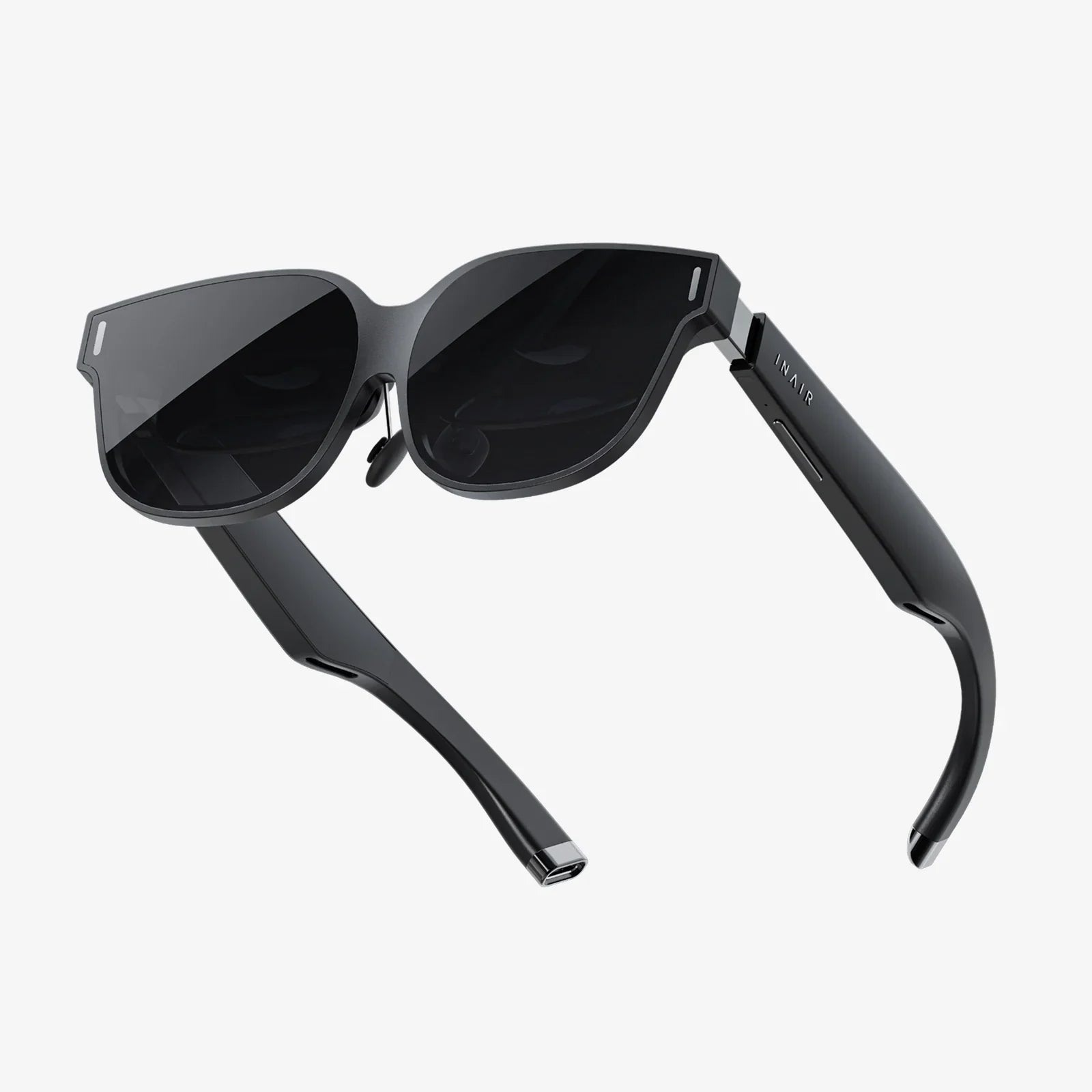
The world is on the cusp of a visual revolution, and it’s being held in the palm of your hand. Forget static screens and two-dimensional interfaces; the future is a dynamic, interactive layer seamlessly superimposed onto our physical reality. This isn't a distant sci-fi fantasy—it's the rapidly evolving landscape of Android AR, a technological synergy that is fundamentally reshaping how we interact with information, our environment, and each other. The latest wave of Android AR news isn't just about quirky filters; it signals a profound shift towards a world where our primary computing device becomes a window into an enhanced universe.
The Foundation: Android's Evolving AR Ecosystem
The journey of Augmented Reality on the Android platform has been one of gradual maturation and increasing sophistication. Unlike walled-garden approaches, the strength of Android AR has historically lain in its diversity and openness, allowing a vast ecosystem of device manufacturers and developers to experiment and innovate.
Early AR experiences were often fragmented, relying on individual applications and specific hardware capabilities. However, the most significant Android AR news in recent years has been the move towards platform-level integration. The development and widespread adoption of frameworks have been pivotal. These software toolkits provide a unified set of APIs, allowing developers to create AR experiences that can run on a multitude of Android devices without needing to understand the intricacies of each device's sensors and hardware.
This standardization is crucial. It means a developer can build an app that understands the world through the camera, maps surfaces, and places digital objects with stability, and it will work consistently across a broad spectrum of phones. This has democratized AR development, moving it from a niche specialty to a more accessible feature that can be incorporated into a wide variety of applications, from games and social media to practical utilities and enterprise solutions.
Under the Hood: The Tech Powering the Experience
To truly appreciate the latest Android AR news, one must understand the complex technology working behind the scenes. It's a symphony of hardware and software working in perfect harmony.
Visual Inertial Odometry (VIO) and Environmental Understanding
At the heart of any compelling AR experience is the device's ability to understand its position in the world. This is achieved through Visual Inertial Odometry (VIO), which fuses data from the camera (visual) and the inertial measurement unit (IMU—gyroscope and accelerometer) to precisely track the device's movement in real-time, all without needing GPS or other external signals. This is why a digital cartoon character can stay pinned to a spot on your table even as you walk around it.
Beyond tracking, the device must comprehend the geometry of its surroundings. This is called environmental understanding. Using machine learning and simultaneous localization and mapping (SLAM) techniques, the phone can detect horizontal planes (like floors and tables) and vertical planes (like walls), along with more complex elements like edges, points of interest, and even approximate lighting conditions. This allows digital objects to not only be placed in the world but to interact with it realistically—hiding behind a real-world couch or casting a shadow that matches the ambient light.
Depth Sensing and the Role of LiDAR
While standard cameras can do an impressive job, the most advanced Android AR news often revolves around dedicated depth-sensing technology. Some high-end Android devices now incorporate time-of-flight (ToF) sensors or even LiDAR (Light Detection and Ranging) scanners.
These sensors project thousands of invisible points into a room and measure how long they take to bounce back, creating a highly accurate, real-time 3D depth map of the environment. This dramatically improves occlusion (where digital objects are properly hidden by real-world objects), accelerates plane detection, and enables incredibly detailed scanning of objects and spaces. This technology is a game-changer for professional applications in interior design, architecture, and engineering.
Transforming Industries: Android AR in Action
The true measure of any technology is its impact, and Android AR is poised to revolutionize numerous sectors. The news is no longer about potential; it's about practical, deployable solutions delivering real value today.
Retail and E-Commerce: The Fitting Room in Your Pocket
The retail sector has been one of the earliest and most enthusiastic adopters of AR. Android AR apps now allow customers to visualize products in their own space before purchasing. Want to see how a new sofa looks in your living room? Point your camera. Curious if that shade of blue paint is right for your bedroom wall? Preview it instantly.
For fashion, virtual try-on experiences are becoming increasingly sophisticated. Using AR, users can see how sunglasses, hats, or even makeup will look on their own face, drastically reducing purchase uncertainty and the likelihood of returns. This "try-before-you-buy" capability, powered by the ubiquity of the Android phone, is bridging the gap between the convenience of online shopping and the confidence of an in-store experience.
Education and Training: Learning by Doing
Android AR is turning abstract concepts into tangible, interactive experiences. Imagine a biology student exploring a detailed, beating heart model that floats above their textbook, a history class walking through a reconstructed ancient ruin on their school playground, or a mechanics trainee seeing the animated inner workings of an engine superimposed onto a physical block.
This hands-on, visual learning paradigm enhances engagement and improves knowledge retention. For complex industrial and medical training, AR can provide step-by-step instructions overlaid directly onto machinery or simulate delicate procedures, offering a safe and repeatable training environment without risk or the need for expensive physical models.
Remote Assistance and the Future of Work
One of the most powerful enterprise applications of Android AR is in remote assistance and collaboration. A field technician facing a complex repair can don smart glasses or simply use their Android phone to stream their first-person view to an expert located anywhere in the world. The expert can then annotate the technician's live view with arrows, notes, and diagrams, guiding them through the process as if they were standing right there.
This "see-what-I-see" functionality reduces travel costs, minimizes equipment downtime, and allows companies to leverage their best expertise instantly and globally. It represents a fundamental shift in how we conceptualize remote work and technical support.
Challenges and the Road Ahead
Despite the exciting progress, the path forward for Android AR is not without its obstacles. The primary challenge remains the massive diversity of the Android ecosystem. Ensuring a high-quality, consistent AR experience across thousands of different device models, each with varying camera quality, sensor accuracy, and processing power, is a monumental task. While software frameworks help, the hardware fragmentation can still lead to a disparity in performance between flagship and budget devices.
Furthermore, creating truly compelling AR content requires a new skillset. Developers and designers must think in 3D and understand spatial design, physics, and user interaction in a completely new context. The tools are improving, but the learning curve is still significant.
Looking ahead, the Android AR news we can expect will focus on a few key areas. The integration of more powerful on-device AI will enable even more realistic interactions and smarter environmental understanding. The evolution towards wearable devices like AR glasses, which will likely use Android as their core operating system, promises a truly hands-free, always-available AR experience, moving the technology from the phone in your hand to the glasses on your face.
Finally, the concept of the AR cloud—a persistent, shared digital layer over the physical world—looms on the horizon. This would allow multiple users to see and interact with the same digital objects in a location, enabling collaborative experiences and persistent content that outlasts a single app session, ultimately weaving AR into the very fabric of our daily lives.
The stream of Android AR news is a testament to a technology moving from novelty to necessity. It’s no longer a question of if augmented reality will become a mainstream platform, but how quickly and seamlessly it will integrate into our daily workflows and play. The Android device, with its global reach and relentless innovation, is poised to be the primary engine of this change, turning every user into a portal between the real and the digital, and forever altering our perception of what’s possible.
Share:
VR Headset for PC Under 100 Dollars: Your Ultimate Guide to Affordable Immersion
User Wearing VR Headset: A Portal to New Realities and Human Transformation