


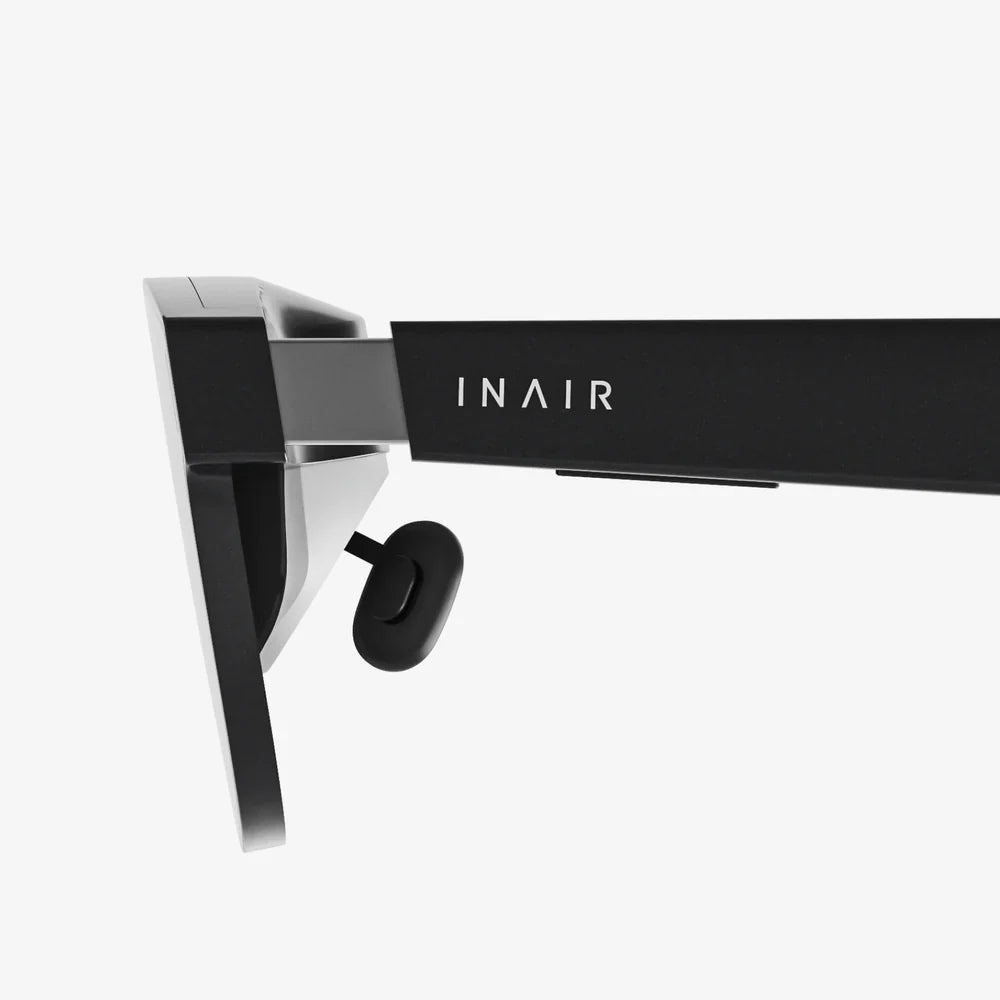
Imagine slipping on a sleek, futuristic headset and, in an instant, being transported. The familiar confines of your room dissolve, replaced by a breathtaking Martian landscape, the intricate chambers of a human heart, or a virtual meeting room where colleagues from across the globe appear as lifelike avatars. This is the promise and the power of using virtual reality goggles, a technology that has vaulted from the pages of science fiction into a tangible, world-altering tool. It’s a gateway not just to new games, but to new ways of learning, connecting, and perceiving reality itself.
The Architecture of Illusion: How the Magic Works
At its core, the experience of using virtual reality goggles is a sophisticated trick played on the human senses, primarily sight and sound. The goal is to achieve what is known as 'presence'—the convincing feeling of being in another place. This is accomplished through a combination of advanced hardware and software working in perfect harmony.
The primary weapon in this sensory deception is stereoscopic display. Each goggle contains two high-resolution screens (or one split screen), one for each eye. These displays show slightly offset images, mimicking the way our two eyes perceive the world from slightly different angles. Our brain then fuses these two images together, creating a powerful illusion of depth and three-dimensionality.
But a static 3D image isn't enough. To sell the illusion of reality, the virtual world must respond to the user's movements instantly. This is achieved through a system called head-tracking. Using a combination of internal sensors like gyroscopes, accelerometers, and magnetometers, the goggles detect the precise rotation and orientation of your head. As you turn your head to the left, the rendered scene shifts accordingly in real-time, with imperceptibly low latency. Any delay, or lag, would break the immersion and could cause discomfort. External sensors or inside-out tracking cameras on the goggles themselves can also track your physical position in a room, allowing you to walk a few steps, crouch, or lean to peek around a virtual object.
Audio is the other critical pillar of immersion. Spatial audio technology mimics how sound behaves in the real world. A noise from your virtual left will sound like it's coming from your left, changing subtly as you turn your head. This auditory cue is incredibly powerful for selling the reality of a digital space.
Finally, input is handled through dedicated motion controllers. These are tracked just like the headset, allowing your hands to exist within the virtual environment. You can reach out, grab objects, push buttons, paint, or wield a laser sword. The combination of 3D vision, responsive head-tracking, 3D audio, and motion-controlled hands creates a feedback loop that is remarkably persuasive, convincing your brain that you are somewhere you are not.
Beyond the Game: Expansive Applications Reshaping Industries
While entertainment, particularly gaming, has been the most visible driver of consumer adoption, the applications of using virtual reality goggles extend far beyond. They are proving to be revolutionary tools in a multitude of professional and educational fields.
Revolutionizing Education and Training
Imagine a medical student not just reading about human anatomy but performing a dissection on a hyper-realistic, virtual cadaver that can be explored from any angle. Or a history class not studying ancient Rome from a textbook but walking through a meticulously reconstructed Forum, hearing the sounds of the marketplace and looking up at the towering temples. Using virtual reality goggles makes this possible. It transforms abstract concepts into experiential learning, dramatically improving retention and understanding.
In high-stakes industries, VR training is saving money and lives. Aircraft mechanics can practice complex procedures on virtual engines. Surgeons can rehearse delicate operations without risk. Firefighters can train for dangerous scenarios in a controlled, virtual fire. This 'learning by doing' in a safe, repeatable environment is arguably one of the most valuable applications of the technology.
Transforming Healthcare and Therapy
The healthcare sector is embracing VR for both treatment and therapy. It is being used for physical rehabilitation, where patients recovering from strokes or injuries can engage in gamified exercises that make repetitive motions more engaging. For mental health, VR exposure therapy is a powerful tool. Patients with phobias, such as a fear of heights or flying, can be gradually and safely exposed to their triggers within a controllable virtual environment. It's also being used to manage pain, distract burn victims during painful wound care, and help with stress reduction through guided meditation in serene virtual worlds.
Redefining Remote Collaboration and Design
The concept of the 'metaverse' is largely built on the premise of using virtual reality goggles for social and professional interaction. Architects and engineers can step inside 3D models of their buildings before a single brick is laid, identifying design flaws and experimenting with materials in real-time. Remote teams can collaborate in shared virtual spaces, interacting with 3D data models, prototypes, and each other's avatars in a way that feels infinitely more natural and productive than a traditional video call. This has profound implications for the future of remote work and global collaboration.
The Human Factor: Navigating Physical and Psychological Effects
For all its potential, the experience of using virtual reality goggles is not without its challenges, primarily centered on the human body and mind.
The most common issue is VR-induced motion sickness, often called 'sim sickness.' This occurs when there is a disconnect between what your eyes see (movement) and what your vestibular system in your inner ear feels (stationary). This sensory conflict can cause dizziness, nausea, sweating, and headaches. Developers combat this with clever design techniques, such as implementing fixed visual reference points (like a virtual cockpit), using 'blink' teleportation for movement instead of artificial joystick locomotion, and ensuring a high, stable frame rate.
Prolonged use can also lead to eye strain and fatigue, as users focus for long periods on screens just centimeters from their faces. It's recommended to take regular breaks, a practice often called for by the technology itself.
Psychologically, the intensity of immersion can be overwhelming. The experience can be so potent that users can feel a sense of dissociation or 'VR hangover' upon returning to the real world. Furthermore, the ethical implications of such persuasive technology are vast. Long-term effects on social development, especially in children, are still being studied. The potential for addiction to virtual escapes is a real concern, as is the risk of experiencing psychological trauma from hyper-realistic simulations.
A Glimpse into the Future: The Next Frontier of Immersion
The technology behind using virtual reality goggles is advancing at a breakneck pace. The current generation is impressive, but the future holds even more astonishing possibilities aimed at deepening immersion and removing barriers.
We are moving towards lighter, wireless, and more comfortable form factors with higher-resolution displays, eliminating the 'screen door effect' and making virtual visuals indistinguishable from reality. Eye-tracking technology will become standard, allowing for foveated rendering (where only the spot you're directly looking at is rendered in full detail, saving processing power) and more natural social interactions with avatars that make real eye contact.
Haptics will evolve beyond simple controller rumble to include full-body suits and gloves that simulate touch, temperature, and even resistance, allowing you to feel the texture of a virtual wall or the weight of a digital object. The ultimate frontier is neural interfacing, where brain-computer interfaces could one day allow us to experience virtual worlds directly through thought, bypassing screens and controllers entirely.
The Societal Shift: Connecting and Disconnecting
As this technology becomes more pervasive, its impact on society will be profound. Using virtual reality goggles offers incredible potential for connection, allowing people separated by vast distances to share experiences as if they were together. It can foster empathy by literally allowing us to see the world through someone else's eyes, whether a colleague in a different country or a person experiencing a different social reality.
However, it also carries the risk of further societal fragmentation. If a perfect, curated virtual world is more appealing than a challenging real one, what incentive is there to engage with physical reality? The balance between using VR as a tool to enhance our lives and using it as an escape to avoid them will be a central tension of the coming decades. It will challenge our definitions of community, experience, and ultimately, what it means to be 'present.'
The journey through the lens of virtual reality goggles is just beginning. It is a tool of immense power—for education, for empathy, for escape, and for evolution. Its responsible development and integration into our lives will require careful thought, not just from engineers, but from ethicists, psychologists, and all of us. The virtual frontier is open, offering a reflection of our own world and a canvas for infinite others. The question is no longer if we will step through, but how we will choose to shape what we find on the other side.
Share:
What Is Immersion in Virtual Reality - The Ultimate Guide to Presence and Perception
What Will Virtual Reality Be Used For - The Next Frontier of Human Experience