


Imagine watching a live concert from the front row, then switching your view to the drummer’s perspective, all from your living room. Envision a business meeting where 3D product models materialize on your desk, or a history lesson where you can walk through ancient ruins as they once stood. This is not a distant sci-fi fantasy; it is the palpable, emerging reality of Video XR, a technological tide that is fundamentally reshaping our perception of digital content and human connection. This convergence of immersive video and extended reality is poised to redefine every industry it touches, offering a glimpse into a future where the line between the physical and the digital is not just blurred, but beautifully intertwined.
Deconstructing the Terminology: What Exactly is Video XR?
To understand Video XR, we must first unpack its components. 'XR' stands for Extended Reality, an umbrella term that encompasses Virtual Reality (VR), Augmented Reality (AR), and Mixed Reality (MR). It represents the entire spectrum of experiences that blend the physical and virtual worlds, or create entirely virtual ones. 'Video' in this context is the crucial differentiator. It refers to the use of captured or streamed real-world imagery, as opposed to purely computer-generated (CG) environments.
Therefore, Video XR is the art and science of using real-world video capture to create immersive experiences across the XR spectrum. This can range from 360-degree videos viewed on a VR headset, where you can look around in every direction, to complex volumetric video that captures a person or object in three dimensions, allowing you to walk around it as if it were physically present in your AR space. It’s the magic of taking a slice of reality, digitizing it with fidelity, and placing it into any context imaginable.
The Technological Pillars Powering the Video XR Revolution
The seamless magic of a Video XR experience rests on a foundation of incredibly sophisticated technology. Several key pillars work in concert to make the impossible seem effortless.
Capture: Seeing the World in 360 and 3D
The journey begins with capture. Unlike traditional filmmaking with a single-lens camera, Video XR requires specialized equipment to record the world spherically. This is most commonly achieved with rigs housing multiple cameras, each pointing in a different direction. Advanced software then stitches these feeds together into a seamless, spherical video file. For the more advanced volumetric video, the process is even more complex. Systems using arrays of dozens, sometimes hundreds, of high-resolution cameras capture a subject from every possible angle. Alternatively, LiDAR (Light Detection and Ranging) scanners and depth-sensing cameras can be used to map the geometry and texture of a space or object, creating a dynamic 3D model rather than a 2D video texture.
Processing and Stitching: Weaving a Cohesive Reality
Raw capture is just the beginning. The data from multiple camera sources must be processed, aligned, and stitched together flawlessly. This is a computationally intensive task where algorithms correct for color differences, lens distortion, and parallax errors to create a unified visual field. Any mistake in this process breaks the immersion instantly, creating visual seams or misalignments that remind the user they are in a constructed world. For volumetric capture, this processing involves creating a photorealistic 3D mesh and texture map from the multitude of 2D images, a process that demands immense computing power, often leveraging cloud-based rendering farms.
Playback and Hardware: Gateways to Immersion
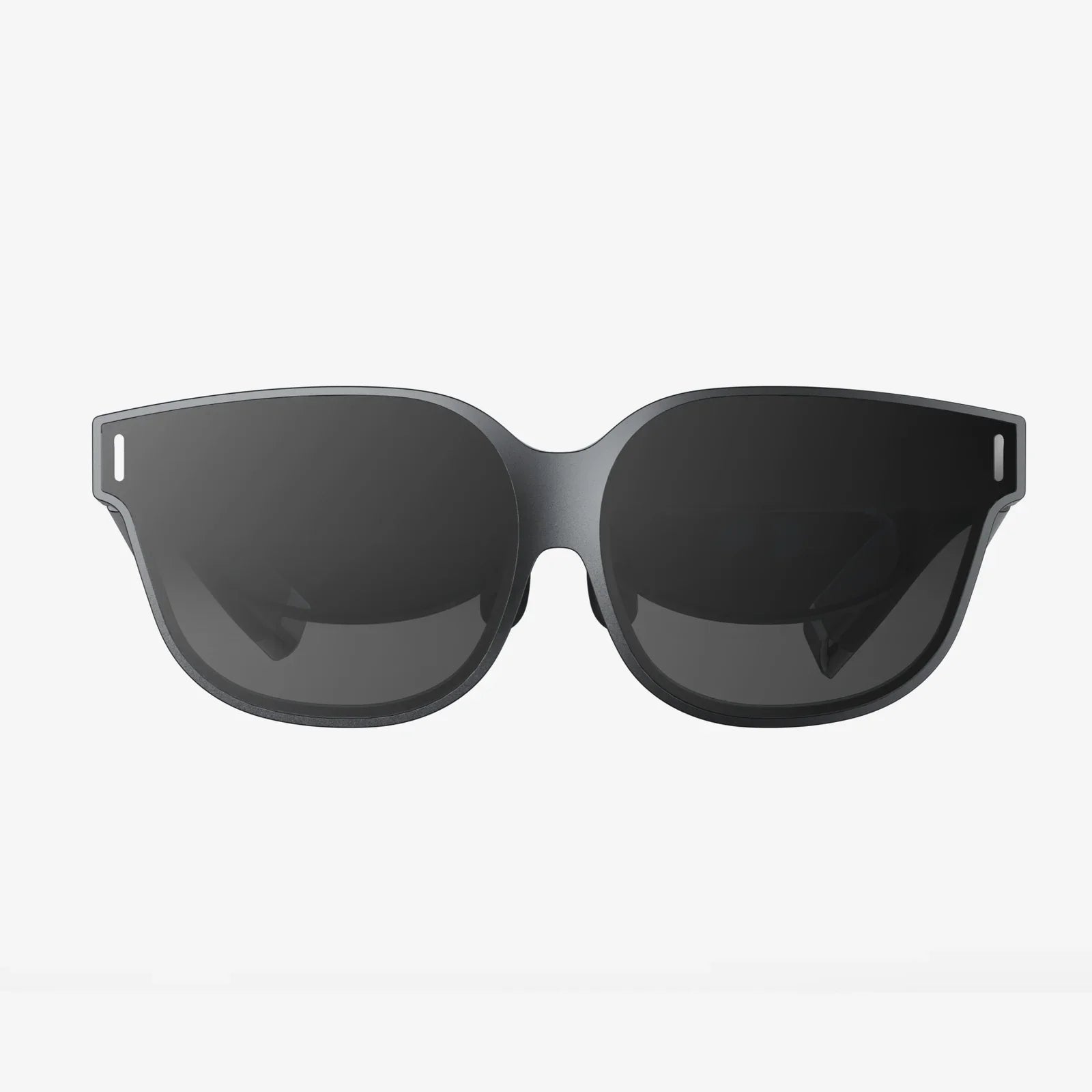
The processed experience needs a window. For fully immersive Video XR, this means a VR headset. These devices, equipped with high-resolution displays, precise head-tracking sensors, and spatial audio, are the primary conduit for losing oneself in a 360-degree world. The quality of the headset—its field of view, resolution (often referred to as pixels-per-degree), and refresh rate—directly correlates to the level of immersion and comfort. For AR experiences that overlay video elements onto the real world, sleek smart glasses or even powerful smartphones serve as the viewport, using their cameras to see the world and their displays to augment it.
Bandwidth and Latency: The Invisible Challenge
Perhaps the most significant hurdle for widespread Video XR adoption, especially for streaming, is data. A single minute of high-resolution 360-degree video can be orders of magnitude larger than a standard HD video file. Streaming this data without causing nausea-inducing lag or buffering requires immense bandwidth and incredibly low latency. The rollout of 5G networks, with their high speed and low latency, is a critical enabler. Furthermore, advanced video compression standards like AV1 are essential to reduce file sizes without sacrificing the visual quality that is paramount to immersion.
A Universe of Applications: How Video XR is Changing the Game
The potential of Video XR extends far beyond novelty and entertainment. It is a transformative tool that is already making waves across diverse sectors.
Entertainment and Media: The New Frontier of Storytelling
The entertainment industry is at the forefront of Video XR adoption. Filmmakers and game developers are exploring entirely new narrative languages.
- Cinematic VR: Directors are creating narrative experiences where the viewer is not a passive observer but an inhabitant of the scene. Your attention and where you choose to look can become part of the story itself.
- Live Events and Sports: Imagine having a courtside seat at the NBA finals or being on stage with your favorite band. Video XR is making this possible, offering live-streamed 360-degree experiences that convey the energy and scale of an event in a way traditional broadcasts cannot. Broadcasters are also using AR overlays powered by real-time data to enhance viewing, drawing tactical lines on a football field or displaying player stats that float beside them.
- Gaming and Social Experiences: Social VR platforms are using Video XR to create more authentic human interaction. Volumetric capture of users can create realistic avatars that convey body language and nuance, making digital hangouts feel more genuine and connected.
Enterprise and Industry: Training, Collaboration, and Design
In the corporate world, Video XR is moving from experiment to essential tool, driving efficiency and innovation.
- Immersive Training: From surgeons practicing complex procedures on volumetric patients to mechanics learning to repair new equipment by following holographic instructions overlaid on the physical machinery, training is becoming safer, cheaper, and more effective.
- Remote Assistance and Collaboration: A field technician wearing AR glasses can stream their point-of-view to an expert thousands of miles away. The expert can then draw annotations and instructions directly into the technician's field of view, guiding them through a repair in real-time.
- Architecture and Real Estate: Instead of looking at flat blueprints, architects and clients can walk through a photorealistic 3D video tour of an unbuilt property. Real estate agents can offer immersive virtual tours that give a far more accurate sense of a space than static images.
Education and Cultural Preservation: Learning by Living It
Video XR has the power to transform education from a passive activity into an active exploration.
- Virtual Field Trips: Students can explore the depths of the ocean, the surface of Mars, or the interior of the Colosseum in ancient Rome, all through captured Video XR experiences.
- Historical and Cultural Preservation: Volumetric video can capture master craftsmen at work, preserving their techniques for future generations. Historians can create immersive documentaries where users witness historical events from within, fostering a deeper empathy and understanding.
Navigating the Challenges: The Road Ahead for Video XR
Despite its immense promise, the path to ubiquitous Video XR is not without significant obstacles that developers, companies, and society must address.
The Hardware Conundrum: Comfort, Cost, and Accessibility
For true immersion, high-end VR headsets are still relatively expensive, bulky, and often tethered to powerful computers. While standalone devices are improving rapidly, they represent a cost barrier for many consumers. AR smart glasses that are both powerful and socially acceptable to wear all day are still in their infancy. The industry is racing to create hardware that is lightweight, affordable, has all-day battery life, and offers a visual fidelity that matches human perception—a tall order that will take years to perfect.
The Content Conundrum: A Chicken-and-Egg Problem
The growth of any new medium depends on a rich library of compelling content to attract users. However, creating high-quality Video XR content, particularly volumetric video, remains prohibitively expensive and complex for most creators. This creates a chicken-and-egg problem: without a large user base, it's hard to justify large content budgets, and without a lot of content, it's hard to build a large user base. The ecosystem needs more accessible creation tools and sustainable business models to overcome this hurdle.
The Human Factor: Ethical and Psychological Considerations
As we create increasingly realistic and persuasive simulations, profound questions emerge. Issues of data privacy are paramount—volumetric captures of people are a form of biometric data. How is this data stored and used? There is also the risk of deepfakes evolving into "volumetric fakes," creating hyper-realistic simulations of people doing and saying things they never did. Furthermore, prolonged use of immersive environments can lead to disorientation, simulator sickness, and a potential blurring of reality for some users. Establishing ethical guidelines and understanding the long-term psychological effects will be crucial for responsible development.
The journey into Video XR is not merely an upgrade in resolution or a new feature; it is a fundamental shift in the paradigm of human-computer interaction. It’s a move from observing a flat screen to inhabiting a digital space, from clicking on icons to interacting with digital entities as if they were real. The technologies that capture our world and recontextualize it within these new realms are dismantling the barriers of distance, scale, and even time. While challenges around hardware, content creation, and ethics remain, the trajectory is clear. Video XR is steadily weaving itself into the fabric of how we learn, work, play, and connect, promising a future where our digital and physical realities are not separate worlds, but a single, enhanced continuum of experience. The screen is dissolving, and an entirely new dimension of human experience is coming into view.
Share:
Best VR Goggles: Your Ultimate Guide to Immersive Virtual Reality in 2024
Communal Workspace The Evolution of Shared Professional Environments