


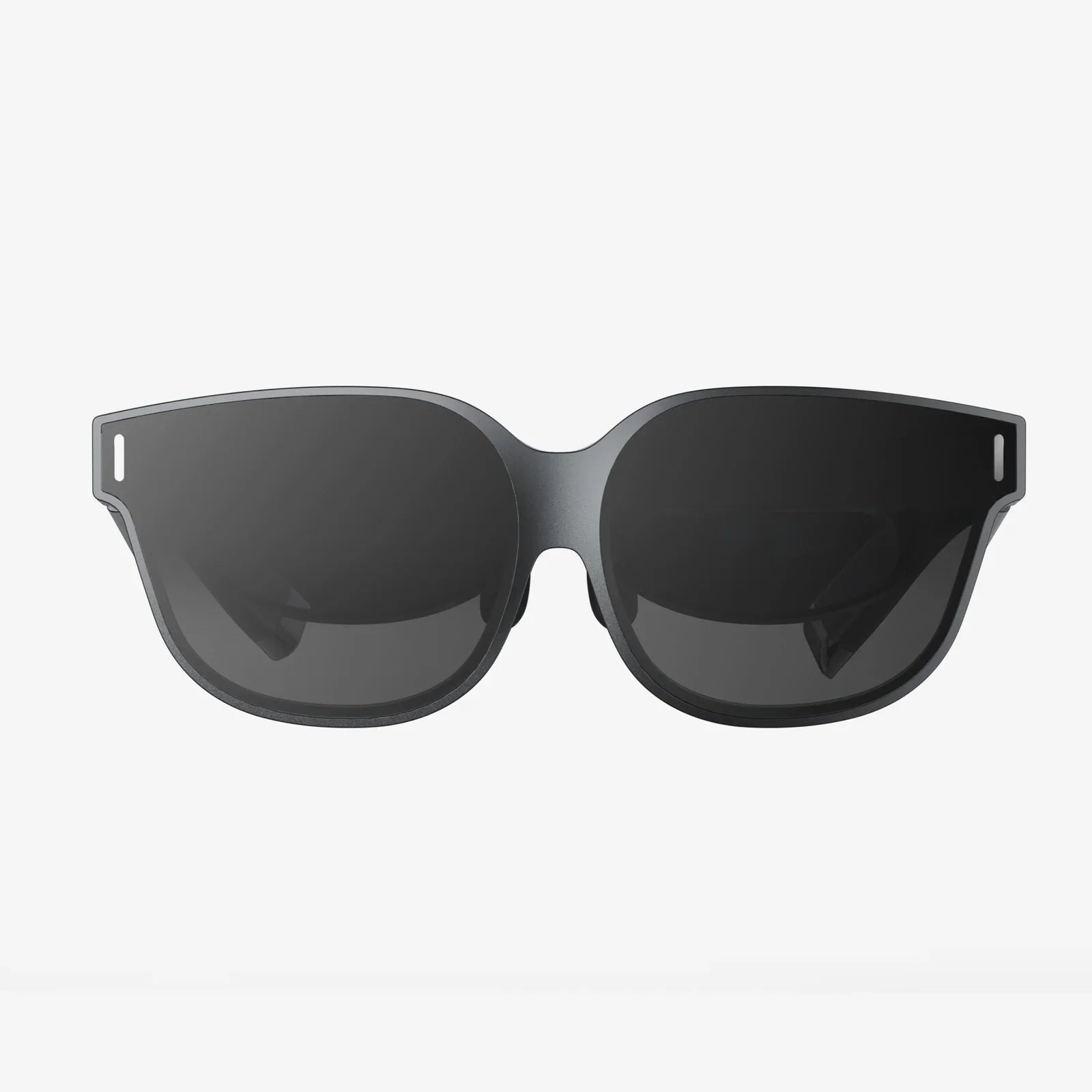
Imagine standing on the edge of a virtual cliff, feeling the vertigo as you peer into a digital abyss, or sitting courtside at a championship game, able to turn your head and see the crowd erupt around you. This is no longer the stuff of science fiction. The world of 3D videos for VR headsets is here, and it is fundamentally reshaping how we consume media, experience stories, and connect with digital content. This immersive technology offers a portal to other worlds, a new lens for education, and a powerful tool for empathy, all from the comfort of your living room. The journey into this three-dimensional realm is just a click away, promising an experience that flat screens simply cannot match.
The Magic Behind the Illusion: Stereoscopy and 360-Degree Capture
At its core, the experience of watching a 3D video through a VR headset is a sophisticated trick on the human brain, leveraging the principles of stereoscopy. Humans perceive depth because our two eyes are spaced apart, each capturing a slightly different image. Our brain then merges these two two-dimensional images into a single three-dimensional picture. 3D videos for VR headsets replicate this exact process.
Content creators use specialized rigs equipped with two or more cameras, meticulously calibrated to mimic the position of human eyes. These cameras capture two distinct video feeds simultaneously. When you wear a VR headset, each of your eyes is shown one of these feeds. The headset's lenses then focus and reshape the image, creating a stereoscopic effect that tricks your brain into perceiving genuine depth and volume. A rock on the ground appears to pop out, a character walking towards you feels tangibly close, and the vastness of a digital landscape feels infinite.
This is often combined with 360-degree capture, which is a different but complementary technology. While stereoscopy provides depth, 360-degree filming captures an entire spherical environment in every direction. The combination of the two—stereoscopic 360 video—is the holy grail for VR immersion. It allows you not only to see a scene in three dimensions but also to freely look around, up, and down within that scene, granting you agency and presence that is unparalleled in traditional media.
From Passive Viewing to Active Experience: The Power of Presence
Watching a traditional movie is a passive activity. You sit and observe a story unfold on a rectangular screen. Consuming 3D content through a VR headset is an active experience. The term most commonly used to describe this feeling is "presence"—the undeniable, often startling sensation of actually being in the virtual environment.
This phenomenon is triggered by several key factors:
- Complete Visual Immersion: The headset blocks out your physical surroundings, filling your entire field of view with the virtual world.
- Head-Tracking: Built-in sensors track the rotation and orientation of your head. When you turn to look left in the real world, the view in the headet pans left accordingly. This 1:1 movement is crucial for selling the illusion and preventing discomfort.
- Spatial Audio: Advanced audio technology mimics how sound behaves in the real world. If a helicopter flies overhead in the video, you'll hear the sound move from one side of your head to the other, and from front to back, depending on where you look. This auditory cue powerfully reinforces the visual illusion of presence.
The result is a profound emotional and psychological connection to the content. A documentary about the ocean is no longer just something you watch; it's an experience where you feel submerged, surrounded by marine life. A narrative film puts you directly in the scene, as if you are a silent witness standing beside the characters.
A Universe of Content: What Can You Actually Watch?
The library of 3D videos for VR headsets has exploded from a niche novelty to a vast and diverse ecosystem. The content available today spans numerous genres and purposes, catering to every imaginable interest.
- Cinematic Narratives: Filmmakers are experimenting with a new language of storytelling. These experiences range from short films to longer features where the viewer's perspective is placed within the story. You might be an invisible ghost in a room observing a family drama unfold or a character directly involved in the action.
- Live Events and Concerts: VR has become a revolutionary front-row ticket. Major sports leagues, music festivals, and theater productions now offer live and recorded 3D VR broadcasts. You can have the best seat in the house for a basketball game or feel like you're on stage with your favorite band, all without leaving home.
- Travel and Exploration: For those with a case of wanderlust, VR is the ultimate travel brochure. Explore the pyramids of Giza, dive the Great Barrier Reef, or take a walking tour of Tokyo's bustling streets. These experiences are not just videos; they are teleportation devices to the world's most fascinating locations.
- Educational and Documentary: This is perhaps one of the most impactful applications. Students can take a field trip to ancient Rome, walk through a human heart, or witness a historical event from a first-person perspective. The ability to learn by being inside the subject matter dramatically improves retention and understanding.
- Gaming and Interactive Experiences: While many VR games are fully interactive and computer-generated, there is a growing genre of interactive 360-degree videos. These choose-your-own-adventure style stories allow you to look around to find clues and make decisions that influence the narrative's outcome.
Creating Your Own Virtual Worlds: The Democratization of VR Filmmaking
Not long ago, creating stereoscopic 360-degree video required a six-figure camera rig and a team of engineers. Today, the technology has become remarkably accessible. A new class of consumer and prosumer cameras allows aspiring creators to capture their own 3D content for VR headsets.
These cameras typically come with multiple lenses—often two to four for 3D 180-degree video, or more for full 360-degree capture. The software then stitches the feeds from these lenses together seamlessly, creating a cohesive spherical video. This democratization of tools is fueling a creative revolution. Travel vloggers, indie filmmakers, educators, and even real estate agents are using this technology to create compelling, immersive content for a growing audience.
However, the craft involves more than just pressing record. creators must think differently about framing, lighting, and editing. Where do you place the audience? How do you guide their attention in an environment where they can look anywhere? These are the new creative challenges that define this emerging art form.
Beyond Entertainment: Practical and Therapeutic Applications
The value of 3D VR videos extends far beyond entertainment. Its ability to induce presence makes it a powerful tool for practical applications in various fields.
- Healthcare: VR is used for surgical training, allowing medical students to observe complex procedures from the surgeon's perspective. It's also used for pain management, distraction therapy for patients undergoing painful treatments, and exposure therapy for treating phobias and PTSD.
- Corporate Training and Simulation: From training retail employees for Black Friday crowds to preparing astronauts for spacewalks, VR provides a safe, controlled, and repeatable environment to practice high-stakes tasks. It's used to train pilots, police officers, and heavy machinery operators.
- Architecture and Design: Architects and interior designers create immersive 3D walkthroughs of unbuilt spaces. Clients can don a headset and literally walk through their future home or office, experiencing the scale, lighting, and flow of the design long before construction begins.
- Social Connection: Social VR platforms allow people to meet up in virtual spaces as customizable avatars. They can watch 3D videos together in a virtual cinema, feeling as if they are sitting next to each other despite being miles apart, fostering a new type of long-distance connection.
Challenges and Considerations on the Road to Perfection
Despite its incredible potential, the medium of 3D videos for VR is not without its challenges. Technical hurdles and user experience issues remain active areas of development.
Resolution and Bandwidth: Because a 360-degree video must cover every possible viewing angle, the image is stretched over a massive sphere. To achieve a high level of detail, extremely high base resolutions are required, which creates enormous file sizes. Streaming this content demands significant bandwidth and robust data compression algorithms. A low-resolution stream can break the illusion of presence with a blurry or pixelated image.
User Comfort: For some users, VR can cause cybersickness—a form of motion sickness caused by a disconnect between what the eyes see and what the body feels. While head-tracking mitigates this, camera movements within the video (like a shaky camera or smooth dolly movement) can still trigger discomfort. Creators must learn to use camera motion sparingly and thoughtfully.
Storytelling Language: As mentioned, traditional filmmaking rules don't always apply. How do you direct the viewer's gaze? Do you force a narrative perspective, or do you allow for complete freedom? The industry is still developing the conventions and vocabulary for this new narrative form.
The Future is Immersive: What Lies Ahead?
The evolution of 3D videos for VR headsets is moving at a breakneck pace. The future promises even more breathtaking and seamless experiences. We are moving towards light-field technology, which captures not just the color and intensity of light but also its direction. This would allow for true parallax and the ability to refocus an image after it's been shot, creating a holographic-like realism.
Advancements in haptic feedback, from sophisticated controllers to full-body suits, will add the sense of touch to the visual and auditory immersion. Imagine feeling the rumble of a virtual engine or the brush of a tree branch. Furthermore, the integration of artificial intelligence will allow for dynamic and personalized narratives that adapt in real-time to where the viewer is looking.
The line between the digital and the physical will continue to blur. Social interactions in VR will become more nuanced and expressive with improved avatar technology and eye-tracking. Ultimately, 3D videos for VR headsets are not just a new way to watch; they are the foundational step towards the metaverse—a persistent, shared, and interconnected network of virtual spaces that could become a significant part of our daily lives for work, play, and socializing.
This is merely the beginning of a sensory revolution. The technology that allows us to step inside a video is rapidly evolving from a novel gadget into a transformative medium for human connection, storytelling, and exploration. The potential to walk with dinosaurs, to stand on Mars, or to see the world through another person's eyes is no longer a fantasy—it's a download away. The next chapter of digital experience is being written in three dimensions, and it invites you to not just see it, but to live it.
Share:
Apps That Use AI Are Reshaping Our Digital Reality
Future Screen Technology: Beyond the Glass Slab and Into a World of Liquid Light