


Imagine a world where your entire wall is a window to any reality you choose, where your car’s windshield overlays navigation data onto the road itself, and where your morning newspaper updates itself on a sheet of material as thin and flexible as a napkin. This isn’t a scene from a science fiction film; it is the tangible, rapidly approaching future promised by the next generation of screen technology. We are on the cusp of a visual revolution that will move beyond the static, glowing rectangles that dominate our lives today and into an era of immersive, adaptive, and intelligent displays that seamlessly integrate with our world and even our bodies.
The End of the LCD/OLED Duopoly: New Contenders Enter the Ring
For decades, the display market has been largely defined by two dominant technologies: Liquid Crystal Displays (LCD) and Organic Light-Emitting Diodes (OLED). LCDs, backlit and reliable, gave us affordable televisions and computer monitors. OLEDs, with their self-emissive pixels, delivered unparalleled black levels and flexibility, gracing the world's best smartphones. But the future is pluralistic, and a host of new technologies are vying for supremacy, each with its own revolutionary promise.
MicroLED: The Holy Grail of Displays?
Often hailed as the ultimate display technology, MicroLED combines the best attributes of its predecessors while eliminating their weaknesses. Like OLED, each pixel is self-emissive, meaning it produces its own light and can switch off completely for perfect blacks and infinite contrast. However, unlike OLED, which uses organic compounds that can degrade over time and are susceptible to burn-in, MicroLED uses inorganic microscopic LEDs made from gallium nitride. This makes them incredibly durable, brighter, and far more energy-efficient.
The implications are staggering. MicroLED panels can be modular, assembled like tiles to create screens of any size or shape, from a wristwatch to an entire building facade, all with zero bezels. Their high brightness and efficiency make them ideal for outdoor use and augmented reality applications. The primary hurdle has been manufacturing complexity and cost—picking and placing millions of microscopic LEDs with perfect yield is a monumental engineering challenge. But as production techniques improve, MicroLED is poised to become the gold standard for premium visual experiences.
Quantum Dots: The Evolution of Color
While not a display technology in itself, the role of quantum dots is fundamental to the future of color reproduction. These are nanoscale semiconductor particles that fluoresce when excited by light. Their key property is that the color of light they emit is determined precisely by their size, allowing for incredibly pure and tunable red, green, and blue light.
Today, quantum dots are primarily used as a color conversion layer in high-end LCD TVs (marketed as QLED), enhancing their color volume and brightness. The next step is QD-OLED, which uses a blue OLED light source with quantum dots to create the red and green subpixels. But the true future lies in QNED (Quantum Nano-Emitting Diode) and, more significantly, Electroluminescent Quantum Dots (QDEL).
Also known as NanoLED, QDEL technology aims to use quantum dots themselves as the light-emitting material. A voltage would be applied directly to the quantum dots, causing them to electroluminesce. This would combine the perfect color and efficiency of quantum dots with the thinness and simplicity of OLED, potentially at a lower manufacturing cost. It promises a future of paper-thin, flexible, and stunningly colorful displays that could be printed like newspaper ink.
Beyond Flat: The Forms and Functions of Future Screens
The next revolution isn't just about what's on the screen, but the screen itself. Form factor will undergo a radical transformation, breaking free from the rigid pane of glass.
Foldable, Rollable, and Stretchable Displays
We've seen the first generation of foldable smartphones and rollable TVs, but these are just the primitive ancestors of what's to come. Future screen technology will embrace true flexibility. Advancements in substrate materials, moving from polyimide plastic to ultra-thin glass composites and even new polymer blends, will create displays that can be folded, rolled, and even stretched without degradation.
Imagine a smartphone that unfolds into a tablet, which then can be rolled up like a scroll and stored in a pocket. Consider a car interior where the entire dashboard is a seamless, morphing display that can reconfigure itself for driving, entertainment, or autonomous mode. Stretchable displays, using meshes of micro-LEDs on elastic substrates, could be integrated into clothing, showing dynamic patterns or health metrics, or onto curved architectural elements, turning entire rooms into immersive environments.
Transparent and Invisible Displays
Why have a screen that is a black void when not in use? The future is transparent. Using transparent OLED (T-OLED) and eventually transparent MicroLED, displays will become windows—literally and figuratively. Your car’s side window could show information about a point of interest you're passing. Your refrigerator door could show its contents while remaining see-through. Office meeting rooms could have glass walls that turn into interactive whiteboards at a moment's notice.
This technology pushes the concept of augmented reality further, anchoring digital information directly onto the real-world objects we look through. The ultimate goal is for the display to disappear entirely when not needed, seamlessly blending into its environment rather than dominating it.
The Bridge to Augmented Reality: Screens on Your Eyes
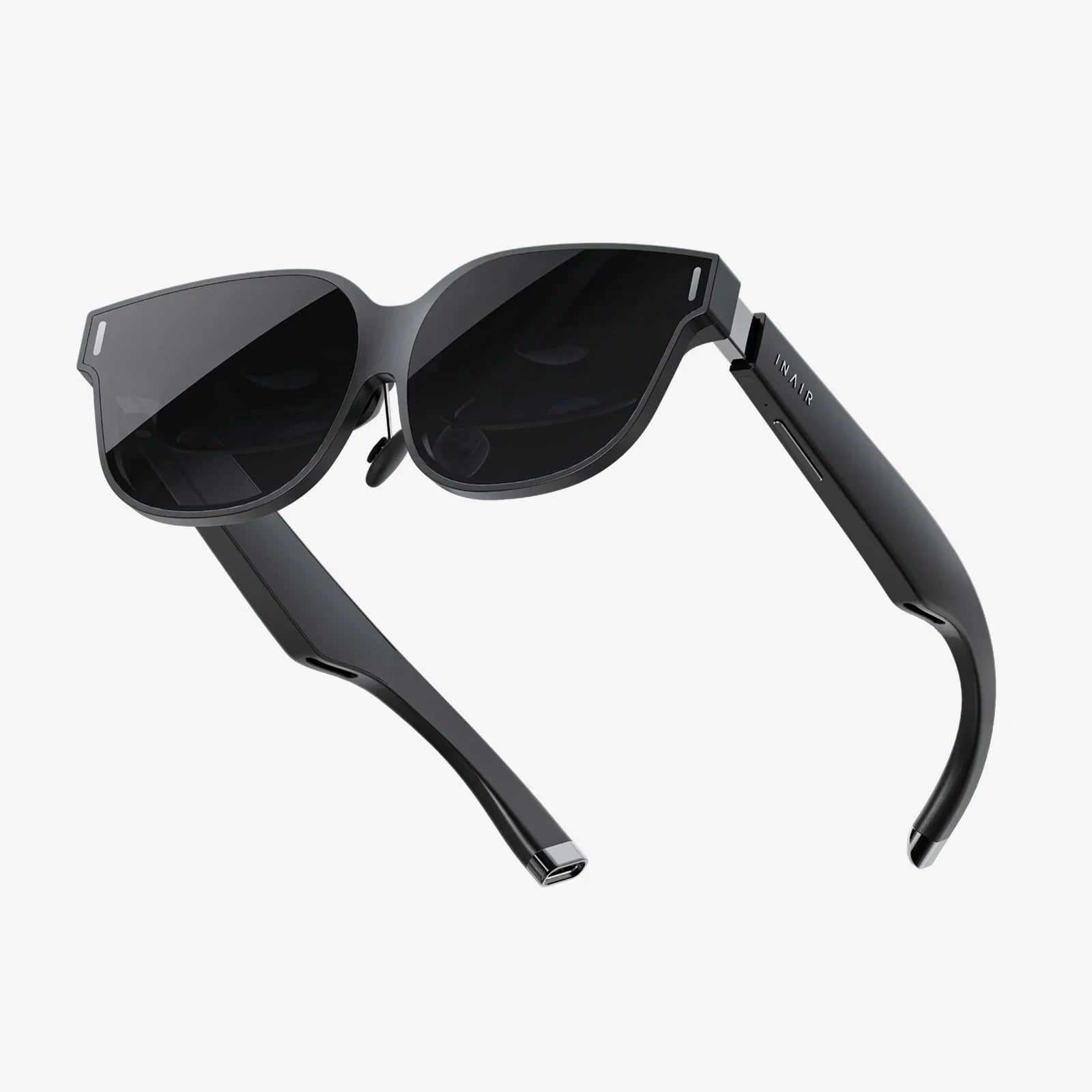
No discussion of future screen technology is complete without addressing the ultimate personal display: augmented reality (AR) and virtual reality (VR) headsets. These devices represent the most complex challenge—projecting high-resolution, bright, and convincing images directly onto the human retina in a package small enough to wear comfortably.
Micro-OLED and Silicon-Based Displays
For VR, the current frontier is Micro-OLED (or OLEDoS). These are OLED panels built directly onto a silicon wafer, the same material used for computer chips. This allows for incredibly high pixel densities (exceeding 3,000 pixels per inch) in a minuscule form factor, essential for eliminating the "screen door effect" and creating truly immersive virtual worlds. They are self-emissive and offer fast response times, crucial for avoiding motion sickness.
The Waveguide and Laser Beam Scanning
For AR, the display technology is only half the battle; the other half is the "combiner"—the method of projecting the image onto the real world. Waveguides, which are transparent glass or plastic plates with nanostructures that bend light from a micro-display into the eye, are the leading approach. They allow for sleek, eyeglasses-like form factors.
An even more futuristic approach is Laser Beam Scanning (LBS). This uses miniature mirrors (MEMS) to rasterize low-power lasers directly onto the retina. This technology can create always-in-focus images with high brightness and efficiency, though it has historically faced challenges with resolution and "speckle." Overcoming these hurdles could make LBS the technology that finally delivers true all-day AR glasses.
Sensory Convergence: When Screens Can Feel and See
The future screen will be more than a visual interface; it will be a multi-sensory portal. Haptic feedback technology will evolve from simple vibrations to sophisticated ultrasonic and electrostatic systems that can simulate the texture of objects on a touchscreen—feeling the weave of a fabric or the roughness of stone before you buy it online.
Furthermore, displays will become perceptive. Under-display cameras (UDC) are the first step, hiding sensors beneath the active display area to eliminate notches and pinholes. The next step is embedding a multitude of tiny sensors across the entire screen surface. These could include ambient light sensors for perfect brightness adjustment, biometric sensors for health monitoring, and even LiDAR scanners for depth sensing and 3D modeling, turning the entire display into a camera and scanner that sees the world in front of it.
The Challenges on the Horizon: More Than Just Pixels
This breathtaking future is not without its obstacles. The environmental impact of producing and disposing of increasingly complex electronic displays must be addressed through circular economies and more sustainable material sourcing. The massive energy consumption of always-on, wall-sized displays will require breakthroughs in efficiency that go beyond Moore's Law.
Furthermore, the proliferation of pervasive screens raises profound questions about digital wellbeing, privacy, and the very nature of attention. When every surface can display information, managing digital clutter and protecting personal data will become paramount challenges for designers and policymakers alike. The technology may become seamless, but our relationship with it will require conscious and deliberate design.
We are moving towards a world where the boundary between the digital and the physical will dissolve, not through dystopian overlays, but through elegant, ambient, and intuitive displays that enhance our reality rather than replace it. The future screen won’t be something we look at; it will be something we look through, something we interact with, and something that becomes an unconscious extension of our human intent. The age of the passive glass slab is ending, and the era of liquid light is just beginning to dawn.
Share:
Videos 3D Para Gafas VR: The Ultimate Immersive Experience
InAir 2 Pro AR Glasses: The Future of Personal Computing is on Your Face