


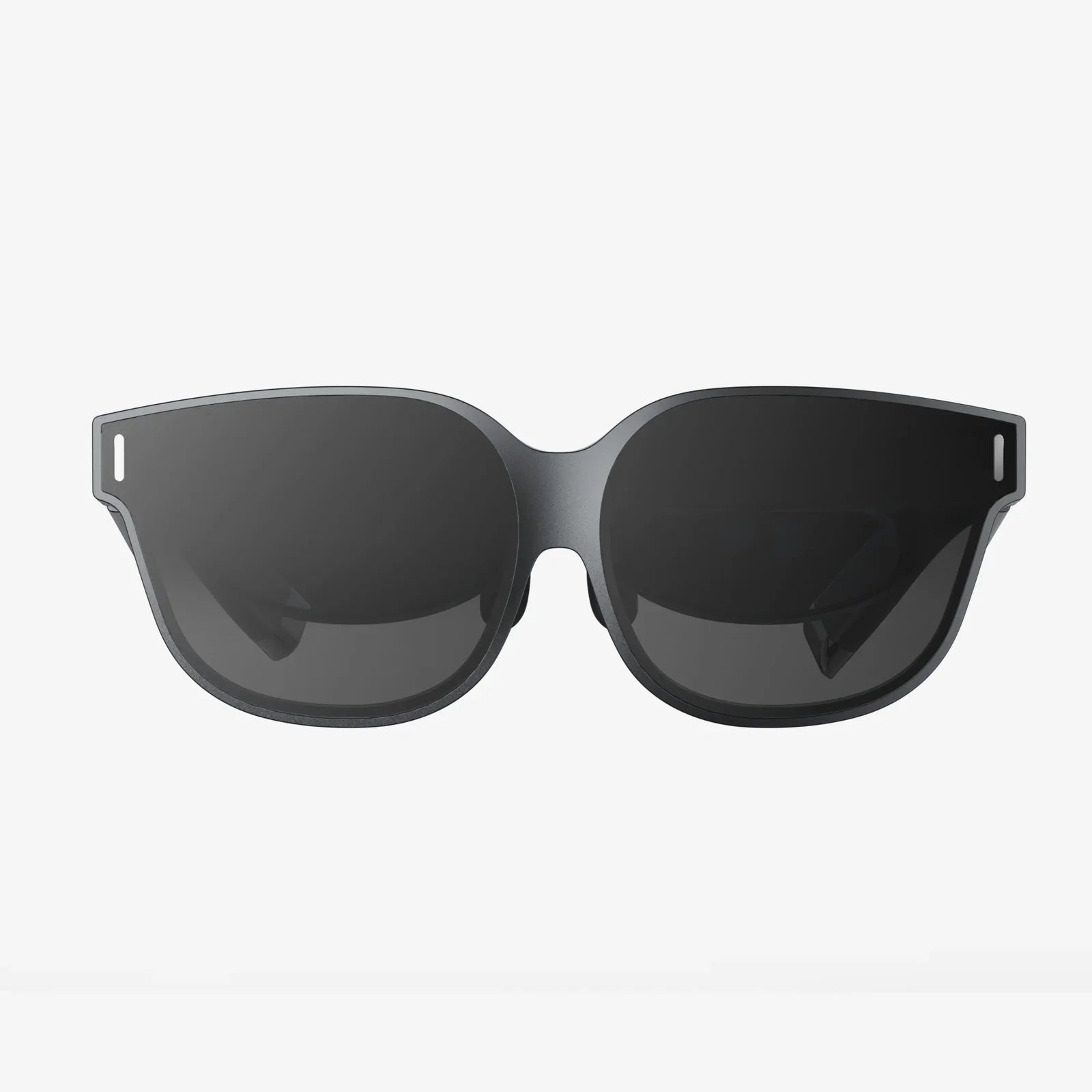
Imagine a world where the digital and physical are no longer separate realms but a seamless, intertwined experience. This is the promise held within the rapidly evolving technologies of Virtual Reality (VR) and Augmented Reality (AR), a duo poised to fundamentally reshape every facet of our lives, from how we work and learn to how we connect and heal. We stand on the precipice of a new reality, and it's being built in ones and zeros.
Demystifying the Spectrum: From VR to AR and Everything In Between
While often grouped under the umbrella of immersive technologies, VR and AR offer distinctly different experiences. Understanding this spectrum is key to appreciating their individual and combined potential.
Virtual Reality (VR) is the art of complete immersion. By donning a head-mounted display, users are transported into entirely computer-generated environments. These digital worlds can be fantastical recreations of impossible places, hyper-realistic simulations of real-world locations, or abstract landscapes of data. The primary goal of VR is to create a sense of presence—the undeniable feeling of "being there." This is achieved through a combination of high-resolution visuals, 3D spatial audio, and precise motion tracking that ensures your physical movements are mirrored perfectly in the virtual space. Advanced systems even incorporate haptic feedback, allowing users to "feel" digital objects, further deepening the illusion.
Augmented Reality (AR), in contrast, does not seek to replace the real world but to augment it. AR overlays digital information—images, text, 3D models, animations—onto our view of the physical environment through a device like a smartphone, tablet, or, more powerfully, a pair of smart glasses. The magic of AR lies in its contextual relevance; the digital content is anchored to and interacts with the real world in real-time. This technology acts as a dynamic, intelligent layer of information on top of our existing reality, enhancing our perception and understanding of our surroundings.
Bridging these two is a concept often referred to as Mixed Reality (MR). MR is not just an overlay; it represents a true merger where digital objects coexist and interact with the physical world in a believable way. A virtual character might hide behind your real sofa, or a digital windmill's shadow might fall correctly across your real desk. This requires advanced sensors and understanding of the environment, making it the next frontier in immersive computing.
The Building Blocks of Immersion: Core Technologies Powering VR and AR
The magic of these experiences is powered by a sophisticated stack of technologies working in concert.
- Display Technology: High-resolution, high-refresh-rate displays are crucial for preventing motion sickness and creating a believable image. For VR, this means screens placed mere centimeters from the eyes, often using specialized lenses to create a wide field of view. For AR, the challenge is different—projecting images onto transparent lenses (optical see-through) or using cameras to blend the real world with digital elements (video see-through).
- Tracking and Sensing: Precise tracking is the backbone of immersion. Inside-out tracking uses cameras on the device itself to map the environment and track the user's position, while outside-in tracking uses external sensors placed in a room. AR and MR devices are packed with additional sensors—depth sensors, LiDAR, and RGB cameras—to create a detailed 3D map of the environment, allowing digital objects to understand and interact with physical surfaces and objects.
- Computational Power and Connectivity: Rendering complex, interactive 3D worlds in real-time demands immense processing power. This is handled by powerful onboard processors or, increasingly, by offloading the computation to the cloud via high-speed 5G and Wi-Fi 6/6E connections. This shift towards cloud-based rendering promises to make high-fidelity experiences accessible on lighter, more affordable devices.
- Input and Interaction: How we interact with these digital spaces is evolving. Hand-tracking technology allows users to manipulate virtual objects with natural gestures, while controllers provide tactile feedback for more precise inputs. Eye-tracking is emerging as a critical technology, enabling foveated rendering (which drastically improves performance by rendering only the area you're looking at in high detail) and more intuitive UI navigation.
Transforming Industries: The Practical Applications of VR and AR
Beyond gaming and entertainment, the practical applications of VR and AR are revolutionizing entire sectors.
Revolutionizing Healthcare and Medicine
The impact on medicine is profound. Surgeons use AR to project critical information—like a patient's vitals or 3D scans of their anatomy—directly into their field of view during operations, keeping their focus on the patient. Medical students are using VR to practice complex procedures in a risk-free environment, dissecting virtual cadavers and performing virtual surgeries. Furthermore, VR is proving to be a powerful tool for therapy, treating conditions like PTSD through controlled exposure therapy, managing chronic pain, and aiding in physical rehabilitation by turning exercises into engaging games.
Redefining Education and Corporate Training
Immersive learning is unlocking new pedagogical possibilities. Instead of reading about ancient Rome, students can take a VR field trip to walk its streets. Mechanics-in-training can learn to repair a complex engine by following AR instructions overlaid on the actual machinery, highlighting each part and step. Corporations are using VR to conduct hyper-realistic safety training for high-risk jobs, from oil rigs to electrical grids, and for soft skills training like public speaking and leadership, placing employees in simulated challenging scenarios.
Architecting the Future of Design and Manufacturing
In architecture, engineering, and construction, these technologies are becoming indispensable. Designers and clients can don a VR headset to walk through a full-scale, photorealistic model of a building before a single brick is laid, making design changes in real-time. On the factory floor, AR smart glasses can guide assembly line workers through complex wiring tasks, drastically reducing errors and training time. The concept of the "digital twin"—a virtual, real-time replica of a physical asset or system—is supercharged by VR and AR, allowing for remote monitoring, predictive maintenance, and collaborative design reviews from anywhere in the world.
Creating the Future of Retail and Remote Collaboration
The retail experience is being reimagined. AR apps allow you to see how a new sofa would look in your living room or how a pair of glasses would fit your face before you buy. Virtual showrooms let customers explore products in 3D from home. Perhaps most significantly, VR and AR are dismantling the barriers of distance for collaboration. Remote teams can meet in a shared virtual workspace as lifelike avatars, interacting with 3D models of their projects as if they were in the same room, a concept far more powerful and engaging than a traditional video call.
Navigating the Challenges: The Roadblocks to Mass Adoption
Despite the immense potential, significant hurdles remain before these technologies achieve ubiquitous adoption.
- Hardware Limitations: Many headsets are still too bulky, expensive, and tethered to powerful computers. Battery life for standalone AR devices is often insufficient for all-day use. Achieving visual perfection—like resolving the "vergence-accommodation conflict" which can cause eye strain—remains a complex technical challenge.
- The User Experience (UX) Conundrum: Designing intuitive interfaces for 3D space is a new discipline. How do users navigate vast virtual worlds? How are complex menus presented without cluttering the experience? Establishing universal design principles for spatial computing is an ongoing process.
- The Social and Ethical Quandary: As these technologies collect vast amounts of biometric and environmental data—from eye movements to detailed 3D maps of our homes—questions of privacy and data security become paramount. There are also concerns about prolonged use affecting social development, creating new forms of addiction, and the potential for a stark digital divide between those who can access these new realities and those who cannot.
The Convergent Future: Where VR and AR Collide
The most exciting development is not the progression of VR and AR as separate paths, but their inevitable convergence. We are moving towards a future of all-day wearable devices, likely in the form of sleek, socially acceptable glasses. These devices will be context-aware, seamlessly blending immersive virtual workspaces with contextual AR information as we move through our day. This will give rise to the metaverse—a persistent network of interconnected virtual spaces and experiences that becomes an extension of our economy, social lives, and identity.
In this future, the distinction between working from home and being in a virtual office will blur. Social gatherings will happen on virtual beaches or in digital replicas of famous museums. The very way we interface with the infinite information of the internet will shift from flat screens to a dynamic, spatial web integrated into our physical reality. This isn't about escaping our world, but about enriching it, enhancing human capability, and forging deeper connections across any distance.
The line between what is real and what is digitally constructed is not just blurring; it is being intentionally and creatively redrawn. Virtual and Augmented Reality are the brushes and chisels for this new canvas, offering a glimpse into a future where our reality is not a fixed state but a customizable, interactive, and profoundly human experience. The next era of human-computer interaction is being built around you, and it’s waiting for you to step inside.
Share:
Augmented Reality Virtual Reality Headset: The Ultimate Portal to Blended Digital Worlds
Human Computer Interaction Virtual Reality: The Dawn of a New Digital Epoch