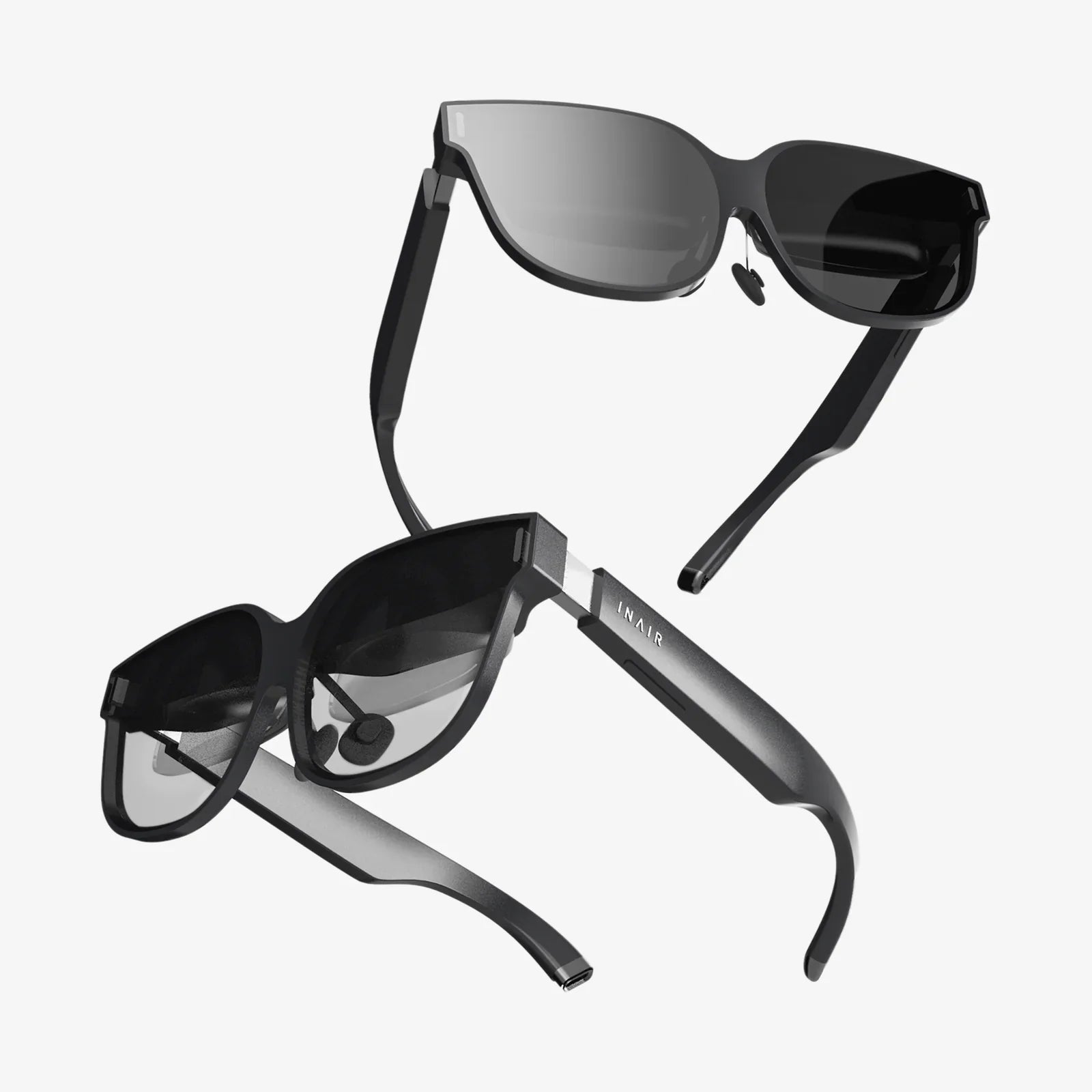
Imagine a device that can transport you to the summit of Mount Everest, allow you to walk alongside dinosaurs, or overlay a schematic of a beating heart onto a medical student’s training dummy. This is no longer the stuff of science fiction; it is the burgeoning reality made possible by the modern augmented reality virtual reality headset. These sophisticated wearables are rapidly evolving from niche novelties into powerful portals, poised to revolutionize how we work, learn, play, and connect. The race to own the gateway to these new realities is on, and the implications for our future are nothing short of staggering.
Demystifying the Technology: AR, VR, and the Spectrum In Between
To understand the headset itself, we must first distinguish between the two primary realities it creates. While often grouped together, Augmented Reality (AR) and Virtual Reality (VR) offer fundamentally different experiences, yet the line between them is increasingly blurred within a single device.
Virtual Reality: Total Digital Immersion
Virtual Reality is an all-encompassing simulation. A VR headset completely occludes your view of the physical world, replacing it with a computer-generated environment. Through stereoscopic displays—one for each eye—and advanced motion tracking, it creates a convincing illusion of being somewhere else entirely. This is known as presence, the visceral feeling of actually inhabiting the digital space. Early VR was often plagued by latency issues, where a lag between head movement and display update could cause disorientation and nausea. Modern headsets have largely overcome this with high refresh rates (90Hz and above) and inside-out tracking, using integrated cameras to map the environment without external sensors.
Augmented Reality: The Digital Overlaid on the Real
Augmented Reality, by contrast, does not seek to replace the real world but to enhance it. Digital information—images, data, 3D models—is seamlessly superimposed onto the user’s view of their immediate surroundings. Think of navigation arrows painted onto the road in front of you or a virtual character sitting on your actual sofa. The technical challenge here is profound: the headset must understand the geometry of the environment, a process called spatial mapping, to anchor digital objects convincingly. This requires a suite of sensors, including cameras, depth sensors, and LiDAR scanners, to create a real-time 3D map of the world. Many modern devices exist on a spectrum called Mixed Reality (MR), where virtual objects can not only be placed in your room but can also interact with it, such as a digital ball bouncing off your physical coffee table.
The Anatomy of a Modern Headset
The magic of these experiences is conjured by a symphony of hardware packed into a single wearable form factor. While designs vary, several core components are universal.
Visual Systems: The Windows to New Worlds
The display is the soul of the headset. Most high-end devices use fast-switching LCD or OLED panels micro-screened through custom optics. The key metrics are resolution (pixels per degree dictates sharpness), refresh rate (for smooth motion), and field of view (FOV), which determines how much of your vision is filled by the digital world. A narrow FOV can feel like looking through binoculars, breaking immersion, while a wide FOV is far more convincing. Advanced pancake lenses are now replacing older fresnel lenses, allowing for a much slimmer and lighter device without sacrificing optical quality.
Tracking and Interaction: Bridging the Physical-Digital Divide
How the headset understands your movement is critical. Inside-out tracking, as mentioned, uses onboard cameras to track the environment. For input, systems have evolved dramatically. Early VR relied on handheld controllers with precise positional tracking. Today, the frontier is in hand-tracking and eye-tracking. Cameras on the headset can now see your hands, allowing you to manipulate virtual objects with natural gestures. Eye-tracking not only enables foveated rendering (dynamically rendering the spot you’re looking at in high detail to save processing power) but also provides a powerful new input method—selection by gaze.
Audio and Haptics: Completing the Sensory Picture
Immersion is a multi-sensory experience. Spatial audio is a crucial technology that mimics how sound behaves in the real world, making a noise seem to come from a specific point in 3D space, even behind or above you. This is often achieved through advanced software algorithms rather than complex speaker systems. Haptic feedback, both in controllers and increasingly in the headset itself or wearable vests, provides the sense of touch. A gentle rumble when picking up an object or a directional vibration when being shot at in a game adds a powerful layer of physicality to the experience.
Transforming Industries: The Practical Power of AR and VR
Beyond gaming and entertainment, which were the initial drivers, AR and VR headsets are proving to be formidable tools for enterprise, education, and healthcare.
Revolutionizing Design and Manufacturing
In engineering and architecture, designers can step inside their creations long before a single physical prototype is built. Automotive companies use VR to conduct virtual crash tests and ergonomic studies on digital car interiors. Technicians on the factory floor can wear AR headsets to see wiring diagrams or assembly instructions overlaid directly onto the machinery they are repairing, drastically reducing errors and training time.
The Future of Medicine and Surgery
Medical students can practice complex procedures on virtual patients with zero risk. Surgeons use AR to visualize a patient’s anatomy—such as the precise location of a tumor—superimposed onto their body during an operation, effectively granting them X-ray vision. VR is also being used for therapeutic purposes, such as exposure therapy for patients with phobias or PTSD, and for managing pain during painful procedures.
Reimagining Education and Remote Collaboration
Imagine a history class where students can virtually visit ancient Rome or a biology lesson where they can walk through a human heart. AR and VR make experiential, immersive learning a reality. For business, remote collaboration is transformed. Instead of a flat video call, colleagues from around the world can meet as lifelike avatars in a virtual boardroom or collaborate on a 3D model of a new product as if they were standing in the same room.
Navigating the Challenges: The Road Ahead
For all their promise, widespread adoption of AR and VR headsets still faces significant hurdles that must be addressed.
The Quest for Comfort and Accessibility
Early headsets were often heavy, cumbersome, and tethered to a powerful computer. The industry is aggressively moving towards wireless standalone devices that are lighter and more comfortable for extended use. However, the "holy grail" remains a pair of sunglasses-style form factor that can deliver high-fidelity AR and VR, a goal that is still years away due to limitations in battery technology and processing power.
Social and Ethical Considerations
As these technologies become more integrated into daily life, they raise important questions. How do we prevent the creation of a deeper digital divide? What are the privacy implications of devices with always-on cameras and microphones constantly scanning our homes and lives? The potential for new forms of addictive behavior, misinformation (e.g., convincing deepfakes in AR), and the psychological effects of long-term immersion are areas that require careful study and proactive policy.
The Content Conundrum
Hardware is nothing without software. The ecosystem of "killer apps" beyond gaming is still growing. Creating high-quality, immersive content is expensive and complex. The industry needs a continuous stream of compelling experiences across productivity, social connection, and creativity to justify the investment for the average consumer.
The journey of the augmented reality virtual reality headset is just beginning. We are witnessing the awkward, exciting, and revolutionary first steps towards a future where the digital and physical are inextricably linked. The devices on the market today are the pioneers, the proof-of-concept for a transformation that will ultimately redefine human-computer interaction. The headset will likely evolve, perhaps even disappear into everyday eyewear, but its function as our lens and portal to a richer, more informed, and infinitely more expansive reality is here to stay. The next time you see someone gesturing at the air, know they might not be talking to themselves—they could be designing a skyscraper, performing surgery, or simply chatting with a friend from across the globe in a way you can’t yet see. The future is putting on a headset, and it’s inviting you to look inside.