


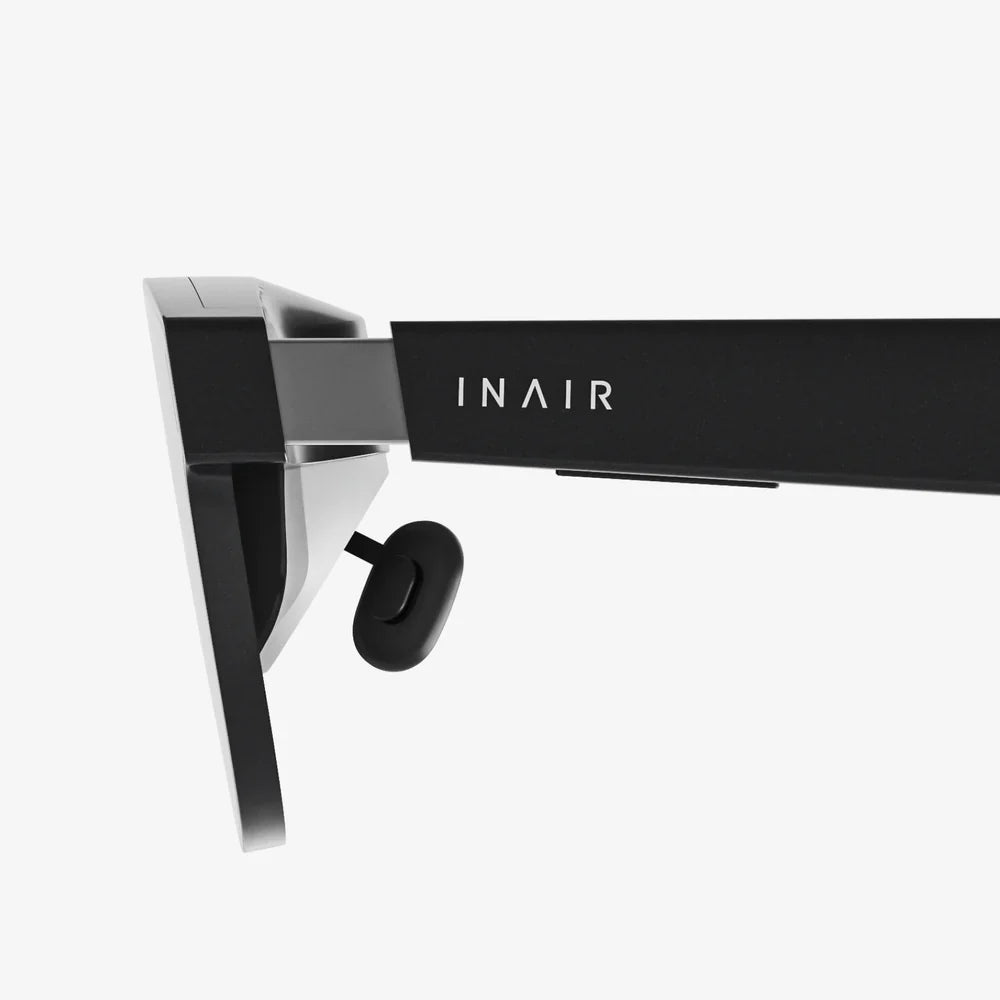
Imagine walking into your office, greeting colleagues from across the globe with a nod, pulling up a complex 3D model with a flick of your wrist, and annotating the virtual space with your ideas—all without leaving your home. This isn't a scene from a distant sci-fi future; it's the rapidly approaching reality promised by virtual glasses for work. This transformative technology is set to dismantle the remaining barriers of remote collaboration, offering an unparalleled level of immersion and interaction that flat screens and video calls simply cannot match. The way we conceive of the workplace, productivity, and even our daily commute is on the verge of a fundamental shift, and it’s all happening through a pair of sleek, intelligent lenses.
Beyond the Screen: Redefining the Digital Workspace
For decades, the pinnacle of digital work has been a multi-monitor setup—a wall of two-dimensional displays containing our portals to meetings, data, and projects. Virtual glasses shatter this paradigm. Instead of looking at a world of work, you are placed inside it. The core proposition is spatial computing: the ability to use the three-dimensional space around you as a canvas for information and interaction.
This means your digital environment is no longer confined to a rectangle on your desk. You can have expansive virtual monitors floating in your physical room, each larger and clearer than any physical screen you could afford. Your email client can reside on your left, a coding terminal can be positioned straight ahead, and a reference document can be pinned to your right—all remaining persistent in your space, exactly where you left them. This eliminates the constant Alt-Tabbing and window management that fragments focus, creating a state of deep, uninterrupted flow.
The End of "Video Call Fatigue"
One of the most immediate and compelling applications for virtual glasses is in meetings and collaboration. Current video conferencing tools, while essential, are notoriously draining. They force us to stare at a grid of faces, struggle with awkward pauses, and miss out on the nuanced body language and shared context of a physical room.
Virtual glasses propose a solution: shared virtual spaces. Teams can meet not in a grid, but around a virtual conference table, inside a purpose-built auditorium, or even on a digital replica of a factory floor. Avatars, powered by advanced tracking, can represent users with realistic gestures and expressions, fostering a much stronger sense of presence and connection. The feeling of being "in the same room" is profoundly different from looking at a screen together.
Collaborating in 3D
The benefits extend far beyond social presence. For roles that involve design, engineering, architecture, or science, the ability to collaboratively manipulate 3D models is revolutionary. Architects can walk clients through a full-scale, immersive rendering of a building before a single brick is laid. Engineers from different continents can stand around a holographic engine, pointing out components and discussing modifications in real-time. Medical professionals can study a detailed, interactive human anatomy model together. This shared interaction with complex data in three dimensions dramatically accelerates understanding, ideation, and problem-solving.
Building the Virtual Office of Tomorrow
The concept of the office itself is evolving from a physical location to a virtual destination. Companies could establish persistent digital headquarters—customizable virtual campuses that employees "log into" each day. These spaces wouldn't be limited by physics or budget. You could have a serene beachfront cabana for deep focus work, a bustling open-plan atrium for spontaneous "watercooler" conversations, and sound-proofed meeting pods for private discussions, all within the same virtual campus.
This has staggering implications for company culture and onboarding. New hires could take a tour of the virtual HQ on their first day, meeting colleagues in a more natural and engaging way than a series of scheduled video calls. Company-wide announcements could feel like a true all-hands meeting, with everyone gathered in a single virtual amphitheater. This creates a cohesive cultural fabric for organizations that are otherwise geographically dispersed, helping to combat the isolation that can plague remote work.
Overcoming the Hurdles: The Path to Mainstream Adoption
For all its promise, the widespread adoption of virtual glasses for work is not without significant challenges. The technology must overcome several critical barriers before it can become as ubiquitous as the laptop.
The Hardware Conundrum: Power vs. Comfort
The ideal pair of work glasses must be a marvel of engineering: powerful enough to render complex, photorealistic environments, yet lightweight and comfortable enough to be worn for an eight-hour workday. They must feature high-resolution displays to avoid screen-door effects and enable clear text reading, possess a wide field of view for immersion, and include accurate eye and hand tracking for intuitive interaction. All of this must be achieved without generating excessive heat or requiring a bulky battery pack that tethers the user to a wall outlet. Current technology is making rapid strides, but achieving the perfect balance of performance, comfort, and all-day battery life remains the holy grail.
The Software Ecosystem: Building the Foundation
Powerful hardware is useless without a robust software ecosystem. This requires the development of new operating systems built from the ground up for spatial computing. It also necessitates that the software tools we use every day—productivity suites, design applications, communication platforms, and project management tools—be reimagined and rebuilt for a three-dimensional interface. This is a monumental task for developers and a potential point of friction for businesses hesitant to retrain their workforce on entirely new paradigms of interaction.
The Human Factor: Accessibility, Privacy, and the New Digital Divide
Perhaps the most profound challenges are human and societal. Not everyone can wear head-worn devices due to medical conditions like vertigo, epilepsy, or severe motion sickness. Companies must ensure this new mode of work is accessible to all employees, not just those who are technologically adept or physically able to use the hardware.
Furthermore, the privacy implications are vast. These devices, by their very nature, will have always-on cameras and microphones, scanning the user's environment. The data collected—from how long you look at a virtual object to your physiological responses in a meeting—is incredibly sensitive. Robust, transparent data governance policies must be established to prevent a dystopian future of workplace surveillance.
There is also a risk of creating a new digital divide. Will employees be evaluated on their willingness to adopt this new, potentially invasive technology? Could a refusal to spend one's day in a virtual world hinder career advancement? These are critical questions that society and businesses must grapple with proactively.
A Glimpse into the Future: The Blended Reality Workday
Looking ahead, the most likely scenario is not a wholesale replacement of physical reality, but a sophisticated blending of the two—a concept often called augmented or mixed reality. Your virtual glasses will seamlessly overlay digital information onto your physical world. A mechanic could see repair instructions and part diagrams superimposed directly onto the machinery they are fixing. A field service technician could have a remote expert visually annotate their real-world field of view, guiding them through a complex procedure. This blended reality combines the best of both worlds: the tangibility of the physical and the infinite flexibility of the digital.
The Evolving Nature of Presence and Connection
Ultimately, the adoption of virtual glasses for work will force us to re-examine what it means to be "present" and to "connect" with our colleagues. While the technology can simulate presence with astonishing fidelity, it is still a simulation. The warmth of a handshake, the subtle energy of a room, and the irreplaceable value of shared physical experiences are elements that may never be fully digitized. The workplaces of the future will likely be hybrid in the truest sense, leveraging virtual glasses for unparalleled productivity and collaboration when needed, while still valuing and preserving opportunities for genuine, in-person human connection. The goal is not to replace reality, but to augment it, giving us new tools to work smarter, collaborate better, and perhaps, reclaim a sense of shared purpose that can sometimes feel lost in the digital age.
The desk of the future might not have any monitors at all. Your next project review could involve walking through a life-sized data visualization, your next brainstorming session might happen on a virtual whiteboard that spans the entire wall, and your most important colleague might be a digital avatar who feels just as present as if they were in the room. The revolution isn't just about seeing differently; it's about interacting with work, data, and each other in a fundamentally new way. The question is no longer if this future will arrive, but how quickly we can adapt to harness its immense potential while thoughtfully navigating its profound challenges. The next era of work is putting on a headset and stepping into view.
Share:
Virtual Glasses for PC: The Ultimate Immersive Computing Experience
AR(VR) Software: The Invisible Engine Powering Our Digital Future