


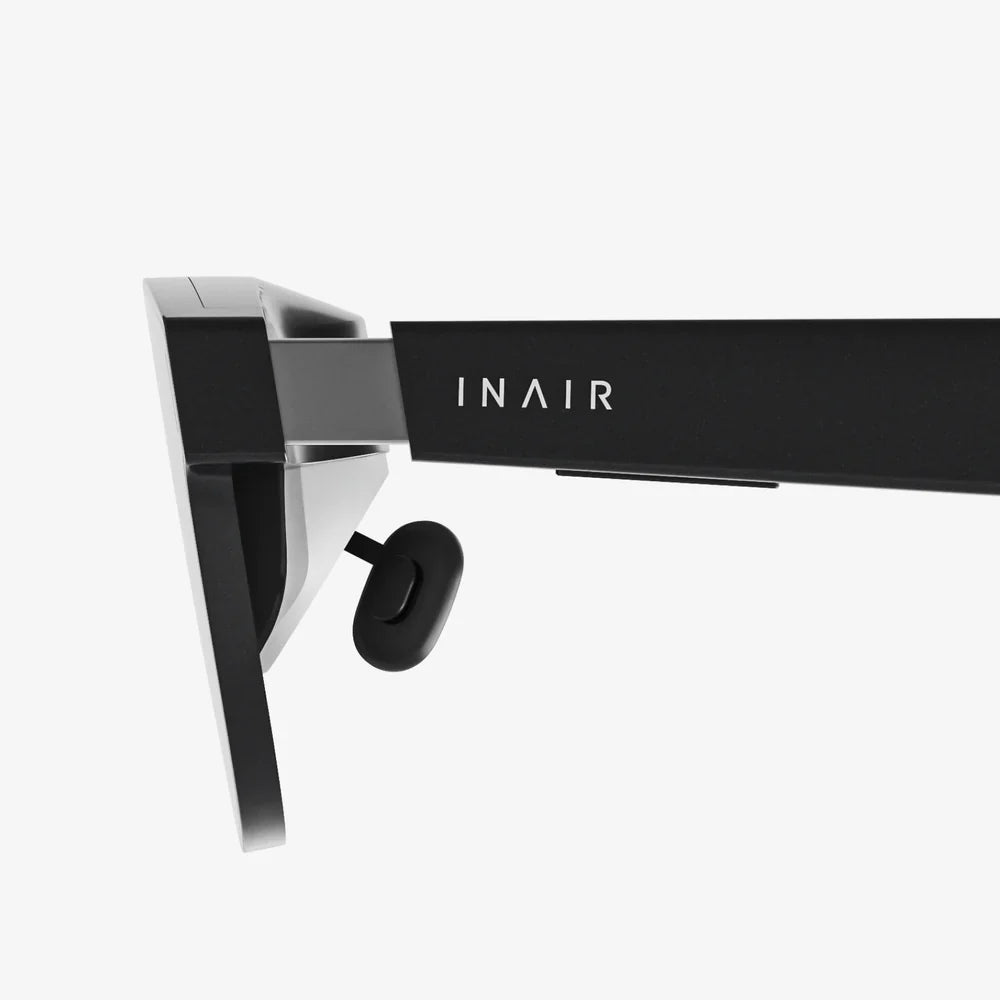
The digital frontier is no longer a distant future; it's knocking on your door, promising to transform your living room into a gaming coliseum, a virtual boardroom, or a private cinema. For tech enthusiasts and curious consumers across Pakistan, the burning question isn't just if they should step into this immersive world, but how to do it without their wallet taking a virtual nosedive. The quest to understand the virtual glasses price in Pakistan is more than a search for a number; it's a journey through technology, economics, and market dynamics, all converging to define the accessibility of the next computing revolution.
Decoding the Virtual and Augmented Reality Spectrum
Before diving into price tags, it's crucial to understand what we're actually discussing. The term "virtual glasses" often serves as a catch-all for a range of devices, primarily falling into two categories:
- Virtual Reality (VR) Headsets: These devices completely immerse the user in a digital environment, blocking out the physical world. They are typically used for gaming, immersive simulations, and 360-degree videos.
- Augmented Reality (AR) Glasses/Smart Glasses: Unlike VR, AR overlays digital information onto the real world. Think of navigation arrows on your street or digital models on your table. This technology is often seen in more sleek, glasses-like form factors.
In the Pakistani market, VR headsets currently dominate the consumer space, while AR glasses represent a more nascent and premium segment. The pricing for each category follows vastly different trajectories.
The Foundation of Cost: Key Factors Influencing Virtual Glasses Price in Pakistan
The price you see on a retailer's shelf or an e-commerce website is not arbitrary. It is the sum of numerous variables, each adding a layer to the final cost. Understanding these factors demystifies the often wide range of virtual glasses prices in Pakistan.
1. Technology and Hardware Specifications
This is the most significant driver of cost. Higher-tier devices boast:
- Display Resolution and Refresh Rate: A higher resolution (e.g., 4K per eye) and a faster refresh rate (90Hz, 120Hz+) provide a sharper, smoother, and more comfortable experience, eliminating the screen-door effect and reducing motion sickness. This requires premium OLED or LCD panels, which are costly.
- Field of View (FoV): A wider FoV, often above 100 degrees, increases immersion but also demands more complex optics and processing power.
- Tracking Systems: Devices use either inside-out tracking (cameras on the headset track the environment) or outside-in tracking (external sensors placed in the room track the headset). Inside-out is more convenient but can be computationally expensive, while outside-in is highly accurate but adds to the setup cost and complexity.
- Computing Power: Standalone headsets have all the necessary processors, memory, and batteries built-in, making them self-contained computers. This inherently makes them more expensive than headsets that rely on an external device like a powerful gaming computer or a console.
- Controllers and Haptics: Advanced motion controllers with precise haptic feedback (the sense of touch) add another layer to the immersive experience and the overall cost.
2. Device Category: Standalone vs. Tethered
This is a critical distinction for both performance and pricing.
- Standalone VR Headsets: These are all-in-one units. They offer incredible convenience and ease of use, as they are not wired to another device. Their price includes the entire computing apparatus, making them a significant investment upfront. However, they represent the most accessible way for the average consumer to experience high-quality VR.
- Tethered/Powered VR Headsets: These devices act as sophisticated displays. They must be connected via a high-speed cable to a high-end gaming PC or a specific games console to function. While the headset itself might seem cheaper, the true cost must include the price of the required powerful computer, which can often double or triple the total investment. This makes them a niche product for dedicated gamers and professionals in Pakistan.
- Smartphone-Based VR Headsets: This budget category has largely faded from the mainstream. These were simple plastic or cardboard holders where a smartphone acted as the screen and processor. While extremely affordable, they offered a very limited experience and are not considered representative of modern virtual reality.
3. Import Duties, Taxes, and Official Distribution
For a country like Pakistan, this is perhaps the most defining factor for electronics pricing. Very few, if any, VR/AR devices are assembled or manufactured locally. This means every unit is imported, incurring:
- Import Duties: The Pakistani government levies customs duties on electronic goods.
- Sales Tax: A standard sales tax is applied at the point of sale.
- Exchange Rate Fluctuation: Since these products are priced in US Dollars or Euros, the constant fluctuation of the Pakistani Rupee directly impacts the final price. A weakening rupee can cause prices to spike suddenly for both distributors and consumers.
- Official vs. Grey Market: Products imported through official channels and authorized distributors carry manufacturer warranties, local customer support, and often have software optimized for the region. This security and peace of mind come at a premium. The grey market consists of devices imported unofficially, often from other regions. They can be significantly cheaper but carry major risks: no warranty, potential compatibility issues, and no recourse if the device is faulty.
4. Market Positioning and Brand Ecosystem
Companies position their devices for different audiences. A headset marketed as a professional tool for architects and engineers will be priced and equipped differently from one aimed at casual family gaming. Furthermore, some devices are part of a larger ecosystem (e.g., tied to a specific gaming platform or a suite of professional software), which can influence their value proposition and cost.
Navigating the Pakistani Market: A Price Tier Breakdown
Based on the factors above, the virtual glasses market in Pakistan can be broken down into distinct tiers. The prices mentioned are estimates and subject to change due to the volatile factors discussed.
Entry-Level / Budget Tier (Approx. PKR 25,000 - PKR 60,000)
This tier is dominated by older generation standalone headsets and some newer entry-level models. They represent the starting point for a decent, immersive VR experience.
- What to Expect: These devices typically feature lower-resolution displays, less powerful processors, and a more basic tracking system. They are almost exclusively standalone units, offering good value for money and a vast library of casual games, fitness apps, and social experiences. They are perfect for first-time users and families.
- Compromises: The visual fidelity won't match higher-end devices, and performance can be choppy in more demanding applications. The build quality of materials and controllers will be more plastic and less premium.
Mid-Range / Mainstream Tier (Approx. PKR 80,000 - PKR 180,000)
This is the most competitive and popular tier for enthusiasts in Pakistan. It features the current generation of flagship standalone headsets from major players.
- What to Expect: This is the sweet spot for performance and price. You get high-resolution displays, high refresh rates, powerful onboard processors, and advanced inside-out tracking with excellent motion controllers. The experience is deeply immersive, comfortable for longer sessions, and capable of handling graphically intensive games and applications. Many also offer mixed reality (MR) capabilities, using passthrough cameras to blend the real world with the virtual.
- Considerations: This is a significant investment. The price often reflects the cutting-edge technology packed into a standalone form factor. Devices in this tier are frequently seen in official retail stores and are the backbone of the local VR arcade scene.
High-End / Enthusiast & Professional Tier (Approx. PKR 200,000 and above)
This tier is for those who demand the absolute best, regardless of cost. It includes tethered PC-powered headsets and professional-focused AR glasses.
- Tethered PCVR Headsets: These devices offer the pinnacle of visual fidelity, with ultra-high resolutions, expansive fields of view, and external tracking systems for millimeter precision. Crucially, their listed price is only for the headset. The cost of the mandatory high-end gaming PC (easily another PKR 300,000 - PKR 500,000+) must be factored in. This makes them a niche product for hardcore sim racers, flight enthusiasts, and professional developers.
- Advanced AR Smart Glasses: True AR glasses that overlay holographic images onto the real world with a sleek form factor are the most expensive category. They are primarily enterprise tools for field service, medical training, and design, and their prices reflect their specialized, low-volume production.
Beyond the Initial Purchase: The Hidden Costs of Ownership
The virtual glasses price in Pakistan isn't just the headset. Prospective buyers must budget for ongoing costs.
- Software and Games: While many apps are free or cheap, premium VR games can cost between PKR 2,000 to PKR 8,000 each. Building a library can become expensive quickly.
- Accessories: Essential additions include:
- Additional face interfaces for hygiene (PKR 2,000 - PKR 5,000).
- Rechargeable battery packs for longer play sessions (PKR 3,000 - PKR 7,000).
- Premium head straps for better comfort (PKR 5,000 - PKR 15,000).
- Protective cases and lens covers.
- PC Hardware Upgrades (for Tethered VR): This is the biggest hidden cost. To run a high-end tethered headset, you need a compatible graphics card, a powerful processor, and ample RAM, representing a massive additional investment.
The Future of Virtual Glasses Pricing in Pakistan
The trajectory is promising but complex. On one hand, as technology matures and economies of scale improve, the cost of core components like displays and sensors will decrease. This could lead to more affordable entry-level and mid-range devices. The focus on standalone computing power will continue to blur the line between convenience and high performance.
However, the pursuit of even more advanced technology—higher resolution, eye-tracking, varifocal displays, haptic suits—will keep pushing the envelope (and the price) of flagship models. Furthermore, Pakistan's macroeconomic factors, particularly the exchange rate and import policies, will remain the ultimate arbiters of local pricing. The growth of a robust official distributor network will be key to stabilizing prices and providing reliable customer support.
The dream of owning a portal to another world is more tangible than ever for Pakistanis. While the virtual glasses price in Pakistan can seem daunting, it's a spectrum offering something for every level of interest and budget. By looking beyond the sticker price and understanding the technology, market forces, and total cost of ownership, you can make a choice that isn't just about cost, but about value. The most immersive experiences are waiting—not just on the other side of the lens, but on the other side of a well-researched decision.
Share:
Why Was Augmented Reality Invented: Bridging Digital Dreams and Physical Reality
Sunglasses Smart Technology: The Invisible Revolution on Your Nose