


- by wangfred
Why Was Augmented Reality Invented: Bridging Digital Dreams and Physical Reality
- by wangfred
Imagine a world where information doesn't just live on a screen in your hand but is woven seamlessly into the fabric of your reality, where digital instructions float over a malfunctioning engine, historical figures narrate their stories on the very ground they walked, and a surgeon can see through tissue to operate with superhuman precision. This is not a distant sci-fi fantasy; it is the promise and the evolving reality of augmented reality (AR). But to understand its profound potential, we must first journey back to its roots and answer a compelling question: why was this technology conceived in the first place? The story is far richer than a simple tale of technological progress; it is a narrative about a fundamental human aspiration to enhance our perception, bridge gaps in understanding, and ultimately, merge the boundless potential of the digital realm with the tangible world we inhabit.
While the term "augmented reality" is relatively modern, the foundational idea—overlaying information onto our view of the world—is decades old. The invention of AR is widely attributed to a visionary computer scientist. In the late 1960s, this pioneer, then working at a renowned research institution, created the first head-mounted display system. This bulky apparatus, nicknamed "The Sword of Damocles" for its intimidating appearance, was a primitive yet revolutionary device. It used half-silvered mirrors to superimpose simple computer-generated wireframe graphics onto the user's physical surroundings. The graphics were rudimentary, a far cry from today's photorealistic 3D models, but the concept was earth-shattering.
The core why behind this invention was not entertainment or consumer convenience. It was born from a need to solve complex problems. The system was designed as a window into a mathematical world, allowing researchers to visualize and interact with digital data in a spatial context. It was a tool for enhancing human intellect by providing visual cues and information that were otherwise abstract lines of code or numerical values. This established the first and most crucial principle of AR's invention: to augment human capabilities, not replace them. It was about creating a symbiotic relationship where the human provides intuition, creativity, and problem-solving skills, and the computer provides information, precision, and visualization power.
If academia provided the spark, then the military and industrial sectors provided the furnace where AR was tempered and refined. The potential to deliver real-time, context-sensitive information to a user while keeping their hands free and their attention focused on their environment was immediately obvious for high-stakes applications.
In aviation, the concept of the heads-up display (HUD) emerged. Early versions projected critical flight data—airspeed, altitude, horizon line—onto a transparent screen in front of the pilot. This meant a pilot could access vital information without looking down at their instruments, especially during critical phases like landing or combat. This directly enhanced safety and performance by reducing cognitive load and keeping the user's situational awareness paramount. The military further explored AR for advanced navigation, targeting systems for soldiers and pilots, and complex equipment maintenance. The invention was driven by a need for supreme efficiency and error reduction in environments where a mistake could be catastrophic.
Similarly, in complex manufacturing and maintenance fields, the value was clear. Imagine a technician tasked with repairing a labyrinthine network of wiring or hydraulic systems. Instead of constantly consulting a massive physical manual or a laptop, AR could project step-by-step instructions, highlight specific components, and display torque specifications directly onto the machinery. This drastically reduces training time, minimizes errors, and improves the efficiency of complex procedures. The invention of AR, in this context, was a direct response to the growing complexity of technology itself; as machines became more sophisticated, we needed an equally sophisticated interface to understand and manage them.
A vision remains a fantasy without the tools to build it. The invention of AR was not a single "Eureka!" moment but a slow convergence of several critical technological advancements. The initial systems of the 60s and 70s were proof-of-concepts, limited by the immense computing power they required and the crude nature of their displays.
The journey towards practicality required progress on multiple fronts. Processors had to become exponentially more powerful and, crucially, smaller and more energy-efficient to be mounted on a headset or housed in a mobile device. Display technology needed to evolve from cumbersome CRTs to miniaturized, high-resolution screens like LCDs, OLEDs, and eventually waveguides and holographic lenses. Sensors—accelerometers, gyroscopes, magnetometers, and later, depth-sensing cameras—were essential for the AR system to understand its position and orientation in space, a process known as simultaneous localization and mapping (SLAM). Finally, the miniaturization of components and the advent of ubiquitous mobile connectivity were the final pieces of the puzzle. The invention of the modern smartphone, in particular, acted as a massive accelerant, as it packaged a powerful computer, high-resolution display, and a full suite of sensors into a single, accessible device that could run AR applications.
At its heart, the invention of AR was a radical response to a growing problem: the awkward and isolating nature of our interaction with computers. For decades, the paradigm was defined by the WIMP interface—Windows, Icons, Menus, Pointer. We were required to crouch over desks, stare at glowing rectangles, and communicate through the artificial abstractions of keyboards and mice. This created a barrier, a chasm between the digital world of information and the physical world of action.
AR was invented to shatter this paradigm. It proposed a new form of natural user interface (NUI). Instead of us going to the computer, the computer's information comes to us, integrated into our environment. We interact with it not through a mouse click, but through gesture, gaze, and voice—the same ways we interact with the real world. This shift is profound. It aims to make technology intuitive, contextual, and invisible. The goal is not to be amazed by the technology itself, but to be empowered by the information it provides seamlessly. The invention of AR was, therefore, a step towards a more human-centric computing experience, one that aligns with our natural cognitive and perceptual systems rather than forcing us to adapt to the machine's limitations.
Today, the original "why" behind AR's invention has exploded into a universe of applications across every facet of society, proving the timelessness and versatility of the core concept.
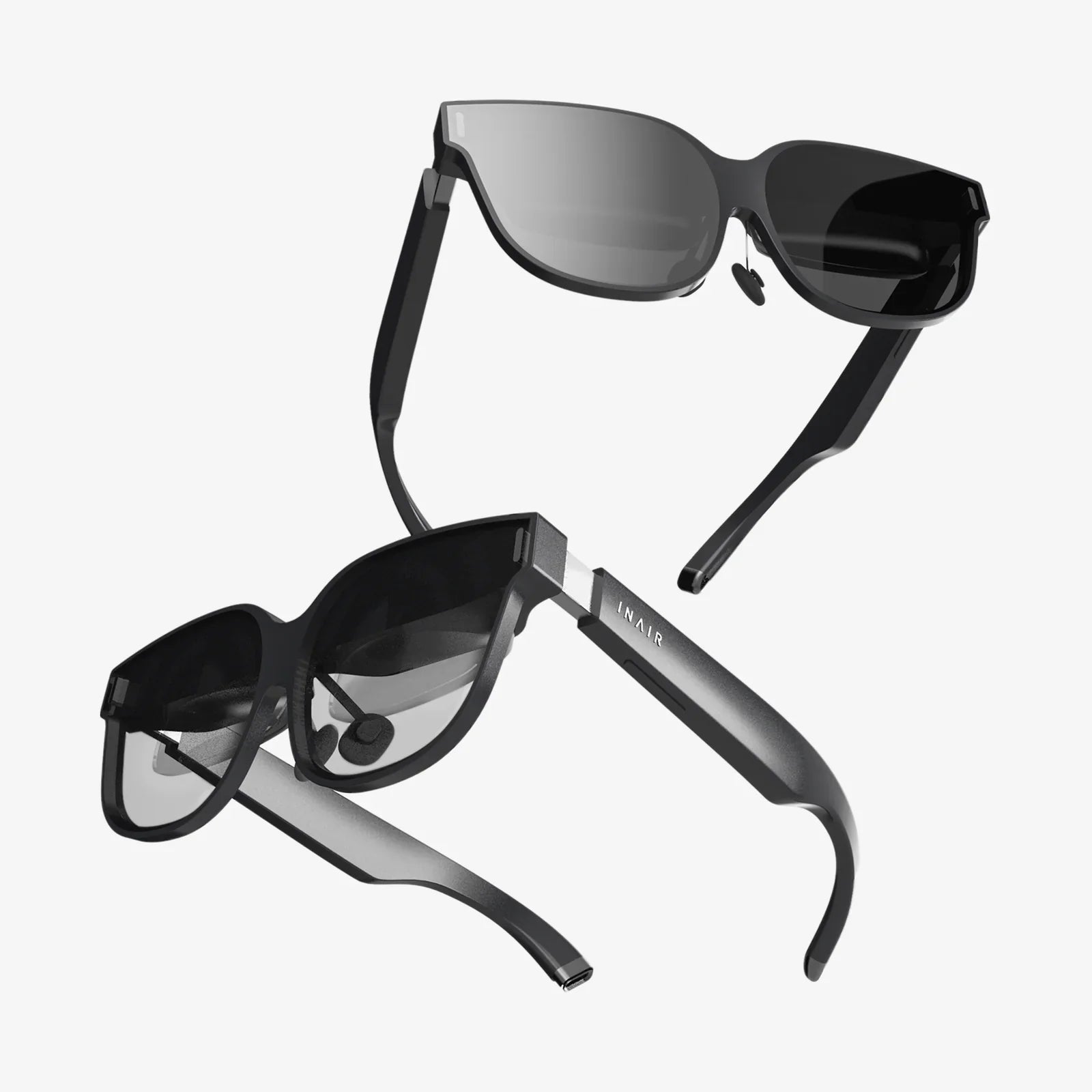
The journey of AR is far from over. The ultimate "why" behind its invention is still being written. We are moving towards a future where always-on, lightweight AR glasses could become as ubiquitous as smartphones, creating a persistent layer of intelligence over our world. This "ambient intelligence" could fundamentally change how we navigate cities, learn new skills, and connect with each other.
The invention was ultimately about expanding human potential. It was about overcoming the limitations of our biological senses and the clumsy interfaces of the digital age. It was driven by a desire to blend the best of both worlds: the richness, texture, and emotional resonance of the physical world with the dynamism, information density, and computational power of the digital one. The goal was to create a world where we are no longer merely users of technology, but empowered beings seamlessly integrated with a layer of digital knowledge, enhancing our reality without overshadowing it.
From the wireframe graphics of a university lab to the powerful applications transforming industries today, the story of augmented reality is a testament to a powerful and enduring human impulse. It answers a call to see the unseen, to know the unknown, and to interact with our world in a deeper, more informed, and profoundly magical way. The next chapter promises to weave this digital dream even tighter into the fabric of our everyday lives, forever changing our perception of what is real and what is possible.