


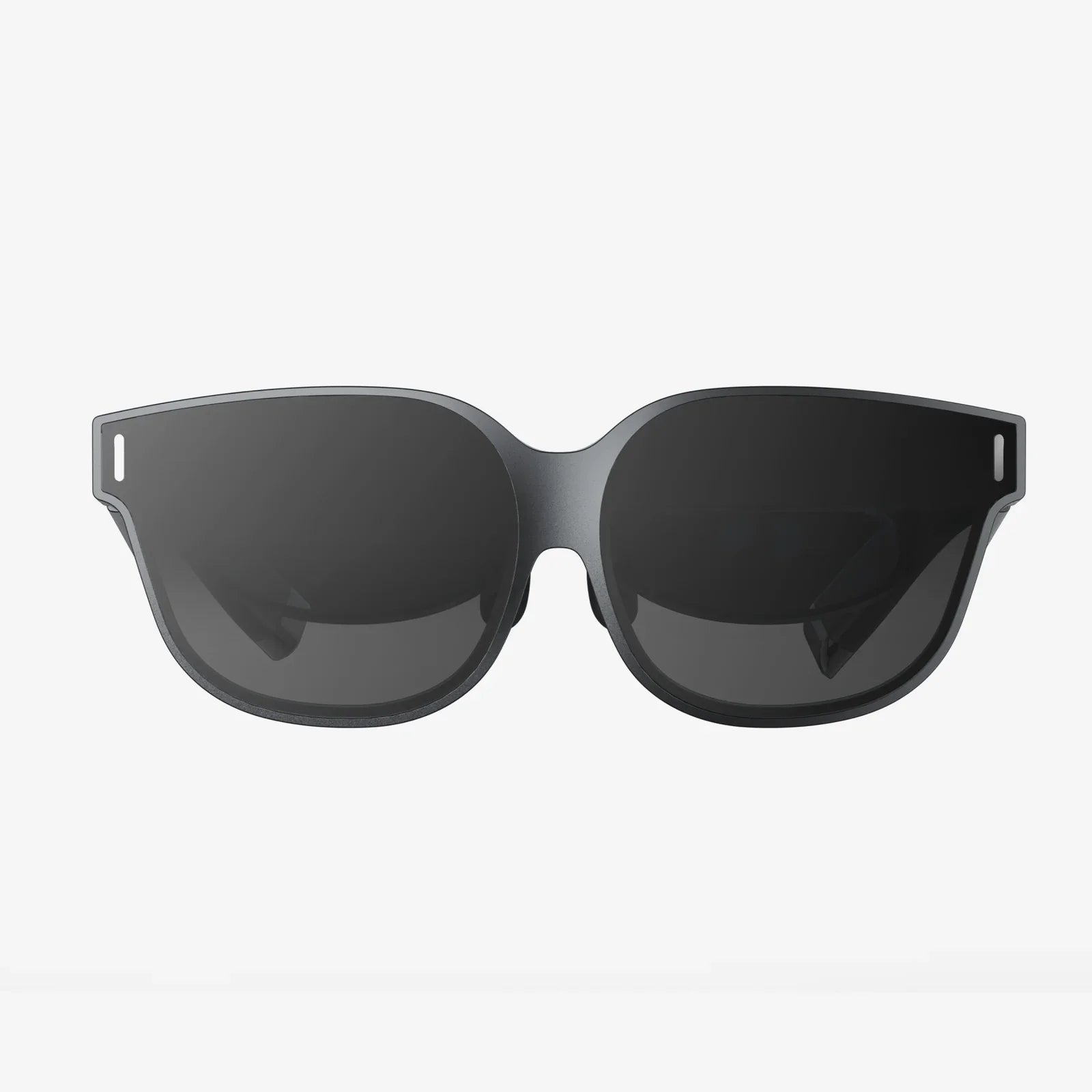
- by wangfred
Virtual Glasses: The Next Frontier in How We See and Interact With the World
- by wangfred
Imagine a world where information floats effortlessly before your eyes, where digital friends sit on your living room sofa, and where you can travel to ancient ruins without leaving your home. This isn't a distant science fiction fantasy; it's the imminent future being crafted by a revolutionary piece of technology: virtual glasses. This wearable tech is rapidly evolving from clunky prototypes into sleek, sophisticated devices poised to seamlessly blend our physical and digital realities, fundamentally altering the very fabric of human experience.
At its core, virtual glasses are a wearable computer that projects a digital overlay onto the user's field of view. Unlike their predecessor, the virtual reality headset, which creates a fully immersive, enclosed digital environment, virtual glasses are designed for augmented reality (AR). They allow you to see the real world around you, enhanced and annotated with digital information, objects, and interfaces. Think of them not as a portal to another world, but as a dynamic, intelligent layer on top of our own.
The magic of these devices hinges on a sophisticated symphony of components working in perfect harmony:
The true potential of virtual glasses lies not in the technology itself, but in its boundless applications. They promise to dissolve the barriers between us and the digital realm, creating a more intuitive and connected existence.
In the workplace, virtual glasses will become an indispensable tool. Imagine a field technician repairing a complex machine with a schematic diagram and real-time sensor data superimposed directly onto the equipment. A surgeon could have a patient's vital signs and a 3D model of the anatomy they are operating on visible within their field of view, without ever looking away from the operating table. Architects and interior designers could walk clients through a full-scale, interactive 3D model of a building before a single brick is laid. The potential for increased efficiency, reduced errors, and enhanced remote collaboration is staggering.
Entertainment will leap out of the television and into our living rooms. Instead of watching a movie on a flat screen, you could have characters and action sequences play out on your coffee table. Sports fans could watch a game with live stats and player tracking data hovering over the pitch. Social media will evolve into a shared spatial experience; you could have a video call with a friend who appears as a lifelike hologram sitting across from you, making long-distance communication feel profoundly more personal and present.
On a more mundane but equally impactful level, virtual glasses will serve as a constant, contextual personal assistant. Walking through a foreign city, directions could be painted onto the sidewalk, with translations of street signs appearing instantly. In a grocery store, you could see nutritional information and allergy warnings materialize above products as you look at them. Your calendar for the day, important notifications, and messages could be displayed subtly in the periphery of your vision, accessible without ever needing to pull out a device.
For all its promise, the path to widespread adoption of virtual glasses is fraught with significant technological, social, and ethical hurdles that society must confront.
The dream is a pair of glasses that are lightweight, all-day comfortable, socially acceptable, and possess the processing power of a supercomputer with the battery life of a smartphone. We are not there yet. Current iterations often struggle with field of view (the size of the digital window), brightness in direct sunlight, and managing the heat generated by powerful processors. Achieving a form factor that is indistinguishable from regular eyewear while packing in all the necessary technology remains the ultimate engineering challenge.
This is arguably the most pressing concern. Virtual glasses, by their very nature, are equipped with always-on cameras and microphones. The potential for pervasive surveillance, both by corporations and governments, is unprecedented. Who has access to the continuous video feed of your life? How is that data stored, analyzed, and used? The risk of creating a perfect tool for data harvesting and social control is very real, necessitating robust, forward-thinking regulations and transparent data policies before these devices become ubiquitous.
What does it mean for human interaction when we are all partially immersed in a digital layer? Will constant notifications and information streams fracture our attention spans further? The phenomenon of "digital ghosting," where people interact more with their AR environment than with the physical people around them, could become a serious social issue. There is also a risk of creating a new digital divide—between those who can afford this enhanced reality and those who cannot, potentially exacerbating existing inequalities.
The evolution of virtual glasses will not stop at overlaying information. The next frontier is direct brain-computer interfaces and more advanced biometric integration. Future devices could read your emotional state through pupil dilation and subtle facial cues, adapting the content accordingly. They could potentially stimulate the optic nerve or even the visual cortex directly, creating photorealistic imagery without any screens at all, moving from augmented reality to truly mediated reality.
The journey of virtual glasses is just beginning. They represent a fundamental shift in the human-computer relationship, moving us from a paradigm of looking at technology to one of looking through it. They hold the power to democratize information, revolutionize industries, and deepen human connection in ways we are only starting to imagine. Yet, this power comes with a profound responsibility. The choices we make today—in designing the technology, crafting the laws that govern it, and establishing the social norms around its use—will determine whether this new lens on the world enhances our humanity or obscures it. The future is not something we enter; it's something we create, and it's coming into focus right before our eyes.
We stand at the precipice of a new sensory revolution, one where the line between the atoms of our world and the bits of our data will blur into irrelevance. The ultimate promise of virtual glasses isn't just about seeing more; it's about understanding more, connecting more, and experiencing a richer, more informed version of reality itself. The device that has sat on our faces for centuries is about to become the most powerful portal we have ever known.
Share:
Simple Virtual Reality: Demystifying the Digital Frontier for Everyone
Augmented Reality in Education: Transforming Classrooms from Passive to Participatory