


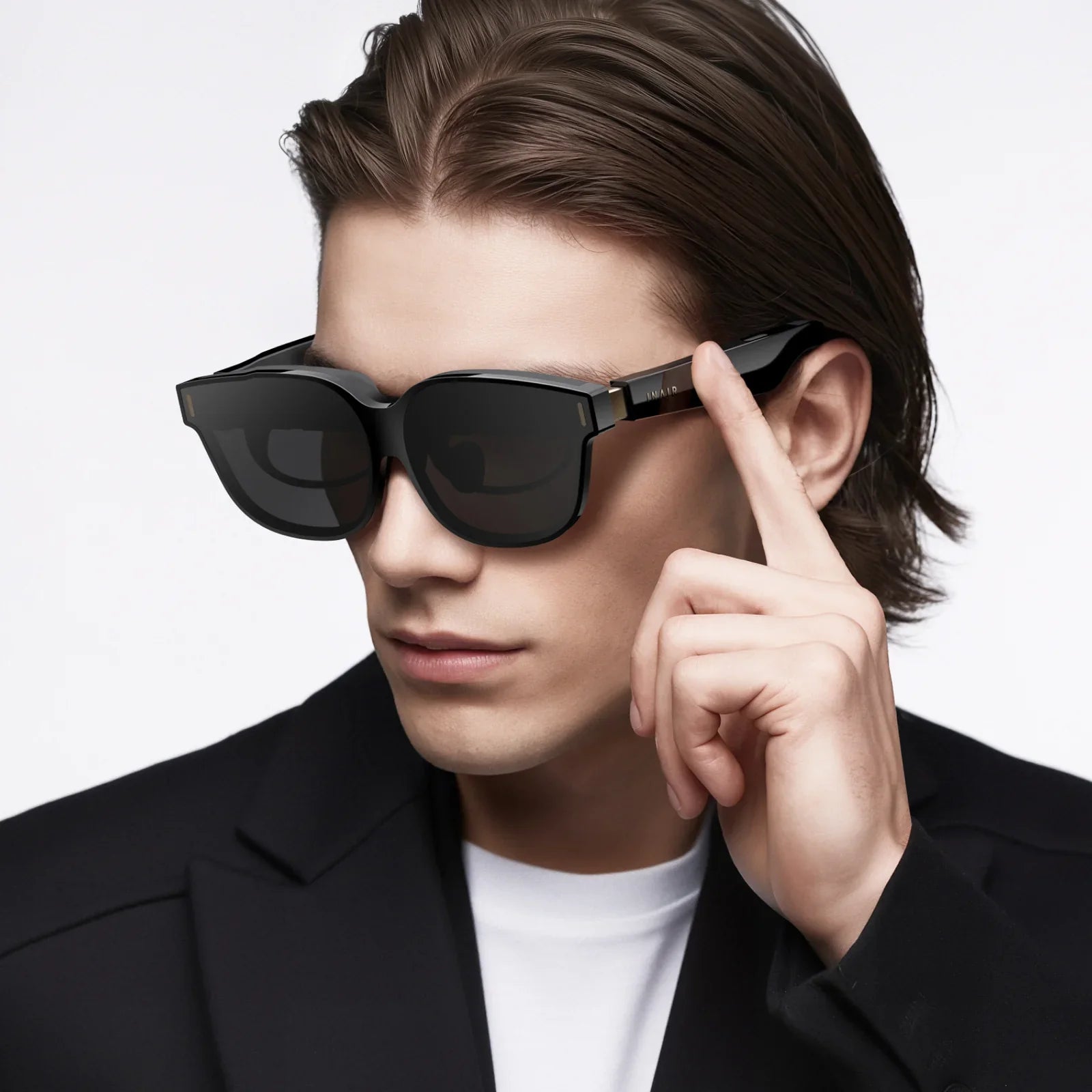
You’ve seen them in movies, heard the buzz from tech enthusiasts, and maybe even tried a pair yourself at a friend’s house or a demo kiosk. Virtual goggles, the portal to digital worlds, promise experiences that defy the laws of physics and geography. But beyond the initial awe of soaring over mountains or battling intergalactic foes, what is the true story of this transformative technology? The journey from a niche concept to a mainstream phenomenon is paved with astonishing engineering, surprising health considerations, and a future that is rapidly blurring the lines between the digital and the physical. Prepare to have your perception of reality expanded as we delve into the most compelling and essential virtual goggles facts.
The Core Technology: More Than Just Lenses and Screens
At first glance, a virtual reality headset appears deceptively simple: a box you strap to your face. In reality, it is a symphony of precision hardware and sophisticated software working in perfect harmony to trick your brain into accepting a digital illusion.
Display Systems: The Windows to Another World
The primary gateway to a virtual experience is the display. Unlike a television or monitor that you observe from a distance, these screens are placed mere centimeters from your eyes. To achieve a wide field of view and prevent the dreaded "screen door effect" (where users can see the fine lines between pixels), modern headsets employ high-resolution OLED or LCD panels with incredibly high pixel density. These displays refresh at a high rate, typically 90Hz or above, to ensure smooth motion and reduce latency, which is critical for preventing discomfort.
Tracking: The Art of Knowing Where You Are
For the illusion to hold, the virtual world must respond to your movements with imperceptible delay. This is achieved through advanced tracking systems. Inside-out tracking uses integrated cameras on the headset itself to map the physical room and track its own position within it. Outside-in tracking, historically used by more advanced setups, relies on external sensors placed around the room to precisely monitor the position of the headset and controllers. This complex dance of data allows you to duck, lean, walk, and jump, with your avatar in the digital space mirroring your actions with stunning accuracy.
Lenses and Audio: Completing the Illusion
Between your eyes and the screens are specially engineered Fresnel or pancake lenses. Their job is to focus your vision across the entire panel, allowing your eyes to relax as if looking into the distance rather than at a close-up screen. This is crucial for visual comfort and depth perception. Equally important is spatial audio. Advanced audio engines simulate sound coming from specific points in the 3D space. The rustle of leaves will seem to come from your left, while a character's voice will feel like it's directly in front of you, dramatically enhancing the sense of physical presence.
Beyond Gaming: The Expansive Universe of Applications
While gaming is the most famous application, labeling this technology as merely a gaming peripheral is a profound underestimation of its potential. The true power of virtual goggles lies in their ability to transport not just your eyes, but your presence.
Revolutionizing Education and Training
Imagine medical students performing intricate virtual dissections without ever touching a cadaver, or history students walking through a faithfully reconstructed ancient Rome. Virtual reality offers experiential learning that is impossible to replicate with textbooks. It is also revolutionizing high-stakes training. Surgeons practice complex procedures, pilots navigate emergency scenarios, and firefighters train for dangerous blazes—all within a safe, controlled, and repeatable virtual environment. This saves costs, resources, and, most importantly, lives.
Transforming Social Connection and Remote Work
The concept of the "metaverse" has brought social VR to the forefront. Platforms exist where users, represented by avatars, can meet, watch movies, play games, and collaborate as if they were in the same physical room. This has profound implications for remote work. Instead of a grid of faces on a video call, teams can gather around a virtual 3D model of a new product, brainstorming and interacting with it naturally. This fosters a level of collaboration and presence that flat screens cannot match.
Empowering Healthcare and Therapy
Therapeutic applications are among the most impactful uses of the technology. Exposure therapy for patients with phobias (like fear of heights or flying) can be conducted safely and gradually in VR. It is also used for pain distraction, helping burn victims manage excruciating pain during wound care by immersing them in a calming snowy landscape. Furthermore, VR rehabilitation programs help stroke patients and those with physical injuries regain motor function through engaging and monitored virtual exercises.
Health and Safety: Navigating the Physical Experience
Immersion comes with a set of physiological considerations. Understanding them is key to a safe and enjoyable experience.
Understanding Simulator Sickness
The most common issue is VR sickness, a type of motion sickness. It occurs when your eyes perceive motion in the virtual world (like riding a roller coaster) but your inner ear, which governs balance, feels no corresponding physical movement. This sensory conflict can cause dizziness, nausea, and headaches. Developers combat this by implementing comfort settings like "snap turning" and "vignetting" (which temporarily narrows the field of view during movement) to reduce the dissonance. Most users build a tolerance over time with short, regular sessions.
Eye Strain and Physical Space
Extended use can lead to eye strain, much like looking at any digital screen for too long. It's crucial to take regular breaks, following the 20-20-20 rule: every 20 minutes, look at something 20 feet away for 20 seconds. Furthermore, using headsets requires a clear play area. Tripping over cables or swinging controllers into furniture or walls are real hazards. Always set up your guardian or boundary system diligently and be mindful of your physical surroundings.
The Future is Now: Where the Technology is Headed
The current state of the art is impressive, but it is merely a stepping stone. Several key developments are poised to push virtual goggles further into the mainstream.
Towards a Wireless and Frictionless Experience
The industry is rapidly moving towards standalone, wireless headsets. Removing the tether to a powerful computer increases freedom and accessibility dramatically. The challenge is maintaining high-fidelity graphics and processing power within a mobile form factor, a hurdle that advancements in mobile chipsets are steadily overcoming.
The Quest for Photorealism and Haptics
Future headsets will feature even higher resolutions, eye-tracking technology (which allows for foveated rendering, where only the spot you're directly looking at is rendered in full detail, saving processing power), and varifocal lenses that adjust dynamically to where your eyes are focused. Perhaps the final frontier is haptic feedback. Full-body haptic suits and advanced controllers that can simulate the feeling of touch, resistance, and texture will be the final piece in achieving true, full-sensory immersion.
Brain-Computer Interfaces and the Ultimate UI
Looking further ahead, research into non-invasive brain-computer interfaces (BCIs) suggests a future where we may not need controllers at all. The ability to navigate virtual spaces and interact with objects using only your neural impulses could become the ultimate user interface, making VR interaction as natural as thought itself.
The world behind the lenses is evolving at a breathtaking pace, shifting from a novel toy to a fundamental tool that will reshape how we learn, work, heal, and connect. The next time you see someone with a headset strapped to their face, know that they are not just escaping reality—they might be training for a surgery, touring a foreign museum, or designing the skyscraper of tomorrow. The most incredible virtual goggles fact of all is that we are only just beginning to scratch the surface of their potential to redefine the human experience.
Share:
What Are Virtual Goggles - A Deep Dive Into Immersive Digital Realities
What Are Virtual Goggles - A Deep Dive Into Immersive Digital Realities