


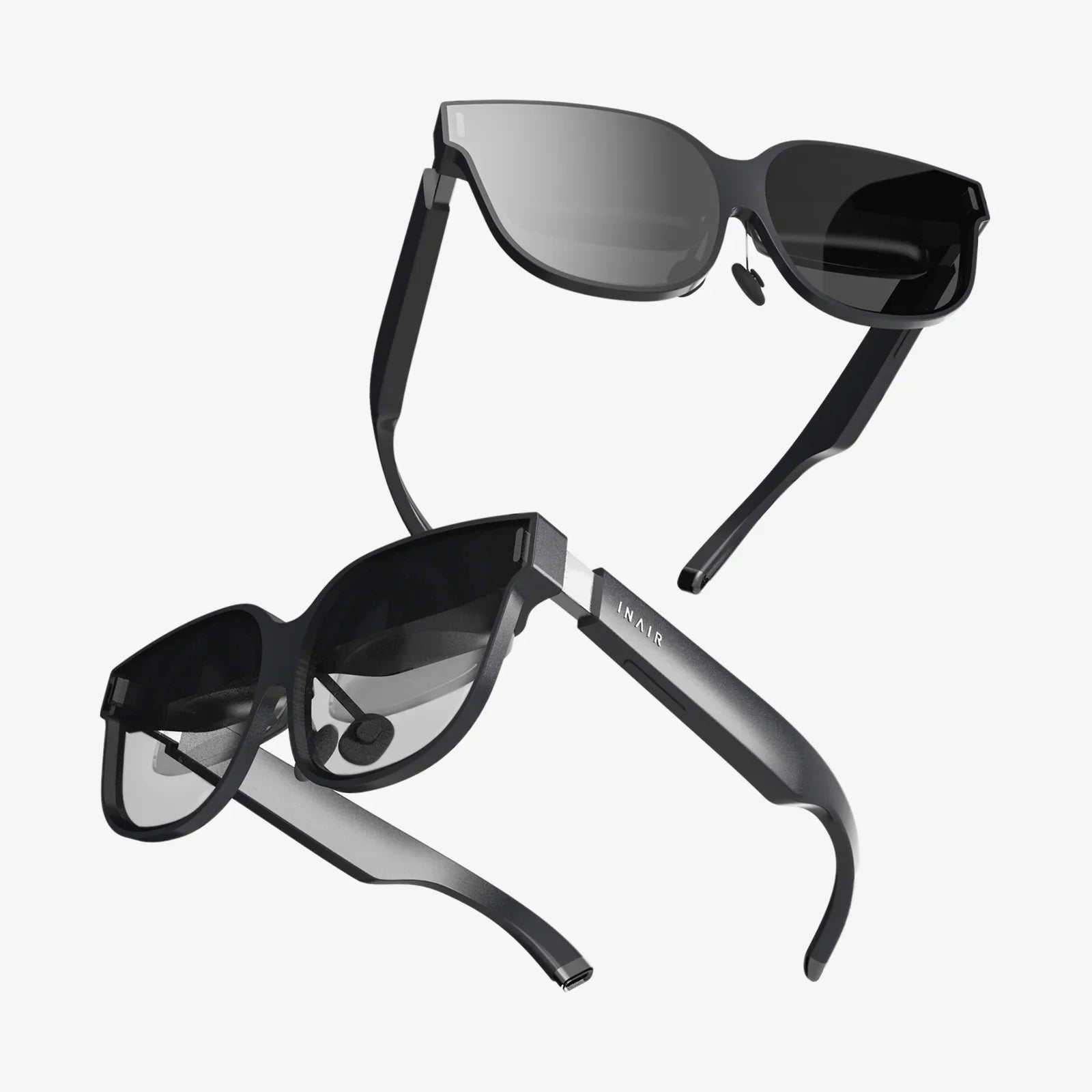
Imagine slipping on a pair of sleek, futuristic eyewear and instantly being transported to the surface of Mars, the depths of the ocean, or the front row of a concert happening halfway across the globe. This is not science fiction; it is the immediate, awe-inspiring reality offered by virtual goggles, a technology that has vaulted from fantasy to mainstream phenomenon, reshaping our perception of reality itself. These devices are the most direct portal we have to digital worlds, and understanding them is key to understanding the next evolution of human-computer interaction.
The Core Technology Behind the Magic
At their essence, virtual goggles are sophisticated head-mounted displays (HMDs) designed to create a convincing, immersive digital experience. The magic is a carefully orchestrated illusion, engineered through several key components working in perfect harmony.
Visual Immersion: Screens and Lenses
The primary sensory input is sight. Inside the housing of the goggles, mere centimeters from your eyes, are two high-resolution displays—one for each eye. These screens render the virtual environment. However, placing a screen so close to the face would be uncomfortable and blurry. This is where specialized lenses come in. They sit between the eyes and the screens, refracting the focused light and allowing your eyes to relax and perceive the imagery as if it were a natural distance away, creating a wide field of view (FOV) that fills your periphery and sells the illusion of being somewhere else.
Precision Tracking: Head and Motion
For the illusion to hold, the virtual world must respond to your movements with imperceptible latency. This is achieved through a complex array of sensors, including gyroscopes, accelerometers, and magnetometers. This combination, often called Inertial Measurement Units (IMUs), tracks the rotation and orientation of your head—when you look up, down, left, or right. More advanced systems employ external cameras or inward-facing sensors for inside-out tracking, mapping your physical room to allow for movement within a defined space, making it possible to physically walk around, duck, and dodge within the virtual environment.
Auditory and Haptic Feedback
Immersion is a multi-sensory experience. 3D spatial audio is critical; integrated headphones deliver sound that changes dynamically based on your head position. A noise to your left will sound like it's coming from the left, enhancing the believability of the world. Furthermore, haptic feedback through controllers or even advanced suits provides tactile sensations, allowing you to feel the virtual recoil of a weapon, the impact of a virtual ball, or the subtle vibration of a virtual engine.
Untangling the Acronyms: VR, AR, and MR
The term "virtual goggles" often serves as a catch-all, but the technology branches into distinct, though sometimes overlapping, categories.
Virtual Reality (VR): The Total Escape
This is the purest form of the technology. VR goggles are fully opaque, blocking out your physical surroundings entirely. They replace your reality with a completely digital one, whether it's a photorealistic simulation or a stylized cartoon world. Users are fully immersed and visually isolated, making VR ideal for gaming, detailed training simulations, and cinematic experiences where total focus is required.
Augmented Reality (AR): Digital Overlays on the Real World
AR goggles, often taking the form of more transparent glasses, do not replace the real world. Instead, they overlay digital information and objects onto your view of your actual environment. Imagine seeing navigation arrows painted on the street in front of you, a digital recipe floating next to your mixing bowl, or a virtual dinosaur stomping through your living room. The digital elements interact with and are composited onto your real-world view.
Mixed Reality (MR): The Best of Both Worlds
MR is a more advanced subset of AR where the line between real and virtual is not just blurred but intelligently intertwined. Using advanced sensors and cameras, MR goggles understand the geometry of your physical space. This allows virtual objects to be occluded by real-world ones—a virtual character can hide behind your actual sofa. They can also interact with the environment, enabling you to turn your real desk into a virtual touchscreen interface. MR represents the most seamless integration of the digital and physical realms.
A Universe of Applications: Far Beyond Gaming
While gaming provided the initial commercial thrust for virtual goggles, their utility extends into nearly every professional and creative field, demonstrating that they are a fundamental tool, not just a toy.
Revolutionizing Education and Training
The power of experiential learning is unmatched. Medical students can practice complex surgical procedures on virtual patients without risk, making mistakes that become valuable lessons rather than tragedies. Astronauts simulate spacewalks. Mechanics can train on the intricate details of a new engine model before it even exists physically. History classes can take immersive field trips to ancient Rome or walk through a scaled-up model of a human cell. This learning-by-doing in a safe, repeatable, and cost-effective environment is transformative.
Transforming Enterprise and Remote Work
The concept of the "virtual office" is being redefined. Instead of a grid of faces on a video call, teams from across the world can meet as lifelike avatars in a shared virtual conference room, brainstorming on a 3D model or a whiteboard that feels tangible. Architects and engineers can walk clients through unbuilt designs at a 1:1 scale, identifying issues long before construction begins. This fosters a new level of collaboration and presence that flat screens cannot replicate, potentially reducing the need for physical travel and opening up new possibilities for remote work.
Expanding Healthcare and Therapy
Therapeutic applications are vast and profoundly impactful. Exposure therapy for phobias—fear of heights, flying, or public speaking—can be conducted in meticulously controlled virtual environments. Physical rehabilitation exercises can be gamified, increasing patient motivation and engagement. VR is also being used for pain distraction, immersing burn victims in a calming, snowy landscape (SnowWorld is a famous example) to significantly reduce their perceived pain during wound care. Furthermore, it offers cognitive therapies for conditions like PTSD and anxiety.
Redefining Social Connection and Entertainment
Virtual goggles are becoming a new social platform. Concerts and live events can be attended virtually, giving everyone a "front-row seat" regardless of their physical location or economic means. Social VR platforms allow people to meet, play games, and watch movies together in shared virtual spaces, fostering a sense of togetherness that transcends geographical isolation. This has the potential to create more meaningful digital interactions than traditional social media.
Navigating the Challenges and Considerations
Despite the exciting potential, the path forward for virtual goggles is not without its obstacles and important ethical questions.
Technical and Physical Hurdles
Simulator sickness, akin to motion sickness, remains a problem for some users. It's caused by a mismatch between the visual motion perceived and the body's vestibular sense of being stationary. Reducing latency and improving display refresh rates are key to mitigating this. Other challenges include achieving visual fidelity indistinguishable from real life (often called the "resolution race"), developing more natural and intuitive input methods beyond controllers, and creating smaller, lighter, more comfortable, and more power-efficient form factors for all-day use.
The Social and Ethical Landscape
As with any powerful technology, questions of privacy and data security are paramount. Goggles with eye-tracking can know exactly where you are looking and for how long—incredibly valuable and sensitive data. The long-term psychological effects of prolonged immersion are still being studied. There are also concerns about the "reality gap"—will people retreat into preferred virtual worlds at the expense of engaging with the real one? Furthermore, creating equitable access to prevent a new digital divide is a critical societal challenge.
Gazing Into the Future: What Comes Next?
The current state of virtual goggles is impressive, but it is merely a stepping stone. The future points toward devices that are indistinguishable from regular eyeglasses—lightweight, socially acceptable, and always connected. We are moving toward photorealistic avatars driven by real-time facial and eye tracking for truly authentic social interaction. The concept of the "metaverse," a persistent and interconnected network of virtual spaces, hinges on the widespread adoption of this technology. Ultimately, the goal is for the technology to fade away, leaving behind only the experience—the feeling of being truly present in another place, with other people, limited only by our collective imagination.
The journey into virtuality is just beginning. From their humble beginnings as clunky prototypes to the sleek devices of today, virtual goggles have proven to be one of the most transformative technologies of the 21st century. They are not merely a new screen but a new reality engine, a tool for empathy, a machine for creativity, and a bridge to experiences once thought impossible. As the hardware continues to evolve and the content within these digital realms grows ever richer, the question will slowly shift from "What are virtual goggles?" to a far more exciting and profound one: "What incredible thing shall we experience next?" The door to infinite worlds is now open, waiting for you to take that first step through.
Share:
Virtual Goggles Facts: Unveiling the Reality Behind the Headset
Virtual Goggles Facts: Unveiling the Reality Behind the Headset