


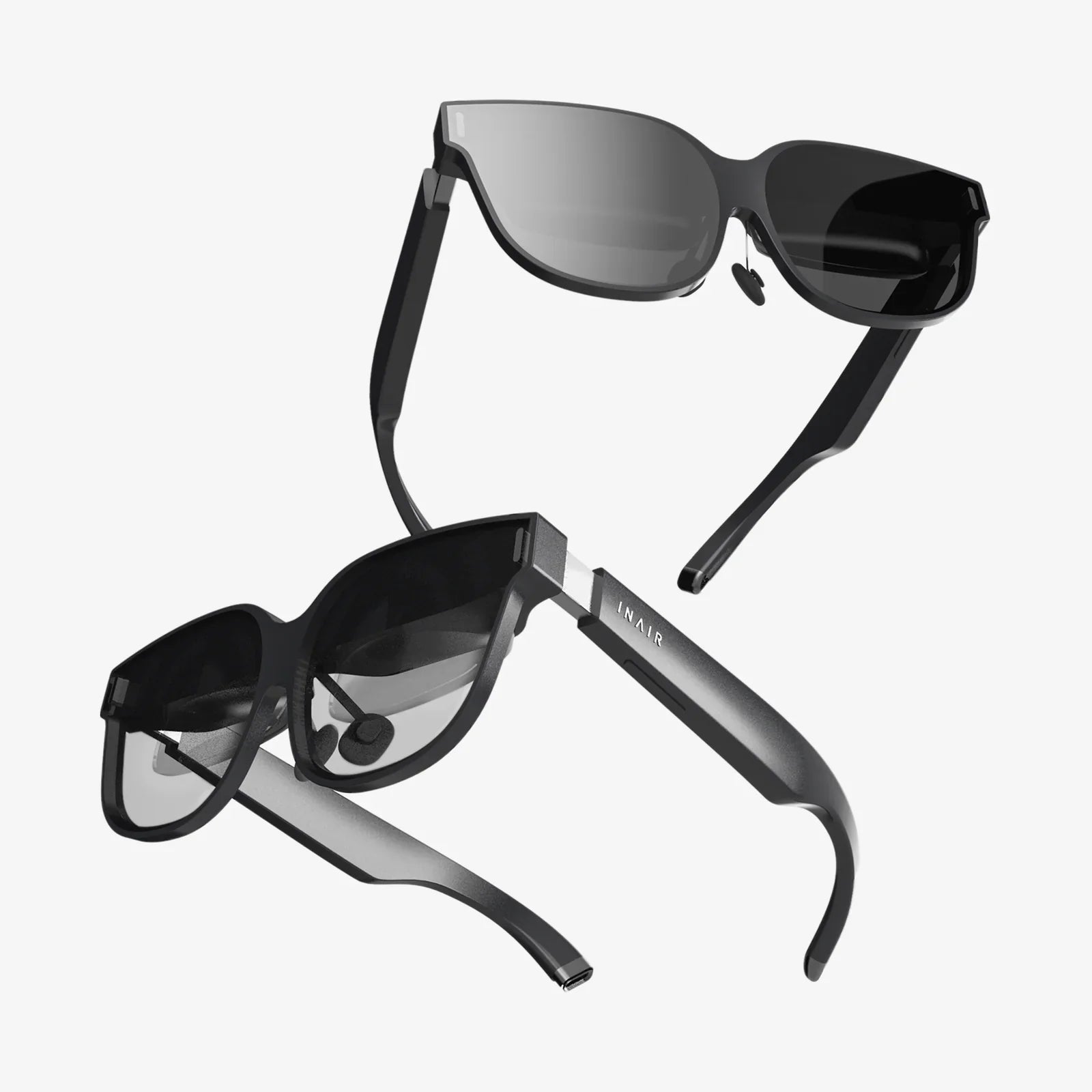
Imagine carrying a 100-inch, crystal-clear high-definition monitor in your pocket, ready to unfold your digital life anywhere, anytime, with complete privacy and immersion. This is no longer a scene from science fiction; it is the tangible reality being delivered by the rapid evolution of virtual monitor goggles. This technology is swiftly moving from a niche gadget for enthusiasts to a mainstream powerhouse, promising to untether professionals, gamers, and everyday users from the physical confines of traditional displays and fundamentally redefine our relationship with computing.
The Engine Behind the Immersion: Core Technologies
At their core, virtual monitor goggles are a marvel of optical and software engineering, blending several advanced technologies to create a seamless and comfortable viewing experience.
High-Resolution Micro-Displays and Advanced Optics
The journey of light begins with tiny, incredibly dense micro-displays, often based on cutting-edge display technology. These panels pack millions of pixels into a minuscule space, serving as the digital canvas. However, projecting these images directly onto the eyes would be like holding a phone screen an inch from your face—blurry and unusable. This is where sophisticated optical systems take over. Pancake lenses, a significant leap forward, use a series of complex reflections to fold the light path, allowing for a much slimmer and lighter goggle design while dramatically reducing distortion and chromatic aberration. Waveguide technology, another method, channels light through a transparent glass or plastic substrate, which is crucial for augmented reality applications but also enhances the clarity of virtual displays. The goal of these systems is to create a "sweet spot"—a large area where the image remains perfectly sharp and legible, eliminating the need for constant adjustment and reducing eye strain.
Precise Tracking and Low-Latency Connectivity
For the virtual screens to feel anchored in real space, as if they are fixed panels on your wall, precise positional tracking is non-negotiable. Inside-out tracking, the standard for modern devices, uses a array of miniature cameras and sensors on the goggles themselves to constantly map the environment and understand the user's head movements in six degrees of freedom (6DoF)—forward/back, up/down, left/right, pitch, yaw, and roll. This data is processed in real-time to adjust the virtual image accordingly, ensuring your virtual email window doesn't drift away if you tilt your head. This tracking is useless if the image lags behind your movement, a phenomenon that can quickly induce nausea. Therefore, a high-speed, low-latency connection to the host computer—be it via a dedicated wireless protocol or a high-bandwidth USB-C cable—is critical. It ensures that every mouse movement, every keystroke, and every screen update is reflected instantaneously within the goggles, creating a responsive and natural-feeling computing experience.
Ergonomics and User-Centric Design
A technically perfect display is worthless if the device is too heavy, uncomfortable, or gets too warm to wear for more than fifteen minutes. Manufacturers are engaged in a constant battle against physics, employing lightweight alloys, advanced polymers, and strategic weight distribution to make goggles feel like a premium pair of headphones rather than a front-heavy burden. Plush, replaceable facial interfaces made from memory foam and hypoallergenic materials create a comfortable seal that blocks out ambient light without applying excessive pressure. Balanced head straps, often with a rear counterweight, distribute mass evenly around the head. Active ventilation or passive heat dissipation channels are also integral, preventing lens fogging and keeping the user's skin cool during extended work sessions. This focus on ergonomics is what transforms a compelling tech demo into a viable all-day productivity tool.
A Universe of Use Cases: Beyond Novelty
The applications for virtual monitor goggles extend far beyond simply watching movies on a giant virtual screen. They are unlocking new paradigms for work, creativity, and leisure.
The Ultimate Portable Office
For the digital nomad, the frequent flyer, or anyone with a limited physical workspace, this technology is a game-changer. It allows users to replace or supplement their physical laptop screen with multiple large, virtual monitors. A developer can have their code editor on one virtual screen, documentation on another, and a communication app on a third, all while sitting in a coffee shop, airport lounge, or hotel room. There are no prying eyes looking at sensitive company data, creating an inherently private workspace. This setup eliminates the need to carry portable physical monitors and their associated cables and power bricks, truly condensing a multi-monitor battle station into a single, sleek headset that fits in a small case.
A Creative and Developer's Paradise
For visual artists, video editors, and 3D animators, screen real estate is directly correlated with creative flow and efficiency. Virtual monitor goggles can provide a massive, immersive canvas for timeline editing, a sprawling view of a complex digital sculpture from all angles, or a full-screen preview of a design without the bezels and color inconsistencies of physical monitors. Software developers benefit immensely from being able to see more lines of code at a natural, readable size, alongside their terminal windows and testing environments, drastically reducing the need to constantly scroll and switch between applications. This deep immersion can minimize distractions from the physical environment, allowing for profound states of focus and flow.
Next-Level Entertainment and Gaming
While dedicated gaming headsets exist for fully immersive 3D worlds, virtual monitor goggles offer a superior experience for traditional PC and console gaming. They can simulate a truly massive, theater-sized screen, placing the player directly in the action for racing sims, flight simulators, and adventure games without being completely blind to their physical surroundings—a safety benefit for those who need to remain somewhat aware. For media consumption, they act as a personal cinema, capable of replicating the experience of a top-tier home theater system anywhere. The high-resolution displays and advanced optics provide stunning image quality that is unaffected by ambient room light, offering a consistent and premium viewing experience day or night.
Navigating the Current Landscape: Challenges and Considerations
Despite the incredible promise, the technology is still maturing, and potential adopters must be aware of its current limitations.
The most significant barrier for many is visual comfort. While much improved, some users may still experience eye strain or headaches during extended use, often related to the vergence-accommodation conflict—a disconnect between where the eyes converge to focus on a virtual object and the fixed focal distance of the lenses. The technology is also an investment, with high-end models carrying a cost comparable to a premium laptop or multiple high-quality physical monitors. Battery life can be a constraint for wireless models, potentially limiting all-day untethered use, though many function excellently in a tethered mode for power and performance.
Furthermore, the experience is not yet universally seamless. Setup can involve installing specific software or drivers, and some users might experience occasional tracking glitches or compatibility quirks with certain applications. The social isolation of being visually cut off from one's environment can also be a drawback in collaborative office settings, though features like video pass-through are beginning to address this.
The Road Ahead: A Glimpse into the Future
The trajectory of virtual monitor goggles points toward a future where they become as commonplace as laptops and smartphones. We can expect rapid advancements in display technology, with resolutions soaring to 8K per eye and beyond, making screen-door effect—the visible grid between pixels—a distant memory. The integration of high-fidelity video pass-through will evolve these devices into powerful augmented reality tools, allowing digital screens to be pinned seamlessly within a user's real-world environment, blending the physical and digital workspaces. Imagine working on a virtual spreadsheet that appears to be sitting on your desk next to your coffee mug.
Advances in eye-tracking and foveated rendering will drastically improve performance and efficiency by rendering only the area where the user is directly looking in full resolution, reducing the computational load. Haptic feedback gloves and neural interfaces are on the horizon, promising to eventually replace the mouse and keyboard, allowing users to manipulate their virtual desktops with gestures or even thoughts. As the technology becomes lighter, more affordable, and more powerful, it will inevitably shift from a professional accessory to a universal computing platform, fundamentally changing how we interact with information.
The age of being physically chained to a desk is drawing to a close. Virtual monitor goggles are not just another peripheral; they are the key to a liberated, flexible, and deeply personal computing experience, offering a glimpse into a future where our digital worlds are limited only by our imagination, not by the size of our desks. The revolution will not be televised; it will be virtually displayed, right before our eyes.
Share:
Cheap Head Mounted Display: Your Portal to Affordable Virtual Worlds
Top Wearable Tech Companies Shaping the Future of Personal Technology