


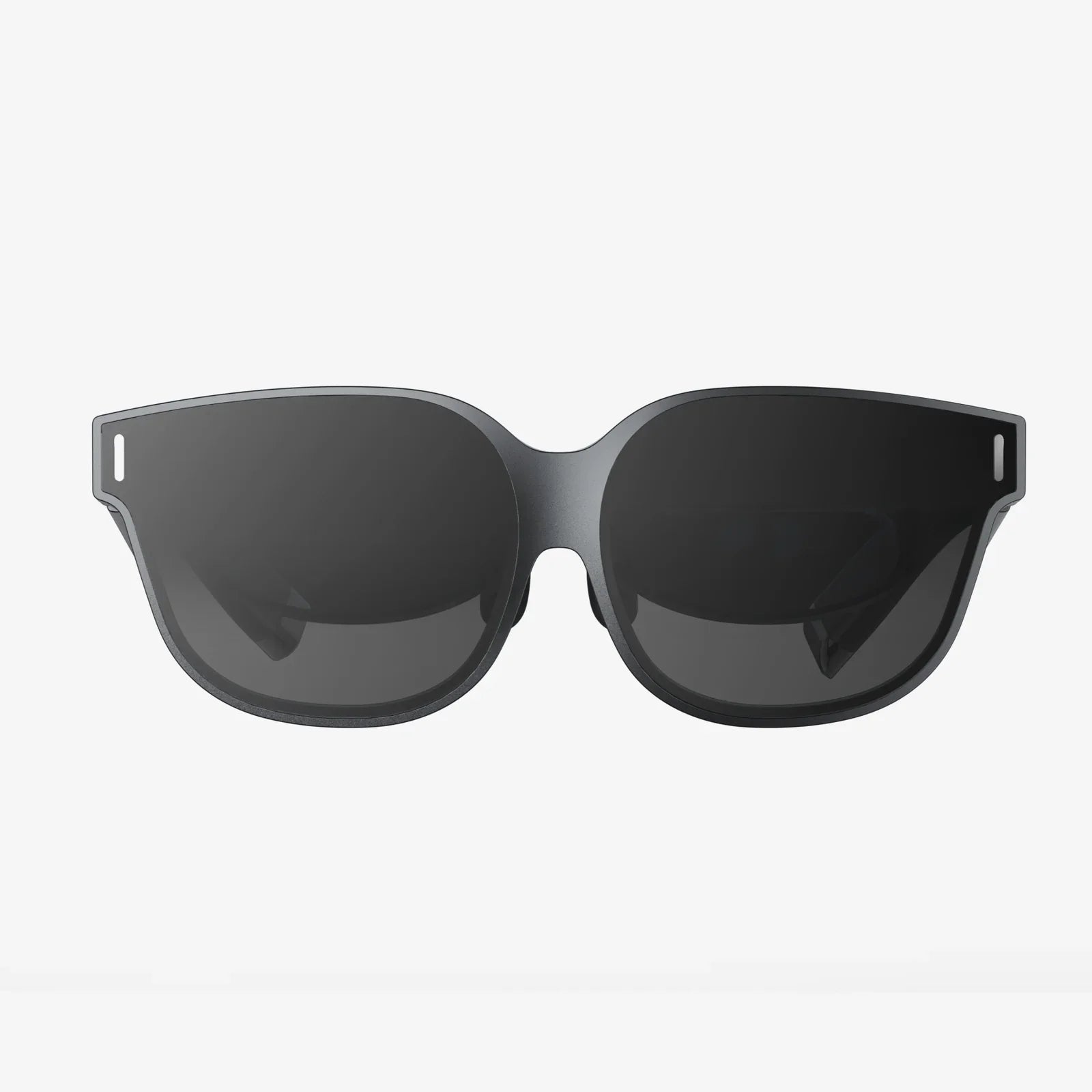
Imagine a world where the digital and the physical are not just connected, but seamlessly intertwined. Where information floats before your eyes, virtual colleagues sit across your real desk, and fantastical worlds are painted over your living room. This is no longer the realm of science fiction; it is the nascent reality being crafted by a new class of wearable technology, epitomized by advanced virtual one XR glasses. These devices are not merely gadgets; they are portals, promising to fundamentally reshape how we work, learn, play, and perceive the world around us.
The Spectrum of Immersion: Understanding XR
To comprehend the revolution these glasses represent, we must first demystify the term 'XR' or Extended Reality. XR is not a single technology but an umbrella term encompassing a continuum of immersive experiences:
- Virtual Reality (VR): A fully digital, immersive experience that completely replaces your real-world environment. Users are transported to a computer-generated world, typically experienced through fully enclosed headsets.
- Augmented Reality (AR): The overlaying of digital information—images, text, animations—onto the real world. Through a transparent lens or screen, users see their physical surroundings enhanced with digital elements. Think of navigation arrows on the road or a virtual dinosaur in your garden.
- Mixed Reality (MR): A more advanced form of AR where digital objects are not just overlaid but integrated into the real world. These objects can be occluded by real-world objects (e.g., a virtual character hiding behind your real sofa), respond to environmental lighting, and interact with the physical space in a believable way.
Virtual one XR glasses sit at the convergence of these technologies. They are the hardware striving to deliver these blended experiences in a single, sleek form factor, moving beyond clunky prototypes towards a wearable, all-day device.
Beyond the Hype: The Core Technologies Powering the Vision
The magic of these glasses is woven from several groundbreaking technological threads, each advancing at a breathtaking pace.
Optical Engineering: The Window to New Worlds
The greatest challenge has been creating a high-resolution, wide-field-of-view display that is bright enough for outdoor use yet small enough to fit into the frame of eyewear. Traditional screens are impractical. The solution lies in sophisticated optical systems like waveguide technology. Imagine a piece of transparent glass or plastic that acts like a prism. Micro-projectors on the temple of the glasses shoot light into this waveguide, which then bounces and channels this light directly into the user's eye, painting digital images onto their view of the real world. This allows for a sleek design without bulky screens in front of the face.
Spatial Mapping and Computer Vision: The Digital Nervous System
For digital content to interact with the real world, the glasses must understand the environment. This is achieved through a suite of sensors—cameras, LiDAR scanners, depth sensors, and inertial measurement units (IMUs). These sensors continuously scan the room, creating a real-time 3D mesh, understanding surfaces, edges, and objects. This process, known as simultaneous localization and mapping (SLAM), allows the device to precisely anchor a virtual television to your wall or have a digital pet run across your floor without glitching through the furniture. Computer vision algorithms identify objects: is that a chair, a screen, a person? This contextual understanding is what elevates AR to true MR.
Processing Power and Connectivity: The Brain Behind the Beauty
Processing the immense data from these sensors and rendering complex 3D graphics in real-time requires immense computational power. Some glasses handle this with a powerful onboard processor, a marvel of miniaturization. Others adopt a hybrid approach, using a compact wearable computer that fits in a pocket, connected wirelessly to the glasses. The ultimate goal is to leverage high-speed, low-latency 5G and future 6G networks to offload processing to the cloud, enabling incredibly complex simulations without taxing the device's battery or thermal limits.
Transforming Industries: The Practical Applications
While consumer entertainment captures headlines, the most profound immediate impact of virtual one XR glasses is happening in enterprise and specialized fields.
Revolutionizing the Frontline Worker
For mechanics, surgeons, field engineers, and warehouse operators, these glasses are becoming indispensable tools. A technician repairing a complex machine can see schematics, torque specifications, and animated repair guides overlaid directly on the equipment they are fixing. This provides hands-free, contextual information, drastically reducing errors and training time. A surgeon could see a patient's vital signs and a 3D model of their anatomy without looking away from the operating field. This is not about replacing skill but augmenting it with superhuman knowledge and precision.
The Future of Remote Collaboration and Workspaces
The concept of the 'office' is being redefined. With virtual one XR glasses, remote collaboration becomes spatial collaboration. Instead of a flat video call, colleagues from across the globe can appear as photorealistic avatars or holograms in your physical space. You can collaboratively design a 3D model of a new product, manipulating it with gestures as if it were physically present. Architects can walk clients through a full-scale, holographic model of a building before a single brick is laid. This creates a sense of shared presence and understanding that flat screens cannot replicate.
A New Paradigm for Education and Training
Learning becomes experiential and immersive. Medical students can practice complex procedures on virtual patients. History students can walk through ancient Rome. Mechanics can train on virtual engines, making mistakes without costly consequences. This learning-by-doing in a simulated, yet realistic, environment dramatically improves knowledge retention and skill acquisition.
The Human Factor: Challenges on the Path to Adoption
For all their potential, significant hurdles remain before virtual one XR glasses become as ubiquitous as smartphones.
The Form Factor Conundrum
The ultimate goal is a device that is indistinguishable from regular eyeglasses: lightweight, comfortable, and socially acceptable to wear all day. Current technology forces a trade-off between performance and size. High-resolution displays and powerful processors generate heat and require larger batteries. Achieving a socially normal form factor without compromising on capability is the industry's holy grail.
Navigating the Privacy Labyrinth
Devices with always-on cameras and microphones that map our homes and offices raise profound privacy concerns. The potential for unauthorized surveillance, data collection, and advertising is a minefield. Establishing clear ethical guidelines, robust data encryption, and user-controlled permissions is not just a technical necessity but a societal imperative for this technology to be trusted and adopted.
The Interface of the Future
How do we interact with this blended world? Touchscreens are obsolete in the air. Voice commands are not always appropriate. The answer lies in a combination of intuitive modalities: advanced hand and gesture tracking that understands subtle finger movements, eye-tracking that knows where you are looking to select objects, and eventually, brain-computer interfaces. Developing an interface that feels natural, effortless, and powerful is key.
A Glimpse Into the Next Decade: The Road Ahead
The trajectory is clear: virtual one XR glasses will become lighter, more powerful, and more integrated into our lives. We are moving towards a future where the internet will not be something we look down at on a screen, but something we look through, an invisible layer of intelligence and connection draped over our reality. They could evolve into our primary computing device, replacing phones, monitors, and televisions, becoming the central hub for our digital lives.
This evolution will be catalyzed by advancements in AI, which will act as an intelligent agent within the glasses, proactively providing information and assistance based on context. The line between the user and the technology will blur, creating a symbiotic relationship where the device acts as a true extension of our own cognition and perception.
The journey into this spatial computing era is just beginning. The current generation of virtual one XR glasses are the pioneering prototypes, the Model T Fords of a new transportation system for our senses. They are clunky, expensive, and limited, yet they offer a breathtaking glimpse of a destination that is now inevitable. They are not just changing the device we hold in our hands; they are challenging the very nature of reality itself, asking us to redefine what is real, what is virtual, and what is possible when the two become one.
Share:
Why Do I Still Need Glasses in VR? The Unseen Science of Virtual Focus
Augmented Reality Instructions Are Revolutionizing How We Learn and Perform Complex Tasks