


Imagine a world where your morning run takes you through the lush jungles of the Amazon, your mechanic overlays a digital schematic onto your car’s engine to guide a repair, and your surgeon practices a complex procedure on a perfect holographic replica of your heart before making a single incision. This is not a distant science fiction fantasy; it is the emerging reality being built today by the innovative minds within the virtual reality and AR company ecosystem. These pioneers are not just creating new gadgets; they are constructing the very fabric of a new layer of existence, a synthesized dimension where the boundaries between what is real and what is digital become beautifully, and usefully, blurred.
The Foundational Divide: Understanding VR and AR
While often grouped together, the core technologies pursued by a forward-thinking virtual reality and AR company represent two distinct approaches to blending human perception with computer-generated content.
Virtual Reality (VR) is an immersive, all-encompassing technology. It seeks to transport the user entirely away from their physical surroundings and into a fully digital environment. By wearing a headset that blocks out the real world and replaces it with a 360-degree simulated landscape, users can be placed on the surface of Mars, inside a human bloodstream, or on the stage of a concert hall. The goal of this branch of a virtual reality and AR company is presence—the convincing feeling of actually being in that digital space. This is achieved through sophisticated tracking of head and hand movements, stereoscopic 3D visuals, and immersive spatial audio.
Augmented Reality (AR), in contrast, does not seek to replace the real world but to augment it. It superimposes digital information—images, data, 3D models—onto the user’s view of their immediate environment. This is the technology that allows a furniture shopper to see how a new sofa would look in their living room through their smartphone screen, or an engineer to see performance statistics and instructions overlaid on a complex piece of machinery. The goal here is contextual relevance, enhancing reality with a layer of interactive, useful data. A modern virtual reality and AR company often works on the spectrum between these two points, with Mixed Reality (MR) serving as a blend that allows digital objects to interact with and be occluded by the real world.
The Engine Room: Core Technologies Powering the Revolution
The magic crafted by a virtual reality and AR company is underpinned by a complex symphony of hardware and software advancements.
Sensory Hardware
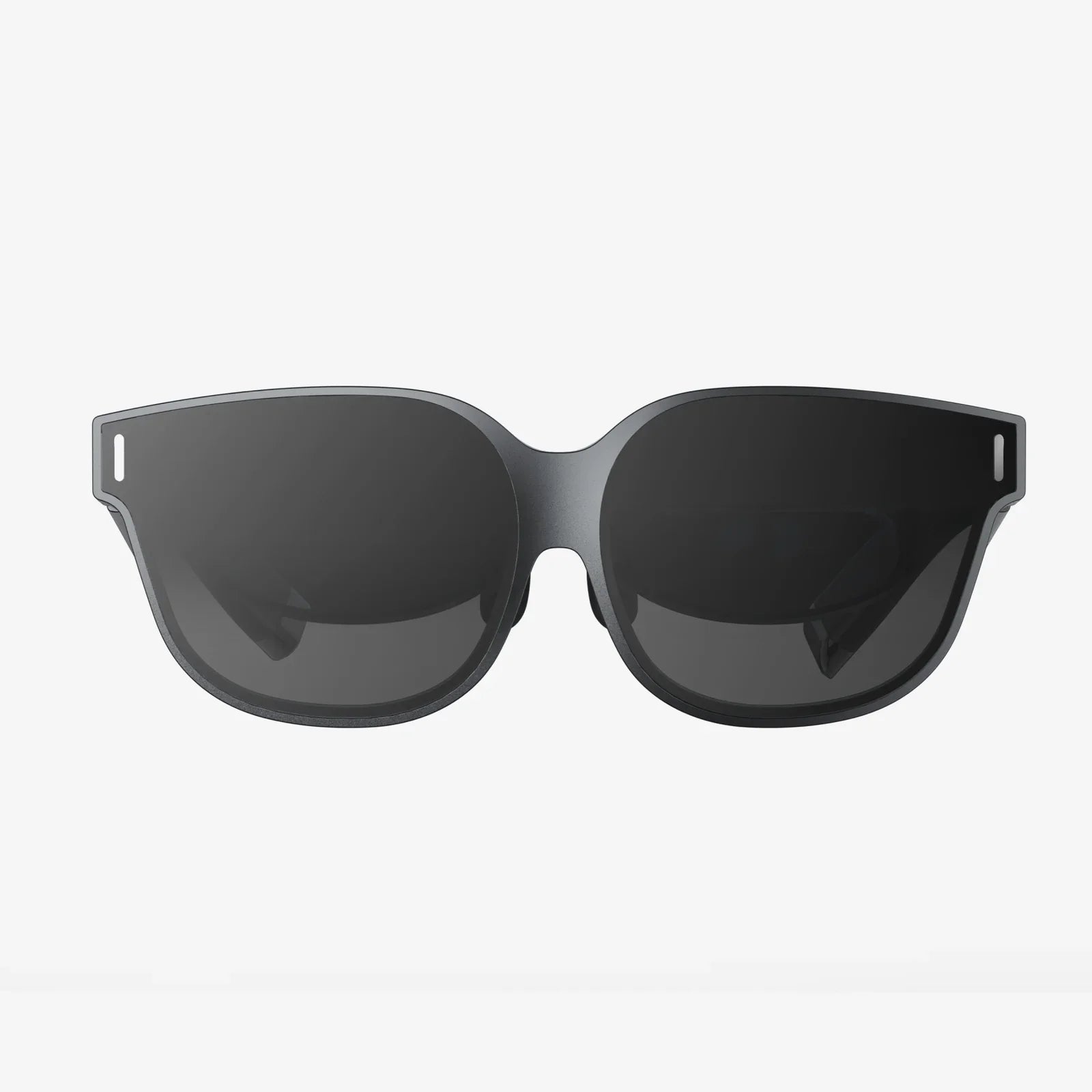
The primary interface is the headset, but the technology within is what separates a simple viewer from a portal to another world. High-resolution displays with high refresh rates are critical to avoiding nausea and achieving visual fidelity. Inside-out tracking systems, using cameras and sensors on the headset itself to map the environment, have eliminated the need for external base stations, making systems more accessible. For AR, technologies like photonic chips that project light directly into the retina are creating sleek, glasses-like devices that promise all-day usability.
The Power of Perception
Beyond sight, the most ambitious virtual reality and AR company is investing in haptic feedback. Advanced gloves and suits can simulate the sensation of touch, allowing a user to feel the texture of a digital object or the recoil of a virtual weapon. Spatial audio is equally important, simulating sound that comes from specific points in the 3D space, making a whisper behind your left ear feel genuinely disconcerting. These multi-sensory inputs are crucial for achieving true immersion and believability.
Software and Development
Powering these experiences are robust game engines, which have become the default tools for building interactive 3D worlds. Furthermore, persistent cloud-based platforms are emerging, allowing for shared, synchronous experiences where users from across the globe can interact within the same digital space in real-time, a concept often termed the "metaverse." This requires immense computational power and low-latency networking, challenges that a leading virtual reality and AR company must solve to create seamless social and professional environments.
Transforming Industries: The Practical Application of Immersive Tech
The value of a virtual reality and AR company is most evident in its transformative impact across diverse sectors.
Revolutionizing Healthcare and Medicine
This is perhaps the most profound area of application. Surgeons use AR overlays during operations to view critical patient data without looking away from the surgical field. VR is revolutionizing medical training, allowing students to perform virtual dissections and practice procedures risk-free. Furthermore, it's a powerful therapeutic tool, used for exposure therapy to treat phobias and PTSD, and for motor rehabilitation following strokes, where patients engage in virtual tasks to rebuild neural pathways.
Redefining Education and Training
Imagine learning about ancient Rome by walking its streets, or understanding molecular biology by manipulating a giant, interactive DNA model. This is the power a virtual reality and AR company brings to education, creating engaging, experiential learning that boosts retention. In corporate and industrial training, the implications are staggering. Airlines train pilots in hyper-realistic flight simulators. Technicians learn to repair expensive equipment by following AR instructions, reducing errors and downtime. It's training without risk, cost, or logistical constraints.
Engineering and Manufacturing
The design process is being upended. Instead of building physical prototypes, automotive and aerospace engineers use VR to design, test, and iterate on vehicles in a virtual environment, assessing ergonomics and aesthetics long before a single piece of metal is cut. On the factory floor, AR smart glasses guide assembly line workers through complex wiring harnesses, ensuring accuracy and speed. A virtual reality and AR company provides the tools to build things better, faster, and cheaper.
Retail and Remote Collaboration
Try before you buy is taking on a new meaning. Customers can use AR to see how clothes fit, how makeup looks, or how a new appliance fits in their kitchen. For businesses, VR meeting rooms are enabling a new level of remote collaboration. Architects and clients can walk through a building design together, regardless of their physical location. Teams can interact with 3D models of products as if they were in the same room, a far cry from a flat video call.
Navigating the Frontier: Challenges and Ethical Considerations
The path forward for any virtual reality and AR company is not without significant hurdles and profound questions.
Technical and Social Hurdles
For widespread adoption, hardware must become lighter, more comfortable, more powerful, and significantly cheaper. The "vergence-accommodation conflict," a technical issue that can cause eye strain, remains a challenge. Furthermore, the risk of deepening the digital divide is real, as these technologies could become a luxury accessible only to a privileged few. The social implications of people increasingly opting for digital escapism over physical interaction also warrant careful consideration.
The Data Privacy Imperative
The data collected by a virtual reality and AR company is arguably the most intimate ever gathered. Headsets with eye-tracking can know exactly where you look and for how long, revealing unconscious biases and interests. They map your physical environment in intricate detail. The ethical collection, storage, and use of this biometric and spatial data is a monumental responsibility. Robust frameworks must be established to prevent misuse and protect user privacy at all costs.
Building a Responsible Metaverse
As these platforms evolve into persistent social spaces, the virtual reality and AR company becomes a de facto governance body. They must proactively address issues of user safety, content moderation, and digital citizenship. How do you prevent harassment in a virtual space? How do you establish digital property rights? These are complex socio-technical challenges that need to be solved in tandem with the technology itself.
The Future is Already Here: What's Next on the Horizon
The trajectory points toward even deeper integration into our daily lives. We are moving toward brain-computer interfaces that could allow us to control digital environments with our thoughts. Haptic technology will evolve to simulate temperature and pressure with stunning realism. The line between the virtual and the physical will continue to erode, giving rise to new forms of art, storytelling, and human connection that we are only beginning to imagine.
The next time you see someone gesturing at empty air, don’t assume they’ve lost their grip on reality. They might be fine-tuning a sculpture that exists only in a shared digital space, collaborating with a colleague on another continent, or learning a skill that will save a life. The virtual reality and AR company is building the tools for that new reality, crafting the lenses through which we will not only see the world but actively reshape it. The door to this new dimension is now open, and the most exciting chapters of this story are yet to be written.
Share:
Custom Prescription Lenses for My Frames: A Complete Guide to Personalizing Your Vision
What Uses Spatial Audio: The Immersive Sound Revolution Reshaping Entertainment