


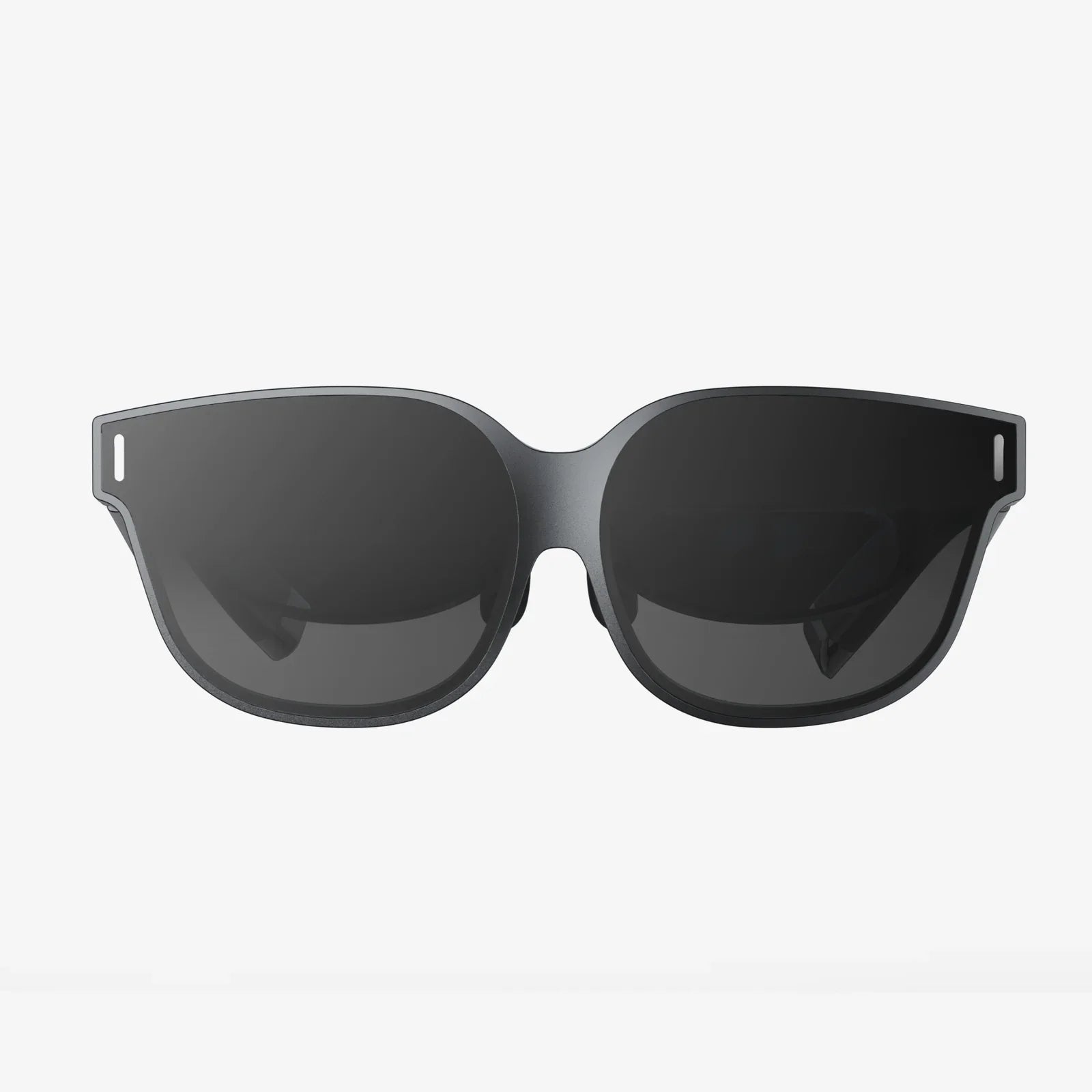
Imagine the sound of rain not just falling around you, but able to pinpoint the individual drops hitting the leaves to your left, the puddle forming behind you, and the distant rumble of thunder moving from the north to directly overhead. This isn't a scene from a high-tech movie; it's the everyday reality being unlocked by spatial audio, a technological leap that is fundamentally changing how we interact with sound. This immersive audio format is rapidly moving from a niche feature to a mainstream standard, promising to deepen our connection to entertainment, communication, and storytelling in ways we are only beginning to understand. The race to harness its potential is on, and the applications are as vast as they are revolutionary.
The Foundation: Understanding the Technology Behind the Magic
Before diving into its uses, it's crucial to grasp what spatial audio is and how it works. At its core, spatial audio is an advanced sound technology that creates a three-dimensional auditory experience. Unlike traditional stereo sound, which is flat and limited to left and right channels, or surround sound, which uses multiple fixed speakers around a room, spatial audio uses complex algorithms to trick the human brain into perceiving sound from virtually any direction—above, below, and all around the listener.
The magic lies in a combination of techniques, primarily head-related transfer function (HRTF). HRTF is a set of acoustic filters that model how sound waves interact with the unique shape of a person's head, ears, and torso. These subtle interactions are what our brains use to determine the location of a sound in space. By applying HRTF filters to audio signals, spatial audio processors can make it seem like sounds are coming from specific points in a virtual environment, even when listening through standard headphones.
This processing is often combined with dynamic head tracking. Using gyroscopes and accelerometers in compatible headphones or devices, the system monitors the user's head movements. If you turn your head to the left, the soundscape rotates accordingly, so the dialogue from a character on your screen remains "locked" in front of you, while ambient sounds shift realistically. This creates a stable, convincing sound field that feels anchored to your environment, not just your headphones.
The Hardware: A World of Devices Tuned for Immersion
The adoption of spatial audio is being driven by its integration into a wide array of popular hardware. The most common gateway is through headphones and earbuds. An increasing number of modern wireless models come equipped with the necessary technology, including built-in head-tracking sensors and support for high-fidelity audio codecs that can transmit the detailed data required for spatial effects. While some basic implementations work with any stereo headphones, the full, head-tracked experience is typically optimized for specific hardware ecosystems.
Beyond personal audio, the technology is also making its way into smartphones, tablets, and laptops. These devices act as the powerful processing hubs, decoding spatial audio formats and sending the instructions to the headphones. Their high-resolution displays are the perfect visual companion to an immersive auditory experience, making them ideal for watching movies and playing games.
Perhaps the most captivating hardware applications are in virtual reality (VR) and augmented reality (AR) headsets. Here, spatial audio is not just an enhancement; it is absolutely critical for believability. In a VR world, seeing an object is only half the equation. Hearing it rustle in the bushes to your right or whiz past your ear from behind is what completes the illusion and triggers a genuine physiological response, making the experience truly immersive and emotionally resonant.
Even home entertainment systems are evolving. Modern soundbars and home theater systems are increasingly adopting object-based audio formats like Dolby Atmos, which is a form of spatial audio designed for multi-speaker setups. These systems use upward-firing speakers to bounce sound off the ceiling, creating a hemisphere of audio that approximates a three-dimensional soundscape without the need for a complex web of speakers installed in the walls and ceiling.
The Software and Platforms: Where Content Comes to Life
Hardware is nothing without content, and a massive push is underway across the software landscape to support and promote spatial audio.
Streaming Services and Cinematic Experiences
Major video streaming platforms are at the forefront of this push. A growing library of movies and TV shows is now available with spatial audio support, particularly in formats like Dolby Atmos. For viewers, this means a cinematic experience at home. A helicopter circles overhead in an action film, whispered conversations in a thriller seem to come from the hallway behind you, and a symphony performance in a documentary places you in the best seat in the concert hall, surrounded by the full breadth of the orchestra.
The Music Industry's New Frontier
The music industry has enthusiastically embraced spatial audio as the next evolution in listening. Music streaming services now offer thousands of tracks mixed in spatial audio. For artists and producers, it’s a new canvas. Instead of placing instruments on a flat stereo field between the left and right speakers, they can position them in a 360-degree sphere. The listener can feel like they are standing in the middle of the band, with the drummer behind them, the guitarist to the side, and the vocalist front and center. It adds a layer of depth, clarity, and artistry that stereo cannot match, encouraging more creative and immersive album productions.
A Paradigm Shift in Interactive Entertainment
Nowhere is the practical advantage of spatial audio more apparent than in gaming. This is often called "3D audio" in gaming circles, and it provides a tangible competitive edge. In a first-person shooter, hearing the precise direction of footsteps, the reload of a weapon to your left, or the distant crack of a sniper rifle from a specific window allows for faster and more accurate reactions than visual cues alone. Beyond competitive play, it massively enhances narrative-driven games. The creak of a floorboard in a horror game becomes infinitely more terrifying when it sounds like it's right behind you, deepening the emotional impact and drawing players further into the game's world.
Communication and the Future of Work
Emerging applications extend beyond entertainment. Video conferencing and communication apps are beginning to experiment with spatial audio. In a virtual meeting with multiple participants, each person's voice could emanate from a different point in the stereo field, mimicking the feeling of sitting around a conference table. This reduces the cognitive load of parsing a grid of talking heads and makes long meetings feel more natural and less fatiguing, potentially revolutionizing remote collaboration.
Beyond Consumption: Creation, Accessibility, and the Future
The spatial audio revolution is also empowering creators. Accessible software tools now allow podcasters, independent filmmakers, and game developers to experiment with spatial soundscapes. A true-crime podcaster can place the listener at the scene of a story, with ambient sounds all around, creating a more engaging and atmospheric narrative. This democratization of technology is opening new avenues for creative storytelling.
There are also promising accessibility applications. For individuals with visual impairments, a rich, spatially-aware audio environment could provide crucial contextual information about their surroundings, enhancing navigation and spatial awareness in both digital and real-world environments through assisted technologies.
Looking ahead, the convergence of spatial audio with other cutting-edge technologies paints an exciting picture. As augmented reality (AR) glasses develop, spatial audio will be essential for layering contextual sounds onto the real world—imagine navigation cues that sound like they are coming from the direction you need to turn, or historical information about a monument accompanied by audio that seems to emanate from the structure itself. Furthermore, the rise of the metaverse—a collective virtual shared space—relies entirely on immersion. Spatial audio is the bedrock of making these digital interactions feel real and present, allowing avatars to have spatial presence through their voices and environmental sounds to create a believable world.
The journey of sound is evolving from something we simply hear to an environment we can feel and inhabit. From the headphones on your ears to the VR headset on your face and the soundbar in your living room, spatial audio is breaking the flat, two-dimensional plane of traditional audio and building a sphere of sonic possibility. It is making our entertainment more captivating, our games more intense, our communication more human, and our technology more intuitive. This isn't just an incremental upgrade; it's the foundation for the next era of auditory experience, and it's already changing how we listen to everything.
Share:
Virtual Reality and AR Company: The Architects of Our New Reality
What's Virtual Reality? A Deep Dive Into The Digital Universe Reshaping Our World