


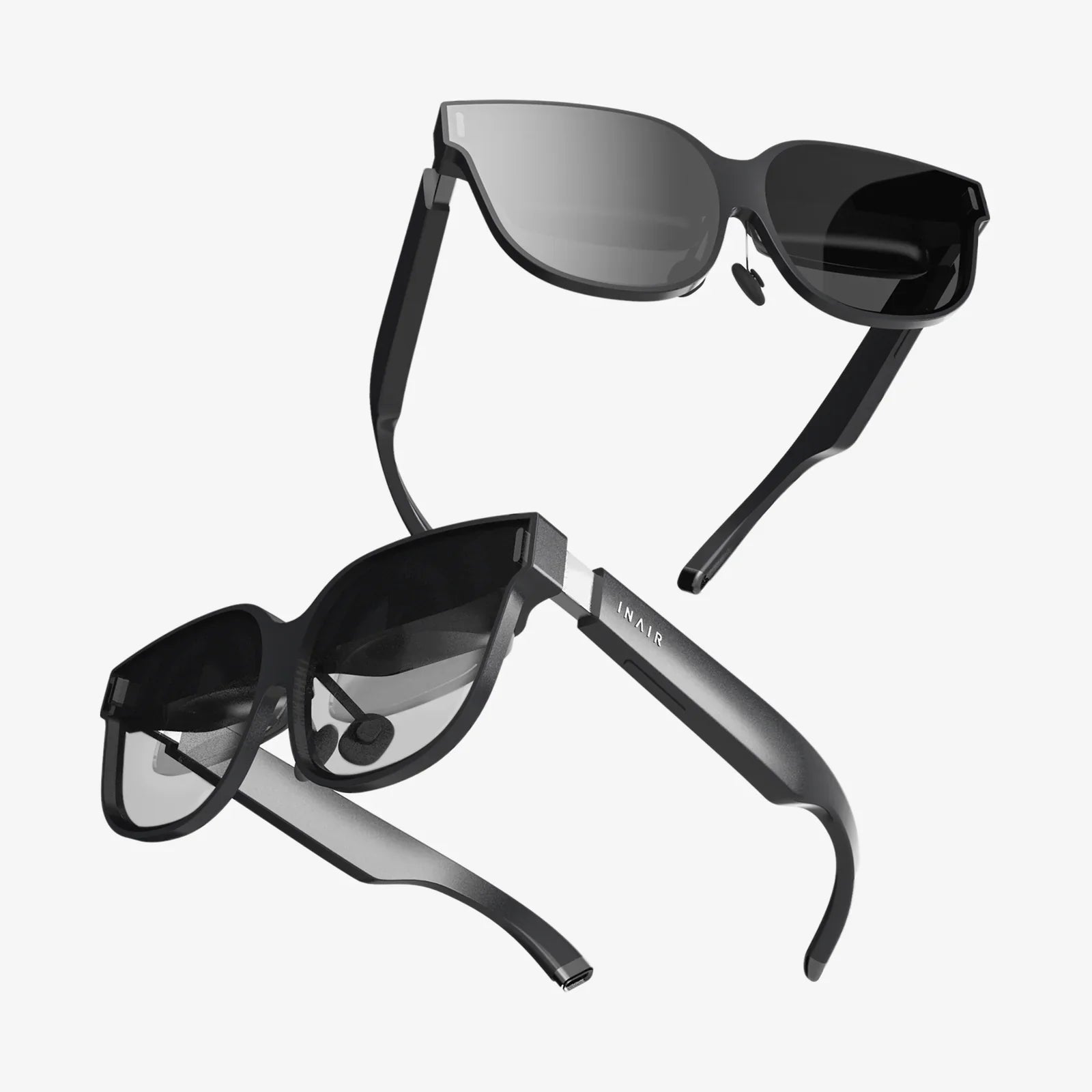
Imagine a world where the boundary between the digital and the physical dissolves not with a bulky headset, but with a blink of an eye. The promise of virtual reality contact lenses—a seamless, invisible gateway to immersive experiences—sounds like science fiction plucked from the most ambitious cyberpunk novel. Yet, this technology is inching from the realm of fantasy into tangible, albeit early-stage, reality. The concept alone is enough to spark the imagination of tech enthusiasts and futurists worldwide, but it inevitably leads to one pressing, practical question: what will be the virtual reality contact lenses price for this revolutionary leap in human-computer interaction? The answer is a complex tapestry woven from astronomical research costs, microscopic engineering marvels, and a future market yet to be born.
The Architectural Marvel: Deconstructing the Technology
To even begin to comprehend the potential price tag, one must first appreciate the profound engineering challenges involved. These are not simple screens placed on the eyes; they are self-contained, ultra-miniaturized computing systems that must operate in one of the most sensitive environments of the human body.
The Core Components and Their Cost Drivers
Every single element of a VR contact lens represents a frontier in nanotechnology and material science.
- Micro-Scale Displays: Unlike headset-based VR, which uses screens visible from inches away, lenses require displays measured in micrometers. Developing displays with high enough resolution and refresh rate to create a convincing virtual image directly on the retina is a monumental task. The research and development for such technology, likely involving MicroLED or laser beam scanning, is a primary driver of initial cost.
- Power Source and Wireless Charging: How do you power a computer on your eye? A wired connection is implausible. Solutions being explored include super-capacitors that charge in seconds, microscopic batteries, or even harvesting energy from the eye itself through bio-fuel cells or movement. Each option is in its infancy and incredibly expensive to develop and miniaturize safely.
- Biocompatible Materials: The lens substrate cannot be standard hydrogel. It must be a advanced polymer that allows for the embedding of electronics while simultaneously permitting oxygen permeability to keep the cornea healthy. These bespoke materials are not cheap to research, test, and manufacture to medical-grade standards.
- Sensors and Tracking: For the virtual world to respond to your movements, the lenses need a suite of micro-sensors—accelerometers, gyroscopes, and magnetometers—to track head and eye movement. Perhaps most crucially, they require pupil-tracking to understand precisely where the user is focusing, a technology that is difficult to perfect even in larger devices.
- Wireless Data Transmission: A constant, high-bandwidth connection to a processing unit (likely a small wearable device or a powerful smartphone) is essential. Implementing reliable, low-latency wireless communication like ultra-wideband or advanced Wi-Fi protocols on a microscopic scale is another significant engineering hurdle.
The convergence of these technologies into a single, safe, and functional device is arguably one of the greatest engineering endeavors of the 21st century. The initial virtual reality contact lenses price will reflect this, not as a consumer product, but as a marvel of scientific achievement.
Beyond Entertainment: The Value Proposition That Justifies the Price
While consumer VR for gaming and socializing is the most visible application, the true value—and justification for a high cost—lies in professional and medical fields. The price is not just for a product; it's for a capability.
Revolutionizing Medicine and Surgery
Surgeons could overlay MRI data and vital statistics directly onto their field of view during complex procedures, providing real-time, hands-free guidance. Medical students could practice surgeries on virtual cadavers. The precision and access to information could save lives and improve outcomes, making a high price point more palatable for institutional budgets.
Augmenting Engineering and Design
Architects could walk through full-scale, virtual models of their buildings before breaking ground. Mechanics could see wiring diagrams and repair instructions superimposed over the engine they are fixing. The efficiency gains and error reduction in industrial settings could provide a rapid return on investment for companies, justifying a significant cost.
Redefining Accessibility
For individuals with visual impairments, VR lenses could be programmed to enhance contrast, highlight obstacles, or even translate text from the physical world into audible speech in real-time. This transformative potential moves the discussion from price to pricelessness for those who would benefit.
These professional applications will be the first market, where the virtual reality contact lenses price will be measured against its value as a high-end tool, similar to the cost of industrial or medical robotics today.
The Inevitable Market Evolution: From Luxury to Mainstream
The journey to consumer adoption will mirror that of many pioneering technologies: painfully expensive at launch, followed by a rapid decline in cost as the technology matures and scales.
The Pioneering Phase: The Six-Figure Prototype
The first functional prototypes, developed by research institutions and tech giants, will have a price tag that is effectively incalculable for a consumer. Millions, if not billions, of dollars in collective R&D will be represented in a handful of working units. These will be proof-of-concepts, not products.
The Professional Rollout: Five Figures and Beyond
The first commercially available units will target the enterprise and medical sectors. Think of the first laser eye surgery machines or MRI scanners. The price could easily reach tens of thousands of dollars per pair, accessible only to hospitals, universities, and large corporations. The cost will be tied to low-volume, precision manufacturing, ongoing software support, and regulatory compliance.
The Consumer Debut: The High-End Tech Luxury
When the technology finally trickles down to consumers, the first generation will occupy the same space as high-end luxury cars or premium jewelry. Early adopters with considerable disposable income might pay thousands of dollars for the privilege of being first. The price will reflect not only the advanced components but also the brand prestige and the novelty factor.
Mainstream Adoption: The Price of a Premium Smartphone
As manufacturing processes improve, yields increase, and competition enters the market, prices will fall. The goal for any company would be to eventually reach a price point comparable to a high-end smartphone—a device which itself is a complex computer. This is the point where the technology could become ubiquitous, transforming daily communication, work, and entertainment.
This entire cycle, from prototype to mainstream, could take a decade or more, and the virtual reality contact lenses price will be a moving target throughout.
The Hidden Costs: More Than Just the Purchase Price
The initial sticker shock is only one part of the financial picture. Ownership will likely come with recurring costs that must be factored into the total cost of adoption.
- Software Subscriptions: The most immersive experiences, professional applications, and premium social worlds will likely live behind monthly subscription fees, creating a recurring revenue model for developers and platform holders.
- Prescription Integration: For the billions of people who need vision correction, the lenses will need to be custom-made to their prescription. This customization adds a layer of cost and complexity to manufacturing that standard lenses do not have.
- Insurance and Healthcare: Will health insurance cover medically-prescribed VR lenses? How will liability work if a software glitch causes physical harm? Navigating insurance and regulatory landscapes will add indirect costs to the ecosystem.
- Companion Hardware: The lenses will almost certainly require a separate processing pack—a small wearable computer that handles the intense number-crunching. This device would be an additional required purchase.
Therefore, the true virtual reality contact lenses price is a combination of the hardware, the software, and the ecosystem that supports it.
A Glimpse into the Future: When Price Meets Possibility
The development of true VR contact lenses is not a question of if, but when. The technological progression is clear, and the potential applications are too transformative to ignore. The price will start as a barrier that only the most well-funded institutions can cross, serving as a testament to the sheer difficulty of the undertaking. It will be a cost measured in decades of research and billions in investment.
Yet, as history has shown with the computer, the internet, and the smartphone, transformative technology follows a predictable path of democratization. The virtual reality contact lenses price will begin its life as an abstract figure representing a distant future, but it will eventually evolve into a tangible number on a consumer website, marking the beginning of a new era. The journey from a multi-million-dollar lab prototype to a device you might casually add to your cart will be one of the most fascinating stories in modern technology, rewriting the very definition of reality and what we are willing to pay to experience it.
Ultimately, the first price tag we see will be less about the cost of materials and manufacturing, and more about the value we place on a fundamentally new way of seeing, interacting with, and understanding the world around us. The real question isn't how much they will cost, but how much we will be willing to pay to make the dream of invisible computing a reality.
Share:
Virtual Reality Headset Compatible Phones: Your Ultimate Guide to Mobile-Powered Immersion
Virtual Reality Headset Compatible Phones: Your Ultimate Guide to Mobile-Powered Immersion