


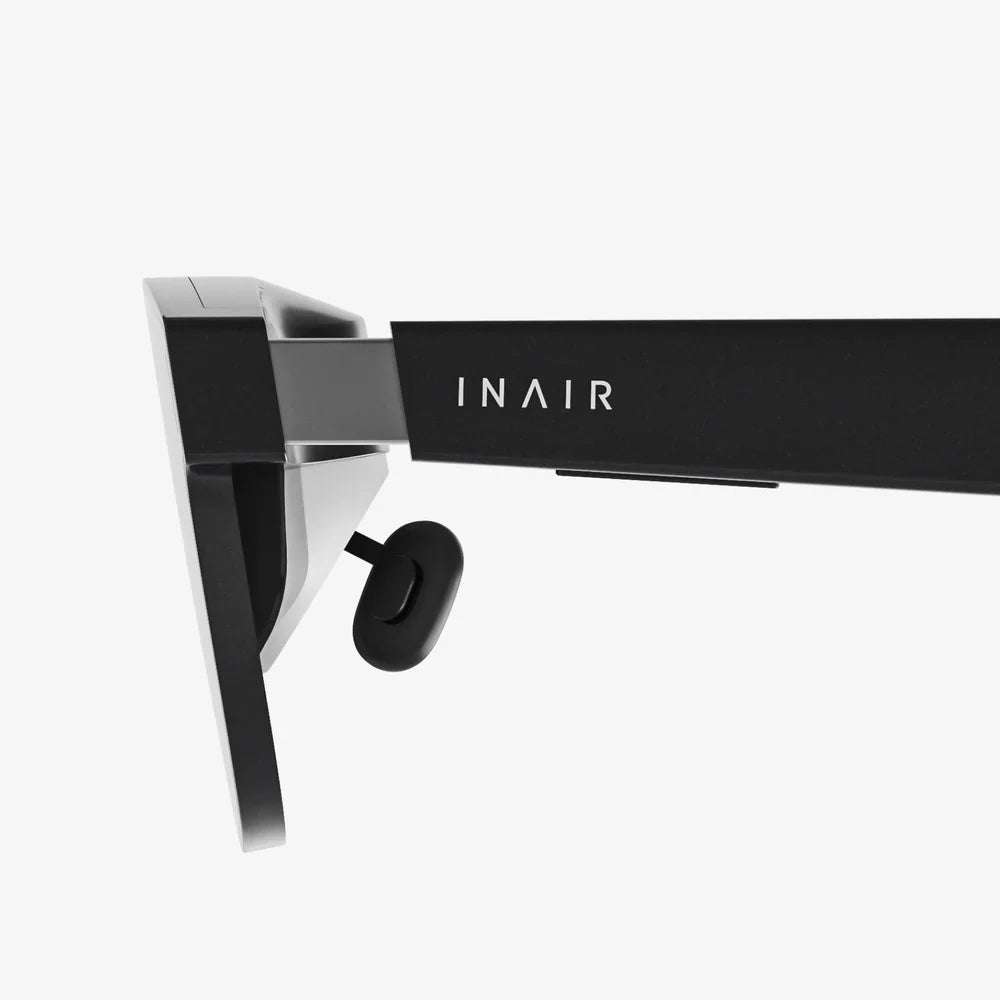
Imagine stepping into a world limited only by imagination, where the laws of physics are suggestions and the only passport required is a headset. This is the promise of virtual reality, a technology that has vaulted from the pages of science fiction into our living rooms, offering glimpses into impossible places and revolutionizing how we work, learn, and play. The journey into understanding this digital frontier begins with a simple question: what exactly is it?
Deconstructing the Core Virtual Reality Definition
At its most fundamental level, Virtual Reality (VR) is a computer-generated simulation of a three-dimensional environment that can be interacted with in a seemingly real or physical way by a person using special electronic equipment. But this clinical definition barely scratches the surface of what the experience entails. True VR is about the complete immersion of the user's senses, creating a persuasive illusion that they have stepped out of their immediate physical surroundings and into a fabricated, digital world.
The concept is far from new. The term "virtual reality" was popularized in the late 1980s by Jaron Lanier, a pioneer in the field, but the yearning to create artificial worlds is ancient, finding early expression in 360-degree murals and panoramic paintings. The foundational technology, however, began with the Sensorama machine in the 1950s, a bulky apparatus that offered short films with stereo sound, smells, and vibrations. The evolution from these rudimentary beginnings to today's sophisticated systems hinges on three core principles that define a true VR experience:
- Immersion: This is the technical capability of the technology to deliver a convincing, multi-sensory simulation. It is achieved through high-resolution visuals, 3D audio, and, in some cases, haptic feedback. The goal is to bombard the senses with digital information that overrides the real world.
- Sensory Feedback: Beyond just seeing and hearing, advanced VR systems provide tactile feedback. This is known as haptics, which uses vibrations, motions, or forces to simulate the sense of touch, such as feeling the recoil of a virtual weapon or the texture of a digital object.
- Interactivity: A static, pre-rendered world is not virtual reality; it's a movie. True VR allows the user to influence and manipulate the environment. This is enabled through motion tracking, controllers, and gesture recognition, allowing for real-time, natural interaction with the virtual space.
It is crucial to distinguish VR from its technological cousins, Augmented Reality (AR) and Mixed Reality (MR). While VR seeks to replace the user's reality entirely, AR overlays digital information onto the real world (think of navigation arrows on your car's windshield). MR is more advanced, anchoring persistent digital objects to the real world that can be interacted with. VR is about escape; AR and MR are about enhancement.
The Engine Room: How Virtual Reality Technology Works
The magic of VR doesn't happen by accident. It is the product of a sophisticated symphony of hardware and software working in perfect harmony to trick the human brain. The primary gateway is the head-mounted display (HMD), a headset that contains the essential technology.
Inside these headsets are small, high-resolution screens placed in front of each eye. Using techniques like stereoscopy, slightly different images are presented to each eye, creating the powerful illusion of depth and dimensionality. These displays are coupled with lenses that focus and reshape the picture, providing a wide field of view (FOV) that fills the user's peripheral vision, a critical factor for immersion.
However, a visually stunning world is useless if it doesn't move with the user. This is where tracking systems come into play. Modern headsets use a combination of technologies:
- Inside-Out Tracking: Cameras on the headset itself look outward, tracking the position of the controllers and mapping the physical room to understand the user's movement in space.
- Outside-In Tracking: External sensors or base stations placed around the room precisely monitor the position of the headset and controllers, often considered the gold standard for high-end, room-scale VR.
This tracking data is processed instantaneously, updating the visual display in real-time to reflect the user's head and hand movements. The latency—the delay between a user's action and the system's response—must be incredibly low (under 20 milliseconds) to prevent disorientation and motion sickness. Finally, this entire experience is powered by potent processors that render two high-frame-rate videos simultaneously, a task that demands significant graphical power, often handled by powerful personal computers or increasingly, self-contained chips within standalone headsets.
Virtual Reality in Action: Compelling Examples Across Industries
The applications of VR extend far beyond entertainment, permeating and transforming numerous professional fields. Here are some of the most impactful examples.
Healthcare and Medicine
The medical sector has embraced VR for its ability to simulate high-risk scenarios without any real-world consequences. Surgeons now use VR platforms to practice complex procedures on detailed, virtual anatomies before ever making an incision. This not only sharpens their skills but also helps in pre-operative planning. Beyond surgery, VR is a powerful tool for therapy and rehabilitation. It is used to treat phobias through controlled exposure therapy, helping patients confront fears like heights or flying in a safe environment. For physical rehabilitation, engaging VR games motivate patients to perform repetitive movements, aiding recovery from strokes or injuries.
Education and Training
VR has the power to turn learning from a passive activity into an active experience. Instead of reading about ancient Rome, students can take a virtual walking tour of the Colosseum. Rather than watching a documentary on marine biology, they can dive into a coral reef. This experiential learning dramatically improves retention and engagement. In corporate and industrial training, VR is used to simulate dangerous jobs, such as high-voltage electrical work, offshore oil rig operations, or firefighting, allowing trainees to make mistakes and learn from them in a zero-risk environment.
Architecture, Engineering, and Construction (AEC)
For architects and designers, VR is a revolutionary tool for visualization. Clients can don a headset and walk through a photorealistic, to-scale model of a building long before the foundation is poured. This allows for informed feedback on spatial relationships, lighting, and materials, saving enormous costs on changes later in construction. Engineers use VR to prototype and examine complex mechanical designs from every angle, identifying potential flaws in the digital realm first.
Retail and Real Estate
The industries of selling are being transformed by virtual try-ons and tours. Furniture retailers allow customers to place virtual couches and tables in their actual living space using VR/AR overlap. Car buyers can configure a vehicle and then take it for a virtual test drive. In real estate, potential buyers from across the globe can take immersive, self-guided tours of properties at any time, vastly expanding the market for sellers and simplifying the search for buyers.
Entertainment and Social Connection
This is the most visible application for consumers. The gaming industry has been the primary driver of consumer VR, offering deeply immersive experiences that place the player inside the game world. But it goes beyond games. VR concerts allow fans to get front-row experiences from their homes. Social VR platforms enable people to meet, interact, and share experiences using digital avatars, offering a new form of presence-based communication that feels far more personal than a video call.
The Horizon and Beyond: The Future of Virtual Reality
The current state of VR is impressive, but it is merely a stepping stone. The future direction of the technology is focused on solving its remaining limitations and expanding its capabilities. A major focus is on achieving photorealistic graphics in real-time through advances in rendering, eye-tracking, and foveated rendering—a technique that maximizes detail only where the user is looking. The pursuit of true haptic feedback is also key, with research into full-body suits and gloves that can simulate touch, temperature, and resistance with high fidelity.
Perhaps the most significant evolution will be the move towards the metaverse—a persistent, interconnected network of shared virtual spaces. This concept envisions VR not as isolated experiences but as a seamless digital layer of society, a place for work, socialization, commerce, and entertainment. Furthermore, the convergence of VR with artificial intelligence will create dynamic, responsive worlds populated by intelligent digital beings that can interact and converse naturally with users.
Of course, this future is not without its challenges and ethical considerations. Issues of data privacy, given the immense amount of personal and biometric data VR systems can collect, are paramount. The potential for psychological effects, addiction, and the blurring of lines between reality and simulation must be carefully studied. There is also the risk of a digital divide, where access to these advanced virtual worlds becomes a marker of socioeconomic status.
From a concept born in fantasy to a tool shaping our reality, virtual reality has proven its transformative potential. It is a medium that challenges our perceptions of presence and connection, offering a new canvas for human creativity and problem-solving. The headset may be the doorway, but the true journey is just beginning.
The screen you're reading this on is about to disappear, replaced by infinite horizons and experiences waiting to be lived, not just watched. This isn't the future of technology; it's the next chapter of human experience, and it's being written in a reality of our own making.
Share:
Should You Use Spatial Audio? The Ultimate Guide to Immersive Sound
What Is The Best Virtual Reality? A Deep Dive Into Finding Your Perfect Digital Escape