


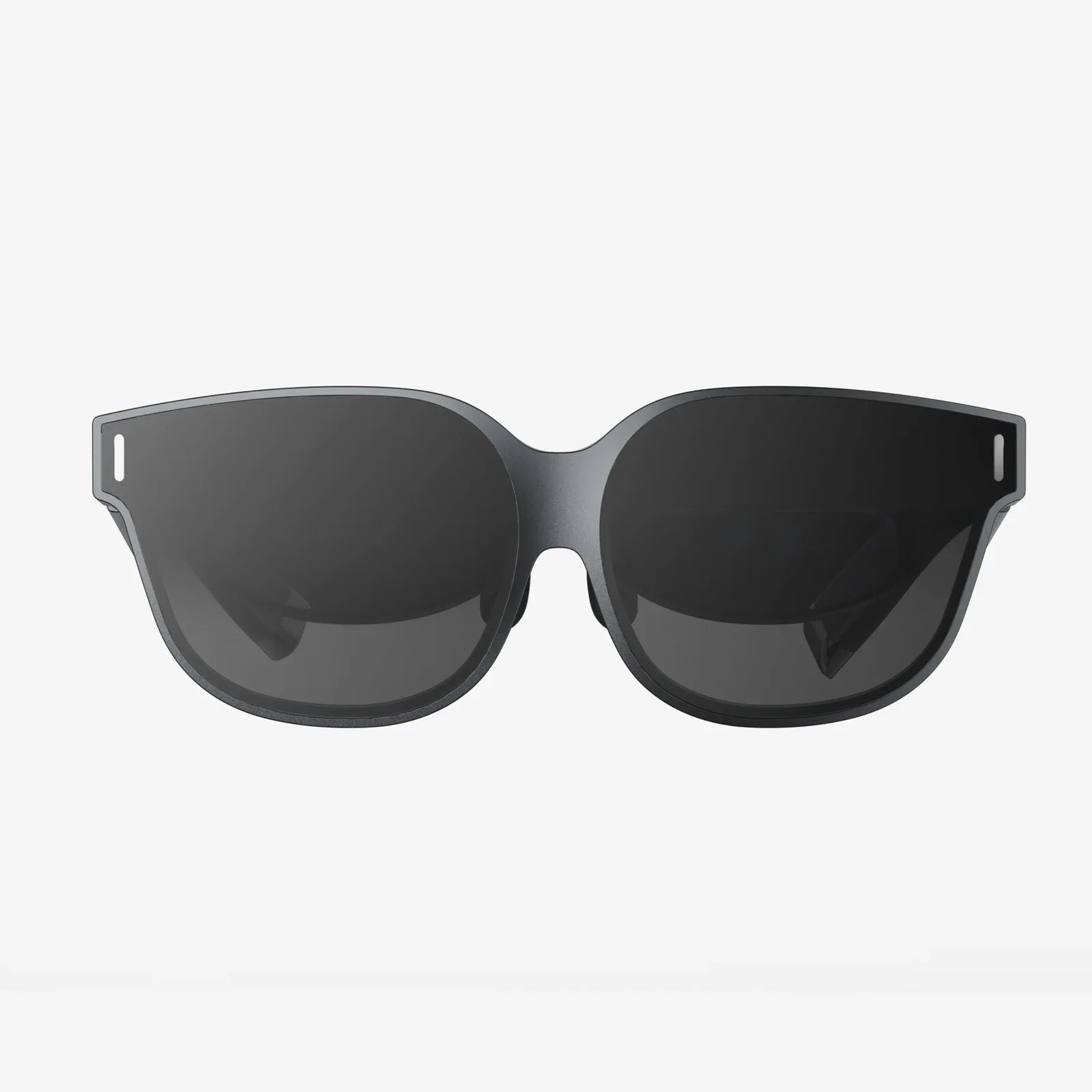
Imagine slipping on a headset and instantly being transported to the peak of Mount Everest, the surface of Mars, or the operating room of a world-class surgeon. This is no longer the stuff of science fiction but the tangible, awe-inspiring power of a technology that is redefining our relationship with digital information and each other. At its heart lies a simple yet profound concept: the creation of a world that isn't there, but one that our senses and our minds wholeheartedly believe is real. To truly understand this revolution, we must start with a fundamental question—what exactly is the virtual reality definition in computer science?
The Core Pillars: What Truly Defines Virtual Reality?
The virtual reality definition in computer science extends far beyond just a fancy head-mounted display. It is a sophisticated orchestration of hardware and software designed to achieve one primary goal: the suspension of disbelief. For an experience to be truly considered VR, it must satisfy three immutable pillars, often referred to as the "3 I's" of virtual reality.
Immersion: The Tricking of the Senses
Immersion is the technical foundation of the experience. It is the objective measure of how effectively the VR system shuts out the physical world and replaces it with a digital one. This is achieved through a combination of technologies:
- Visual Immersion: High-resolution displays are placed mere centimeters from the user's eyes, filling their entire field of view. Stereoscopic 3D, rendered with precise perspective for each eye, creates a powerful sense of depth and scale.
- Aural Immersion: Three-dimensional spatial audio is critical. Sounds must change dynamically based on the user's head position and orientation, allowing them to locate the source of a noise in the virtual space, just as they would in the real world.
- Haptic Immersion: This involves the sense of touch. While still an area of intense development, haptic feedback through controllers, vests, or even gloves provides tactile sensations, from the recoil of a virtual weapon to the texture of a virtual wall.
Interaction: The Bridge Between User and World
A world you can only look at is a diorama, not a reality. True VR is interactive. Users must be able to influence and manipulate the digital environment in a natural and intuitive way. This is where input devices and software algorithms come together.
- Motion Tracking: Six Degrees of Freedom (6DoF) tracking is the gold standard. It monitors not just the rotation of your head (yaw, pitch, roll) but also its positional movement in space (forward/back, up/down, left/right). This allows you to lean, crouch, and walk around within a defined area.
- Controllers: Handheld controllers act as proxies for your hands. They are also tracked in 3D space, enabling you to grab, throw, push, and pull virtual objects. Advanced systems use hand-tracking technology to eliminate controllers entirely, using your bare hands as the input device.
- Environmental Interaction: The software must support physics engines that make interactions believable. A pushed object should topple, a thrown ball should arc, and a virtual door should swing open with appropriate resistance.
Presence: The Psychological Holy Grail
If immersion is the technical input, presence is the psychological output. It is the elusive, magical feeling of "being there"—the moment your conscious brain forgets about the headset, the wires, and your living room, and accepts the virtual world as your genuine reality. Presence is the ultimate benchmark for a successful VR system. It's a fragile state that can be shattered by low latency, poor graphics, or unrealistic physics. When achieved, it triggers profound emotional and physiological responses, from fear when standing on a virtual ledge to genuine connection with a digital human.
Deconstructing the Technology: The Hardware That Builds Worlds
The magic of VR doesn't happen by accident. It is the result of a complex stack of hardware components working in perfect harmony to create a seamless, believable experience.
Visual Output: The Head-Mounted Display (HMD)
The HMD is the most recognizable piece of VR hardware. It's a helmet or pair of goggles that contains the miniature screens viewed by the user. Key components inside an HMD include:
- Displays: Modern HMDs use fast-switching LCD or OLED panels with very high resolutions and refresh rates (90Hz and above) to prevent motion blur and provide a smooth, clear image.
- Lenses: Placed between the screens and the eyes, specialized Fresnel or pancake lenses focus and reshape the image to cover the user's field of view correctly and create the stereoscopic 3D effect.
- Integrated Sensors: Inertial Measurement Units (IMUs), including gyroscopes, accelerometers, and magnetometers, are embedded inside the HMD to provide high-speed, precise tracking of head rotations.
Tracking Systems: Mapping Reality to Virtuality
Knowing where the user is looking and where they are in physical space is non-negotiable. Two primary methods are used:
- Inside-Out Tracking: Cameras mounted on the HMD itself look outward to track the surrounding environment. By analyzing how features in the room move relative to the headset, the system can calculate its position without external hardware. This is common in standalone VR systems.
- Outside-In Tracking: External sensors or base stations are placed around the room. These emit lasers or infrared light that is detected by sensors on the HMD and controllers. This method is often considered more precise and is favored for high-end PC-based VR systems.
Computational Power: The Engine Room
Rendering two high-resolution, high-frame-rate views of a complex 3D world is an astronomically demanding computational task. This processing can happen in two places:
- Standalone/All-in-One HMDs: The computing hardware is built directly into the headset. While convenient and wireless, these mobile processors represent a trade-off between performance and portability.
- Tethered HMDs: The headset is connected via a cable to a powerful external computer. This setup leverages the immense power of dedicated graphics cards and central processing units to deliver the highest-fidelity visuals and most complex simulations, making it the choice for professionals and enthusiasts.
Beyond Entertainment: The Expansive Applications of VR
While gaming is the most famous application, the utility of VR stretches into nearly every professional field, revolutionizing how we work, learn, and heal.
Education and Training: Learning by Doing, Virtually
VR provides a safe, cost-effective, and infinitely repeatable training environment. Medical students can practice complex surgical procedures on virtual patients without risk. Astronauts can simulate spacewalks. Mechanics can learn to repair new engines before they even physically exist. This experiential learning dramatically improves knowledge retention and skill acquisition.
Healthcare and Therapy: Treating Mind and Body
The medical field has embraced VR for both treatment and rehabilitation.
- Exposure Therapy: Psychologists use controlled VR environments to help patients confront and overcome phobias, such as fear of heights, flying, or public speaking, in a safe and gradual manner.
- Physical Rehabilitation: VR games and exercises make repetitive physical therapy regimens more engaging for patients recovering from strokes or injuries, improving motivation and outcomes.
- Pain Management: Immersive VR experiences have been shown to act as a powerful non-pharmacological analgesic, distracting the brain of burn victims during wound care or chronic pain sufferers.
Enterprise and Design: Prototyping the Future
Architects and engineers walk clients through unbuilt buildings. Car designers sit inside a full-scale model of a new vehicle prototype long before a single physical part is manufactured. Teams from across the globe collaborate in shared virtual boardrooms as if they were in the same physical space. VR is collapsing the distance between concept and reality.
The Challenges and Ethical Considerations on the Horizon
For all its promise, the path forward for VR is not without significant hurdles and profound questions.
- Technical Limitations: The pursuit of perfect realism continues. Challenges include achieving "retina" level display resolution, eliminating motion sickness for all users, developing affordable and convincing full-body haptics, and creating wireless systems with the power of tethered ones.
- Social and Psychological Effects: As presence becomes more powerful, what are the long-term effects of spending significant time in virtual worlds? Issues of addiction, dissociation from physical reality, and the impact on social skills are areas of active research.
- Privacy and Data Security: VR systems collect a staggering amount of biometric and behavioral data—precise eye gaze, body movement, vocal inflections, and even emotional responses. This data is incredibly valuable and raises serious questions about who owns it and how it can be used.
- The Accessibility Gap: High-cost, high-powered VR systems risk creating a new digital divide, where access to these transformative experiences and tools is limited to those with sufficient means.
The journey into virtuality is just beginning. The current definition of virtual reality in computer science is a snapshot of a technology in rapid, explosive evolution. It is a gateway to experiences that were once unimaginable, a tool for solving real-world problems, and a canvas for human creativity. As the hardware shrinks, the software gets smarter, and the lines between the real and the simulated continue to blur, one thing is certain: our digital futures will not be confined to flat screens. They will be all around us, waiting to be explored, and limited only by the boundaries of our own imagination.
Share:
Augmented Reality Examples: 10 Powerful Use Cases Changing Our World
Economic Development and Virtual Reality: The New Frontier of Global Growth