


Imagine trying to describe the color blue to someone who has been blind since birth, or the symphony of a roaring crowd to someone who has never heard a sound. This is the monumental, thrilling, and often frustrating challenge we face when attempting to articulate the experience of virtual reality. It is a medium that must be felt to be truly understood, a digital phantom that dances on the edges of our perception, begging for a vocabulary robust enough to capture its essence. The quest to perfect the virtual reality description is not merely an academic exercise; it is the fundamental bridge between the uninitiated and the immersive, the key to unlocking mainstream adoption and shaping the very future of human-computer interaction.
The Foundational Layers: Deconstructing the Hardware
Any attempt at a virtual reality description must begin with the tangible—the hardware that serves as our gateway. This is the most straightforward layer to define, yet it is often muddled by technical specifications that mean little to the average person. A clear description here separates the physical apparatus from the psychological experience it enables.
The primary device is the head-mounted display (HMD), a helmet or pair of goggles that houses the miniature screens positioned mere centimeters from the user's eyes. The core function of these screens is to present a stereoscopic image—two slightly offset views that mimic the perspective of our left and right eyes, creating the crucial illusion of depth and scale. The quality of this image is often described by its resolution (the sharpness and clarity of the picture) and its refresh rate (measured in Hertz, indicating how smoothly the image updates, which is critical for preventing discomfort).
Surrounding these screens is an array of sensors: accelerometers, gyroscopes, and sometimes magnetometers. Together, they perform a constant, high-speed dance of tracking, precisely measuring the rotation of your head (rotational tracking) and, in more advanced systems, its translation through space (positional tracking). This is the magic that makes the virtual world remain locked in place when you turn your head or lean in for a closer look, selling the illusion that you are truly there.
Beyond sight, immersion is deepened through audio. The implementation of 3D spatial audio is a cornerstone of a compelling virtual reality description. Unlike standard stereo sound, spatial audio algorithms simulate how sound waves interact with the human head and ears, allowing sounds to have a specific point of origin in three-dimensional space. The creak of a floorboard behind you, the whisper from a doorway to your left, the echo of a voice in a vast cavern—these auditory cues are arguably as important as visual ones in selling the reality of a virtual space.
Finally, we have the input devices, the extensions of our will into the digital realm. These range from simple handheld controllers with buttons and joysticks to more advanced motion controllers that are tracked themselves, allowing you to see and use virtual hands. The pinnacle of this evolution is the pursuit of haptic feedback—technology that provides tactile sensations, from the simple buzz of a controller to sophisticated vests and gloves that simulate touch, impact, and resistance, closing the loop between action and physical reaction.
The Language of Experience: Beyond Pixels and Polygons
While describing the hardware is a science, describing the experience is an art. This is where language fails most often, forcing us to rely on metaphor, analogy, and subjective emotional reporting. The goal is to convey not what the device is, but what it feels like.
The most powerful concept in the lexicon of VR is Presence. Coined by pioneers in the field, presence (sometimes called telepresence) is the holy grail. It is the undeniable, subconscious conviction that you are in another place, a momentary suspension of disbelief so complete that your body and brain react as if the virtual world is physically real. You might flinch from a virtual bullet, feel a wave of vertigo on a virtual ledge, or instinctively reach out to steady yourself against a virtual table. Describing presence is like describing love or fear; it is a deeply personal physiological and psychological state. We know it when we feel it, and we struggle to define it for others.
Closely related is the concept of Embodiment. This moves beyond simply being present in a space to having a body within that space. A good virtual reality description of embodiment involves the user identifying with their virtual avatar. When you look down and see a body that moves in sync with your own, when you reach out with a virtual hand and it collides with a virtual object, a profound connection is forged. The description of this sensation often involves terms like 'agency,' 'ownership,' and 'self-location.' It's the difference between piloting a mech suit and being the mech suit.
Another critical experiential element is Scale. VR has a unique ability to convey the awe-inspiring magnitude of things in a way that flat screens cannot. A description of standing at the foot of a virtual dinosaur, where its foot is the size of your body, or floating next to a reconstruction of the International Space Station, humbles the user. Conversely, VR can shrink you down to the size of an ant, exploring the intricate landscape of a leaf or a circuit board. Describing this effortless manipulation of perspective is key to conveying VR's power.
The Spectrum of Realism: From Photorealism to Stylized Abstraction
A common misconception is that a perfect virtual reality description must hinge on perfect graphical fidelity—that the goal is always photorealism. In reality, the pursuit of realism is a spectrum, and different points on this spectrum serve different purposes.
Photorealism aims to perfectly mimic the visual complexity of the real world. Descriptions of these experiences focus on the minutiae: the way light refracts through a glass, the individual pores on a character's skin, the subtle wear and tear on a object's surface. This approach is often used for architectural visualizations, historical recreations, and high-fidelity simulations where believability is paramount.
However, achieving true photorealism is computationally monstrous and can sometimes work against presence if any element falls short (a phenomenon known as the 'uncanny valley'). This is why many compelling VR experiences embrace Stylized or Abstract visuals. A virtual reality description of a stylized world might focus on its artistic merit—the vibrant, cel-shaded colors of a cartoon world, the bleak, minimalist beauty of a monochromatic puzzle game, or the flowing, particle-based representations of data. These worlds are no less immersive; in fact, their cohesive and intentional art style can often foster a stronger sense of place than a flawed attempt at realism. The description moves from technical achievement to artistic expression.
The Challenges of Articulation: When Words Are Not Enough
Despite our best efforts, language remains a frustratingly blunt instrument for capturing the VR experience. We face several inherent challenges in crafting an accurate virtual reality description.
The first is the Empathy Gap. It is nearly impossible for someone who has never been in VR to mentally reconstruct the sensation from a verbal account. They can understand the concepts intellectually—'So, you wear goggles and it looks like you're somewhere else'—but they cannot viscerally comprehend the feeling of presence, the physiological reactions, or the emotional weight. This gap is the single biggest barrier to communication.
Secondly, we suffer from a Poverty of Vocabulary. We are forced to borrow terms from other media ('it's like a movie you're inside') or from reality ('it feels like you're really there'), but these descriptions are inherently inaccurate and can set up false expectations. We lack a unique and shared lexicon for the specific sensations of VR, much like how the Inuit languages are famously said to have many words for snow, describing specific conditions that are vitally important to their experience.
Finally, the experience is intensely Subjective. One person's profound moment of presence is another's mild curiosity. One user might be highly susceptible to simulator sickness, coloring their entire description with discomfort, while another is immune. Age, prior experience with technology, and even cultural background can influence how an experience is perceived and, consequently, how it is described.
Crafting the Narrative: The Role of the Content Creator
For developers and storytellers, the virtual reality description is not just something they write after the fact—it is a design philosophy embedded in the creation process itself. They must become architects of experience, thinking constantly about how a user will perceive and describe their world.
This involves mastering Environmental Storytelling. In VR, the environment is not a backdrop; it is a primary character. A creator must design spaces that invite exploration and discovery. The description of a room is no longer just a list of props; it's a narrative. The placement of objects, the quality of light, the audible ambiance—all these elements tell a story without a single line of dialogue. A messy desk tells of its owner's frantic work. A child's abandoned toy in a post-apocalyptic wasteland carries immense emotional weight.
They must also guide the user's Attention. In a 360-degree world, you cannot force a user to look where you want them to. Therefore, description through design becomes key. Using light, sound, movement, and spatial composition, a designer can gently 'direct' the user's gaze toward important narrative elements, ensuring they have the intended experience and, thus, the intended story to describe later.
Furthermore, creators are pioneering new forms of Interaction that themselves become a core part of the description. The act of physically turning a valve to open a door, of using two hands to carefully reload a virtual weapon, or of painting in three-dimensional space with your hands—these interactive verbs form the core of the user's memory and the stories they will tell. 'I climbed the mountain' is a fundamentally different and more powerful statement than 'I pressed a button to make the character climb the mountain.'
The Future of Description: Evolving Beyond Words
As the technology matures, our methods of description will inevitably evolve beyond written and spoken language. We are already seeing the emergence of new tools to bridge the empathy gap.
Volumetric Video and 360-degree video, while not interactive VR, serve as powerful introductory tools. Telling a friend about a VR experience is one thing; showing them a 360-degree recording of that experience on their smartphone, allowing them to look around, is another. It provides a glimpse, a trailer for the full feeling of presence.
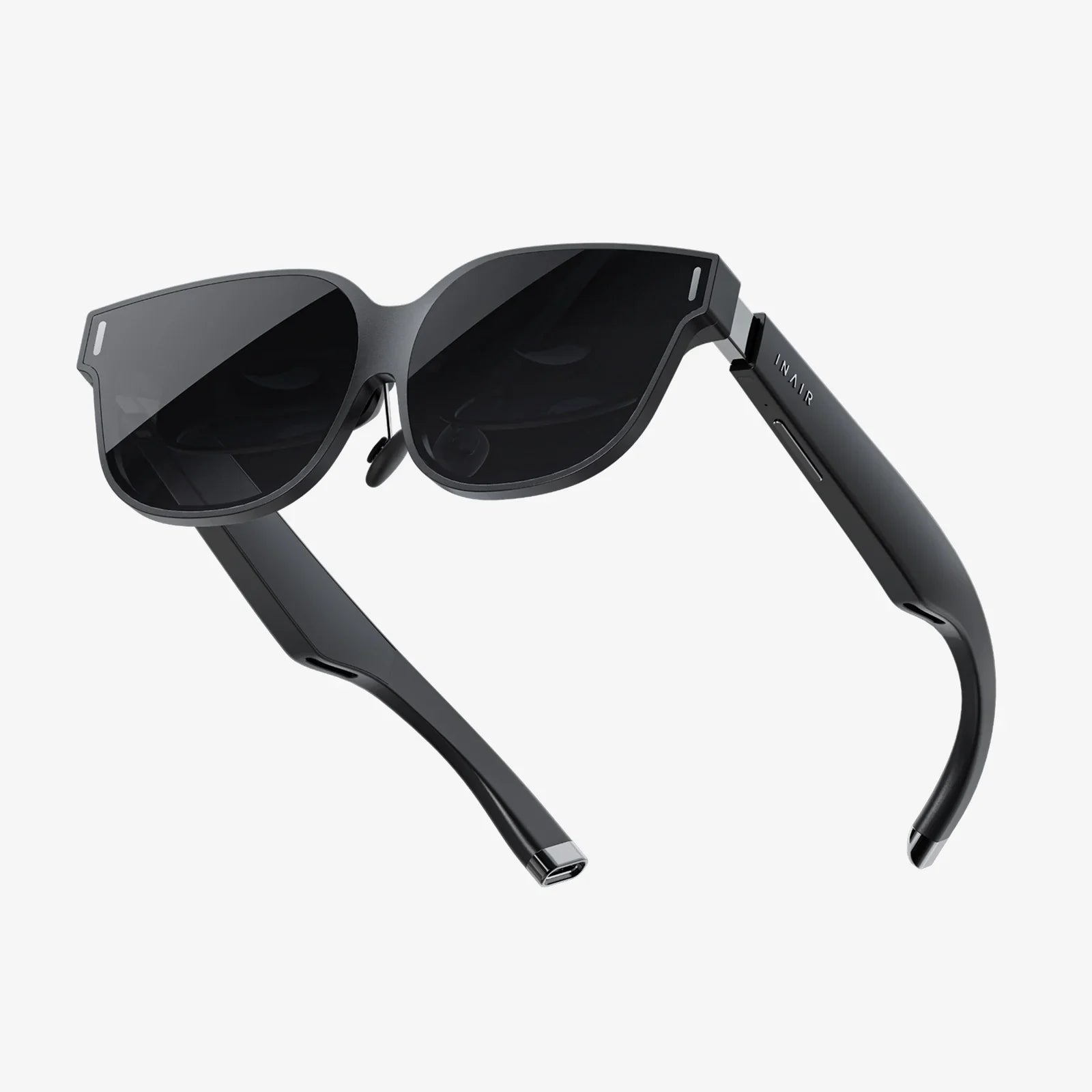
More importantly, the descriptions are becoming Embedded in the Hardware itself. The industry is moving towards lighter, wireless, and more intuitive devices that require less explanation. The act of putting on the headset is becoming as simple as putting on sunglasses, lowering the barrier to entry and making the experience itself the description. You don't need to describe the taste of chocolate; you just need to give someone a piece.
Looking further ahead, the development of Shared Social Spaces will become the ultimate descriptor. The ability to inhabit a virtual world with another person, to point things out to each other, to share the same experience simultaneously, creates a shared point of reference. The description then becomes a collaborative act of reminiscing—'Remember when we stood on that virtual Mars cliff?'—which is far more powerful and accurate than any solitary account.
Ultimately, the struggle to describe virtual reality is a testament to its transformative potential. We are grappling with a new dimension of human experience, and our language is racing to catch up. We are moving from describing a technology to describing a place, from listing specifications to recounting memories, from explaining a gadget to sharing a story. The words we choose today are laying the foundation for how future generations will perceive, discuss, and understand this new reality. They are not just labels; they are the very architecture of our digital dreams, and we must choose them with care, with wonder, and with an eye toward a future where the line between the real and the virtual becomes beautifully, and indescribably, blurred.
You can read all the technical specifications, watch all the trailer videos, and listen to a thousand enthusiastic testimonials, but the final, most accurate virtual reality description will always be a personal and silent one—the moment the headset settles onto your face, the real world fades away, and your own breath catches in your throat as you step into the impossible. The only way to know is to go.
Share:
Best Virtual Reality App: Your Ultimate Portal to Immersive Digital Worlds
Frontiers in Virtual Reality: Exploring the Next Digital Frontier