


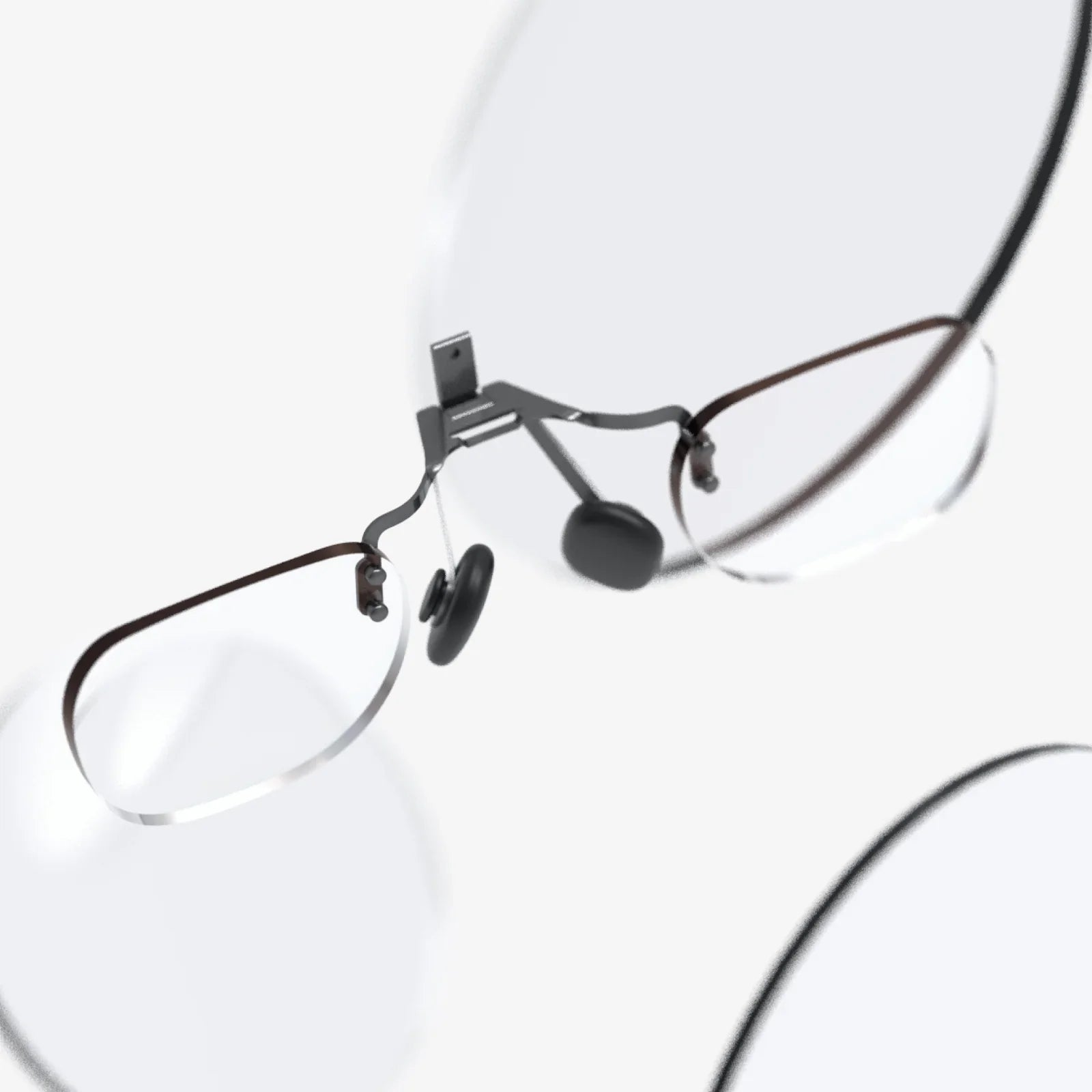
Imagine slipping on a headset, ready to be transported to a breathtaking digital frontier, only to be met with a jarring, nauseating blur. Your eyes struggle to merge two conflicting images into one coherent world, but they can't. This is the unsettling reality of virtual reality double vision, a technical specter that haunts the edges of the metaverse and a challenge that, once solved, will unlock the true potential of immersive computing for everyone.
Deconstructing the Illusion: How Human Vision Creates a Single World
To understand the problem, we must first appreciate the biological marvel of human stereoscopic vision. Our eyes are positioned approximately two and a half inches apart, giving each eye a slightly different perspective on the world. This difference, known as binocular disparity, is not a bug; it's the primary feature our brain uses to calculate depth and construct a three-dimensional understanding of our environment. The brain's visual cortex performs an incredible feat of real-time processing, fusing these two two-dimensional images into a single, stable, and volumetric perception. This process, called stereopsis, is so seamless that we are rarely aware of it—until it breaks down.
The Digital Divide: When Virtual Images Fail to Converge
Virtual reality double vision, or diplopia in clinical terms, occurs when this fusion process fails within a simulated environment. Instead of a unified 3D scene, the user perceives two distinct, overlapping images. This failure can be attributed to several critical technical mismatches between the human visual system and the digital display technology.
1. The Vergence-Accommodation Conflict (VAC)
This is the most significant and deeply rooted cause of virtual reality double vision. In the natural world, the processes of vergence (the inward or outward movement of our eyes to point at an object) and accommodation (the flexing of our eye's lens to focus on that object) are neurologically linked. If you focus on your finger close to your face, your eyes cross (verge) and your lenses thicken to focus (accommodate).
Traditional VR headsets shatter this link. They present a stereoscopic image on a fixed-depth display plane, typically two to three meters away. Your eyes must verge to the virtual distance of an object—whether it's a tree on the horizon or a floating menu right in front of you. However, your eye's lenses must always accommodate to focus on the fixed physical screen. This constant, unnatural decoupling of two hardwired biological functions places immense strain on the visual system. For many users, the brain eventually fails to resolve the conflict, resulting in virtual reality double vision, eyestrain, and often, cyber sickness.
2. Improper Interpupillary Distance (IPD) Calibration
Every person has a unique distance between their pupils. VR headsets must precisely align their dual displays or lens systems to match this IPD. If the software or hardware IPD setting is incorrect, the virtual cameras are spaced either too far apart or too close together relative to the user's eyes. This misalignment presents the two images with a disparity that falls outside the brain's fusional range, making it impossible to combine them into a single 3D image, thus triggering immediate and pronounced virtual reality double vision.
3. Latency and Tracking Errors
A high-fidelity VR experience requires an incredibly low motion-to-photon latency (the delay between moving your head and the image updating on the screen). Even a delay of 20 milliseconds can disrupt the brain's expectation of reality. If the head tracking is sluggish or imprecise, the rendered images for each eye do not align correctly with the user's head position and movement. This temporal misalignment can cause the world to appear to "smear" or "slip," creating a form of dynamic double vision that is particularly disorienting.
4. Optical Imperfections and Software Rendering Flaws
Chromatic aberration, where lenses fail to focus different colors of light to the same point, can create colored fringes that mimic double vision. Distortion from low-quality lenses or incorrect distortion correction algorithms can also pull images apart. Furthermore, errors in the stereoscopic rendering pipeline itself—such as incorrect calculation of the projection matrices for each eye—can generate inherently unfusable imagery from the moment it is drawn.
The Human Toll: Beyond a Simple Glitch
The impact of virtual reality double vision extends far beyond a simple graphical glitch. Its effects are profoundly physical and psychological.
- Visual Fatigue and Eyestrain: The constant struggle to force fusion of misaligned images leads to rapid fatigue, soreness, and headaches, drastically shortening comfortable session times.
- Cyber sickness: The sensory conflict between what the eyes report (instability, double vision) and what the vestibular system in the inner ear reports (lack of physical movement) is a primary trigger for nausea, dizziness, and vertigo.
- Break in Presence: The ultimate goal of VR is "presence"—the convincing feeling of being in the digital world. Virtual reality double vision is a constant, uncomfortable reminder of the headset's presence, shattering immersion and preventing users from fully engaging with the experience.
- Accessibility Barrier: For individuals with pre-existing binocular vision disorders (like strabismus or amblyopia), the prevalence of double vision can make VR completely inaccessible, excluding a significant portion of the population.
The Engineering Frontier: Solving the Double Vision Dilemma
The industry is engaged in a multi-front war against virtual reality double vision, employing advanced hardware and sophisticated software solutions.
Hardware Innovations
Varifocal and Light Field Displays: These are the holy grail for solving the VAC. Varifocal systems physically move displays or use liquid crystal lenses to dynamically adjust the focal plane of the screen to match the depth of the virtual object the user is looking at. Light field displays, even more advanced, project bundles of light rays that mimic how light arrives from objects in the real world, allowing the eye to naturally accommodate. While still primarily in research labs, they represent the future.
Advanced Optics and Customization: Higher quality, multi-element aspherical lenses minimize distortion and chromatic aberration. Motorized IPD adjustment that is precisely calibrated per-user is moving from high-end devices into the mainstream, ensuring perfect optical alignment.
Software and Algorithmic Solutions
Foveated Rendering: By using eye-tracking to pinpoint the user's gaze, this technique renders the center of the visual field (the fovea) in high resolution while intelligently reducing the detail in the periphery. This not only saves computational power but allows for more precise rendering of the stereoscopic image exactly where the user is looking, reducing peripheral errors that can contribute to discomfort.
Superior Distortion Correction: Sophisticated pre-distortion algorithms, calibrated for the exact optics of each headset, are applied to the image before it is sent to the display, so the lenses then "undo" this distortion to present a perfect, rectilinear image to each eye.
Depth-Based Rendering Techniques: New rendering methods take depth information into account more intelligently, applying blur (simulating depth of field) and other cues to help guide the eye's accommodation system and reduce the strain of the VAC, even on fixed-focus displays.
A Clearer, More Inclusive Virtual Horizon
The pursuit of a solution to virtual reality double vision is more than a technical exercise in improving comfort. It is a fundamental requirement for the longevity and mass adoption of immersive technologies. Eliminating this barrier will enable longer, more productive professional use in fields like design, medicine, and architecture. It will make virtual social spaces truly welcoming and accessible to all. It will allow for the creation of profound artistic and narrative experiences that can be enjoyed without a lurking sense of unease. The race to conquer virtual reality double vision is, at its core, the race to build a digital future that our biology can seamlessly accept. The day we stop seeing double is the day we will finally see the true promise of virtual worlds come into perfect, singular focus.
Share:
3D Headset Videos: The Ultimate Immersive Experience and How to Get Started
Windows Auto Adjusting Volume: The Ultimate Guide to Taming Your PC's Sound