


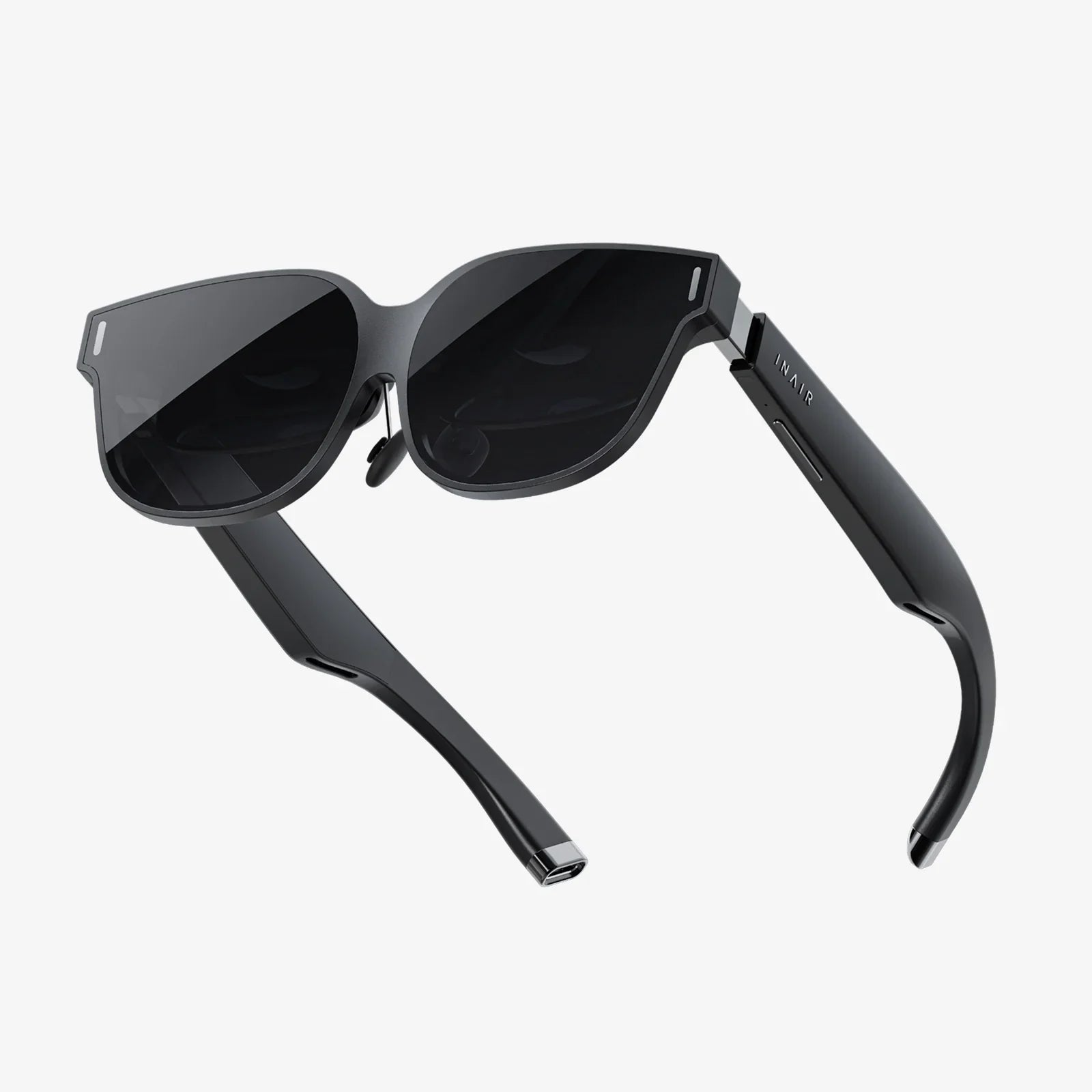
Remember the first time you held a View-Master up to your eyes and were magically transported to the Grand Canyon or the depths of the ocean? Now, imagine that childhood wonder, but amplified a thousandfold, with you at the center of the action. This was the incredible promise that virtual reality goggles for the iPhone 5 offered—a pocket-sized portal to entirely new worlds, accessible to anyone with a specific, beloved smartphone. It wasn't just a piece of tech; it was the first tangible taste of a future we had only ever dreamed of in science fiction, and it arrived not from a top-secret lab, but from your own pocket.
The Perfect Storm: Why the iPhone 5 Was the Ideal VR Pioneer
To understand the phenomenon, we must first rewind to the technological landscape of the early 2010s. The iPhone 5, released in September 2012, was a monumental leap forward in Apple's design philosophy. It was thinner, lighter, and, for the first time, boasted a larger 4-inch Retina display with a resolution of 1136 x 640 pixels. While these specs might seem modest by today's standards, at the time, they were groundbreaking. This screen offered a pixel density that was more than sufficient for the early, low-persistence VR experiences, providing a clear and crisp image that was crucial for immersion and reducing the dreaded screen-door effect.
Furthermore, the iPhone 5 was powered by the Apple A6 chip, a dual-core processor that represented a significant performance boost over its predecessors. This raw computational power was essential for handling the complex task of rendering two slightly different perspectives for each eye at a stable frame rate—a fundamental requirement for convincing VR. A laggy or stuttering experience is a one-way ticket to motion sickness, and the A6 chip was one of the first mobile processors that could credibly shoulder this burden for simpler applications.
Perhaps most importantly, the iPhone 5's cultural and market penetration cannot be overstated. It was one of the most popular and recognizable consumer electronics devices on the planet. This widespread adoption meant that the barrier to entry for VR was dramatically lowered. Instead of needing to invest in expensive, dedicated PC-powered hardware, millions of potential users already owned the core computational unit. The only missing piece was the headset itself, which often came in at a fraction of the cost of high-end alternatives. This democratization was the key that unlocked mainstream curiosity and paved the way for the VR revolution that followed.
More Than Just a Holder: The Anatomy of iPhone 5 VR Goggles
At first glance, many of these headsets appeared deceptively simple: a plastic or cardboard shell with a couple of lenses. However, the engineering behind them was cleverly designed to work in perfect harmony with the smartphone's capabilities.
- The Housing and Comfort: Models ranged from ultra-affordable cardboard designs (inspired by projects like Google Cardboard) to more sophisticated plastic versions with adjustable head straps, padded foam interfaces for comfort, and integrated ventilation to prevent lens fogging. These more robust designs acknowledged that immersion is broken just as easily by physical discomfort as by technical glitches.
- The Optical Lenses: The heart of the experience lay in the high-quality, precision-ground lenses. These were not mere magnifying glasses. They were designed to create a wide field of view (typically around 90-100 degrees), focus the screen's image to appear distant and vast, and correct for chromatic aberration to ensure a clean, color-accurate picture. They effectively turned the flat, rectangular screen into a seemingly infinite, stereoscopic 3D environment.
- The Input Methods: Lacking external controllers, these early systems relied on ingenious input solutions. The most common was a magnetic or capacitive slider on the headset itself that, when moved, would interact with the phone's built-in magnetometer or touchscreen to simulate a button press. Other methods included using a single-button Bluetooth remote or, most simply, using a user's gaze as a cursor with a timed dwell function to select items.
- The Software Ecosystem: The magic was activated by dedicated VR applications. The App Store became a vibrant playground for developers experimenting with this new medium. Users could download apps that would split the screen into two distinct images (one for each eye) and use the iPhone 5's internal gyroscope, accelerometer, and magnetometer to track head movement with surprisingly low latency. This allowed users to naturally look around their virtual surroundings by simply moving their head.
A Universe in Your Pocket: The Experiences That Defined an Era
The content available for these platforms was diverse, often experimental, and endlessly fascinating. It fell into several key categories that showcased both the potential and the limitations of mobile-powered VR.
- 360-Degree Videos and Photos: This was the "killer app" for early adopters. Platforms emerged allowing users to experience immersive videos, from walking through the streets of Paris to sitting front row at a concert. It was a passive but profoundly impactful experience, offering a powerful sense of "presence"—the feeling of actually being in a different place.
- Interactive Demos and Games: Developers created a plethora of simple yet engaging experiences. You could find yourself sitting in the cockpit of a starfighter, exploring a haunted house, or playing a minimalist puzzle game where the environment wrapped entirely around you. These experiences, while graphically simple, were revolutionary in their design philosophy, built from the ground up to be experienced from within.
- Educational and Travel Applications: Museums, educational institutions, and travel companies quickly saw the potential. They developed apps that let you take a virtual tour of ancient Roman ruins, explore the human body from the inside, or visit iconic landmarks. It was a powerful tool for experiential learning and virtual tourism.
- The Social Experience: Despite being a solitary activity physically, there was a strong social component. Sharing the headset with friends and family became an event. The sheer novelty of VR meant that watching someone else gasp, laugh, or jump while wearing the headset was entertainment in itself. It was a shared journey of discovery into a new technological frontier.
Confronting the Limitations: The Challenges of Pioneering Tech
For all its wonder, the experience was not without its significant drawbacks, each one a lesson that would shape the future of VR development.
The most glaring issue was performance and battery life. Rendering two high-resolution perspectives and constantly polling all the motion sensors was incredibly taxing on the iPhone 5's hardware. Experiences could become warm, and battery life would plummet dramatically. A long VR session required being tethered to a power outlet, undermining the concept of mobile freedom.
Visual fidelity was another major hurdle. The screen resolution, while good for its time, was still a far cry from what was needed for truly lifelike VR. The screen-door effect—seeing the fine lines between pixels—was often noticeable, and the graphical complexity of games was necessarily limited to maintain a smooth frame rate. Any judder or lag would instantly break immersion and could cause discomfort.
The lack of positional tracking was a fundamental limitation. The iPhone 5's sensors could track rotation (looking around, up, and down) perfectly, but they could not track translation (leaning forward, crouching, or moving side-to-side). This meant your virtual head was fixed in one point in space, which felt unnatural and limited interaction within the virtual environment. This "3 Degrees of Freedom" (3DoF) experience was immersive but ultimately a seated, look-based interaction.
Finally, the input methods were a clear area for improvement. The single-button input was functional but deeply limited. It prevented complex interactions and gameplay mechanics, highlighting the need for dedicated, tracked motion controllers to truly let users reach into and manipulate the virtual world.
The Legacy Lives On: From iPhone 5 to the Modern VR Landscape
The era of dedicated virtual reality goggles for the iPhone 5 was relatively short-lived. As technology advanced rapidly, subsequent iPhone models became even more powerful, with higher-resolution screens and better sensors. More importantly, the industry learned from this experiment. The limitations of smartphone-based VR—thermal throttling, battery drain, and the lack of dedicated hardware—pushed innovation towards standalone headsets.
These modern devices, the undisputed kings of the VR market today, are the direct descendants of those early iPhone holders. They are, in essence, a smartphone's worth of components—processor, screen, sensors, battery—but expertly optimized and integrated into a single, purpose-built package. They feature inside-out positional tracking (6 Degrees of Freedom), sophisticated hand-held controllers, and lenses that are the evolution of those first simple optics. They solved the problems that the iPhone 5 setup could not.
Yet, the debt is clear. The iPhone 5 VR goggles were the crucial stepping stone. They introduced millions to the concept of virtual reality, proved there was a massive consumer appetite for it, and provided a low-cost, accessible platform for developers to learn, experiment, and understand what makes a compelling VR experience. They validated the market and fueled the investment that led to the advanced systems we have today. They were the proof of concept that showed the world was ready for VR.
Today, sitting on a shelf or in a drawer, an iPhone 5 paired with its VR headset might seem like a quaint relic, a technological curiosity from a bygone era. But its true value is historical. It represents a pivotal moment when virtual reality shed its exotic, lab-bound image and became something anyone could experience. It was the end of the beginning, a nostalgic portal that didn't just show us virtual worlds—it showed us the very real future of human-computer interaction, and it invited everyone to take their first look.
Share:
Wearable Technology is the Future: Reshaping Our Lives from the Wrist Up
Full VR: The Complete Immersive Experience and Its Transformative Potential