


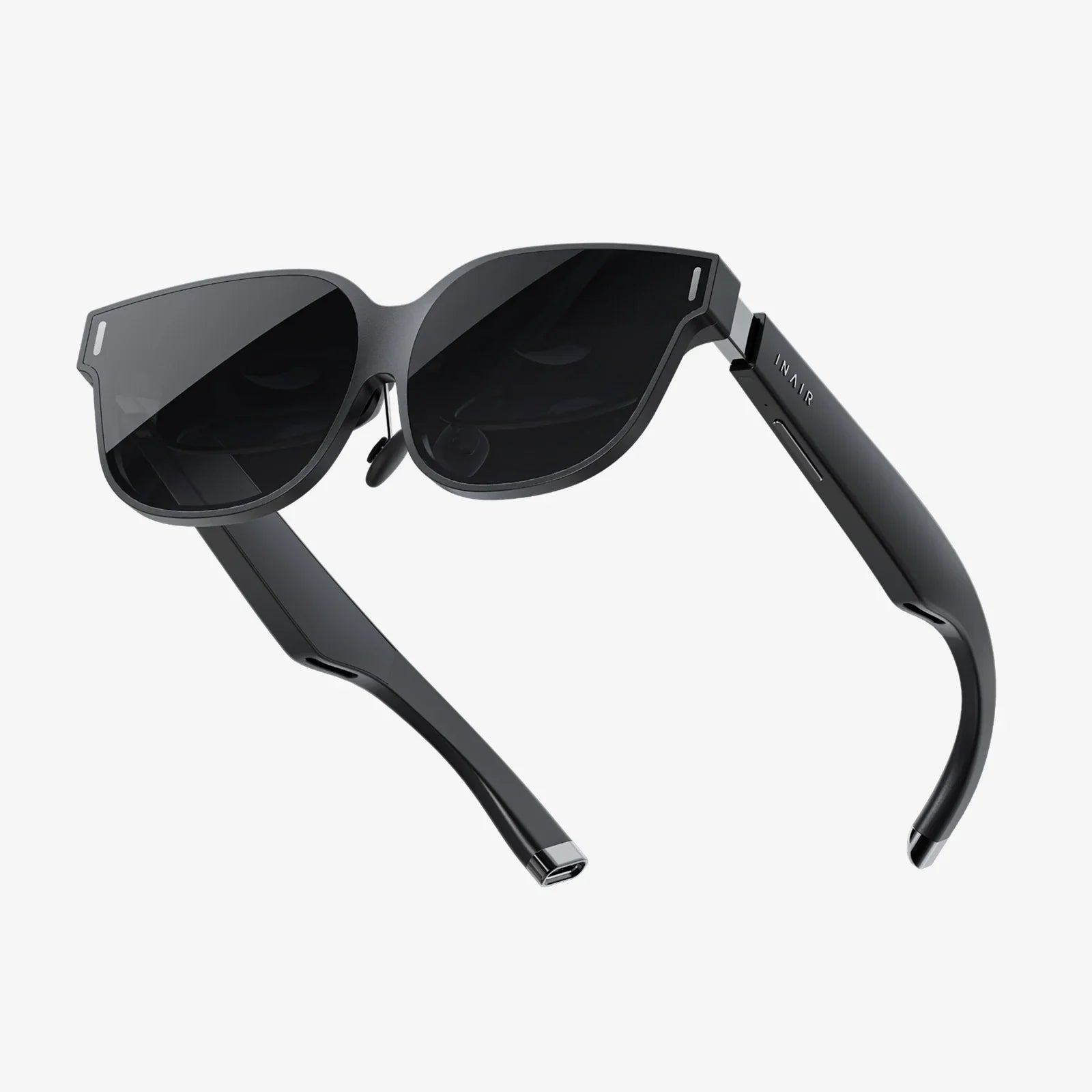
Imagine holding an entire universe in your pocket. That’s the promise, the magic, and the sheer technological marvel of virtual reality goggles for smartphone. This isn't just another gadget; it's a key, a looking glass, a portable escape hatch from the mundane. By simply slotting your everyday device into a headset, you are instantly transported from your living room to the edge of a volcano, the depths of the ocean, or the front row of a concert happening halfway across the globe. The barrier between you and the experience isn't a high-end, expensive console—it's a simple, elegant piece of hardware that leverages the powerful computer you already own. This is the democratization of virtual reality, and it's more accessible and awe-inspiring than you might think.
The Alchemy of Sight and Sound: How It All Works
At its core, the principle is beautifully simple. Your smartphone possesses almost all the necessary components for a VR experience: a high-resolution screen, a powerful processor, sophisticated motion sensors, and a capable audio system. Virtual reality goggles for smartphone provide the missing pieces—the lenses and the structure—to transform that flat, rectangular window into a vast, stereoscopic, and immersive panorama.
The process begins the moment you place the phone into the headset's holder. The dedicated VR application splits the screen into two identical images, one for each eye. The convex lenses placed between your eyes and the screen then work their magic. They focus and reshape these two 2D images, tricking your brain into perceiving a single, coherent, and three-dimensional world. This stereoscopic vision is the foundation of the depth and immersion that defines VR.
But vision is only half the story. The true sense of "being there" comes from a technology called head tracking. This is where your phone's built-in gyroscope, accelerometer, and magnetometer become stars of the show. These sensors detect the precise orientation and movement of your head in real-time. When you look up, down, left, or right, the sensors relay this data to the VR software, which instantly adjusts the perspective of the virtual environment to match your gaze. This creates a 360-degree, responsive world that moves with you, eliminating the disconnect between your physical movement and what you see, which is crucial for preventing discomfort and selling the illusion of reality.
More Than Just Games: A Universe of Applications
While gaming is often the first application that comes to mind, the utility of smartphone-powered VR extends far beyond defeating virtual dragons or racing futuristic cars. It has blossomed into a versatile tool for education, productivity, and social connection.
Revolutionizing Education and Training
Imagine a history class where students don't just read about ancient Rome—they can take a virtual walk through the Forum, looking up at the towering temples and hearing the echoes of the past. Or a biology lesson where learners can step inside a human cell, watching proteins and mitochondria float by. Virtual reality goggles for smartphone make this possible. Medical students can practice complex surgical procedures in a risk-free virtual operating room, and mechanics can familiarize themselves with the engine of a new vehicle model before ever touching a physical tool. This experiential learning boosts retention and understanding in a way textbooks never could.
A New Dimension for Entertainment
The film industry is embracing VR to create immersive 360-degree movies where you, the viewer, are placed at the center of the action. You are no longer a passive observer but an active participant in the narrative, able to look around and discover story elements in every direction. Live events, from sports games to music festivals, are now being broadcast in VR, offering a front-row seat to anyone with a headset and an internet connection. The feeling of presence is unparalleled.
Virtual Travel and Real Estate
For those with a case of wanderlust but a limited travel budget, VR offers the next best thing. Numerous applications allow you to visit iconic landmarks, stroll through foreign cities, or even trek through natural wonders like the Amazon rainforest or the Antarctic tundra. The real estate industry has also adopted this technology enthusiastically. Potential buyers can take detailed, self-guided virtual tours of properties from anywhere in the world, saving time and resources for both agents and clients.
Choosing Your Portal: What to Look For
Not all headsets are created equal. While the basic principle remains the same, several factors can dramatically affect your experience.
- Field of View (FOV): This measures the angular extent of the observable world you can see at any given moment, typically in degrees. A wider FOV (100-110 degrees is good) increases immersion by reducing the perception of looking through binoculars or a scuba mask.
- Lens Quality: High-quality, precision-ground lenses are essential for a clear, sharp image with minimal distortion, especially around the edges. Aspheric or Fresnel lenses are common in better models to reduce weight and optical aberrations.
- Comfort and Fit: You'll likely be wearing the headset for extended periods. Look for adjustable head straps, padded interiors, and a design that evenly distributes weight. A comfortable headset is a forgotten headset, which is the goal.
- Input and Interaction: Basic models rely on a magnet or button on the headset for input, which can feel limited. More advanced options come with a separate wireless controller, allowing for more intuitive and complex interactions within the virtual space.
- Phone Compatibility: Ensure the headset can accommodate the physical size of your smartphone. Also, verify that your phone's specifications (especially its sensors and screen resolution) are up to the task for a smooth experience.
Navigating the Challenges and Limitations
While the technology is impressive, it's important to understand its current constraints. The experience is ultimately dependent on the capabilities of your smartphone. A lower-resolution screen will result in a more pixelated image, often called the "screen-door effect," where you can see the fine lines between pixels. Less powerful processors may struggle with graphically intensive applications, leading to lag or stuttering, which is a primary cause of motion sickness in VR.
This phenomenon, known as simulator sickness, occurs when there's a disconnect between what your eyes see (movement) and what your inner ear feels (stationary). It's a challenge for all VR, but can be more prevalent in lower-performance setups. Starting with stationary experiences and taking frequent breaks is highly recommended for newcomers.
Furthermore, smartphone VR is generally considered a form of "3-DoF" (Degrees of Freedom). This means it tracks rotational movement—pitch, yaw, and roll (leaning your head side to side). It does not track positional movement; if you lean your body forward or walk around, the virtual world does not move with you. This contrasts with high-end PC-based systems that offer "6-DoF," tracking both rotation and translation in space, allowing for a much greater range of physical interaction.
The Future is in Your Hands (and Your Pocket)
The landscape of mobile VR is constantly evolving. We are seeing the integration of inside-out tracking, where cameras on the headset itself (or using the smartphone's camera) can map your environment to enable limited 6-DoF experiences without external sensors. Advancements in display technology, like higher refresh rates and better pixel density, will continue to reduce latency and improve visual fidelity, making experiences smoother and more realistic.
The rise of cloud-based VR gaming and experiences could also be a game-changer, potentially offloading the heavy graphical processing from the phone to remote servers, allowing even mid-range devices to run high-end VR content seamlessly.
Virtual reality goggles for smartphone have successfully ripped VR out of the exclusive domain of hardcore tech enthusiasts and placed it firmly into the mainstream. They have proven that profound, breathtaking experiences don't require a dedicated supercomputer. They require curiosity, a device you already cherish, and a simple headset that acts as a catalyst for wonder. It is the most accessible ticket to the grand show of virtual reality, offering a compelling glimpse into a future where the lines between our digital and physical lives are not just blurred, but beautifully intertwined.
Your smartphone is no longer just a tool for communication; it's a canvas for entire realities. That headset isn't just plastic and glass; it's a frame for a masterpiece waiting to be painted by your exploration. The next world you visit is already in your pocket, waiting for you to take a look.
Share:
Types of Virtual Reality with Examples: A Deep Dive into the Digital Metaverse
Methodology of Virtual Reality: A Deep Dive into the Architecture of Immersion