


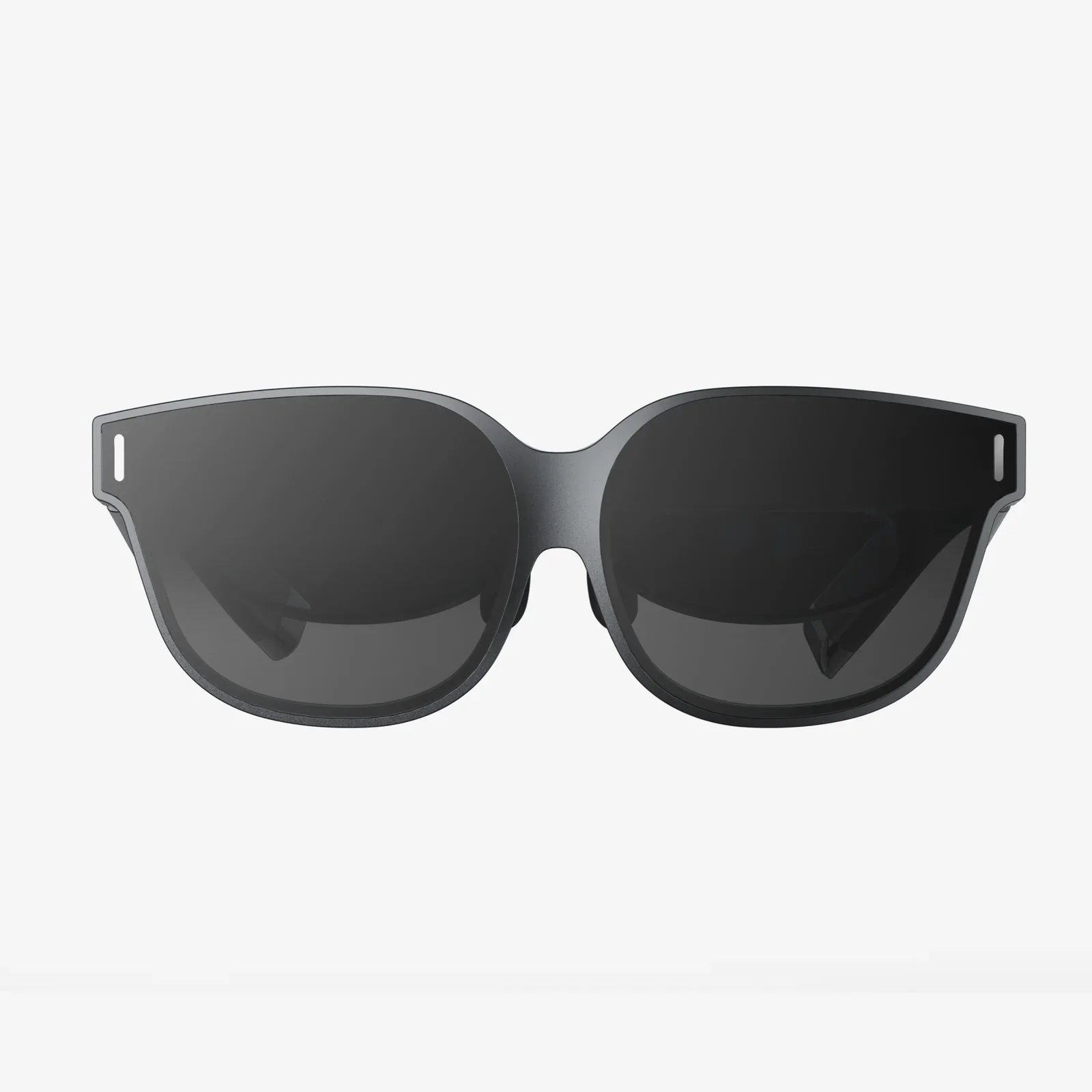
- by wangfred
Virtual Reality Headset Comparison 2025: The Ultimate Buyer's Guide
- by wangfred
The year is 2025, and you're standing on the precipice of a digital frontier, your wallet in hand, ready to purchase a portal to another world. The virtual reality landscape has exploded with options, each promising a more immersive, more intuitive, and more incredible experience than the last. But which headset is the right vessel for your journey? This comprehensive virtual reality headset comparison for 2025 cuts through the marketing hype to deliver a crystal-clear, feature-by-feature analysis, empowering you to make an informed decision and invest in the reality that's right for you.
Gone are the days of clunky prototypes and underwhelming resolution. The VR market in 2025 is characterized by fierce competition and rapid technological maturation. We've witnessed a significant convergence around several key trends: the near-complete eradication of the screen-door effect, the widespread adoption of pancake lenses for sleek form factors, and the integration of advanced inside-out tracking as a standard feature. Furthermore, the line between standalone and PC-powered VR has blurred, with many headsets now offering a hybrid approach. The focus has shifted from pure hardware specs to a more holistic user experience, encompassing not just visual fidelity but also comfort, software ecosystem, and social connectivity.
To effectively compare the diverse range of headsets available, we must evaluate them across several critical axes. A high-resolution display is meaningless if the headset is too uncomfortable to wear for more than twenty minutes, and a powerful processor is wasted without compelling software to run on it.
This is often the first specification users scrutinize. In 2025, the benchmark for high-end headsets is a dual-element OLED or advanced Mini-LED display, offering per-pixel lighting and deep, true blacks. Resolution has soared, with many new devices boasting a per-eye resolution exceeding 4K, making text sharp and distant objects in virtual environments perfectly clear. The standard refresh rate for a smooth experience is now 120Hz, with some professional models pushing 144Hz for competitive applications. Perhaps the most significant quality-of-life improvement across the board is the near-universal adoption of pancake lenses. These optical stacks allow for a much thinner headset profile and, crucially, a larger ‘sweet spot’ with dramatically reduced god rays and glare compared to the Fresnel lenses of old.
The heart of any VR system is its brain. For standalone headsets, the competition between chipset manufacturers has yielded incredible results. The latest mobile processors are built on an advanced architecture, integrating dedicated AI cores for tasks like enhanced hand-tracking and foveated rendering, and powerful GPUs capable of delivering console-quality graphics untethered. For PC-connected headsets, the onus is on the host computer, but the headset itself must support high-bandwidth data transmission via a robust cable or a high-fidelity wireless standard like Wi-Fi 7, which offers minimal latency and compression artifacts.
Engineers have finally taken ergonomics as seriously as electronics. The winning design philosophy in 2025 is ‘balanced comfort.’ This often involves a rigid headstrap with a rear counterweight, distributing pressure evenly around the head instead of squeezing the face. Facial interfaces are now made from advanced, breathable materials that are easy to clean. Weight is a major factor, with the most popular devices dipping well below 500 grams. Furthermore, the shift to compact pancake optics has enabled a new class of ‘ski-goggle’ style headsets that are less intrusive and easier to put on and take off.
Inside-out tracking, where cameras on the headset itself monitor the environment and controllers, is now flawless and ubiquitous. The number of cameras has increased, providing a massive tracking volume that rarely, if ever, loses sight of the controllers. Controller design itself has evolved. Haptic feedback is more nuanced, providing everything from the gentle thrum of a virtual engine to the precise snap of a bowstring. The biggest leap forward is in hand-tracking. It is no longer a novelty but a reliable, low-latency primary input method for many productivity and social applications, freeing users from holding hardware altogether.
Hardware is nothing without software. The walled gardens of various platforms remain a significant deciding factor. Some ecosystems are vast, offering thousands of experiences, robust social hubs, and deep integration with a major tech company's services. Others might be more curated or focused on a specific niche, like professional simulation or fitness. Access to exclusive titles and applications can be a powerful motivator, making the choice of a headset also a choice of a digital home.
For standalone units, battery life remains a practical constraint. While efficiency has improved, demanding applications can still drain a cell in under two hours. Most systems now support hot-swappable battery packs or continuous play while plugged in. Connectivity options are crucial. Alongside the latest Wi-Fi standards, high-speed USB-C connections for PC link and DisplayPort Alternate Mode support are expected on higher-end models. Bluetooth 5.3 is standard for connecting peripheral accessories like headphones.
The market has effectively segmented into three distinct categories, each serving a different primary use case and budget.
These devices represent the peak of all-in-one VR technology. They contain a powerful mobile processor, a high-resolution display, and a comprehensive tracking system, all within a self-contained unit. They are the most versatile option, capable of being used anywhere but also often able to connect to a PC to access even more powerful content. They are ideal for users who want a single device for fitness, socializing, media consumption, and premium mobile gaming. In 2025, they compete fiercely on processing power, display quality, and exclusive content.
These are the performance kings, designed from the ground up to be tethered (either via wire or ultra-low-latency wireless) to a powerful gaming computer. They prioritize absolute visual fidelity above all else, featuring the highest resolutions, the widest field-of-view, and the most advanced display technology available. They are the unequivocal choice for hardcore sim enthusiasts (flight, racing, space) and users who want to experience the most graphically demanding titles available. The trade-off is a higher cost, both for the headset and the required PC, and less freedom of movement.
The barrier to entry for VR has never been lower. This segment is filled with capable standalone devices that offer a fantastic introduction to virtual reality. While they may use a previous-generation processor or a slightly lower-resolution LCD panel, they provide access to the vast majority of the same software library as their flagship siblings. They are perfect for first-time users, families, or those focused primarily on casual gaming and media. The design often prioritizes lightweight comfort and ease of use.
So, which headset deserves a place on your shelf? The answer is deeply personal and hinges on your answers to a few questions. What is your primary use case? Is it intense exercise, deep solo gaming, social hangouts, or professional design? What is your budget, not just for the headset but for the PC required to power it if necessary? How important is absolute wireless freedom versus ultimate graphical performance?
The enthusiast with a powerful gaming rig seeking the most immersive sim racing experience will lean towards a high-end PC-powered model. The fitness fanatic who wants to work out in any room of the house will find their match in a comfortable, durable standalone flagship. The parent looking to introduce the family to VR without breaking the bank will find incredible value in an entry-level device. There has never been a better time to dive into VR, because there has never been a headset so perfectly tailored to such a wide array of needs and desires.
Your journey into the metaverse, a specialized training simulation, or simply your next fitness class doesn't start when you put the headset on—it starts now, with this research. The perfect device is out there, waiting to redefine your sense of play, work, and connection. The future of immersion is no longer a promise; it's a product on a virtual shelf, and it's finally ready for you to take it home.