


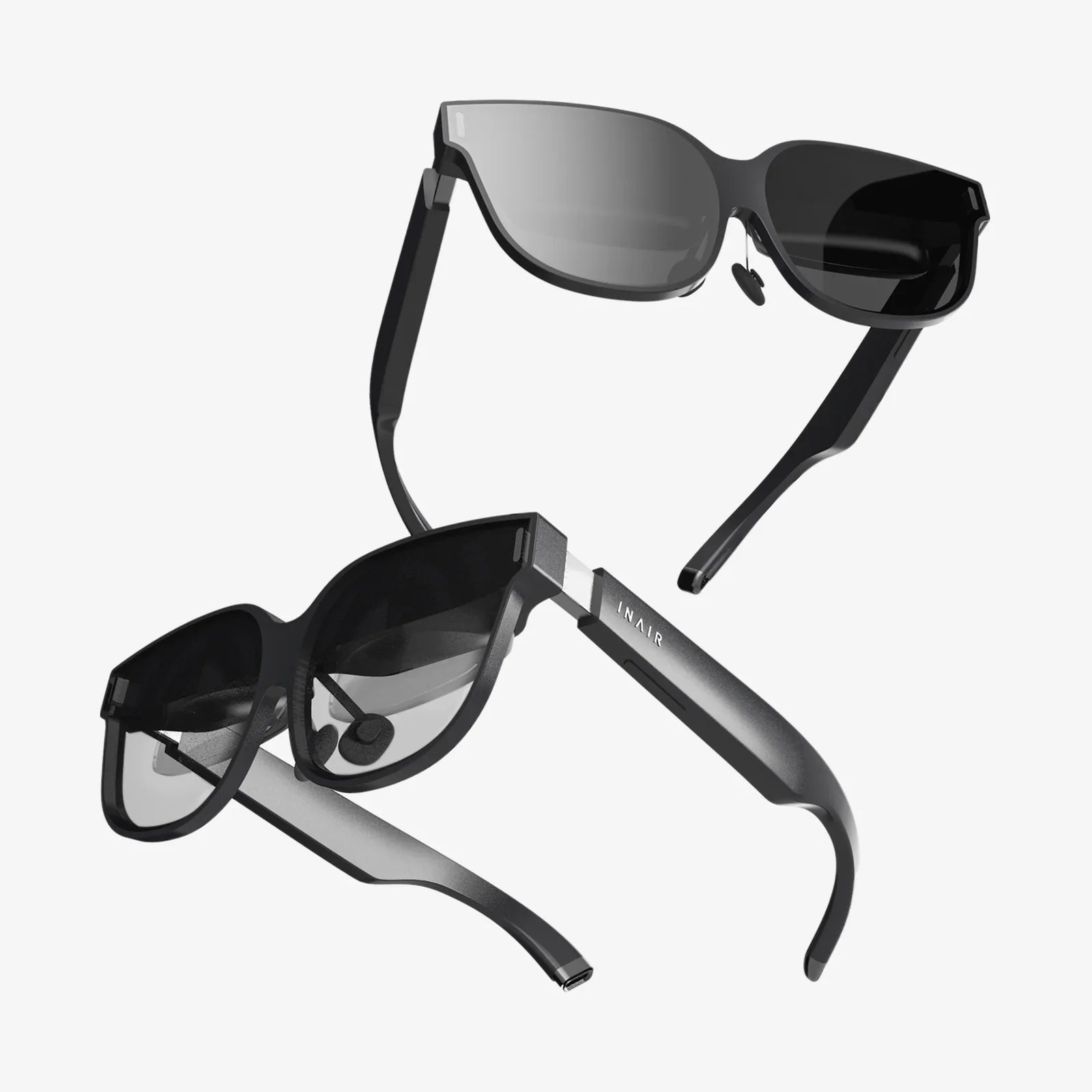
- by wangfred
Virtual Reality Imaging: Redefining Reality and Reshaping Our World
- by wangfred
Imagine stepping inside the human heart as blood pumps through its chambers, flying through a prehistoric jungle teeming with long-extinct creatures, or walking through the architectural blueprint of a building that hasn't yet been built. This is no longer the stuff of science fiction. It is the tangible, breathtaking power of Virtual Reality Imaging (VRI), a technological revolution that is not just changing how we see the world, but fundamentally redefining the very nature of reality itself. We stand at the precipice of a new dimension of human experience, where the lines between the physical and the digital are blurring into irrelevance, and it all begins with the ability to capture, construct, and explore immersive worlds born from data.
At its essence, Virtual Reality Imaging is the sophisticated convergence of two powerful disciplines: advanced imaging technologies and immersive virtual reality. It is the process of capturing high-fidelity data from the real world—or from complex simulations—and translating it into a detailed, three-dimensional, and interactable virtual environment.
The process typically involves three critical stages:
This is the foundational step where raw data is gathered. Unlike a standard camera that captures light in two dimensions, VRI systems capture spatial and visual information in three. This is achieved through a suite of technologies:
The raw data, whether a point cloud or a stack of 2D images, is raw and unrefined. Powerful computational software takes over, processing this data to create a coherent and watertight 3D mesh. This mesh acts as the digital skeleton. Textures, colors, and material properties extracted from the photographs are then meticulously mapped onto this mesh, transforming the geometric model into a visually authentic replica. This stage requires immense computational power to handle the billions of data points involved.
The completed 3D model is then imported into a game engine or a dedicated VR development platform. This is where it truly comes to life. Developers and designers add layers of interactivity, physics, and spatial audio. Users don a VR headset, which tracks their head and hand movements, and are instantly transported inside the model. They are no longer passive observers but active participants within the data. They can walk around a virtual sculpture, peel back the layers of a machine, or hold a beating heart in their hands, all while being spatially present within the simulation.
Perhaps the most profound impact of VRI is being felt in the field of healthcare, where it is transforming both education and clinical practice.
Surgeons can now step inside a patient-specific model of an organ, such as a brain with a complex tumor or a malformed heart. Created from CT and MRI scans, these models allow surgeons to navigate the unique anatomical landscape of their patient before making a single incision. They can practice the procedure, identify potential challenges, and determine the safest surgical approach. This virtual rehearsal reduces operative time, minimizes risk, and leads to significantly better patient outcomes. It is the difference between having a detailed road map and wandering into unknown territory.
VRI has democratized access to anatomical education. Instead of relying solely on cadavers or 2D textbooks, medical students can don a headset and explore every muscle, nerve, and blood vessel in immersive, life-sized detail. They can dissect virtual bodies an infinite number of times, observe physiological processes in motion, and understand spatial relationships between structures in a way that was previously impossible. This experiential learning accelerates comprehension and retention, training a new generation of more confident and capable medical professionals.
VRI is also a powerful tool for communication. A surgeon can use a patient's own virtual scan to explain a complex condition and the planned procedure, making abstract medical concepts tangible and reducing anxiety. Furthermore, VRI is being explored for therapeutic applications, such as immersive exposure therapy for phobias or PTSD, and for motor rehabilitation, where engaging virtual environments can motivate patients to perform repetitive movements.
The utility of VRI extends far beyond medicine, permeating a diverse range of industries and disciplines.
In the AEC industry, VRI is revolutionizing the design and review process. Architects and clients can walk through a photorealistic virtual model of a building at a 1:1 scale long before the foundation is poured. They can experience the flow of spaces, assess sightlines, check for design clashes between systems (like plumbing and electrical), and make informed changes that are far less costly than modifications during construction. This "virtual walkthrough" prevents errors, saves millions of dollars, and ensures the final product meets expectations.
VRI offers a powerful means of preserving and experiencing our shared history. Archaeologists can scan entire dig sites or fragile artifacts, creating perfect digital preserves that can be studied by researchers worldwide without risking damage to the original. Museums are creating immersive exhibits where visitors can explore ancient Egyptian tombs, walk through reconstructed Roman villas, or handle priceless artifacts that would otherwise be locked away in glass cases. It makes culture accessible and interactive.
From elementary schools to corporate boardrooms, VRI is creating unforgettable learning experiences. Students can take field trips to the bottom of the ocean or the surface of Mars. Mechanics can train on the internal systems of a jet engine. Factory workers can learn safety protocols in a hazardous virtual environment without any real-world risk. This "learning by doing" in a simulated world dramatically improves engagement and effectiveness.
The market is increasingly embracing VRI. Potential homebuyers can take virtual tours of properties from anywhere in the world, customizing finishes and furnishings in real-time. Customers can see how a new sofa would look in their living room or how a new car's interior feels before visiting a dealership. This reduces uncertainty and empowers consumer decision-making.
Despite its immense potential, the path forward for VRI is not without significant obstacles and profound questions.
The evolution of Virtual Reality Imaging is accelerating, driven by advancements in artificial intelligence, haptic feedback, and neural interfaces. We are moving towards a future where these models will be not only visually perfect but also physically accurate, obeying the laws of physics and responding to touch. AI will be able to generate complex virtual environments from simple text prompts, democratizing creation. Haptic gloves and suits will allow us to feel the virtual world, adding a critical layer of sensory feedback. Further out, the concept of the "digital twin"—a live, constantly updating virtual replica of a city, a factory, or even the planet—will become a standard tool for simulation, planning, and disaster management.
The promise of Virtual Reality Imaging is a future where distance, cost, and physical limitation cease to be barriers to exploration, understanding, and creation. It is a tool that empowers us to see the unseen, to practice perfection before performance, and to preserve our world in perfect digital amber. It offers a bridge between the cold objectivity of data and the warm subjectivity of human experience, allowing us to not just analyze information, but to truly inhabit it. The door to this new reality is now open, and the worlds waiting on the other side are limited only by our imagination.
We are no longer just consumers of flat images and videos; we are becoming explorers of dynamic, living data. The next time you see a complex machine, a historical landmark, or even an X-ray, imagine not just looking at it, but stepping inside it, holding it in your hands, and understanding it from the inside out. That is the irresistible allure and transformative power of Virtual Reality Imaging—it doesn't just show you a new picture of the world, it hands you the keys to the entire universe and invites you to come inside and play.
Share:
How to Work in the Virtual Reality Business: A Comprehensive Career Guide
Virtual Reality Headset Design: The Unseen Engineering Shaping Our Digital Future