


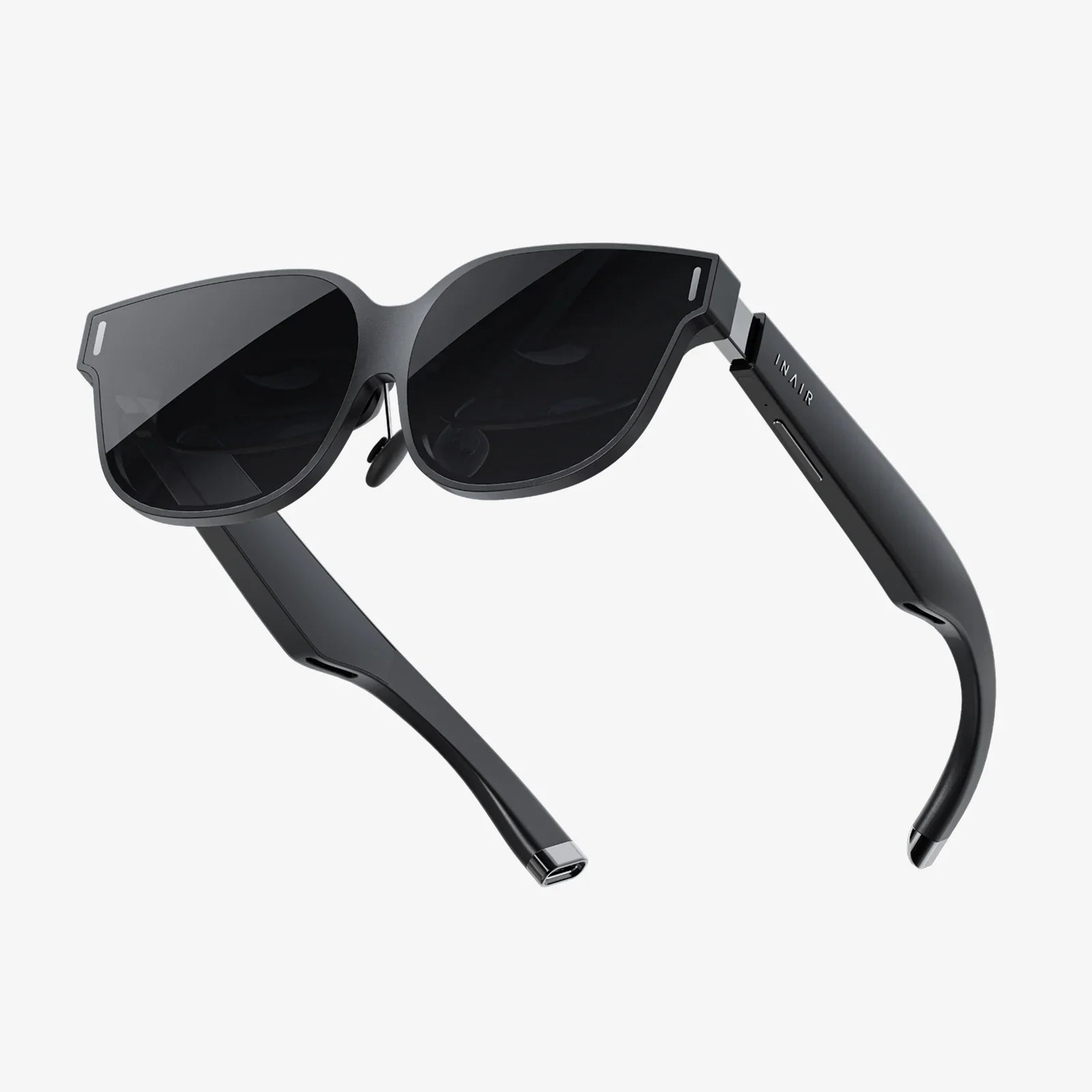
Remember when Virtual Reality was a distant dream, a fantastical concept reserved for sci-fi movies and multi-million-dollar research labs? That world is gone. Today, VR is not just knocking on our door; it has stepped inside, taken off its headset, and is busy reshaping the very fabric of our reality. The journey from a niche gaming curiosity to a multifaceted tool revolutionizing how we work, learn, heal, and connect is the defining tech story of our time. This is no longer about what VR will be; it's about what it is, right here, right now.
The Meteoric Ascent: From Prototype to Mainstream(ish) Presence
The story of VR's recent history is one of rapid iteration and falling barriers. Just a decade ago, high-fidelity VR required a tether to a super-powered computer and a budget that put it out of reach for most. The landscape today is dramatically different, defined by three distinct paths to immersion.
The Powerhouse: PC-Connected VR
At the apex of performance and fidelity sits PC-connected VR. These systems leverage the raw processing power of a high-end computer to deliver breathtakingly detailed visuals, complex physics, and deeply immersive experiences. They are the engines driving the most ambitious VR titles and professional applications, from architectural walkthroughs with photorealistic lighting to hyper-realistic flight simulators used for pilot training. The tether, once a significant immersion-breaker, is being addressed with innovative solutions like wireless adapters and inside-out tracking that reduces external hardware.
The Accessible Gateway: Standalone Headsets
If PC-VR represents the high-end sports car, standalone headsets are the reliable, efficient, and incredibly popular family sedan. These all-in-one devices have been the single biggest catalyst for VR's growth. With a computer, display, and tracking sensors all contained within the headset, they offer a frictionless entry point. Users are no longer confined to a specific room; they can dive into virtual worlds anywhere with enough space to swing a digital lightsaber. This accessibility has unlocked a massive user base, making VR a living room reality for millions and democratizing development for creators.
The Novelty with Potential: Mobile VR
While its prominence has waned with the rise of standalone devices, mobile VR—using a smartphone as the screen and processor—played a crucial historical role. It offered a cheap, easy way for consumers to dip their toes into virtual waters. Though limited in power and interactivity, it proved the market's appetite for immersive content and introduced basic concepts like 360-degree video to a broad audience.
A Universe of Applications: VR's Impact Across Industries
While gaming was the initial rocket fuel for consumer VR, its potential has exploded far beyond entertainment. The core value proposition of VR—the ability to simulate any environment or scenario safely, repeatedly, and at a fraction of the cost—is finding profound applications everywhere.
Revolutionizing Education and Training
The classroom is being utterly transformed. Imagine medical students performing intricate virtual dissections without ever touching a cadaver, or history students walking through ancient Rome at the height of its power. VR enables experiential learning that textbooks and videos simply cannot match.
- Corporate Training: Companies use VR to train employees in high-stakes situations. From retail workers managing difficult customers to oil rig technicians practicing emergency shutdown procedures, VR provides a safe, controlled, and scalable training environment.
- Soft Skills Development: VR is being used for public speaking practice, presenting to a virtual audience, and even for empathy training, allowing users to experience scenarios from another person's perspective.
Transforming Healthcare and Therapy
The therapeutic potential of VR is staggering. It is now a validated tool for:
- Pain Management: Immersive experiences can distract patients from acute and chronic pain, reducing reliance on pharmaceuticals.
- Physical Rehabilitation: Games and exercises designed in VR make repetitive physical therapy regimens more engaging, improving patient adherence and outcomes.
- Exposure Therapy: Therapists can gradually and safely expose patients to phobias—like fear of heights, flying, or public spaces—within a virtual setting, helping them overcome anxieties.
- Surgical Planning: Surgeons can use detailed VR models of a patient's anatomy to plan and practice complex operations before making a single incision.
Redefining Remote Work and Collaboration
The global shift to remote work has highlighted the limitations of flat, 2D video calls. VR offers a compelling alternative: the virtual meeting room. Colleagues from across the globe can meet as lifelike avatars, interacting with 3D models, brainstorming on virtual whiteboards, and sharing a sense of presence that Zoom cannot replicate. This is the early foundation of the 'metaverse' office, a persistent virtual space for work and collaboration.
Unlocking New Frontiers in Design and Retail
Architects, engineers, and designers are using VR as an integral part of their creative process. They can step inside their unbuilt designs to assess scale, lighting, and flow, making changes in real-time. In retail, customers can use VR to preview how furniture would look in their home or try on virtual clothes, reducing purchase uncertainty and returns.
The Hurdles on the Path to Ubiquity
For all its progress, VR is not without its significant challenges. Addressing these is critical for its evolution from an exciting technology to a seamless part of everyday life.
The Hardware Conundrum: Comfort, Cost, and Fidelity
The ideal VR headset would be visually indistinguishable from reality, as light as a pair of sunglasses, wireless, and affordable. We are not there yet. Issues of weight, heat, and the often bulky design can lead to discomfort during extended use. While prices have fallen, a quality experience still requires a notable investment. Furthermore, screen technology, though improving rapidly, still grapples with the 'screen door effect' and achieving perfect human-eye resolution.
The Content Chasm: Seeking the Killer App
While the library of VR experiences is vast and growing, the search for a true 'killer app'—an application so compelling it drives mass adoption on its own—continues. Gaming has several stellar examples, but for broader audiences, a must-have use case beyond entertainment is still emerging. The content needs to be not just novel, but genuinely useful and seamlessly integrated into daily routines.
The Social and Psychological Questions
As we spend more time in virtual spaces, important questions arise. How does long-term immersion affect our perception and social skills? What are the privacy implications of companies collecting incredibly detailed data on our movements, reactions, and even eye-tracking? Establishing ethical guidelines and understanding the long-term psychological effects of pervasive VR use is a challenge that must be met with careful research and open discourse.
Glimpsing the Horizon: The Future is Immersive
The current state of VR is merely a prelude. The technology on the horizon promises to dissolve the line between the digital and the physical entirely.
- Hyper-Realistic Avatars: Advancements in photogrammetry and real-time rendering will allow us to be represented by avatars that are perfect digital twins, capturing our expressions and mannerisms with uncanny accuracy.
- Haptic Feedback and Sensory Suits: The next level of immersion will come from touch. Gloves and full-body suits that provide tactile feedback—allowing you to feel the texture of a virtual object or the impact of a virtual punch—will make experiences profoundly more real.
- Brain-Computer Interfaces (BCIs): The ultimate frontier. BCIs aim to allow users to control virtual environments with their thoughts, moving beyond controllers and gestures. This technology, though in its infancy, could redefine human-computer interaction altogether.
- The Truly Seamless Metaverse: The concept of a persistent, interconnected network of virtual worlds is the endgame. VR will be the primary portal into this metaverse, a place for work, socializing, commerce, and creativity, all existing in a unified digital universe.
The conversation has decisively shifted. We are no longer asking if Virtual Reality is a viable technology; the evidence is overwhelming that it is. The question now is how quickly we will adopt it, how wisely we will integrate it, and how creatively we will use it to overcome the limitations of our physical world. The headset is no longer a gateway to a fantasy; it's a tool for building a better reality. The virtual world is here, and it’s waiting for you to log in.
Share:
How to Describe Virtual Reality: Capturing the Digital Frontier in Words
Categories of Virtual Reality: A Deep Dive into Immersive Digital Worlds