


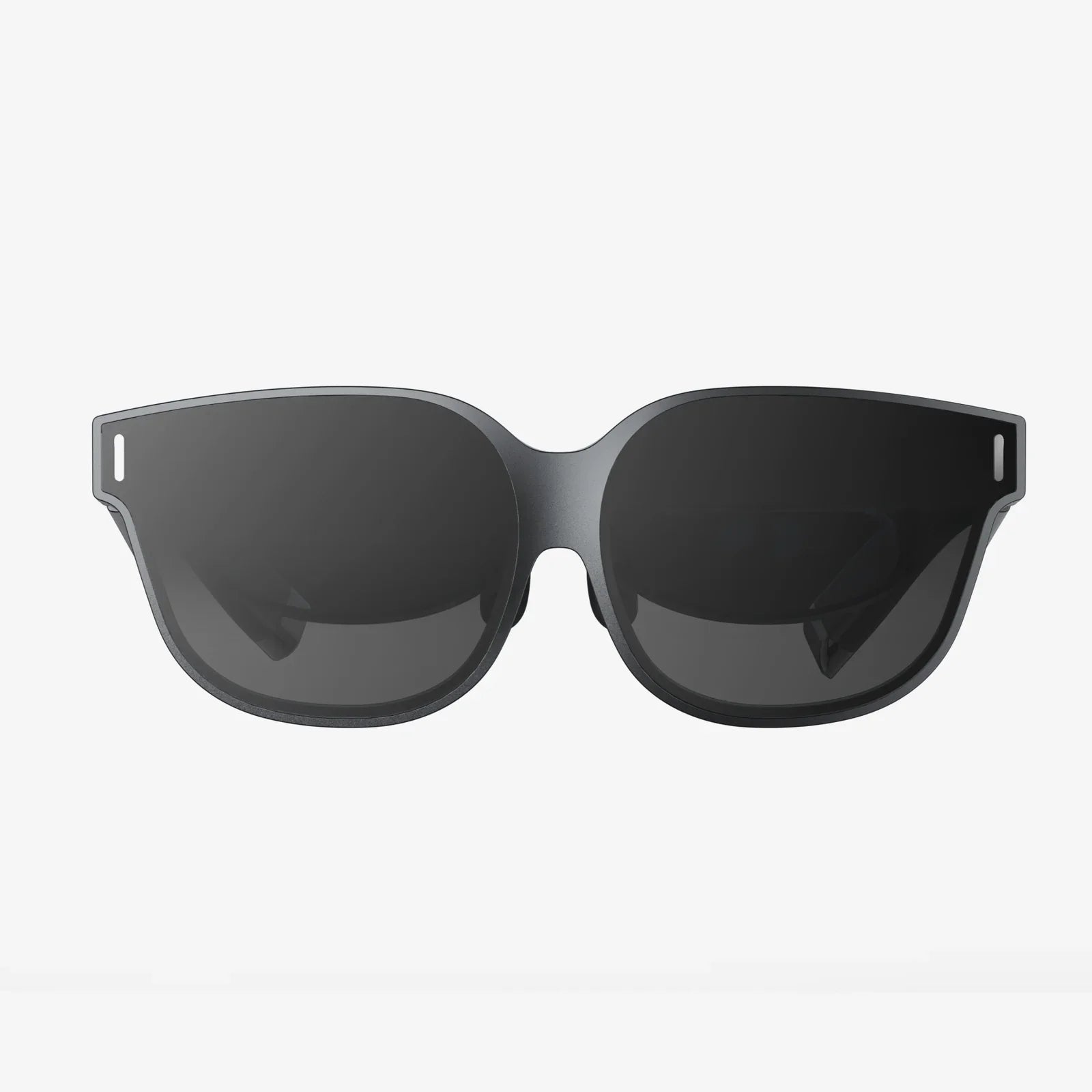
You’ve just experienced something incredible, a journey to another world without moving an inch, but the words escape you. How do you possibly begin to describe the indescribable? The sensation of virtual reality is one of the most profound technological experiences of our generation, yet it remains locked behind a lexical barrier for many. This isn't just about finding synonyms; it's about building a bridge between the digital frontier and our tangible reality, giving voice to the ineffable. Unlocking this vocabulary is the key to sharing, selling, and understanding the future itself.
Deconstructing the Experience: The Core Pillars of VR
To describe VR effectively, one must first understand its fundamental components. It is not a monolithic experience but a symphony of interconnected elements that create the whole.
Immersion: The Illusion of Presence
This is the cornerstone of VR. Immersion refers to the sensation of being physically present in a non-physical world. It is the feeling of "being there." When describing immersion, focus on the user's psychological state. Does the world feel convincing? Do they forget about the headset on their face and the room around them? Strong immersion is often described as a dissolution of the boundary between the real and the virtual.
Interactivity: Agency Within the Digital Realm
A static VR environment is a 360-degree video. True VR is defined by interactivity—the user's ability to influence and manipulate the digital environment. This can range from picking up a virtual object with a motion-tracked controller to using their own hands via hand-tracking, to manipulating complex machinery. Describe the fidelity of the interaction. Is it intuitive or clunky? Does the object respond with realistic physics? Does the user feel a sense of agency, that their actions have meaningful consequences?
Embodiment: The Virtual Self
A unique aspect of VR is embodiment—the phenomenon of adopting a virtual body as your own. This is often represented by virtual hands or a full avatar. The quality of embodiment is crucial. Describe whether the virtual body feels like a natural extension of the self. Is there a sense of ownership and agency over this body? Does it move in sync with the user's real movements, or is there a disconcerting lag? A powerful embodiment can lead to the Proteus Effect, where users unconsciously change their behavior to align with their avatar's characteristics.
Narrative: The Story You Inhabit
Unlike traditional media where you witness a story, in VR, you often inhabit it. The narrative can be linear or exploratory. Describe the user's role. Are they a passive observer or an active participant? Does the story unfold around them, or do they drive it forward? The sense of environmental storytelling—where the world itself tells a story through its design, objects, and sounds—is particularly potent in VR.
A Lexicon for the Virtual: Sensory Vocabulary
Equipping yourself with the right vocabulary is essential. Here’s a breakdown of descriptive terms categorized by sense and experience.
Visual Description
The visual fidelity of a VR world is its most immediate characteristic.
- Field of View (FOV): Describe the peripheral awareness. A "tunneling" or "scuba mask" effect indicates a narrow FOV, while a "seamless" or "window-like" view suggests a wide FOV.
- Resolution & Sharpness: Use terms like "crystal-clear," "high-fidelity," "pixel-dense," or conversely, "screen-door effect" (visible lines between pixels), "soft," "blurry," or "muddy."
- Art Direction & Style: Is the world "photorealistic," aiming to mimic reality? Or is it "stylized," "cel-shaded," "low-poly," or "abstract"? Describe the color palette: "vibrant," "muted," "monochromatic," "dystopian."
- Scale & Depth: VR excels at conveying immense scale. Describe feelings of "grandeur," "monumentality," "vastness," or "claustrophobia." The perception of depth is "volumetric," "layered," and "tangible."
Aural Description
Sound is half the experience in VR, critical for selling the illusion.
- 3D Spatial Audio: This is sound that exists in 3D space. Describe it as "directional," "positional," or "realistic." You can hear an object "behind you," "to your left," or "whispering directly in your ear."
- Ambience & Atmosphere:
- Sound Quality: "Rich," "deep," "crisp," "tinny," or "compressed."
Kinesthetic & Haptic Description
This describes the sense of movement and touch, often the most challenging to articulate.
- Haptic Feedback: The tactile response from controllers or suits. It can be a "subtle buzz," a "sharp pulse," a "rumble," or a "thud." Describe its precision: "localized," "diffuse," "realistic."
- Locomotion: How one moves through the world. "Teleportation" (instant point-to-point movement), "smooth locomotion" (analog-stick movement that can induce "VR sickness" in some), "arm-swinger," or "room-scale" (physically walking around a defined space).
- Weight & Physics: Do objects feel "heavy," "light," "buoyant," or "tethered"? Does the world obey "Newtonian physics" or something more "fantastical"?
Emotional & Psychological Description
This is the ultimate impact of the experience on the user.
- Awe & Wonder: The feeling of seeing something breathtaking for the first time.
- Presence: The holy grail—the uncanny feeling of "actually being there."
- VR Sickness (Simulator Sickness): The negative physical reaction characterized by "disorientation," "nausea," "eye strain," or "vertigo."
- Empathy: A powerful outcome of VR, the feeling of deeply understanding another's perspective by literally standing in their shoes.
- Isolation vs. Social Connection: Does the experience feel "lonely" and "isolating," or in social VR, "connected," "collaborative," and "communal"?
Frameworks for Effective Description
Beyond individual words, use structured frameworks to build a compelling description.
The Comparative Analogy
Compare the VR experience to a familiar real-world or media experience.
- "It feels like the first time you put on diving goggles and looked underwater."
- "It has the visual style of an animated film, but with the physicality of a theme park ride."
- "The social interaction is less like a video call and more like hanging out in a friend's living room."
The User Journey
Walk through the experience chronologically.
- The Entry: Describe the transition from the real world. The "fade to black," the "loading environment," the moment the world "materializes around you."
- The First Moments: Focus on the initial impressions. What do they see first? What is the first interaction? This is where "wonder" and "discovery" are paramount.
- The Core Loop: Describe the primary action of the experience. Is it solving puzzles, exploring, creating, or socializing?
- The Climax: Detail the most intense or memorable moment—the peak of the narrative or the most impressive technical feat.
- The Exit: Describe the return to reality. The "disorientation," the "lingering feeling," the "readjustment" to the physical world.
Focus on the Human Element
The most relatable descriptions are about human reaction, not technical specs.
- Instead of: "It features a 110-degree field of view."
- Say: "You quickly forget you're looking through a lens; the world fills your entire vision."
- Instead of: "It uses haptic feedback actuators."
- Say: "You can feel the virtual rain patter on your palms, a startlingly real sensation."
- Instead of: "The application supports room-scale tracking."
- Say: "I found myself crouching behind a virtual crate to take cover, physically ducking my head."
Tailoring the Description for Your Audience
The way you describe VR must adapt to who you are talking to.
For a Non-Technical Audience (Consumers, Friends, Family)
Avoid jargon. Use strong analogies and focus on emotion and experience.
- "It's like a dream you can control."
- "You're not watching the game; you're on the field."
- "It's the closest thing to teleportation we have."
- "I was genuinely scared because my brain thought the height was real."
For a Technical or Professional Audience (Developers, Designers, Investors)
You can use specific terminology, but still connect it to the user experience.
- "The low persistence displays combined with a 90Hz refresh rate effectively eliminate motion blur, creating a rock-stable visual environment crucial for smooth locomotion."
- "Their implementation of inverse kinematics for the full-body avatar drastically reduces the uncanny valley effect, leading to a stronger sense of embodiment and more natural social interactions."
For Marketing and Sales Copy
Here, description must be concise, powerful, and benefit-driven.
- "Step into a world without limits."
- "Experience total immersion."
- "Connect with others like never before."
- "Feel the action." (Leveraging the haptic aspect).
The next time you remove that headset, the words will be waiting for you. You'll be armed not with technical jargon, but with a palette of sensory and emotional language capable of painting a picture so vivid, your listener can almost see it themselves. You become more than just a user; you become a translator for the future, a guide for those yet to take their first step into the infinite expanse of virtual reality. The ability to articulate this digital magic is no longer a nicety—it's the essential skill for shaping how we will all understand, share, and ultimately live within the worlds we create.
Share:
Black Series Virtual Reality Goggles: The Ultimate Portal to Immersive Digital Worlds
Virtual Reality Nowadays: Beyond the Hype and Into Our Daily Lives