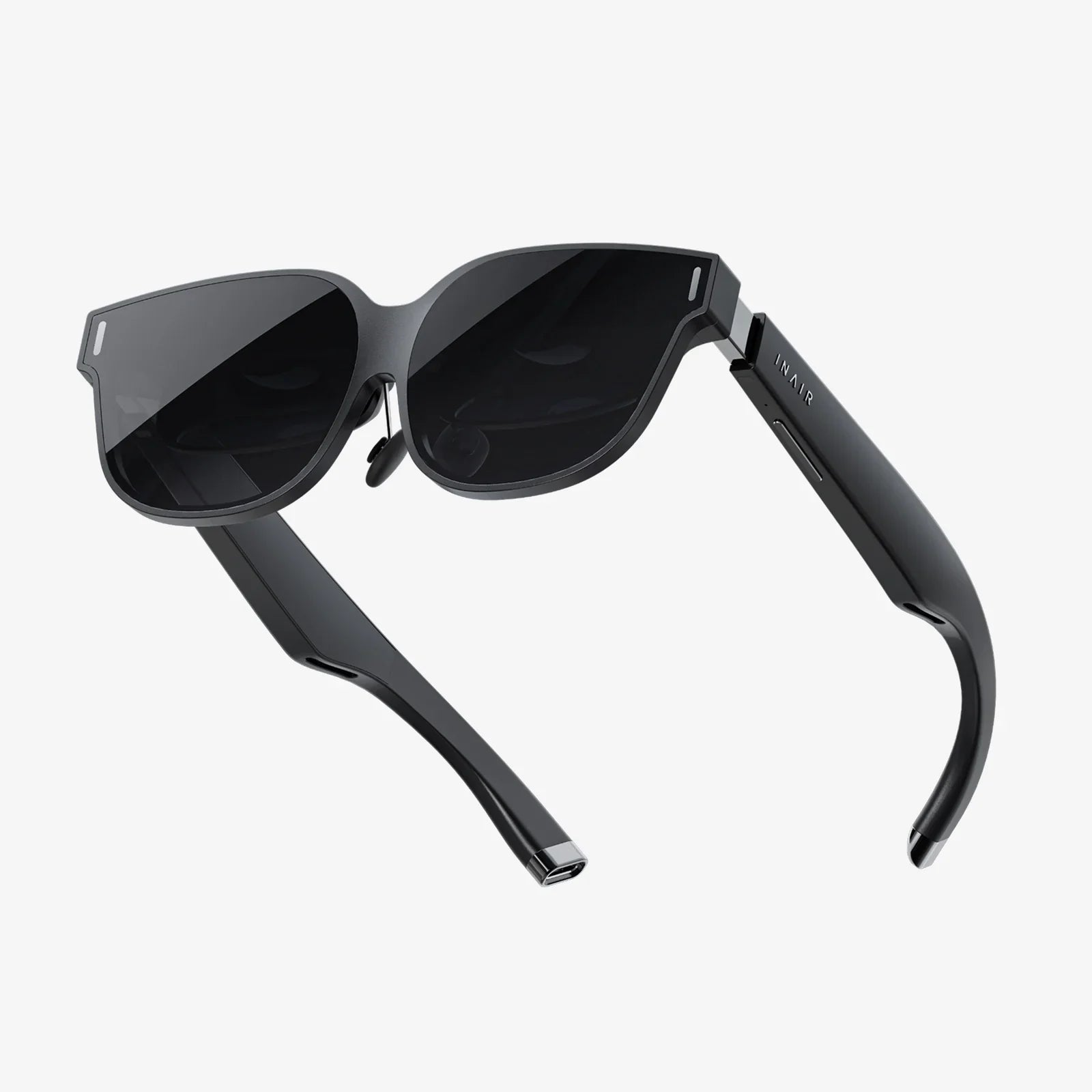
You put on the headset, expecting to be transported to a breathtaking digital frontier, but instead, you're greeted by a stuttering, juddering world that feels more like a glitchy nightmare than a promised paradise. This jarring disconnect between expectation and reality is the very obstacle that virtual reality optimization seeks to demolish. It is the unsung hero, the intricate ballet of software and hardware engineering working in perfect harmony to construct convincing illusions. Without it, even the most creatively ambitious virtual worlds collapse under the weight of their own technical inadequacies, breaking presence and reminding users they are merely wearing a screen on their face. Optimization is not merely an option; it is the absolute foundation upon which all compelling and comfortable VR experiences are built, the critical difference between a forgettechle demo and a transformative journey.
The Immutable Laws of the Virtual Realm: Why Optimization is Non-Negotiable
Unlike traditional flat-screen applications, virtual reality operates under a set of unforgiving physiological constraints. The human perceptual system is exceptionally adept at detecting artifice, and any failure to meet its high standards results in a failed experience, often accompanied by physical discomfort. The primary pillars that optimization must uphold are:
-
High and Stable Frame Rate: The golden rule of VR is 90 frames per second (FPS) as a bare minimum, with high-end systems now targeting 120Hz or even 144Hz. Any drop below this threshold introduces latency, which is the primary culprit behind simulator sickness. This demand for speed is approximately seven times greater than that of a standard 30FPS console game, placing immense pressure on the rendering pipeline.
-
Minimal Motion-to-Photon Latency: This is the total delay between a user moving their head and the image on the display updating to reflect that movement. The industry benchmark is less than 20 milliseconds. Exceeding this delay creates a disconnect between the user's vestibular system (inner ear) and their visual input, directly inducing nausea and vertigo. Optimization is a relentless war against every millisecond of latency.
-
Visual Fidelity and Presence: While performance is paramount, it cannot come at the total expense of visual quality. A convincing world requires detailed textures, complex lighting, and realistic shadows to foster "presence"—the brain's acceptance of the virtual environment as real. The optimizer's challenge is to achieve this fidelity within the brutal performance budget.
These are not target metrics; they are non-negotiable barriers to entry. Failure is not just a drop in visual quality; it is a physical reaction that alienates the user. Thus, virtual reality optimization is a holistic discipline focused on respecting the user's biology as much as it is about leveraging computer hardware.
Deconstructing the Bottleneck: A Multi-Faceted Approach to Performance
Optimizing for VR is not a single action but a multifaceted strategy applied at every stage of development, from initial asset creation to final runtime execution. It requires a meticulous approach, targeting the main areas of computational expense.
1. Rendering Pipeline: The Heart of the Matter
The process of generating a 3D image is notoriously performance-intensive. VR compounds this by requiring two renders—one for each eye—for every single frame. Key optimization techniques here include:
-
Stereo Rendering Techniques: Naive rendering would draw the entire scene twice. Modern engines use techniques like Single Pass Stereo (where geometry is submitted once but transformed for each eye by the GPU) and Multi-View Rendering (a more efficient API-level solution) to drastically reduce the CPU overhead of setting up the two draws.
-
Advanced Level of Detail (LOD): This fundamental technique involves creating multiple, less detailed versions of a 3D model. As an object moves further from the viewer, the engine seamlessly swaps it for a lower-polygon version. In VR, LOD transitions must be even more seamless and aggressive to maintain framerate, often using techniques like "fade transitions" to avoid visual popping.
-
Occlusion Culling: Why spend resources drawing what the user cannot see? Occlusion culling is a process where the engine identifies objects that are hidden behind others (occluded) and prevents them from being processed by the renderer. Dynamic and precise occlusion culling is vital for complex VR scenes.
-
Shader Optimization: The small programs that calculate the color of each pixel (shaders) can be incredibly complex. Optimizing them involves simplifying mathematical calculations, reducing texture samples, and using cheaper lighting models wherever possible without sacrificing crucial visual cues.
2. Asset Creation: Building for Performance from the Ground Up
The most efficient rendering techniques will fail if the underlying 3D models and textures are poorly constructed. Optimization must be a consideration for artists, not just engineers.
-
Topology and Polygon Count: Artists must create models that are "clean"—using as few polygons as necessary to define the shape. This involves eliminating unnecessary edge loops, avoiding tiny details that won't be perceived, and using normal maps to simulate high-frequency detail instead of modeling it geometrically.
- Texture Streaming and Atlasing: Loading massive, high-resolution textures into video memory is costly. Texture streaming loads only the necessary mip-levels needed for the current view, saving precious VRAM. Similarly, texture atlasing—packing many small textures into one larger image—reduces the number of state changes the GPU must make, boosting performance.
-
Audio Optimization: Spatial 3D audio is a critical component of immersion. However, processing dozens of high-quality audio sources is CPU-intensive. Techniques include prioritizing audio sources based on proximity and importance, using optimized audio codecs, and implementing effective attenuation.
3. Engine and System-Level Optimizations
Beyond the scene itself, the underlying software and hardware offer significant optimization levers.
-
Asynchronous Timewarp and Spacewarp: These are ingenious software techniques that act as a safety net. If the game risks missing its frame deadline, these algorithms reproject the previous frame based on the latest head-tracking data, synthesizing an intermediate frame to maintain a smooth image and low latency. It's a clever trick that hides performance hiccups, though it can introduce visual artifacts during fast motion.
-
Fixed Foveated Rendering: The human eye only sees high detail in a very small central area called the fovea. Fixed Foveated Rendering (FFR) leverages this by rendering the periphery of the image at a significantly lower resolution. This provides a substantial performance boost with no perceptible loss in quality for the user, as their gaze is naturally focused on the center.
-
Dynamic Resolution Scaling: This technique dynamically adjusts the resolution at which the scene is rendered on a per-frame basis. If the engine detects the framerate is dropping, it will temporarily lower the render resolution to reclaim performance headroom, upscaling the image to fit the display. When done smoothly, it's another nearly imperceptible way to maintain a stable framerate.
The Future is Adaptive: AI and Eye-Tracking
The next frontier of virtual reality optimization moves from pre-baked and generalized techniques to dynamic, personalized systems powered by artificial intelligence and advanced hardware.
-
Foveated Rendering: While FFR is powerful, its true potential is unlocked with eye-tracking. This technology knows precisely where the user is looking in real-time. With this data, the renderer can drastically reduce the resolution everywhere except the tiny foveal region the user is directly gazing upon. The performance savings are staggering, potentially allowing for photorealistic graphics on mobile-level hardware, as computational resources are focused exactly where they are needed.
-
AI-Powered Super Sampling and Reconstruction: Machine learning is revolutionizing image generation. Techniques like DLSS (Deep Learning Super Sampling) and its counterparts use a dedicated AI processor to take a lower-resolution rendered image and intelligently upscale it, reconstructing a high-quality image that often looks better than a native resolution render while running significantly faster. This is a paradigm shift, turning brute-force rendering into a smarter, more efficient process.
-
Predictive Tracking and Haptics: AI can also be used to predict user movement, further reducing perceived latency. By forecasting where a user's head or hand will be in a few milliseconds, the system can begin rendering the appropriate view even before the movement is fully completed. This predictive approach can also be applied to haptic feedback, pre-loading tactile sensations for a more seamless experience.
The Invisible Art: A Continuous Balancing Act
Virtual reality optimization is rarely about finding one "silver bullet." It is a meticulous and continuous process of profiling, testing, and iterating. Developers use profiling tools to identify performance bottlenecks—is the CPU struggling to process animations, or is the GPU overloaded by pixel shading? The answer dictates the strategy.
It is also a constant trade-off. Should a developer use a more complex shadow technique for higher fidelity, or a simpler one for higher performance? The answer depends on the scene, the target hardware, and the experience's core goals. This decision-making process is the "art" of optimization, requiring a deep understanding of both technical constraints and human perception.
Ultimately, the goal of all this effort is invisibility. The user should never think about the frame rate, the resolution, or the rendering techniques. They should only feel the awe of standing on a mountain peak, the tension of a surgical procedure, or the focus of an intricate training simulation. They are not experiencing optimization; they are experiencing presence. And that is the highest compliment a VR developer can receive.
Imagine a virtual world so flawlessly rendered, so instantly responsive, that the very notion of a "headset" dissolves into the background of your consciousness. This is the promise held within the meticulous science of optimization—not just smoother frames, but a key that unlocks deeper emotional connection, more effective professional training, and truly boundless digital universes waiting for you to step inside and explore. The next generation of virtual experiences won't just be defined by what they show you, but by how perfectly they disappear, leaving only the magic behind.