


- by wangfred
What Does a Virtual Reality Headset Look Like? A Deep Dive into Design & Tech
- by wangfred
You’ve seen them in movies, glimpsed them in advertisements, and perhaps even watched a friend disappear into one. The image of a person, face obscured by a futuristic-looking device, gesturing at nothing, is now a familiar part of our cultural landscape. But have you ever stopped to truly consider the intricate piece of technology strapped to their head? What does a virtual reality headset actually look like, and more importantly, why does it look that way? The answer is far more fascinating than a simple black box; it’s a story of optical innovation, ergonomic challenges, and a relentless pursuit of immersion. This isn't just about aesthetics; it's a deep dive into the very architecture of escape, the physical gateway to limitless digital realms.
At its most fundamental level, a virtual reality headset is a stereoscopic display system worn on the head. But this simple description belies a complex assembly of components, each playing a critical role in tricking your senses. While designs vary, almost all share a common set of physical elements that define their distinctive silhouette.
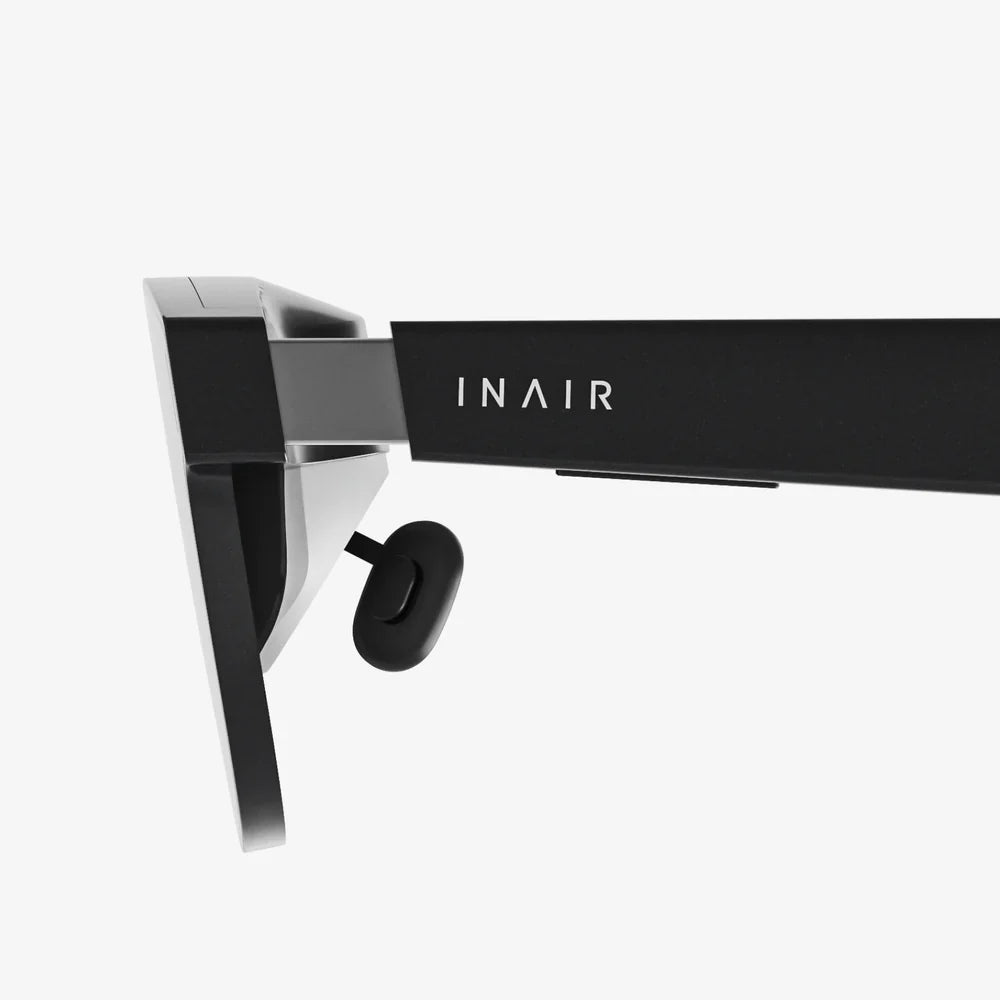
The most prominent feature is the head-mounted display (HMD) itself, often referred to as the visor or faceplate. This is the large, central unit that houses the magic. It's typically a curved, contoured shell made from lightweight plastic or composite materials, designed to sit flush against the user's face. Its primary job is to block out all external light, creating a sealed, dark environment necessary for total immersion. The front-facing exterior is often a smooth, minimalist surface, but it's what lies beneath and within that counts.
Look closely at the exterior of a modern headset, and you'll notice an array of small, dark circles or dots. These are not decorative; they are the external tracking sensors or cameras. Their number and arrangement differ, but their purpose is universal: to understand the headset's position in physical space. By constantly monitoring the room's fixed points, these sensors create a real-time map, allowing the virtual world to remain stable as you move your head. This is the foundation of six degrees of freedom (6DoF) tracking, which lets you not just look around but also lean, crouch, and walk within a defined area. Some headsets also feature a dedicated camera on the front, often called a passthrough camera, which can project a grayscale or color video feed of your real surroundings onto the internal displays, allowing you to see the physical world without removing the device.
Behind the faceplate lies the heart of the visual experience. Your eyes align with a pair of high-quality lenses, which are perhaps the most crucial optical component. These are not simple magnifying glasses; they are specially engineered Fresnel lenses or newer pancake lenses, designed to take the image from a small screen placed very close to your face and make it appear as a vast, distant panorama. They are responsible for the wide field of view that makes VR feel expansive rather than like looking through a pair of binoculars. Adjusting the interpupillary distance (IPD)—the space between the lenses—is a common feature, allowing users to align the lenses with their unique eye spacing for a clear, comfortable image and to avoid strain.
Behind these lenses are the displays. Most modern headsets use two high-resolution LCD or OLED panels, one for each eye. This dual-panel setup is essential for creating the stereoscopic 3D effect that provides depth perception. The combination of ultra-high resolution and a high refresh rate (90Hz and above) is critical for producing a sharp, smooth image that feels real and reduces the potential for motion sickness.
A headset is useless if it wobbles, slips, or feels like a burden. This is where the headstrap system comes into play. This component has seen significant evolution, moving from simple elastic bands to sophisticated rigid structures. There are two primary designs:
The soft strap system uses adjustable elastic bands that go over the top and around the back of the head. It's lightweight and simple but can sometimes struggle to distribute the headset's weight evenly, leading to pressure on the cheeks and forehead during extended use.
The rigid strap or halo design features a hard plastic band that encircles the rear of the skull, with the visor attached via an arm that floats in front of the face. This design does a superior job of balancing weight across the crown of the head, reducing facial pressure. Many modern straps also integrate the audio system and feature a dial at the back for fine-tuning tightness.
Comfort is further enhanced by the facial interface or foam padding that creates the light seal around the eyes and nose. This is typically made from a breathable, hypoallergenic foam or silicone material that is removable and washable. Its contour is designed to fit a wide range of face shapes comfortably.
The external form is dictated by the internal machinery. Despite their relatively compact size, VR headsets are packed with technology that rivals modern smartphones. Inside the shell, you'll find a powerful processor (or a connection to an external one), memory, a dedicated graphics processing unit, and a complex cooling system often involving heat sinks and quiet fans to manage thermals during intense computational tasks.
Connectivity is another defining feature. Headsets fall into three categories based on how they connect to a computing source:
The look of VR headsets hasn't emerged from a vacuum; it's a direct result of engineering constraints and human factors. Early prototypes were bulky, heavy, and crudely strapped together with off-the-shelf components. They looked like scientific instruments because, frankly, they were. As the technology has matured, so has the industrial design.
Modern headsets strive for a balance between several competing demands:
While the core anatomy remains consistent, the VR landscape is not monolithic. There is a growing spectrum of designs catering to different priorities:
The common thread weaving through every design, from the most advanced standalone unit to the simplest mobile holder, is intent. Every curve, every vent, every sensor placement is a calculated decision aimed at one goal: to erase its own existence. The ultimate success of a VR headset's design is measured by how quickly the user forgets they are wearing a piece of technology at all, becoming wholly present in another world. It is a mask whose purpose is to disappear, leaving behind only the reality it creates.
So the next time you see someone wearing one, you'll see more than just a gadget. You'll recognize the sophisticated dance of optics and ergonomics, the careful balance of weight and power, and the intricate portal that allows a human mind to step through the screen. The quest for the perfect virtual reality headset is a pursuit of invisible engineering, where the best design is the one you never have to think about—until you take it off and wonder, if only for a moment, which world is truly real.
Share:
Virtual Reality Optimization: The Unseen Engine Powering Immersive Digital Worlds
Most Advanced Virtual Reality Headset 2025: A Glimpse into the Future of Immersion