


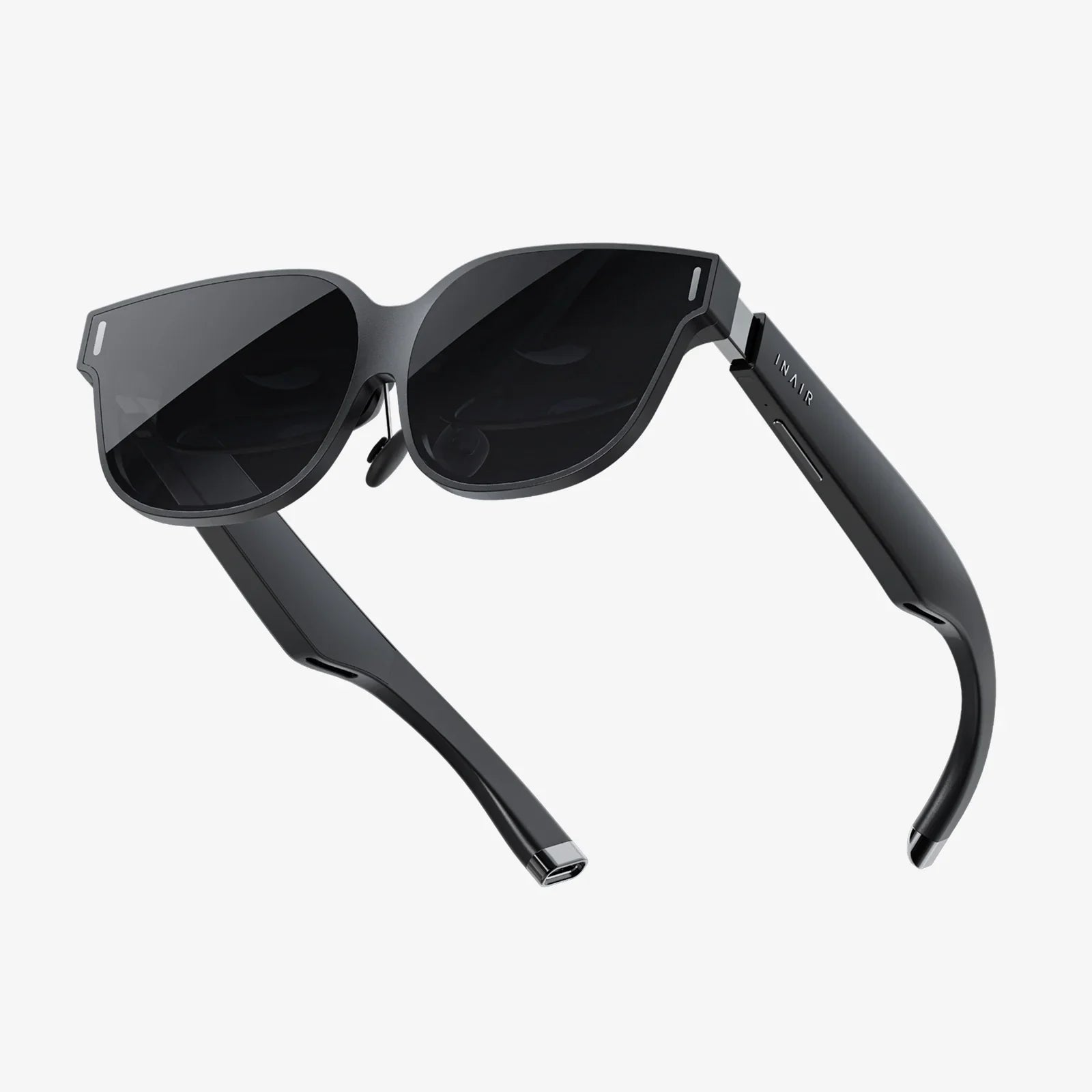
Imagine slipping a sleek, compact viewer onto your head and instantly being transported. One moment you're on your couch, the next you're standing on the edge of a Martian crater, front row at a concert across the globe, or walking through a meticulously reconstructed ancient Roman forum. This isn't science fiction; it's the power of a virtual reality player for iPhone, a technological marvel that turns the powerful computer in your pocket into a gateway to limitless experiences. The journey from a standard smartphone screen to a fully immersive 3D environment is both fascinating and accessible, and it all begins with understanding the software that makes it possible.
The Magic Behind the Viewer: How an iPhone Becomes a VR Portal
At its core, a virtual reality player is a sophisticated application that performs a complex series of tasks in real-time. It's far more than a simple video player. When you launch a VR experience, the player must first render two distinct images, one for each eye, to create the stereoscopic 3D effect that is fundamental to depth perception in VR. This requires significant graphical processing power, which is why modern iPhones, with their advanced chipsets, are perfectly suited for the task.
The player then utilizes the iPhone's internal gyroscope and accelerometer to track your head movements with remarkable precision. As you turn your head to look up, down, or side-to-side, the player adjusts the perspective of the rendered imagery instantaneously. This creates the critical illusion that you are physically present within the digital environment, a phenomenon known as "presence." Low latency is absolutely essential here; any noticeable delay between your movement and the visual update can break immersion and cause discomfort. High-quality players are engineered to minimize this latency to imperceptible levels.
Furthermore, these players support various video formats and projection types. They can decode standard monoscopic 180-degree videos, full 360-degree videos, and sophisticated stereoscopic 360-degree content where each eye sees a slightly different image, creating a powerful sense of depth and scale. The software automatically detects the type of content and applies the correct lens distortion and field-of-view settings to ensure the image looks correct through the lenses of your headset.
A Universe of Content at Your Fingertips
The true value of a virtual reality player is unlocked by the content it can access. The ecosystem of VR media has exploded, offering something for every interest.
Cinematic Experiences and 360-Degree Videos
Platforms dedicated to VR video host millions of experiences. You can find breathtaking nature documentaries that place you alongside wild animals, thrilling travelogues that let you visit exotic locations, and professionally produced short films that use the medium to tell stories in entirely new ways. Music lovers can enjoy 360-degree concert recordings that make them feel like they are on stage with the artist.
Interactive Gaming and Applications
Beyond passive viewing, many players serve as hubs for interactive games and apps. These range from simple roller coaster simulators to complex puzzle games where you must manipulate objects in a 3D space. Fitness applications can guide you through workouts in immersive environments, while educational apps can take you on interactive tours of human anatomy or the solar system.
Your Own Media in VR
One of the most compelling features of a robust VR player is the ability to view your own personal media. With support for local file playback, you can watch standard 2D movies on a virtual giant screen as if you were in your own private theater. Some players even offer environments like a moonbase or a cozy cabin to enjoy your content in. Furthermore, if you own a 360-degree camera, you can relive your own memories—a family birthday, a wedding, a vacation—with an unparalleled sense of "being there" again.
Choosing the Right Virtual Reality Player for Your Needs
With several options available, selecting the right player depends on how you plan to use it. Key considerations include:
- Content Source: Do you primarily want to stream from online platforms, or do you need robust support for playing local files from your phone or a network drive?
- User Interface (UI): The UI must be easy to navigate while you are wearing a headset. Look for players with intuitive, gaze-based controls or full compatibility with simple Bluetooth controllers.
- Codec and Format Support: Ensure the player supports a wide range of video codecs (like H.264, HEVC/H.265) and audio formats to avoid compatibility issues with your media collection.
- Customization: Advanced users may appreciate options to manually adjust settings like lens separation, vertical alignment, and field of view to perfectly match their specific headset, maximizing comfort and visual clarity.
- Streaming Integration: Some players offer deep integration with popular VR video streaming services, providing a seamless browsing experience within the app.
The Perfect Partner: Choosing a Headset
While the software does the heavy lifting, the hardware viewer is its essential partner. For the iPhone, there are two primary categories of headsets.
The most accessible option is the mobile viewer, which uses a combination of lenses and a comfortable head strap. Your iPhone slots into the front of the viewer, and the lenses refract the screen's image to fill your peripheral vision. These viewers are affordable, lightweight, and offer a fantastic entry point into VR.
For those seeking a more advanced and untethered experience, standalone headsets represent the cutting edge. These devices have their own high-resolution displays, powerful processors, and advanced inside-out tracking systems, eliminating the need to insert a phone. Their ability to connect to and stream content from a powerful iPhone showcases a hybrid approach, leveraging the phone's processing power for more complex tasks without physically housing it.
Beyond Entertainment: The Practical Power of Mobile VR
The applications for a virtual reality player extend far beyond games and videos. Architects and designers use them for virtual walkthroughs of unbuilt structures. Real estate agents offer virtual property tours to remote clients. Museums and cultural institutions create virtual exhibitions, making art and history accessible to a global audience. In education, students can take virtual field trips to the Great Wall of China or the bottom of the ocean, transforming abstract lessons into tangible experiences.
Getting the Most Out of Your Experience
To ensure a comfortable and high-quality VR session, follow these tips. First, adjust the headset straps and the interpupillary distance (IPD) settings if available, to align the lenses with your eyes. This sharpens the image and reduces eye strain. Second, start with shorter sessions to acclimatize yourself to the experience. Third, ensure you have a comfortable and clear space to enjoy VR, especially for experiences that require standing and turning. Finally, use high-quality headphones. Spatial audio is a critical component of immersion, and good headphones make a dramatic difference in selling the illusion of a real place.
The Future is Mobile and Immersive
The technology behind virtual reality players is constantly evolving. We are moving towards higher resolution displays, better field-of-view, and more sophisticated inside-out tracking that will make the experience even more seamless and convincing. As 5G connectivity becomes ubiquitous, streaming high-fidelity, volumetric video will become instantaneous, opening up new realms of social and interactive experiences. The line between the physical world and the digital ones we create will continue to blur, and the iPhone, paired with a powerful VR player, will remain at the forefront of this revolution, democratizing access to these incredible worlds.
The door to these infinite worlds isn't in a high-end gaming PC or a specialized lab; it's already in your pocket, waiting for you to download the key. Your next adventure, your next lesson, your next front-row concert experience is just one app away from becoming your reality. What will you explore first?
Share:
3D Painting Virtual Reality: The Digital Renaissance of Artistic Expression
Augmented and Virtual Reality Hardware Market Analysis: Navigating the Next Digital Frontier