


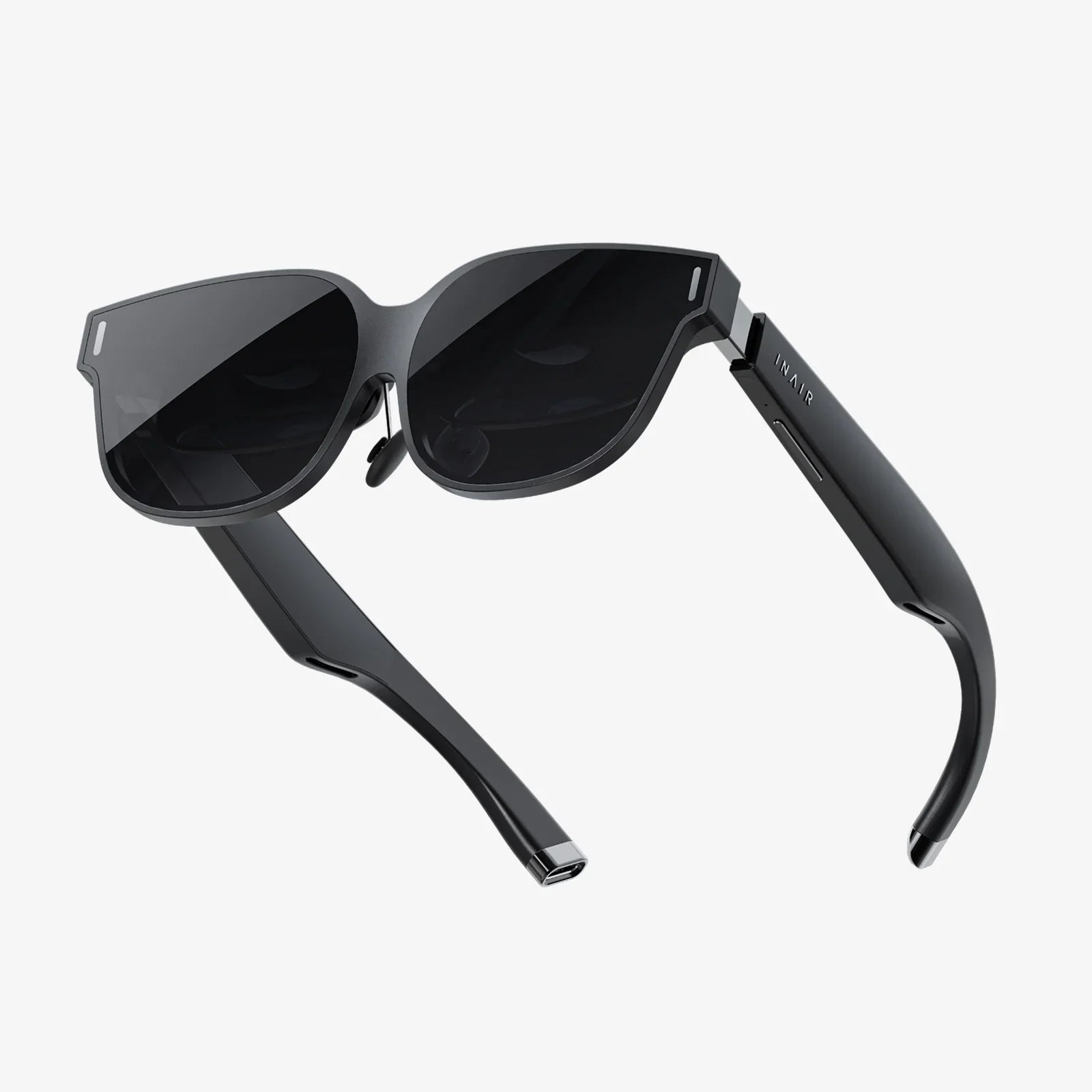
- by wangfred
Virtual Reality Toolkit: The Ultimate Guide to Building Immersive Worlds
- by wangfred
Imagine stepping through a portal into a world of your own creation, where the only limit is your imagination. This is no longer the realm of science fiction; it's the tangible promise held within a modern Virtual Reality Toolkit. These sophisticated collections of software and frameworks are democratizing the development of immersive experiences, empowering a new generation of creators to build, experiment, and redefine reality itself. The barrier to entry has crumbled, and the tools to construct entire universes are now at your fingertips.
While the head-mounted display is the most visible symbol of VR, a robust Virtual Reality Toolkit is a complex ecosystem of interdependent components. Understanding this anatomy is the first step to mastery.
At the core of any toolkit lies the game engine. This powerful software environment provides the foundational physics, lighting, audio, and rendering systems. It's the canvas upon which every virtual world is painted. Modern engines are incredibly versatile, offering intuitive visual scripting systems for beginners and deep, code-level access for seasoned programmers. They handle the immense computational heavy lifting required to generate two high-frame-rate, stereoscopic images in real-time, ensuring the experience feels fluid and believable, not nauseating.
If the engine is the heart, SDKs are the nervous system. These specialized software packages act as translators, enabling the core engine to communicate seamlessly with a wide array of hardware—headsets, motion controllers, haptic gloves, and tracking systems. A comprehensive toolkit will include or support SDKs for all major hardware platforms, ensuring that developers can build experiences with broad compatibility. Plugins extend this functionality further, adding pre-built assets, advanced interaction systems, and genre-specific mechanics that can drastically accelerate development time.
A world is nothing without its content. This part of the toolkit encompasses the software used to create 3D models, textures, animations, and soundscapes. This includes industry-standard applications for polygonal modeling, sculpting high-resolution details, painting textures directly onto 3D surfaces, and composing spatial audio that reacts to the user's position and movement. The integration between these creation tools and the core engine is critical, allowing for iterative design and instant feedback.
This component, often overlooked in purely software discussions, refers to the supported hardware that completes the immersion. A toolkit's value is tied to its ability to leverage:
Leveraging a Virtual Reality Toolkit is a journey with distinct phases, each leveraging different parts of the ecosystem.
The process begins not with hyper-realistic graphics, but with simple grey-box environments. Developers use basic shapes within the engine to block out the experience, testing core mechanics, user movement (locomotion), and interaction models. This rapid iteration is vital. Is the experience comfortable? Is it intuitive? Does the core loop feel engaging? Modern toolkits facilitate this with pre-fabricated interactable objects—doors, levers, buttons—that can be dragged and dropped into a scene, allowing designers to test ideas within minutes, not weeks.
Once the prototype is validated, the grey boxes are replaced with final art. 3D models created in external software are imported, materials and shaders are applied to give surfaces their visual properties (e.g., metallic, glossy, rough), and lighting is baked or set up dynamically to create mood and atmosphere. This is where the world gains its personality and visual fidelity. Audio designers place ambient sounds and spatialized audio cues throughout the environment, which are essential for selling the illusion of a living, breathing world.
This phase focuses on refining the user experience. Toolkit features for creating UI elements that exist within the virtual world (diegetic UI) are employed. Complex interaction sequences are built and tested, ensuring object manipulation feels natural. Performance optimization is critical; developers analyze frame rates, reduce polygon counts, and compress textures to ensure a smooth, stutter-free experience across a range of hardware. This often involves using profiling tools within the toolkit to identify computational bottlenecks.
No VR experience is complete without rigorous user testing. Unlike traditional software, VR testing requires checking for comfort, spatial awareness, and physical safety. Testers ensure the virtual boundaries align correctly with the physical play area. Finally, the toolkit provides the means to build and package the application for distribution on various online storefronts, handling the complex process of compiling code and assets into a final, runnable executable.
The application of these toolkits extends far beyond entertainment, revolutionizing numerous professional fields.
Virtual Reality Toolkits are creating safe, scalable, and highly effective training simulations. Medical students can practice complex surgical procedures on virtual patients, making mistakes without consequence. Engineers can walk through and inspect a full-scale 3D model of a machine before it's ever built. Emergency responders can drill for high-stress scenarios like building fires or natural disasters in a completely controlled environment. The immersion provided by these toolkits leads to significantly higher knowledge retention and muscle memory development compared to traditional methods.
In healthcare, VR experiences built with these tools are proving to be powerful therapeutic instruments. They are used for exposure therapy, helping patients with phobias confront their fears in gradual, manageable steps. They provide cognitive and physical rehabilitation for stroke victims or those with motor skill impairments, turning repetitive exercises into engaging games. Furthermore, VR is being used for pain distraction, immersing burn victims in a calming snowy landscape to significantly reduce their perceived pain during wound care.
The AEC industry has been transformed by the ability to step inside a virtual building. Architects and clients can take immersive walkthroughs of a design long before ground is broken, allowing for informed decisions about space, lighting, and materials. This identifies potential design flaws and changes early in the process, saving enormous amounts of time and money. Collaboration is enhanced as teams from around the world can meet inside the same virtual model to discuss and annotate the project in real-time.
VR toolkits are the foundation for the next evolution of remote communication. Instead of a grid of faces on a flat screen, teams can meet in a virtual boardroom, workshop, or classroom as lifelike avatars. They can share and manipulate 3D models, write on virtual whiteboards, and experience a strong sense of co-presence that video conferencing cannot match. This has profound implications for remote work, global design teams, and maintaining social connections.
Selecting the right toolkit depends heavily on your goals, expertise, and target platform.
Some engines are renowned for their accessibility and strong, out-of-the-box VR support. They often feature extensive asset stores where creators can purchase pre-made models, environments, and even entire interaction systems, allowing them to build complex experiences with minimal coding. Their visual scripting systems enable logic and gameplay to be created through node-based graphs, making it an excellent starting point for artists and designers new to development.
Other industry-standard engines offer unparalleled graphical fidelity and deep, low-level control. They are the go-to choice for studios creating high-budget VR games and enterprise applications where cutting-edge visuals are paramount. The learning curve is steeper, and development often requires strong programming skills in C++, but the payoff is maximum performance and customization. Their robust marketplace also offers a vast array of professional-grade VR plugins and assets.
The ecosystem also includes powerful open-source frameworks for web-based VR. This allows experiences to run directly in a web browser, removing the friction of downloading and installing a separate application. This is ideal for quick marketing demos, virtual museum tours, or simple educational modules that need to be accessible to the widest possible audience with just a click of a link.
The evolution of these toolkits is moving at a breakneck pace, driven by advancements in both software and hardware.
AI is poised to supercharge VR development. Toolkits are beginning to integrate AI features that can generate dynamic, responsive environments. Imagine AI-driven characters that can hold unique, natural conversations with users, or systems that can automatically generate vast, realistic landscapes. AI will also streamline asset creation, allowing developers to generate textures or 3D models through simple text prompts, dramatically reducing production time.
Future toolkits will offer more sophisticated avatar systems that include full-body tracking without the need for additional sensors, using advanced algorithms to infer the position of limbs and expressions. This will lead to more natural and expressive social interactions. Haptic technology will also become more integrated, with toolkits providing standardized APIs to control a new generation of wearables that simulate temperature, resistance, and texture.
Ultimately, Virtual Reality Toolkits are the fundamental building blocks for the much-hyped metaverse—a persistent network of interconnected virtual spaces. The next generation of these toolkits will focus on features that enable this vision: robust networking solutions for massive numbers of concurrent users, cloud-based streaming of content to any device, and standardized protocols for transferring assets and identity between different experiences and platforms.
The power to craft awe-inspiring virtual worlds is no longer locked away in high-end gaming studios. A new Virtual Reality Toolkit is the master key, inviting filmmakers, educators, engineers, and artists to become architects of the impossible. The question is no longer if you can build it, but what breathtaking reality you will build first. The headset is your window, and the toolkit is your blueprint—your journey into the immersive frontier starts with a single idea.