


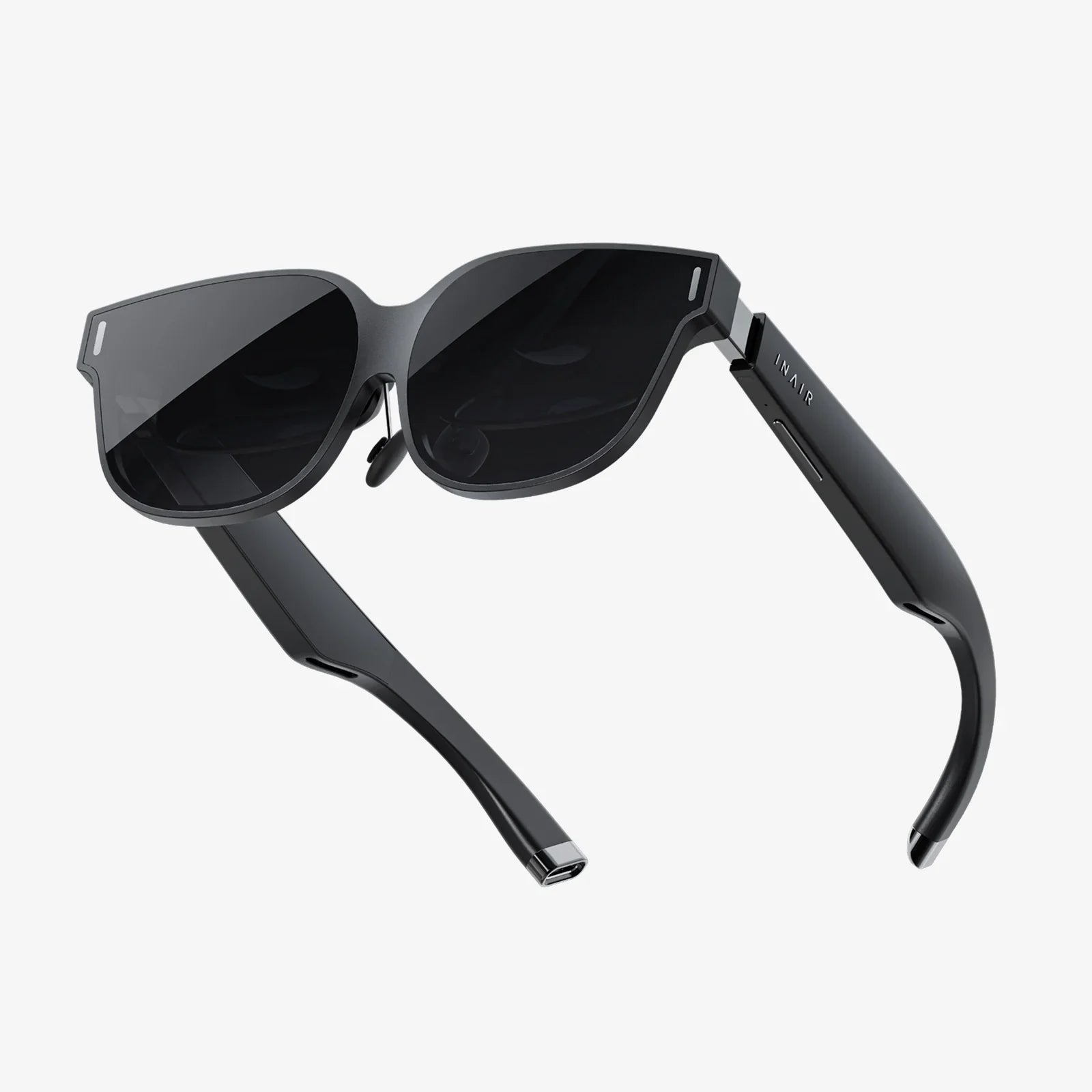
- by wangfred
Virtual Reality Transparent: Seeing Through the Next Digital Revolution
- by wangfred
Imagine a world where the line between the digital dreamscape and the physical world around you simply vanishes. Where you can conjure a sprawling data visualization to hover above your desk, collaborate with a colleague's photorealistic avatar as if they were standing in your living room, and then, with a glance, see your actual room again, unchanged. This is the breathtaking promise of virtual reality transparent, a technological leap that is poised to redefine our relationship with computing, information, and each other. It’s not just a new feature; it’s a fundamental shift from isolation to integration, and it’s arriving faster than we think.
To understand the revolutionary nature of transparent VR, we must first appreciate the journey of the technology thus far. Traditional virtual reality is an exercise in sensory substitution. By blocking out all visual and auditory stimuli from our immediate environment, a VR headset transports us entirely. We are plunged into fantastical game worlds, immersive training simulations, and breathtaking virtual tours. The success of this experience is measured by its ability to make us forget the chair we are sitting on and the walls that surround us—a concept known as presence.
Yet, for all its power, this model of complete immersion carries inherent limitations. It is, by design, an isolating experience. The user is cut off from their physical surroundings, creating a tangible barrier to adoption in professional and social settings. How can you use a powerful computing platform if it blinds you to your coffee cup, your keyboard, your pet, and, most importantly, the people next to you? This isolation has often confined high-fidelity VR to dedicated, controlled spaces, limiting its utility as an all-day, every-day tool. Augmented reality (AR) offered a solution by overlaying digital information onto the real world through transparent lenses, but it often struggled to deliver the deep, convincing immersion of high-end VR. The two paradigms—the fully virtual and the augmented real—existed in separate technological silos. Transparent VR shatters this silo.
The magic of seeing through a solid headset is achieved through two primary technological pathways, each with its own strengths and philosophical implications.
This method uses outward-facing cameras mounted on the headset to capture a live video feed of the user's environment. This feed is then processed and displayed on the internal screens in real-time, effectively acting as a high-tech window. The sophistication of this "window" is everything. Early implementations were grainy, laggy, and disorienting. Modern systems, however, are achieving remarkable feats:
Video passthrough is powerful because it is a bridge technology. It allows a single device to function as both a fully immersive VR headset and a potent AR platform, a concept often called Mixed Reality (MR). The user can blend realities on a spectrum, from fully virtual to fully transparent, with infinite variations in between.
The other path, which is more nascent for consumer-grade VR, involves true optical transparency. This would use advanced waveguide combiners or holographic optical elements (HOEs) similar to those in some AR glasses, but integrated into a VR form factor. Light from the real world would pass through these transparent optics to reach the user's eyes, while projectors would simultaneously beam digital imagery onto the same lenses.
The advantage is a potentially more natural, lag-free view of reality without the intermediary of a camera system. The challenge is the "see-through compromise": achieving high visual fidelity for the virtual content while maintaining a clear, unobstructed view of the real world. The digital images must be bright enough to be seen in daylight and must be able to convincingly occlude real-world objects to feel solid. While video passthrough is the dominant force in today's transparent VR landscape, optical methods represent the holy grail for a future generation of even more lightweight and seamless devices.
The ability to seamlessly blend realities unlocks a universe of applications that were previously clumsy, impossible, or simply unimaginable.
The concept of the virtual office is transformed. Instead of being trapped in a virtual void, a user can sit at their actual physical desk. They can don their headset and spawn multiple large, virtual screens for coding, writing, or data analysis, positioned perfectly in their field of view. They can have a video conferencing call where other participants appear as life-sized avatars or holograms sitting in the empty chairs around them. Crucially, they can still see their physical keyboard, take a sip of water, and glance at a notepad without any friction. This merges the infinite scalability of the digital workspace with the tactile comfort and context of the physical one.
In fields like medicine, engineering, and maintenance, transparent VR is a game-changer. A medical student can practice a procedure on a hyper-realistic virtual patient while an instructor standing in the real room guides them, their physical hands visible alongside the digital tools. An architect can walk a client through a full-scale, immersive 3D model of a new building design, and then with a gesture, fade the model to transparency to discuss the view from the actual physical location. Factory technicians can see schematics, instructions, and animated guides overlaid directly onto the complex machinery they are repairing, with their own hands perfectly visible and tracked within the scene.
Transparent VR has the potential to dissolve the antisocial stigma of headset use. In a living room, multiple people could be wearing headsets, interacting with a shared virtual board game or watching a virtual big-screen movie, all while remaining fully aware of each other's real reactions and body language. For individuals with mobility challenges or those who are geographically isolated, this technology could enable a powerful new form of telepresence, allowing them to "be" in a room with others in a way that feels far more genuine and embodied than a standard video call.
With this profound new capability comes a host of complex questions that we must grapple with as a society.
A headset with always-on, high-resolution cameras that map and record your environment is a powerful data-collection device. The privacy implications are staggering. Who has access to the continuous video feed of your home, your office, your life? How is this data stored, processed, and used? Could it be used for targeted advertising based on the contents of your room, or worse, for surveillance? Establishing robust, transparent data policies and giving users complete control over their passthrough data will be paramount to earning public trust.
If we can alter our reality at will, what becomes of our shared baseline? When a contentious conversation with a colleague can be "enhanced" by making them appear as a cartoon character, or a stressful work environment can be masked with a serene virtual backdrop, do we risk losing our grip on an objective truth? The potential for misuse in creating deepfakes or manipulative environments is significant. Furthermore, the long-term psychological effects of living in a blended reality are unknown. Will we become dissatisfied with an un-augmented world? Will the constant mediation of experience through a digital layer impact memory, attention spans, or our fundamental sense of self?
This technology will not be cheap at first. This risks creating a new kind of inequality: not just a divide in access to information, but a divide in the very perception of reality. A privileged class could enjoy digitally enhanced, productivity-boosting, and entertainment-filled worlds, while others are left with an un-augmented existence. This could extend beyond consumers to businesses, where companies that can afford to equip employees with this technology may gain an insurmountable advantage over those that cannot.
The current state of transparent VR is impressive but still evolving. Challenges remain in achieving perfect visual fidelity, eliminating latency entirely, and creating headsets that are socially acceptable and comfortable enough for all-day wear. The next decade will focus on refining these fundamentals: better resolution, wider fields of view, more powerful processors, and smaller, lighter form factors.
Beyond hardware, the real revolution will be software-driven. We need intuitive new user interfaces and spatial operating systems designed for this blended world. Developers will need to create experiences that thoughtfully and ethically leverage the unique power of blending the real and virtual, moving beyond simple gimmicks to create tools that genuinely enhance human capability and connection.
The journey of virtual reality is moving from building walls to building windows. Virtual reality transparent is not about escaping our world, but about enriching it. It promises to weave the threads of digital information, creativity, and connection directly into the fabric of our physical lives, transforming every room into a potential portal and every surface into a screen. The door between realities is now open, and there's no going back. The only question that remains is what we, as individuals and as a society, will choose to build in the boundless, blended space it reveals.