


Imagine a world where the line between the digital and the physical is not just blurred but entirely erased, where your thoughts can manipulate matter and digital creations can walk off the screen. This is no longer the stuff of science fiction; it is the breathtaking trajectory of our present, a journey we are all on, moving at breakneck speed from the virtual to reality. This convergence is poised to be the most transformative technological shift of our lifetime, reshaping everything from how we work and learn to how we love and heal. The future is not a distant destination; it is being rendered in real-time, and it is more immersive than we ever dared to dream.
The Philosophical and Historical Foundations
The human desire to bridge the imagined and the tangible is ancient. Our ancestors captured visions of hunts on cave walls, not merely as record-keeping, but as a form of manifesting a hoped-for reality. For millennia, philosophers have debated the nature of reality itself—is the world we perceive the true world, or merely a shadow on a wall, as Plato suggested in his Allegory of the Cave? This enduring quest to understand, replicate, and ultimately merge with our creations is the bedrock upon which our modern journey from virtual to reality is built.
The technological lineage begins with early flight simulators and the crude, wire-frame graphics of the 1960s. However, the true catalyst was the invention of the internet, which created a pervasive, interconnected digital layer atop our physical world. This digital ecosystem became the canvas. The term "Virtual Reality" itself was popularized in the late 1980s, but it described clunky, expensive equipment that remained a niche curiosity for decades. The parallel development of Augmented Reality, which overlays digital information onto the physical environment, offered a different path—one of enhancement rather than replacement. For years, these fields developed on parallel tracks, both promising but failing to deliver a seamless experience. The missing ingredients were processing power, high-fidelity graphics, and, most importantly, a cohesive vision. Today, we have all three.
The Technological Engine: Making the Impossible Tangible
The seamless flow from virtual to reality is powered by a symphony of advanced technologies working in concert. It is this convergence that has moved us from primitive prototypes to powerful, integrated systems.
Digital Twins: The Ultimate Mirror World
At the forefront is the concept of the digital twin—a dynamic, virtual replica of a physical object, process, or system. This is far more than a simple 3D model; it is a living entity fed by a constant stream of data from sensors embedded in its physical counterpart. This allows for real-time monitoring, simulation, and analysis. Engineers can stress-test a jet engine under extreme conditions without ever building a physical prototype. Urban planners can simulate traffic patterns, emergency responses, and the environmental impact of new policies on a perfect copy of an entire city. The digital twin acts as a sandbox for reality, a risk-free environment where we can perfect the physical world before a single ounce of steel is poured or a single wire is laid.
The Rise of the Metaverse and Persistent Worlds
While often misrepresented as merely a VR social platform, the core concept of the metaverse is the creation of a persistent, shared, and interoperable virtual space. It is an embodied internet where users, represented by avatars, can interact with each other and digital content in a way that feels continuous and real. The true power of the metaverse in the virtual-to-reality pipeline lies in its persistence. A virtual object you create remains where you left it. A meeting in a virtual boardroom can conclude with a finalized CAD model that is instantly sent to a 3D printer on the other side of the globe, beginning its journey from virtual concept to physical product without interruption.
Sensory Feedback and Haptics: The Feeling of Data
Vision and sound are not enough for true convergence. The sense of touch is critical for believability and immersion. Advanced haptic technology is creating devices that simulate tactile feedback. This can range from gloves that let a designer feel the texture of a digital fabric to full-body suits that allow a surgeon to feel the resistance of virtual tissue during training simulations. This technology is closing the loop, allowing not just for us to see and hear the virtual world, but to physically feel it, creating a profound and undeniable link between the digital and the physical.
Transforming Industries: The New Blueprint for Progress
The impact of this convergence is not theoretical; it is actively dismantling and rebuilding industrial processes, creating new paradigms for innovation and efficiency.
Manufacturing and Engineering
The assembly line is being replaced by the digital thread. Product design has moved entirely into virtual environments, where teams distributed across the globe can collaborate on a single 3D model in real-time. Using AR headsets, factory technicians can see assembly instructions overlaid directly onto the machinery in front of them, reducing errors and training time. Before a single component is manufactured, the entire production process is simulated and optimized digitally, saving immense costs and accelerating time to market. This is the ultimate manifestation of virtual to reality: a perfect digital plan executed flawlessly in the physical world.
Healthcare and Medicine
In medicine, the stakes of this convergence are human lives, and the benefits are staggering. Surgeons now routinely use VR to walk through complex procedures, practicing on patient-specific digital twins created from MRI and CT scan data. This allows them to anticipate challenges and perfect their approach before making a single incision. AR provides a similar overlay during surgery, projecting critical information like blood vessel locations or tumor margins directly onto the surgeon's field of view. Furthermore, VR is proving to be a powerful tool for physical rehabilitation, creating engaging environments for patients to recover motor skills, and for mental health, offering controlled exposure therapy for conditions like PTSD.
Education and Training
Rote memorization from textbooks is giving way to experiential learning. A medical student can dissect a virtual cadaver thousands of times. A history class can don VR headsets and stand in the Roman Forum, experiencing the scale and grandeur firsthand. An apprentice electrician can practice wiring a complex circuit in a photorealistic simulation, receiving instant feedback on mistakes without any risk of electrocution. This learning-by-doing in a virtual space creates deeper understanding and muscle memory that translates directly to enhanced performance in the real world, democratizing access to high-quality training regardless of geographic or socioeconomic constraints.
Retail and Commerce
The frustrating guesswork of online shopping is being eliminated by virtual try-ons. Using your phone's camera or AR glasses, you can see how a pair of glasses fits your face, how a sofa looks in your living room, or how the color of a new car model appears in daylight. This drastically reduces return rates and increases consumer confidence. The virtual experience is no longer just about viewing a product; it's about experiencing its place in your physical reality before you commit to a purchase, merging the convenience of e-commerce with the certainty of in-store shopping.
The Human Dimension: Connection, Identity, and Ethics
Beyond industry, this technological shift is fundamentally altering the fabric of human interaction and identity, presenting profound opportunities and equally significant challenges.
Redefining Social Connection
Virtual spaces are becoming viable venues for meaningful social interaction. Friends and families separated by oceans can meet in a virtual garden, watch a movie together in a simulated theater, or simply share a conversation as lifelike avatars, feeling a presence that a flat video call cannot provide. For individuals with mobility issues or social anxiety, these spaces can offer a new lease on social life. However, this also raises questions. Will these enhanced digital connections come at the cost of weakening our physical bonds? Can a hug from a haptic suit ever replace the warmth of human touch? The technology promises greater connection, but it is up to us to ensure it enhances rather than replaces the human experience.
The Fluidity of Identity
In virtual worlds, the constraints of our physical bodies can be overcome. Your avatar can be any gender, species, or fantastical creation you can imagine. This offers an unprecedented opportunity for self-expression and exploration, allowing people to present themselves as they feel inside. This can be incredibly empowering, but it also opens a Pandora's box of ethical dilemmas. Issues of digital identity theft, emotional catfishing, and the psychological impact of living a double life are becoming increasingly urgent. The line between a curated online persona and a deceptive fake is becoming dangerously thin.
The Ethical Imperative
The power to blend virtual and reality comes with immense responsibility. The data required to fuel these experiences—biometric data, movement patterns, eye tracking, even emotional responses—is deeply personal. Who owns this data? How is it used and protected? The potential for surveillance and manipulation is unprecedented. Furthermore, as these experiences become more compelling, the risk of addiction and reality dissociation grows. We must establish clear ethical frameworks and robust regulations now, before the technology becomes so embedded that these concerns are an afterthought. The question is not just what we can build, but what we should build.
The Road Ahead: A Symbiotic Future
The end goal is not a world where we escape into the virtual, but one where the virtual and real exist in a symbiotic harmony, each enhancing the other. We are moving towards interfaces that are increasingly intuitive—perhaps even brain-computer interfaces that allow us to manipulate digital objects with our thoughts. The physical world will be annotated with layers of useful digital information, visible only when we need it, turning our entire environment into an interactive dashboard.
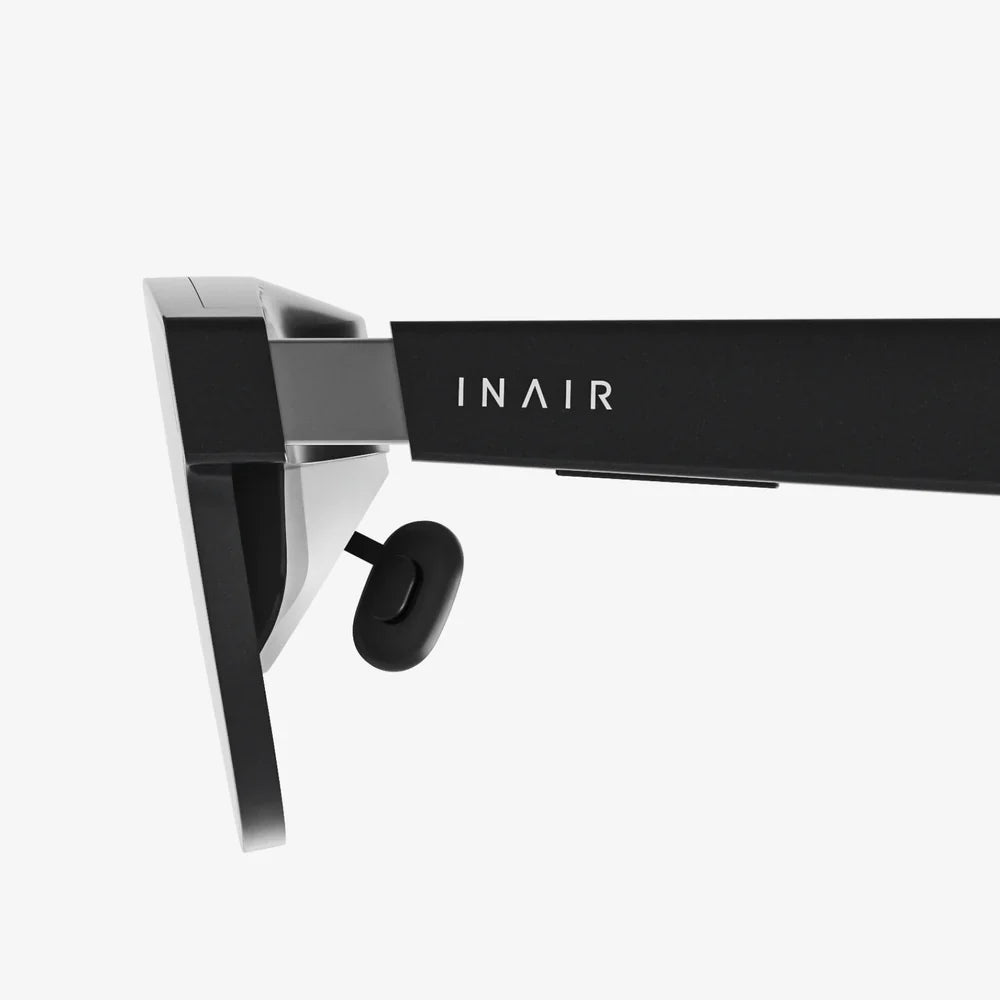
This future will be built on advancements in artificial intelligence, which will act as the intelligent glue understanding our intent and serving up the right blend of virtual and real information at the right time. It will be powered by even faster connectivity, like 6G and beyond, ensuring these rich data streams are instantaneous and ubiquitous. The device itself will evolve from clunky headsets to sleek glasses and eventually to nothing more than a subtle contact lens or neural link.
The journey from virtual to reality is the story of humanity's greatest skill: taking an idea and giving it form. We are building a world where our imagination is the only true limit, where the digital dreams we code today become the physical artifacts of tomorrow. This is not a future to be feared, but one to be shaped with careful thought, fierce optimism, and an unwavering commitment to the humanity it is meant to serve.
We stand at the precipice of a new dimension of human experience, where every creative impulse can be instantly manifested and every physical space can be infinitely enhanced. The door between what is and what could be is swinging wide open, inviting us to step through and redefine the very essence of our reality. The convergence is here, and it promises a world limited only by the boundaries of our own imagination—are you ready to see what you can create?
Share:
What Are The Virtual Reality Devices - A Deep Dive Into The Tech Shaping Our Digital Future
New Touch Controls Are Redefining Our Digital Interactions