


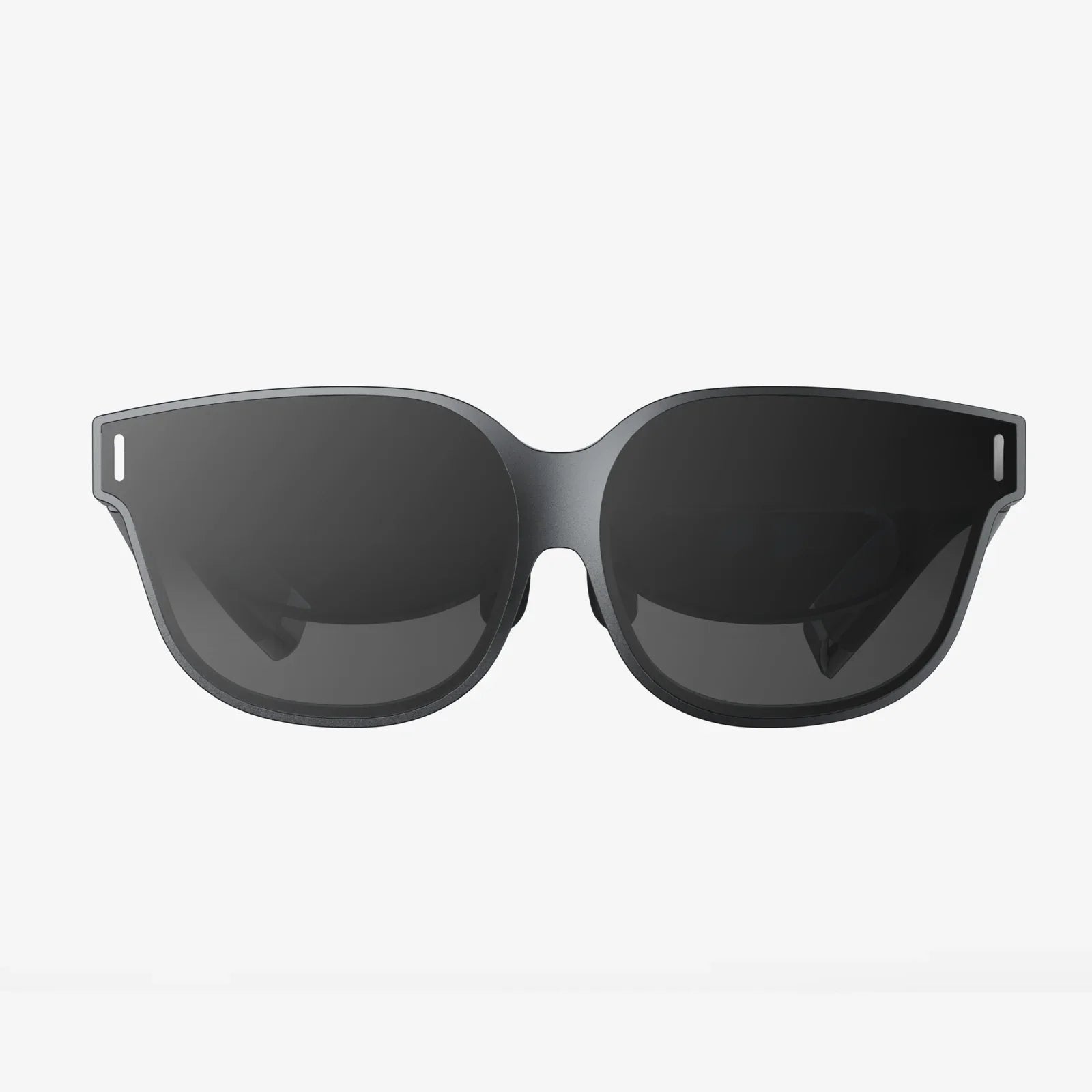
Imagine stepping into a new world, a digital frontier where the only limit is imagination. This is the promise of virtual reality, a technology that has exploded from science fiction fantasy into a tangible, awe-inspiring reality. But this journey into other realms doesn't happen by magic; it's powered by a sophisticated array of hardware designed to trick our senses and transport our consciousness. The gateway to these experiences is through a collection of technologies known collectively as virtual reality devices, and understanding them is the first step to unlocking their incredible potential.
The Core Components of a VR Device
At its heart, every virtual reality device is an elaborate sensory deception machine. It must convincingly replace your real-world surroundings with a simulated one. To achieve this, all devices share several key components that work in concert.
The Head-Mounted Display (HMD)
The most recognizable part of any VR setup is the head-mounted display, or HMD. This is the helmet or goggles you wear on your head. Its primary job is to house the screens that are displayed mere centimeters from your eyes. These are not ordinary screens; they are typically high-resolution, fast-refresh-rate displays designed to minimize the screen-door effect (where you can see the lines between pixels) and to present a smooth, believable image. The HMD also contains the crucial lenses that sit between your eyes and the screens. These specialized lenses warp the image to fill your entire field of view, creating a sense of scale and depth, and are fundamental to the feeling of immersion.
Tracking Systems: Understanding Your Position in Space
For virtual reality to feel real, the digital world must react to your movements. This is the role of the tracking system. There are two main types: rotational tracking and positional tracking.
Rotational tracking monitors the orientation of your head—whether you're looking up, down, left, or right. This is typically handled by an Inertial Measurement Unit (IMU) inside the HMD, which includes a gyroscope, accelerometer, and magnetometer.
Positional tracking is far more complex. It tracks where you are physically located in a room. Several methods exist for this:
- Outside-In Tracking: This system uses external sensors or cameras placed around the room that look inward to pinpoint the exact location of the HMD and controllers. It is renowned for its high accuracy and low latency.
- Inside-Out Tracking: A more modern approach where the cameras or sensors are built directly into the HMD itself. These cameras look outward at the room, tracking fixed points in your environment to triangulate your position without any external hardware. This makes for a much simpler setup process.
Controllers and Input Methods
Your hands are your primary tool for interacting with the real world, and VR devices replicate this with motion-tracked controllers. These handheld devices are equipped with buttons, joysticks, triggers, and haptic feedback motors. More importantly, they are tracked in 3D space just like the headset, allowing you to reach out, grab, throw, and manipulate virtual objects with an astonishing degree of naturalism. Advanced systems are even beginning to incorporate hand-tracking technology, which uses cameras to directly track your fingers and gestures, eliminating the need for controllers altogether for certain experiences.
Audio Systems
Sound is half the experience. Spatialized 3D audio is a critical, often overlooked component of immersion. Advanced audio systems simulate how sound waves interact with the shape of your ears, allowing you to hear whether a sound is coming from in front, behind, above, or below you. This convinces your brain that the virtual environment is physically real. Some devices use built-in headphones, while others employ audio straps or rely on external headphones you provide.
The Three Main Categories of Virtual Reality Devices
Not all virtual reality devices are created equal. They can be broadly categorized into three distinct types, each offering a different balance of power, convenience, and cost.
1. Tethered VR Headsets
These are the powerhouses of the VR world. A tethered headset is connected via a high-speed cable to a separate, powerful computer or gaming console that acts as its engine. This external machine handles the intense graphical processing required to render complex, high-fidelity virtual worlds.
Key Characteristics:
- High Performance: Offers the most visually stunning and computationally advanced experiences available.
- Full Tracking: Provides the most accurate and responsive tracking, often supporting room-scale VR where you can walk around a physical space.
- External Dependency: Requires a significant investment in both the headset and the powerful computer it connects to.
- Limited Mobility: The physical tether cable can sometimes be restrictive, though wireless adapter kits exist for some models.
These devices are the preferred choice for hardcore gamers, professional developers, and enterprises requiring the highest level of detail and interaction for simulations and design.
2. Standalone VR Headsets
Standalone headsets represent the most significant shift in making VR accessible to the masses. As the name implies, these are all-in-one devices. The computer is built directly into the headset itself.
Key Characteristics:
- Complete Freedom: No wires and no external PC required. You can use it anywhere with enough space to move safely.
- Ease of Use: Setting up is often as simple as putting on the headset and configuring a guardian boundary.
- Mobile Processing Power: While incredibly convenient, the processing power is necessarily less than that of a high-end gaming PC, so graphical fidelity is often scaled back.
- Affordability: Despite being a complete system, they are frequently more affordable than investing in a tethered headset plus a VR-ready computer.
Standalone devices have become the dominant force in the consumer market, perfect for social VR, fitness applications, media consumption, and a huge library of mobile-optimized games.
3. Smartphone-Based VR Headsets
This category served as the first introduction to VR for many people. These devices are essentially shells or holders with lenses. You slot your smartphone into the headset, and the phone's screen becomes the display, while its internal sensors provide the basic rotational tracking.
Key Characteristics:
- Low Cost: They are by far the most affordable entry point into VR.
- Limited Capability: They generally lack positional tracking and high-quality controllers, offering a primarily rotational, 3D-viewer experience.
- Dependence on Phone: The quality of the experience is directly tied to the capabilities of your smartphone.
While their popularity has waned with the rise of more capable standalone headsets, they played a vital role in democratizing access to basic virtual reality experiences.
Beyond the Headset: Supporting Hardware and Peripherals
The experience often extends beyond the headset and controllers. A growing ecosystem of peripherals deepens immersion further.
- Haptic Feedback Suits and Vests: These wearable devices translate in-game events, like an impact or explosion, into physical sensations across your body, making you feel the virtual world.
- Treadmills and Locomotion Devices: Omnidirectional treadmills allow users to run and walk in any direction indefinitely within a finite physical space, solving the problem of virtual travel across large distances.
- Eye and Face Tracking: Advanced add-on sensors can track where a user is looking and even capture their facial expressions, enabling more natural social interactions in virtual spaces and more efficient rendering techniques.
- VR-Compatible PCs: For tethered setups, the computer is a core part of the device ecosystem. These machines are equipped with high-end graphics processors, plenty of RAM, and a multitude of ports to handle the immense data throughput required for a smooth VR experience.
How to Choose the Right Virtual Reality Device for You
Selecting a device is a matter of aligning its capabilities with your intended use, budget, and technical comfort.
Ask yourself these questions:
- What is your primary use case? Is it for gaming, fitness, socializing, creative work, or enterprise training? High-end gaming demands a tethered system, while fitness and social apps thrive on standalone.
- What is your budget? Remember to account for the cost of the headset, the software library, and, if necessary, a powerful computer.
- How much space do you have? Room-scale experiences require a clear area, while many standalone experiences can be enjoyed in a smaller footprint or even seated.
- What is your technical proficiency? A standalone headset offers a plug-and-play experience, while a tethered PC setup may require more setup and troubleshooting.
The Future of Virtual Reality Hardware
The evolution of these devices is rapid and relentless. The trajectory points towards several key improvements that will further blur the line between the real and the virtual.
- Increased Resolution and Field of View: Screens will move towards 8K resolution per eye and beyond, vastly reducing pixilation. A wider field of view will more closely match human sight, eliminating the binoculars-like effect of current headsets.
- Varifocal Displays and Eye-Tracking: Future headsets will automatically adjust focus based on where you are looking, solving the vergence-accommodation conflict that can cause eye strain and making virtual objects feel truly solid.
- Miniaturization and Comfort: Headsets will become smaller, lighter, and more comfortable for extended use, eventually evolving towards a form factor resembling everyday eyeglasses.
- Advanced Haptics and Neural Interfaces: We will see more sophisticated full-body haptic feedback and the early development of direct neural interfaces, aiming to simulate sensations like touch and temperature directly.
- The Metaverse and Interoperability: As the concept of a persistent, interconnected virtual world gains traction, devices will increasingly be designed as gateways to this metaverse, prioritizing social presence and cross-platform compatibility.
The world of virtual reality devices is a landscape of incredible innovation, offering a spectrum of ways to step into the future. From the raw power of tethered behemoths to the elegant convenience of standalone systems, these technological marvels are more than just gadgets; they are passports to uncharted worlds, revolutionary tools for professionals, and a new canvas for human connection. The journey into virtual reality begins by choosing your window into this new dimension, and that choice has never been more exciting or diverse. Your next adventure is waiting, and it's just a headset away.
Share:
Difference Between Metaverse and Virtual Reality: A Comprehensive Guide to the Digital Frontier
Virtual to Reality: The Seamless Convergence Reshaping Our World