


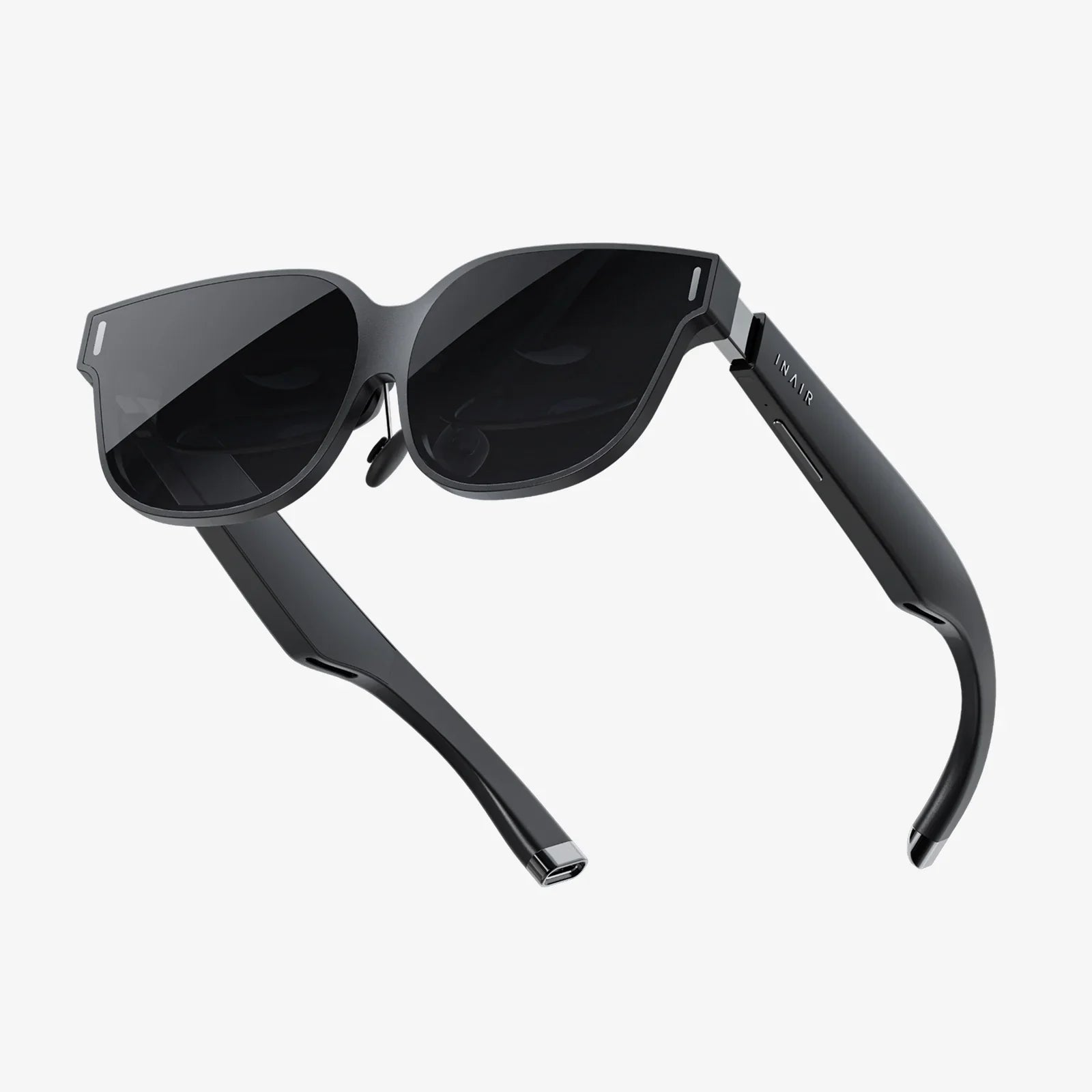
Imagine slipping on a pair of sleek, unassuming goggles and, in an instant, being transported from your living room to the front row of a concert, the cockpit of a fighter jet, or a collaborative workspace floating in the stars. This is no longer the stuff of science fiction; it is the palpable reality offered by virtual video goggles, a technology poised to revolutionize every facet of our lives. These devices are not merely screens for your eyes; they are portals, engineered to dissolve the barriers between the digital and the physical, offering experiences so profound and engaging that the real world momentarily fades away. The journey into these immersive realms is just beginning, and it promises to be nothing short of extraordinary.
The Architectural Marvel: How Virtual Video Goggles Craft Reality
At their core, virtual video goggles are a symphony of sophisticated components working in perfect harmony to deceive the human senses into accepting a digital construct as reality. The magic begins with two high-resolution displays, one for each eye, positioned at a precise focal length. These micro-OLED or fast-switch LCD panels pump out stunning imagery with incredibly high pixel density, a critical factor in eliminating the 'screen door' effect that plagued earlier iterations and reminding users they were looking at a display.
However, a crystal-clear image is only the first step. The true genius lies in the optics. A series of specialized lenses sits between the displays and the user's eyes, warping the flat images into a stereoscopic, three-dimensional field of view that can span 100 degrees or more. This wide field of view is essential for fostering a genuine sense of presence, making the digital environment feel vast and all-encompassing rather than like looking through a pair of binoculars.
This combination of high-resolution displays and advanced optics creates the visual foundation, but it is the tracking technology that breathes life into the virtual world.
Inside-out tracking, now the industry standard, utilizes a constellation of cameras and sensors embedded on the goggles themselves. These sensors constantly scan the physical environment, tracking the precise position and orientation of the user's head—and by extension, their point of view—in real-time. This means when you lean forward to examine a virtual object, duck to avoid a low-hanging beam, or turn your head to look behind you, the world responds with imperceptible latency. This 6-degrees-of-freedom (6DoF) tracking is the difference between watching a scene and being in it. The final layer of immersion is delivered by integrated spatial audio. By simulating sound sources in a 3D space, these audio systems allow you to hear a whisper from your left or the roar of an engine approaching from behind, completing the sensory illusion with breathtaking efficacy.
From Clunky Prototypes to Sleek Headsets: A Historical Evolution
The dream of virtual reality is decades old, but the path to the modern virtual video goggle has been a long and iterative one. The earliest concepts, emerging in the 1960s, were monumental, cumbersome machines more akin to torture devices than portals to new worlds. They established the basic principle of stereoscopic vision but were impractical and inaccessible.
The 1990s witnessed the first major consumer push, bringing clunky, low-fidelity headsets to market amidst great fanfare. These devices were characterized by their primitive graphics, nausea-inducing latency, and lack of accurate positional tracking. They captured the public's imagination but ultimately failed to deliver a compelling experience, leading to a long period of dormancy and niche development.
The modern renaissance began in the early 2010s. A critical mass of technological advancement converged: smartphone technology miniaturized high-quality displays and motion sensors, gaming computers became powerful enough to render complex 3D environments in real-time, and computer vision algorithms advanced to enable robust inside-out tracking. This perfect storm gave birth to the first generation of truly viable modern virtual video goggles. These devices, while still tethered to powerful external computers, demonstrated the staggering potential of high-fidelity VR. The subsequent leap was toward independence. The development of all-in-one goggles, with all necessary computing power, battery, and tracking systems contained within the headset, was a watershed moment. It cut the cord, both literally and figuratively, unleashing users from a limited play space and democratizing access to virtual experiences by removing the need for expensive auxiliary hardware.
Transforming Industries: Applications Beyond Entertainment
While immersive gaming and cinematic experiences are the most visible applications, the impact of virtual video goggles is reverberating far beyond the realm of entertainment, creating new paradigms across numerous sectors.
Revolutionizing Education and Training
Virtual video goggles have unlocked the potential for experiential learning. Instead of reading about ancient Rome, students can take a guided tour through a historically accurate digital reconstruction. Medical students can practice complex surgical procedures on virtual patients, making mistakes and learning from them without any risk to human life. Astronauts, pilots, and surgeons all use highly detailed VR simulators to train for high-stakes scenarios in a safe, controlled, and repeatable environment. This 'learning by doing' in a virtual space dramatically improves knowledge retention and skill acquisition.
The Future of Remote Work and Collaboration
The concept of the 'metaverse' as a persistent virtual space for work and socializing is being built on the foundation of this technology. Virtual video goggles enable a new form of remote collaboration that is infinitely more engaging than a grid of video calls. Colleagues from across the globe can meet as lifelike avatars in a virtual boardroom, interact with 3D models of products or architectural designs as if they were physically present, and share a sense of space and presence that flat screens cannot provide. This has profound implications for reducing travel, enhancing creative teamwork, and creating a more human connection for distributed teams.
Healthcare and Therapeutic Breakthroughs
The therapeutic potential of this technology is vast and already being realized. VR exposure therapy is effectively used to treat phobias, anxiety, and PTSD by allowing patients to confront their triggers in a gradual, controlled, and safe virtual environment. It is also used for physical rehabilitation, turning repetitive exercises into engaging games that motivate patients to complete their regimens. Furthermore, virtual video goggles offer powerful distraction therapy for patients undergoing painful procedures like wound care or chemotherapy, transporting them to calming beaches or serene forests to significantly reduce perceived pain and anxiety.
Navigating the Virtual Frontier: Challenges and Considerations
Despite the incredible promise, the widespread adoption of virtual video goggles is not without significant hurdles that must be thoughtfully addressed.
- Physical Comfort and Ergonomics: Modern headsets have shed considerable weight, but designing a device that is comfortable for extended use remains a challenge. Issues like heat generation, pressure on the face, and managing glasses wearers' needs are ongoing areas of development.
- The Simulator Sickness Conundrum: A mismatch between visual motion and the body's vestibular sense can cause cybersickness in some users, manifesting as dizziness, nausea, and headaches. While high refresh rates, low latency, and better software design have mitigated this for many, it remains a barrier for a portion of the population.
- The Privacy Paradigm: These devices are data collection powerhouses. They map our physical environments, track our eye gaze, and monitor our movements and interactions. This data is invaluable for improving experiences but raises serious questions about ownership, consent, and security. Robust ethical frameworks and transparent data policies are non-negotiable.
- The Social and Psychological Impact: As virtual worlds become more compelling, there is a risk of escapism and social isolation. Furthermore, the long-term psychological effects of prolonged immersion, the blurring of reality, and the potential for new forms of addiction are areas that require careful and continuous study.
The Horizon of Possibility: What the Future Holds
The evolution of virtual video goggles is accelerating toward a future where the technology becomes even more seamless, powerful, and integrated into our daily lives. We are moving toward devices that are indistinguishable from a standard pair of glasses, thanks to advancements in holographic optics and micro-displays. Haptic feedback suits and gloves will evolve to let users not just see but also feel virtual objects, adding the crucial sense of touch to the immersive palette.
The ultimate goal is a complete sensory immersion that feels natural and intuitive, unlocking applications we can only begin to imagine.
Brain-computer interfaces represent the final frontier, potentially allowing us to interact with virtual environments through thought alone. This could lead to experiences of unparalleled richness and facilitate new forms of communication for those with physical disabilities. As the technology matures, we will see the emergence of a true digital twin of our world and the rise of the 'metaverse'—a network of interconnected virtual spaces that becomes a new layer of reality for work, play, and social connection.
The line between the physical and the digital is not just blurring; it is being consciously redrawn. Virtual video goggles are the brush with which we are painting this new reality, offering a glimpse into a future where our experiences are limited not by our physical location, but only by the boundaries of our imagination. The next time you see someone standing in an empty room, gazing in wonder at a world you cannot see, know that they are not escaping reality—they are stepping into its next great iteration.
Share:
VR Apps for Android: Your Ultimate Guide to the Virtual Frontier
VR Headset Attachments: The Ultimate Guide to Enhancing Your Virtual Reality Experience