


- by wangfred
VR Headset Attachments: The Ultimate Guide to Enhancing Your Virtual Reality Experience
- by wangfred
You’ve strapped on your headset and stepped into another world, but something’s missing. The visuals are stunning, the worlds are vast, yet the experience feels… incomplete. It’s a common feeling for virtual reality enthusiasts, a whisper on the edge of immersion that hints at a deeper level of presence waiting to be unlocked. What if you could feel the virtual rain on your skin, smell the alien flora of a distant planet, or see with crystal clarity without your glasses? The secret to transcending from a user to a true citizen of the virtual realm doesn't lie in a costly headset upgrade alone. The true game-changer, the key to a fully personalized and profoundly immersive experience, is found in the expansive and innovative world of VR headset attachments.
The core function of any VR headset is visual immersion. But true presence—the uncanny feeling of actually being in a virtual space—requires engaging more than just our eyes. Our brains rely on a symphony of sensory inputs to understand and interact with our environment. This is where attachments move from being simple accessories to essential components of the VR ecosystem.
The most significant leap in this area comes from haptic feedback systems. While standard controllers provide rudimentary vibrations, dedicated haptic vests, gloves, and even foot pedals deliver precise, localized feedback. Imagine feeling the thump of a virtual arrow hitting your shield, the gentle pressure of a hand on your shoulder, or the distinct recoil of a sci-fi blaster. These devices use a combination of motors, electrostimulation, and pneumatic systems to translate digital events into physical sensations, grounding you in the experience in a way visuals alone never could.
Another frontier is olfactory technology—the science of smell. While still emerging, several attachments now exist that can release specific scents on cue. The smell of gunpowder in a combat sim, the salty sea air in a sailing adventure, or the sterile aroma of a spaceship’s interior adds a powerful, often subconscious layer of realism. This technology works by using cartridges containing primary scents that are mixed and released via small fans, directly challenging the notion that virtual worlds are sterile, odorless places.
For many, the single biggest barrier to VR immersion is visual discomfort, whether from wearing glasses inside the headset or the strain of long play sessions. Fortunately, a suite of attachments addresses these issues head-on, making VR accessible and comfortable for a much wider audience.
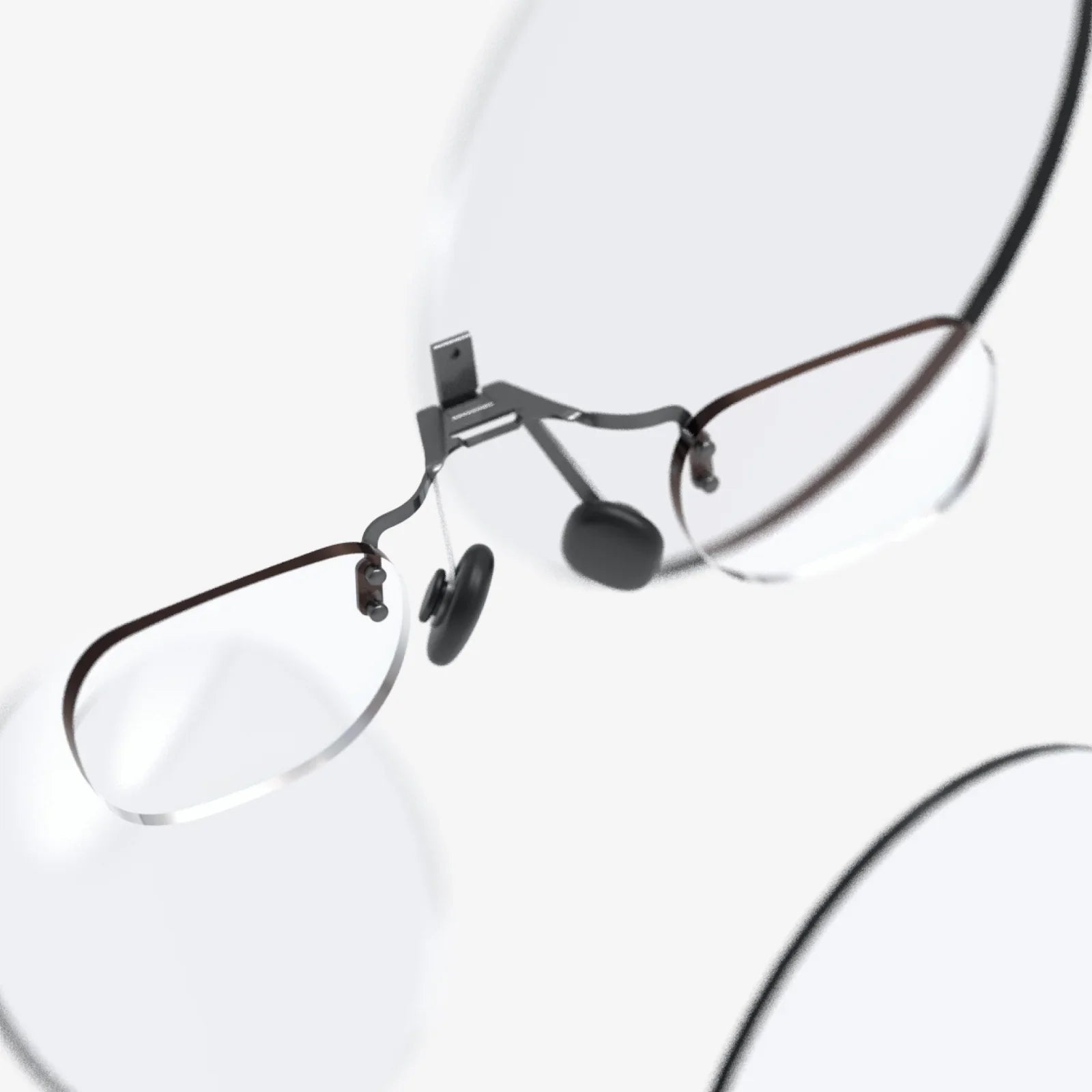
Prescription lens inserts are arguably the most impactful comfort upgrade for glasses-wearers. These are custom-magnetic lenses that slot perfectly inside the headset, calibrated to your specific prescription. They eliminate the discomfort of squeezing glasses frames into the tight confines of a headset, prevent scratches on both your glasses and the headset's lenses, and provide a wider, clearer field of view. For those who require vision correction, they are not merely an accessory; they are a necessity.
Beyond correction, other visual enhancements include:
Audio is half of the experience. While many headsets feature decent built-in speakers or require earbuds, dedicated audio attachments can dramatically improve spatial awareness and sound quality.
High-fidelity off-ear headphones that mount directly onto the headset’s strap are a popular choice. They offer the powerful, immersive sound of over-ear headphones without the discomfort of adding another tight strap to your head. More importantly, they are often specifically tuned for the spatial audio capabilities of VR, allowing you to pinpoint the direction of footsteps, voices, and environmental cues with incredible accuracy. This is critical not just for immersion but for competitive performance in social and gaming applications.
For a more personal and powerful solution, some attachments integrate amplified audio solutions that provide a richer bass response and clearer highs than standard outputs, ensuring every whisper and explosion is delivered with maximum impact.
The greatest virtual adventure is brought to an abrupt halt by a flashing low-battery warning. This tether to the real world is a constant reminder of the hardware on your face, breaking immersion. Battery pack attachments solve this problem elegantly.
These are not just simple power banks; they are counterweights. A well-designed external battery pack attaches to the back of the headset’s strap, serving a dual purpose. First, it drastically extends playtime, often doubling or even tripling the available battery life. Second, by shifting weight from the front to the back of the head, it improves overall balance and comfort, reducing strain on the cheeks and forehead. This allows for significantly longer and more comfortable sessions, making multi-hour VR social events, workflows, or campaigns a genuine possibility.
Your head and hands are in VR, but what about the rest of you? Full-body tracking (FBT) is the holy grail for social VR, professional motion capture, and certain simulation genres. While some high-end systems have built-in solutions, for most headsets, this is achieved through attachments.
Additional tracking pucks or sensors are strapped to the user’s waist, ankles, and sometimes elbows and knees. These devices communicate with the headset or base stations, creating a precise skeletal map of your body’s movements. This allows your entire avatar to mimic your actions with stunning accuracy—kicking a ball, performing a dance, or assuming a specific posture. For creators and performers, this opens up affordable motion capture capabilities. For users, it represents the final step in translating their physical self into the digital realm, enabling a level of non-verbal communication and expression that standard controllers cannot replicate.
With investment comes the need for protection and maintenance. A category of practical attachments focuses on preserving the headset itself and improving its hygiene.
Protective lens covers are a simple but vital add-on. The headset's lenses are delicate and prone to scratching from dust, debris, or accidental contact with glasses. A set of clear, polycarbonate covers acts as a sacrificial layer, preserving the pristine condition of the original optics.
Given that VR is a physically active medium, protective cases are essential for anyone who travels with their headset or needs to store it safely. These are often custom-molded, hard-shell cases with padded interiors that cradle the headset, controllers, and all attachments, protecting them from impacts, dust, and moisture.
Finally, hygiene kits have become increasingly important, especially for shared or demo headsets. These include replaceable, waterproof silicone facial interfaces and strap covers that are easy to wipe down with disinfectant, as well as disposable VR masks for commercial settings. They prevent the buildup of sweat and makeup and ensure a sanitary experience for every user.
The trajectory of VR attachments points towards even greater integration and specialization. We are already seeing early prototypes of biometric sensors that can track heart rate, skin conductance (a measure of emotional arousal), and even brainwave patterns. This data could be used to adapt experiences in real-time—increasing a game’s difficulty if it senses you’re not challenged, or guiding a meditation app based on your actual mental state.
Another area of development is in eye-tracking modules. While beginning to appear in native headsets, external add-ons could bring this powerful technology to older models. Eye-tracking enables foveated rendering (where only the spot you’re looking at is rendered in full detail, boosting performance), and incredibly intuitive menu navigation, and adds a new layer of social depth as avatars can now make genuine eye contact.
The line between attachment and integrated feature will continue to blur. Today’s popular add-on may be tomorrow’s standard equipment. This ecosystem of innovation ensures that your headset is not a static product but a platform that can evolve and improve over time, continually refreshing your experience without the need for a full-system overhaul.
Your journey into virtual reality has only just begun. The headset you own is merely a canvas, a powerful engine waiting for you to unlock its full potential. Every attachment you add—from the simple comfort of prescription lenses to the profound immersion of haptic feedback—is a brushstroke that paints a richer, more personal, and more believable world. This is no longer about just playing a game or watching a video; it’s about crafting your portal, tailoring every sensory detail to your liking, and stepping into realities limited only by imagination. The next dimension of immersion isn’t coming with a new headset release; it’s waiting for you in the incredible, expanding universe of attachments designed to transform how you see, hear, feel, and experience everything virtual reality has to offer.