


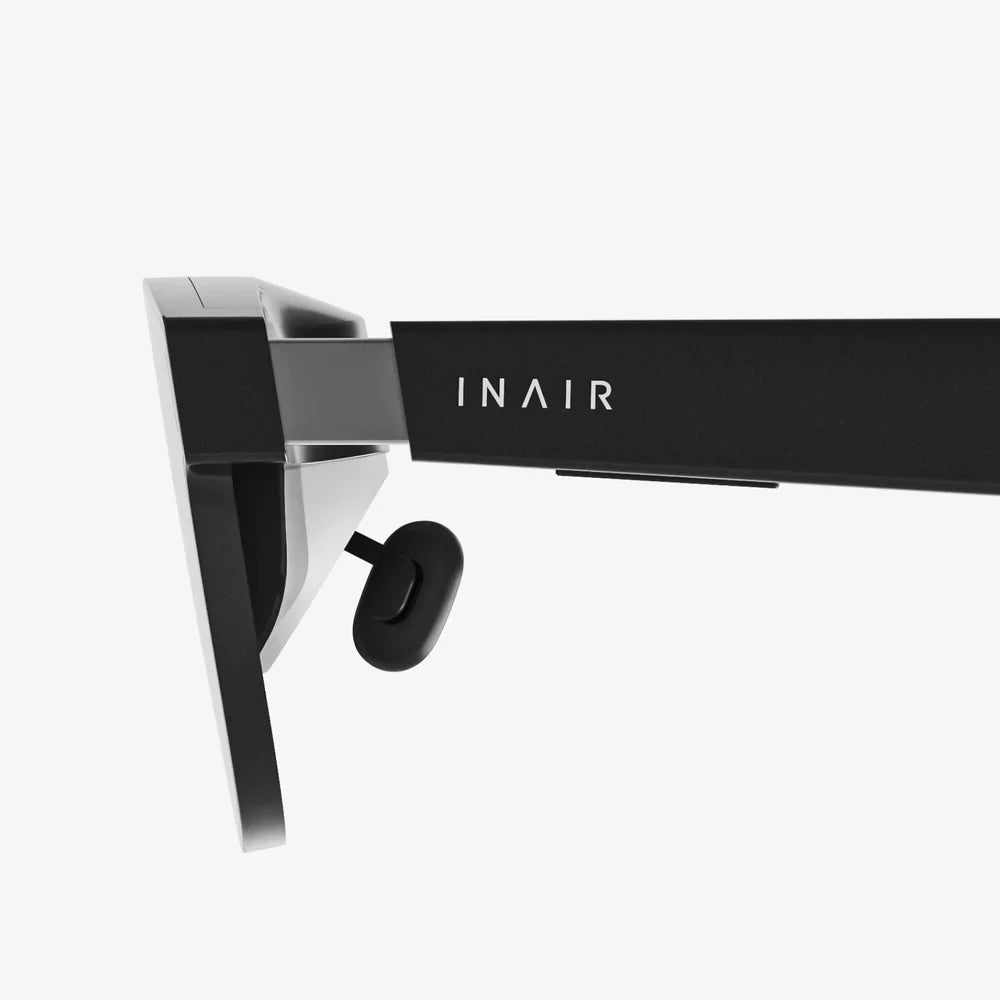
Imagine slipping on a device and instantly being transported. The familiar confines of your room dissolve, replaced by the dizzying peak of a mountain, the intricate cockpit of a spaceship, or a front-row seat at a concert happening a continent away. This is no longer the stuff of science fiction; it is the immediate, breathtaking reality offered by the modern virtual VR headset. This technology, once a distant dream, now sits poised to revolutionize not just how we play games, but how we work, learn, and connect, offering a portal to experiences previously limited by the boundaries of geography and physics.
The Evolution of Immersion: From Stereoscopes to Cyberspace
The dream of virtual immersion is far older than the silicon chip. The fundamental principle—tricking the brain into perceiving a flat image as a three-dimensional world—dates back to the 19th century with the invention of the stereoscope. These handheld devices presented slightly offset images to each eye, creating a compelling illusion of depth. For over a century, this was the pinnacle of visual escapism.
The term "virtual reality" itself was popularized in the late 1980s, but the hardware of the era was monstrously expensive, low-fidelity, and confined to university labs and military simulators. These early systems were the proof of concept, crude yet powerful demonstrations of a future that was tantalizingly close, yet economically out of reach for the average person. The journey from those clunky prototypes to the sleek, consumer-ready virtual VR headset of today is a story of relentless innovation in display technology, motion tracking, and processing power.
Deconstructing the Magic: How a Virtual VR Headset Works
At its core, every virtual VR headset performs a simple yet extraordinary magic trick: it completely replaces your field of vision with a digital world and convinces your senses that you are truly inside it. This illusion is broken down into several critical technological components working in perfect harmony.
The Display: A Screen for Each Eye
Inside the headset, mere centimeters from your eyes, are two high-resolution displays (or one large display split for each eye). These are the digital canvases upon which the virtual world is painted. The images on these two screens are rendered from perspectives that are slightly offset, mimicking the natural parallax of human vision. This stereoscopic 3D effect is the foundational layer of depth perception in VR.
The Lenses: Focusing on Infinity
You cannot simply hold a phone screen to your face and expect a comfortable VR experience. The displays are too close for your eyes to focus on naturally. This is where sophisticated, custom-designed lenses come in. These lenses sit between your eyes and the displays, refracting the light so that the image, though physically close, appears to be at a distance, allowing your eyes to relax and focus as they would when looking at something far away. This is crucial for preventing eye strain and selling the illusion of vast, open spaces.
Tracking: The Sense of Self in a Digital Space
Visuals are nothing without interaction. For immersion to hold, the virtual world must respond to your movements with imperceptible latency. This is achieved through advanced tracking systems.
- Rotational Tracking (3DoF): This tracks the orientation of your head—the pitch, yaw, and roll. It knows if you're looking up, down, or turning side-to-side. Early mobile-based headsets relied solely on this.
- Positional Tracking (6DoF): This is the gold standard for modern VR. It adds the ability to track the physical position of your head in space. It knows if you lean forward to examine an object, duck under a virtual barrier, or step sideways to peek around a corner. This is typically achieved through external sensors or, more commonly now, inside-out tracking using integrated cameras on the headset itself that map the room and track its own movement within that environment.
Controllers: Your Virtual Hands
To interact with the virtual world, you need virtual hands. VR controllers are ergonomic wands tracked by the system, often featuring buttons, triggers, thumbsticks, and haptic feedback. They translate your real-world gestures into digital actions, allowing you to grab, throw, push, shoot, and manipulate the environment. This tactile connection is what transforms a passive viewing experience into an active, participatory one.
Audio: The Forgotten Sense
Visuals might be the star, but spatialized 3D audio is the indispensable supporting actor. Using head-related transfer function (HRTF) technology, a good VR audio system can simulate sounds coming from specific points in the 3D space around you. The creak of a floorboard behind you, the whisper in your left ear, the roar of a crowd in the distance—this auditory layer is critical for selling the reality of the experience and is a powerful tool for directing attention and evoking emotion.
Beyond the Game: The Expansive Applications of VR
While gaming remains the most prominent and commercially successful application, the utility of the virtual VR headset extends far beyond entertainment. It is becoming a powerful tool in numerous professional and educational fields.
Revolutionizing Education and Training
Imagine medical students performing intricate virtual dissections or practicing complex surgical procedures without risk to a patient. Pilots have trained on flight simulators for decades; VR now brings that same risk-free, cost-effective training paradigm to surgeons, mechanics, welders, and first responders. They can make mistakes, learn from them, and master muscle memory in a safe, controlled, and repeatable environment. History students can take a guided tour of ancient Rome, and biology students can shrink down to explore the inner workings of a cell. The virtual VR headset is the ultimate empathy and education machine.
Transforming Enterprise and Remote Work
The concept of the "virtual office" is evolving. With a VR headset, remote collaboration can move beyond flat video calls into shared 3D spaces. Architects and engineers can walk clients through full-scale models of unbuilt structures. Design teams from across the globe can gather around a virtual prototype, examining it from every angle as if it were physically present. This sense of shared presence and the ability to interact with 3D data naturally can dramatically improve communication, streamline workflows, and reduce the need for physical travel and expensive physical prototypes.
A New Frontier for Social Connection
Social VR platforms are creating new forms of digital interaction. Instead of communicating through text or a flat video feed, you can don a headset and meet friends as personalized avatars in a virtual world. You can watch a movie together in a virtual cinema, attend a live comedy show, or simply hang out and chat as if you were in the same room. This has profound implications for reducing loneliness and maintaining deep social bonds across vast geographical distances, offering a sense of presence that other digital mediums cannot replicate.
Navigating the Challenges: The Hurdles on the Path to Mainstream Adoption
Despite its incredible potential, the virtual VR headset industry still faces significant challenges that prevent it from becoming as ubiquitous as the smartphone.
The Comfort Conundrum
Early headsets were often described as strapping a brick to your face. While significant progress has been made in weight distribution and materials, comfort over extended periods remains an issue for some users. Furthermore, a subset of the population experiences VR-induced motion sickness, a disconnect between what the eyes see and what the inner ear feels. While technologies like better refresh rates, reduced latency, and varifocal displays are mitigating this, it remains a barrier for some.
The Content Conundrum
Hardware is nothing without software. While the library of VR experiences is growing rapidly, the industry is still searching for its definitive "killer app" beyond gaming—the application so compelling that it drives mass adoption on its own. High-quality VR content is also expensive and time-consuming to produce, which can slow the pace of development.
The Cost and Accessibility Equation
Although prices have fallen dramatically, a high-end VR setup still requires a significant investment, both for the headset and, in many cases, a powerful computer to run it. Standalone headsets have solved the computer problem for many, but creating a device that is both high-fidelity and affordable for the mass market remains the ultimate goal for the industry.
The Future is Now: What Lies on the Horizon
The current state of VR is impressive, but it is merely a stepping stone. The next generation of virtual VR headset technology is already taking shape in research labs, promising to dissolve the remaining barriers between the real and the virtual.
We are moving towards headsets that are lighter, wireless, and have dramatically higher resolution displays, approaching and surpassing the resolving power of the human eye. Eye-tracking technology will allow for foveated rendering, where only the part of the scene you are directly looking at is rendered in full detail, drastically reducing the processing power required. This will enable more complex and realistic worlds on smaller devices.
Perhaps the most anticipated frontier is the development of advanced haptics. This goes beyond simple controller rumble to include full-body suits and gloves that can simulate the touch and pressure of virtual objects, truly completing the sensory feedback loop. Furthermore, research into brain-computer interfaces, while far off, hints at a future where we might navigate virtual spaces through thought alone.
The line between the physical and digital realms is not just blurring; it is being systematically erased. The virtual VR headset is no longer a novelty for early adopters but a robust and rapidly evolving platform poised to redefine the human experience. It offers a glimpse into a future where our reality is not a fixed destination but a customizable landscape of infinite possibilities, limited only by the breadth of our imagination.
This is your invitation to step through the looking glass. The worlds waiting on the other side are more vivid, more interactive, and more profoundly transformative than ever before. The next great adventure, the next revolutionary business meeting, the next unforgettable memory—it might not be found by looking out your window, but by powering on the portal that rests, waiting, on your desk.
Share:
Best VR Headset: The Ultimate Guide to Immersive Reality in 2024
Upcoming VR Headset 2025: The Future of Immersion is Almost Here