


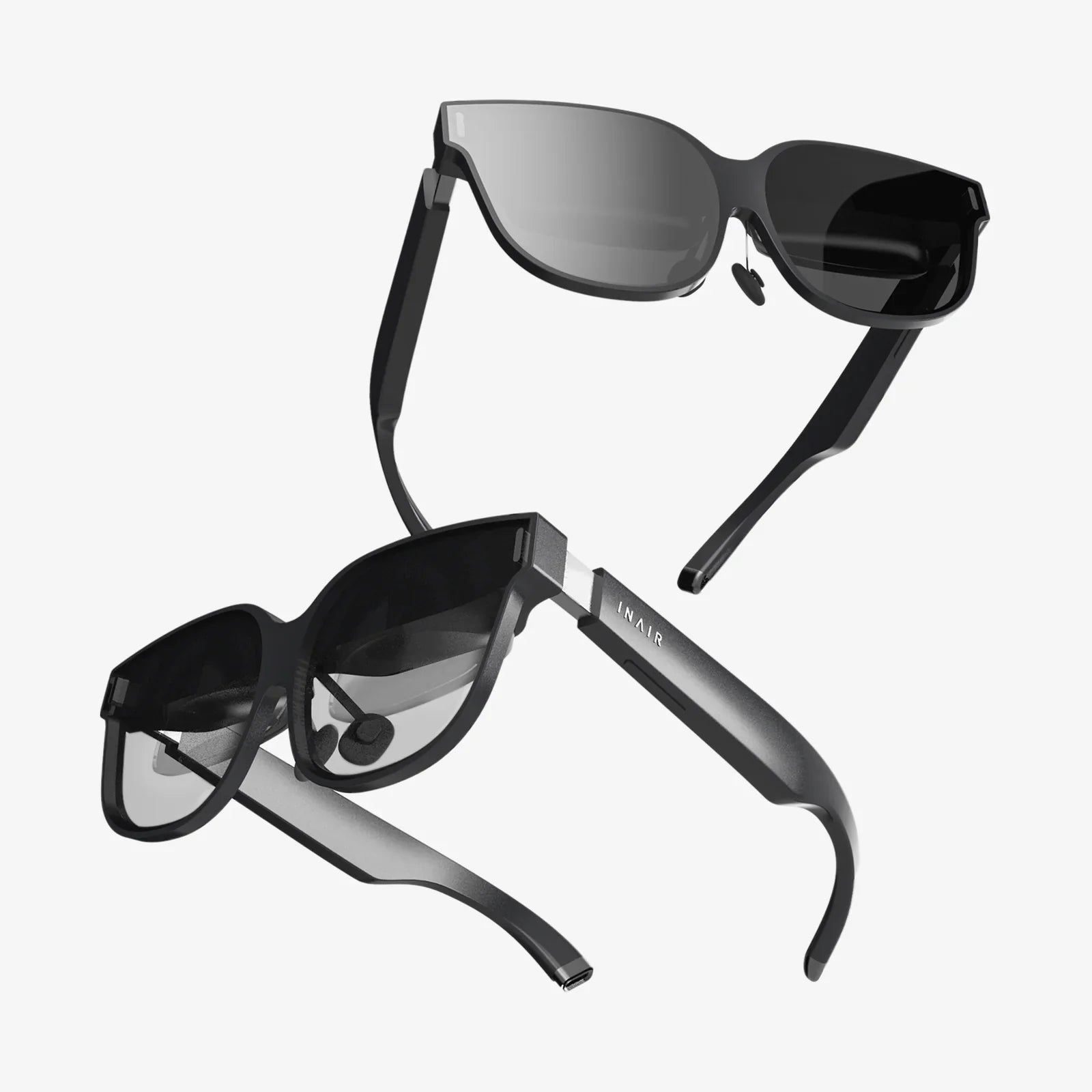
The digital realm is converging with our physical world at an unprecedented pace, and at the heart of this revolution are Virtual and Augmented Reality. What once felt like science fiction is now a burgeoning multi-billion dollar industry, poised to redefine everything from entertainment and education to manufacturing and medicine. But beneath the glossy surface of futuristic headsets and captivating demos lies a complex and fiercely competitive battlefield. For investors, entrepreneurs, and tech enthusiasts alike, understanding the true dynamics at play is not just beneficial—it's essential. A Porter's Five Forces analysis provides the critical lens needed to cut through the hype, revealing the underlying structure of the VR and AR industry, the intensity of its competition, and where the real opportunities—and pitfalls—lie for the future.
The Framework of Five Forces
Developed by Michael E. Porter of Harvard Business School in 1979, the Five Forces framework remains a cornerstone of business strategy. It moves beyond simple competitive analysis to examine the complete industry structure based on five fundamental forces: the threat of new entrants, the bargaining power of buyers, the bargaining power of suppliers, the threat of substitute products or services, and the intensity of competitive rivalry. When applied to the VR and AR sector, this model illuminates a landscape of immense potential tempered by significant strategic challenges, high costs, and rapid technological evolution.
Competitive Rivalry Within the Industry: A Battle for Ecosystem Dominance
The competitive landscape of the VR and AR industry is intensely dynamic and can be characterized as moderately high to high. The market is not a single homogenous block but is segmented into various layers, each with its own competitive dynamics.
At the hardware level, competition is ferocious. Numerous major technology corporations are vying for market share, each with substantial financial resources and deep expertise. The competition is less about selling a single device and more about establishing a dominant platform or ecosystem. These ecosystems encompass not just the headset hardware, but also the operating systems, software development kits (SDKs), application stores, and content libraries. The goal is to create a sticky environment where users invest in software and become locked into a specific hardware brand for future upgrades.
Beyond the tech giants, there is a vibrant and crowded field of specialized startups and smaller companies focusing on niche applications. These include enterprises developing AR smart glasses for industrial use, VR setups for location-based entertainment, and specialized solutions for healthcare and real estate. This fragmentation increases rivalry as companies compete for limited developer talent, enterprise contracts, and consumer attention.
Factors intensifying this rivalry include the high fixed costs associated with research and development (R&D) and manufacturing, the rapid pace of technological obsolescence which pushes continuous innovation, and the current relatively slow adoption rate in the consumer space, forcing companies to fight over a smaller-than-anticipated pie. However, the market's vast growth potential prevents this rivalry from becoming purely cut-throat, as many players believe there is enough future opportunity to justify current investments.
Threat of New Entrants: High Barriers Guarding the Future
While the promise of the metaverse might suggest a gold rush open to all, the barriers to entry in the VR and AR industry are formidably high, resulting in a low to moderate threat of new entrants.
The most significant barrier is the colossal capital requirement. Designing, developing, and manufacturing advanced head-mounted displays (HMDs) involves immense investment in R&D. The components alone—high-resolution micro-displays, precision optics, advanced sensors (LiDAR, depth sensors), and powerful mobile processors—are expensive. Establishing the manufacturing supply chain and scaling production to achieve economies of scale requires billions of dollars, a resource far beyond the reach of most potential entrants.
Secondly, technology and intellectual property (IP) act as a massive moat. Established players have invested years and vast sums into building extensive patent portfolios covering everything from optical designs and tracking algorithms to user interface elements. A new entrant would face immense legal and technical challenges to innovate without infringing on these existing patents, stifling their ability to compete effectively.
Furthermore, strong brand identity and ecosystem loyalty present a formidable challenge. Consumers and enterprises are beginning to align with specific ecosystems. A new company would not only need to produce a superior hardware product but also convince developers to build content for its platform and convince users to leave their existing software libraries behind. The power of network effects is already strengthening the position of early leaders.
Despite these barriers, opportunities exist for new entrants in specific software and content niches. Developing a breakthrough enterprise application, a must-have game, or a specialized tool for a vertical market (e.g., surgical training, architectural visualization) requires less capital than hardware development and can allow a company to carve out a defensible position, potentially even partnering with or being acquired by a larger hardware player.
Bargaining Power of Buyers: Fragmented Power with Growing Clout
The bargaining power of buyers in the VR and AR market is segmented and currently moderate, but it is steadily increasing as the market matures.
On the consumer side, individual buyers historically had relatively low power. Early adoption was driven by enthusiasts willing to pay a premium for cutting-edge technology with limited content. However, as the market expands toward a broader audience, consumers are becoming more price-sensitive and discerning. With multiple hardware options now available, buyers can compare specifications, content libraries, and prices more easily. The cost of switching between ecosystems, primarily the loss of purchased software, remains a factor that reduces buyer power, but competition is forcing platform holders to improve interoperability and offer more compelling value propositions.
The real shift in power is evident in the enterprise and institutional buyer segment. Large corporations, universities, and government agencies purchasing VR/AR solutions in bulk for training, design, or remote assistance have very high bargaining power. They demand robust solutions, enterprise-grade support, custom development, and significant volume discounts. They can pit vendors against each other to negotiate better terms, and their specific needs often drive the roadmap of entire software companies. The shift in industry focus from consumer entertainment to enterprise productivity has, by its nature, handed more power to sophisticated, large-scale buyers.
Bargaining Power of Suppliers: The Crucial Role of Component Specialists
The bargaining power of suppliers is high in the VR and AR industry, creating a significant strategic dependency for hardware manufacturers. The AR and VR supply chain is complex and relies on a limited number of specialized suppliers for critical components.
Key components like micro-OLED displays, pancake lenses, advanced sensor suites (e.g., MEMS mirrors for laser beam scanning), and custom silicon chips are produced by a highly concentrated group of specialized firms. For a hardware company, switching costs for these components are extremely high, as each headset design is meticulously engineered around a specific set of parts. This dependency grants substantial pricing and terms negotiation power to these suppliers.
Software and content developers also act as suppliers to the ecosystem. While there are thousands of developers, a few key titles or applications can drive hardware sales. A popular game or a critical enterprise software suite can give its developer significant leverage when negotiating revenue share terms with platform owners on their application stores. Platform holders need these key developers to populate their stores with compelling content to sell hardware.
To mitigate this supplier power, large hardware companies engage in strategic partnerships, co-investment in R&D, and even vertical integration by designing their own custom chipsets and components, bringing crucial technology development in-house to control their destiny and costs.
Threat of Substitutes: The Ever-Present Risk of Good Enough
The threat of substitutes for VR and AR is significant and multifaceted, representing a constant pressure on the industry to prove its unique value proposition.
The most pervasive substitute is traditional computing and entertainment platforms. A high-end gaming PC with a large monitor, a modern games console, a smartphone, or a television all offer immersive entertainment and functional productivity at a fraction of the cost and without the need for wearable hardware. For many tasks, these “flat” screens are simply “good enough,” posing a persistent challenge to VR/AR's value of immersion.
In enterprise settings, substitutes abound. Traditional computer-aided design (CAD) software on a workstation, in-person training sessions, video conferencing tools like Zoom, and even physical manuals and blueprints are all established, well-understood, and often cheaper substitutes for VR/AR solutions. For AR to replace a tablet on a factory floor, it must demonstrably improve workflow efficiency, reduce errors, or save costs to a degree that justifies the investment and change management.
Perhaps the most potent long-term substitute is the rapid advancement of the technology itself. Today's AR glasses could be substituted by tomorrow's more advanced neural interfaces or contact lenses. This internal substitution driven by technological progress is a unique aspect of high-tech industries, forcing companies to continuously innovate or risk having their own products rendered obsolete by the next generation.
Synthesis and Strategic Outlook
Porter's Five Forces analysis synthesizes into a picture of an industry with high barriers protecting established players, fierce competition among them for ecosystem control, significant power held by key component suppliers, and a constant need to justify its existence against powerful substitutes and increasingly demanding buyers. The overall industry attractiveness is high for large, well-capitalized players who can withstand the R&D costs and ecosystem-building requirements. For smaller firms, the path to success lies in specialization, innovation in software and specific applications, and forming strategic alliances rather than attempting to win the hardware war.
The future trajectory of the industry will be shaped by its ability to overcome these forces. This will require technological leaps in miniaturization, battery life, and user interface design to reduce dependency on specialized suppliers and enhance the user experience. It will require the creation of killer applications that provide undeniable value beyond what substitutes can offer. And it will require a collaborative approach to establish open standards that reduce switching costs for buyers and developers, ultimately expanding the entire market. The companies that can navigate this complex web of competitive forces, not just with better hardware, but with smarter ecosystem strategies and deeper understanding of vertical market needs, will be the ones to ultimately define our augmented future.
The race to overlay our world with digital information and create entirely new ones is far from a guaranteed victory for any single company. It is a strategic chess match on a global scale, where billions of dollars are the ante and the payoff is the platform upon which the next chapter of human-computer interaction will be built. For those watching from the sidelines, the Five Forces model reveals this is not just a story of technological wonder, but a high-stakes business drama where understanding the underlying currents of competition is the key to predicting who will lead the charge into this new reality and who will be left in the digital dust.
Share:
Electric Smart Device Revolution: Transforming Homes and Lives with Intelligent Technology
AR Heads Up Display Scope: The Future of Vision is Transparent